
 Worksheets
ANS 105: Sporting Group
Total questions: 89
Worksheet time: 45mins
Which of the following statements is true regarding AKC breed colors?
All colors listed by the AKC are the only colors that exist for each breed.
Markings and colors are considered the same by the AKC.
AKC listed colors are show colors, but not the only options that exist.
Every breed has more than 10 show color sets.
According to AKC breed notes, what is the relationship between markings and colors?
Markings are technically separate from colors.
Markings are a type of color.
Markings are only found in rare breeds.
Markings are not recognized by the AKC.
If a breed has only one show color set listed by the AKC, what does this imply?
The breed cannot have any other color variations.
The breed may still have other color options not listed as show colors.
The breed is not recognized by the AKC.
The breed must have more than 10 color sets.
Why might coloration be considered a separate breed or a subset of the same breed according to the AKC notes?
Because all breeds have the same colorations.
Because coloration differences can indicate either a separate breed or a subset within a breed.
Because the AKC does not recognize colorations.
Because markings are always the same as colorations.
How does the number of show color sets vary among breeds according to the AKC?
All breeds have the same number of show color sets.
Some breeds have only one show color set, while others have more than 10 noted sets.
No breed has more than five show color sets.
The AKC does not list show color sets for any breed.
Which coat pattern is described as having one solid coat color with no patterns?
Solid
Brindle
Tri-Color
Spotted
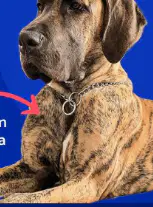
What is the main characteristic of a "Brindle" coat pattern in dogs?
A tiger stripe pattern with a mix of black, brown, tan, or gold
White fur with large black patches
Flecks of color against a white coat
Light yellow or tan fur
Which coat pattern is defined by three distinct colors, typically a black or brown body with tan patches and a white belly?
Tri-Color
Bi-Color
Sable
Roan

A dog with irregular white patches on its coat is described as having which pattern?
Piebald
Spotted
Harlequin
Mask
If a dog has a tan or light brown coat with black hair tips all over the body, what is this pattern called?
Sable
Fawn
Roan
Merle/Dapple

Which coat pattern is characterized by white fur with large black patches?
Harlequin
Spotted
Bi-Color
Ticked/Flecked
A dog with black on the muzzle area is said to have which marking?
Mask
Roan
Fawn
Brindle
What distinguishes a "Merle/Dapple" coat pattern in dogs?
White markings and patches
Light yellow or tan fur
Small spots of any color
Flecks of color against a white coat
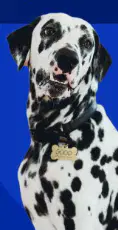
Which coat pattern is described as a mostly white dog with small spots of any color?
Spotted
Piebald
Harlequin
Tri-Color
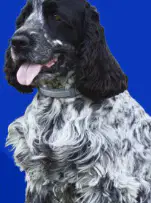
If a dog's base coat color is muted by a mixture of white hairs, what is this pattern called?
Roan
Sable
Mask
Bi-Color
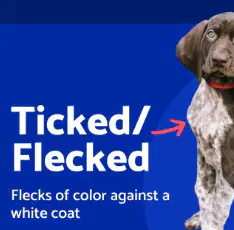
Which coat pattern involves flecks of color against a white coat?
Ticked/Flecked
Brindle
Fawn
Solid

A dog with dark color on most of the body and tan patches on the face, eyebrows, belly, legs, and chest is described as having which pattern?
Black & Tan
Tri-Color
Sable
Merle/Dapple
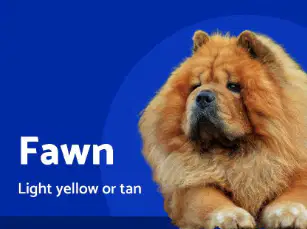
Which coat color is described as light yellow or tan?
Fawn
Sable
Roan
Piebald
What is the main difference between "Bi-Color" and "Tri-Color" coat patterns?
Bi-Color has two colors, Tri-Color has three distinct colors
Bi-Color has three colors, Tri-Color has two colors
Bi-Color is only found in black and white, Tri-Color is only brown and white
Bi-Color always includes tan, Tri-Color never includes tan
Which of the following best describes the primary role of dogs in the Sporting Group?
Specialized hunters that locate game and often collect it.
Dogs bred primarily for herding livestock.
Dogs known for their guarding abilities.
Dogs that are mainly used as lap pets.
Which types of dogs are typically included in the Sporting Group?
Spaniels, pointers, setters, and retrievers
Terriers, bulldogs, and mastiffs
Chihuahuas, poodles, and dachshunds
Huskies, malamutes, and samoyeds
What characteristic is NOT typically associated with Sporting Group dogs?
They are energetic and need lots of exercise.
They are active, alert, and likeable.
They are great companion animals.
They are generally lazy and prefer to sleep all day.
A family is looking for a dog that is energetic, active, and enjoys outdoor activities. Based on the characteristics of the Sporting Group, would this group be a suitable choice? Explain your reasoning.
Yes, because Sporting Group dogs are energetic and need lots of exercise.
No, because Sporting Group dogs are not active.
No, because Sporting Group dogs are not good companions.
Yes, because Sporting Group dogs are known for being lazy.
Which subgroup of the Sporting Group typically consists of pointers and setters that find game and silently point toward it?
Flushing dogs
Retrievers
Forerunners
Hounds
What is the main function of retrievers in the Sporting Group?
Silently pointing toward game
Moving game toward their human companion
Fetching game and returning it to their human companion
Guarding livestock
Flushing dogs are best described as:
Dogs that silently point toward game
Dogs that move game toward their human companion
Dogs that herd livestock
Dogs that guard property
A hunter wants a dog that can both find game and indicate its location without making noise. Which subgroup should they choose?
Flushing dogs
Retrievers
Forerunners
Terriers
Compare the primary roles of flushing dogs and retrievers in hunting activities.
Both silently point toward game
Flushing dogs move game toward humans, while retrievers fetch and return game
Both fetch and return game
Both herd livestock
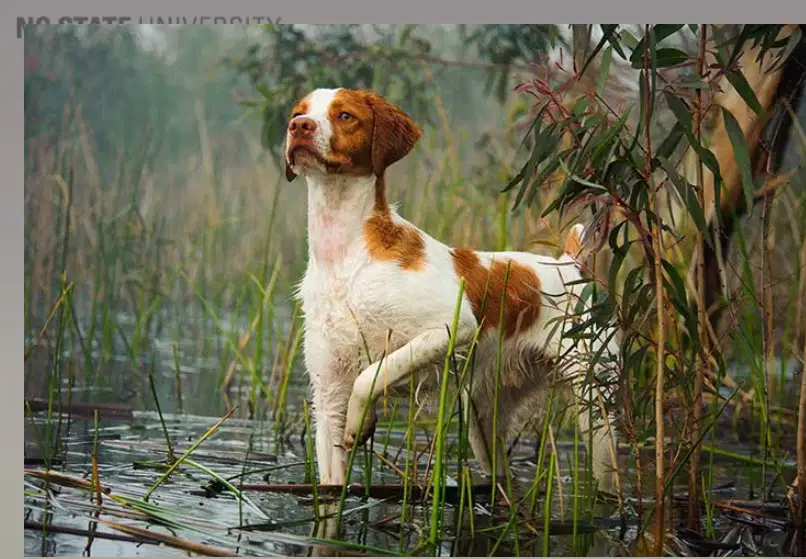
What is the name of the dog breed shown in the images?
Brittany
Beagle
Labrador Retriever
German Shepherd
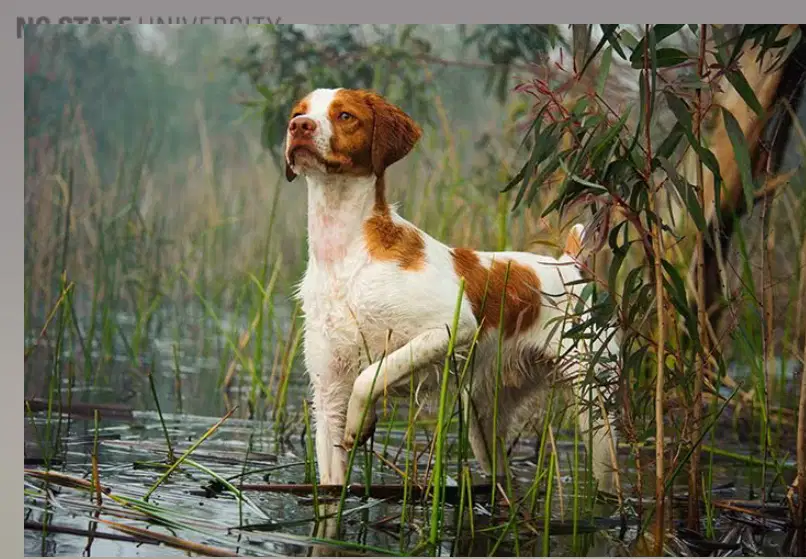
Which of the following best describes the typical environment where Brittany dogs are often found, as shown in the images?
Urban apartments
Outdoor fields and wetlands
Desert landscapes
Mountainous snow regions
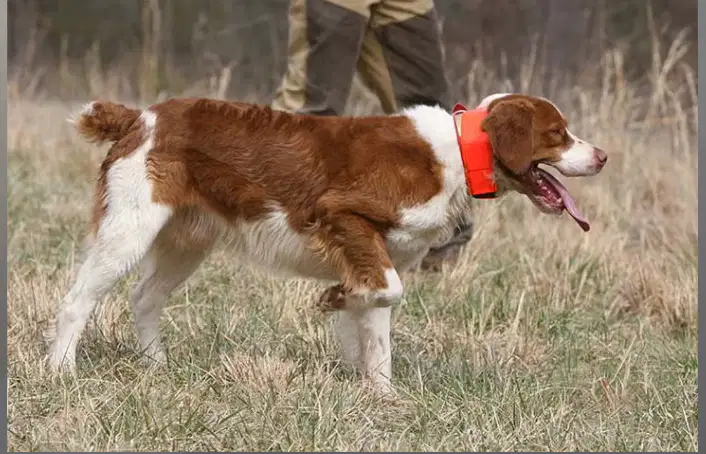
Based on the images, which activity are Brittany dogs most likely suited for?
Herding sheep
Hunting and retrieving
Guarding property
Performing tricks in a circus
What country is the Brittany dog breed originally from?
France
Germany
Spain
Italy
Which of the following best describes the Brittany breed’s natural abilities?
They are natural pointers and excellent retrievers
They are natural swimmers and climbers
They are natural guard dogs and herders
They are natural runners and jumpers
What is the typical height range at the withers for a Brittany dog?
10-15 inches
17.5-20.5 inches
22-25 inches
25-30 inches
How much does a typical Brittany dog weigh?
10-20 lb
20-30 lb
30-40 lb
40-50 lb
Why might Brittany dogs be considered good hunting companions? (DoK Level 2)
Because they are small and quiet
Because they are natural pointers and excellent retrievers
Because they are aggressive and territorial
Because they are fast runners
A family is looking for a dog that requires minimal grooming time each day. Would a Brittany be a suitable choice? Explain your reasoning. (DoK Level 3)
Yes, because they require only a few minutes of brushing/grooming each day
No, because they require hours of grooming daily
No, because they shed excessively
Yes, because they do not need any grooming
What is a common temperament trait of Brittany dogs?
Aggressive and territorial
Very friendly and love people
Shy and fearful of strangers
Independent and aloof
Which of the following best describes the trainability of Brittany dogs?
Difficult to train and stubborn
Easily trained and submissive
Only trainable with professional help
Not interested in pleasing their owners
What is the typical length of a Brittany dog's tail if it is not docked?
More than 6 inches
About 10 inches
Less than 4 inches
Exactly 5 inches
Why should the hips of Brittany dogs be tested?
To check for allergies
To ensure they can compete in shows
To monitor for potential health issues
To determine their coat color
Which health issues are sometimes reported in Brittany dogs?
Diabetes and blindness
Allergies and seizures
Heartworm and fleas
Obesity and arthritis
A Brittany dog is described as “max quality – min size.” What does this phrase most likely mean in the context of the breed?
The breed is known for being very large and high quality
The breed is valued for high quality traits in a smaller size
The breed is only suitable for small apartments
The breed is not considered high quality
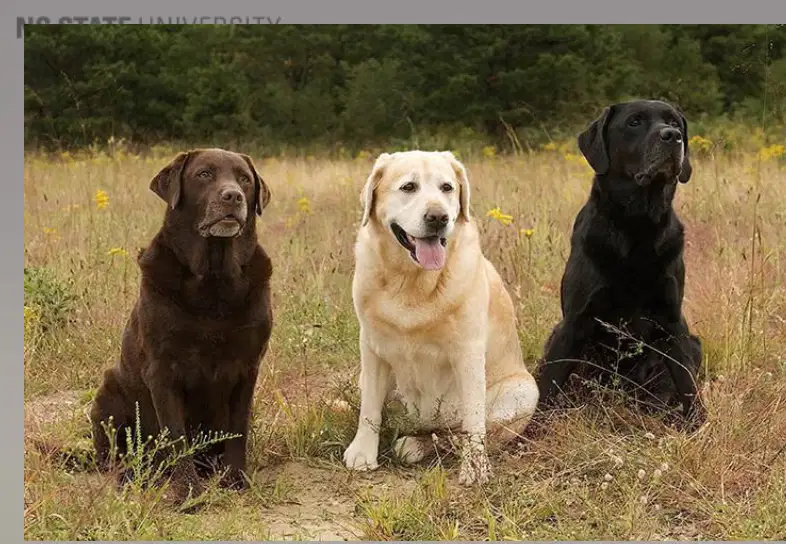
What breed of dog is shown in the images on the page?
Labrador Retriever
German Shepherd
Golden Retriever
Beagle
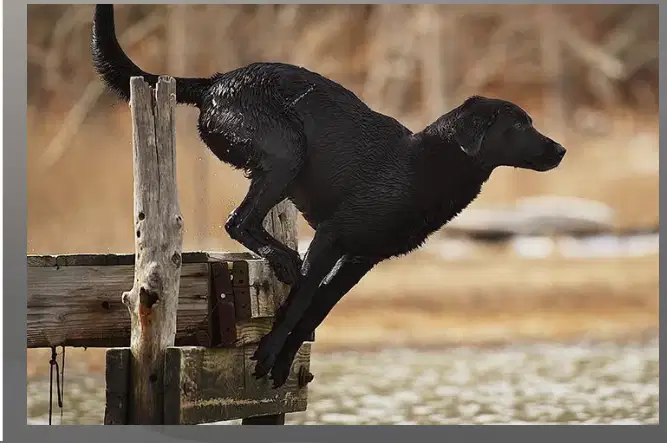
Which of the following is a characteristic activity often associated with Labrador Retrievers, as shown in the images?
Herding sheep
Jumping into water
Climbing trees
Flying
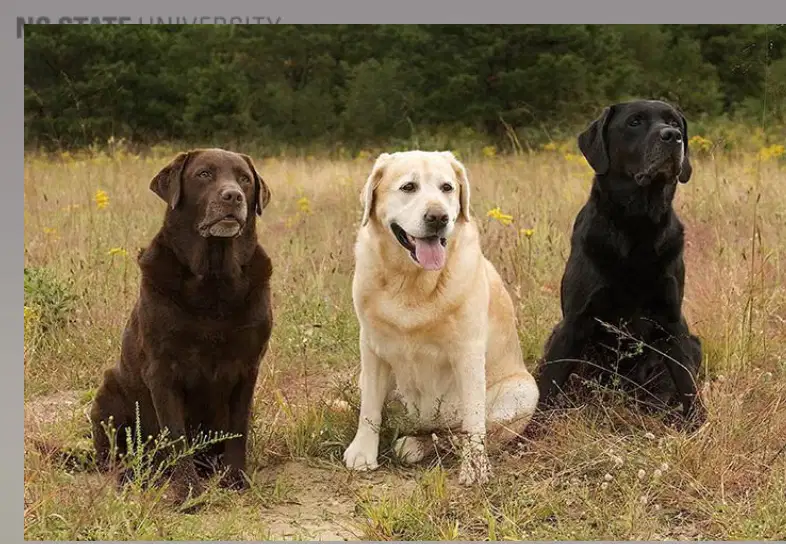
Based on the images, which color is NOT shown as a typical coat color for Labrador Retrievers?
Chocolate
Yellow
Black
Blue
What is a distinctive feature of the Labrador Retriever's tail that helps it function as a retrieving gun dog?
Curly tail
Otter tail
Feathered tail
Docked tail
Where did the Labrador Retriever originate?
England
Newfoundland
Australia
Scotland
What is the typical life expectancy (LE) of a Labrador Retriever?
5-8 years
8-10 years
12-15 years
16-20 years
Which of the following is NOT a common color for Labrador Retrievers?
Black
Chocolate
Yellow
White
Labrador Retrievers have been the #1 breed for how many years?
10 years
20 years
31 years
50 years
Explain how the physical characteristics of the Labrador Retriever, such as its coat and tail, contribute to its effectiveness as a retrieving gun dog.
The short, water-resistant coat and otter tail help the dog swim and retrieve objects efficiently.
The long, fluffy coat and curled tail keep the dog warm in cold climates.
The spotted coat and bushy tail make the dog more visible in the field.
The thin coat and straight tail help the dog run faster on land.
Which of the following best describes the temperament of a Labrador Retriever?
Aggressive and stubborn
Gentle, intelligent, and adaptable
Shy and fearful
Aloof and independent
For which of the following purposes is the Labrador Retriever considered a prime breed?
Hunting only
Guide and rescue work
Herding livestock
Police attack dog
Which of the following health problems is NOT commonly associated with Labrador Retrievers?
Hip dysplasia
Gastric torsion
Cataracts
Diabetes
A family is looking for a pet that is eager to please, non-aggressive, and adaptable. Based on these traits, why might a Labrador Retriever be a suitable choice?
Because they are known for being aggressive guard dogs
Because their temperament makes them great family pets
Because they require little exercise and attention
Because they are difficult to train
If a Labrador Retriever is showing signs of hip dysplasia, what might be a possible reason based on common breed health issues?
It is a rare and unusual condition for this breed
It is a common health problem for Labrador Retrievers
It is only seen in older dogs of other breeds
It is caused by their intelligence
Which of the following characteristics best describes a Field lab (American Labrador)?
Shorter, more brachycephalic head, sloped back
Longer head, straighter back; bred for function in the field
Curly fur and small ears
Large paws and bushy tail
What is a distinguishing feature of Show labs (English Labradors) compared to Field labs?
Longer head and straighter back
Shorter and more brachycephalic head, sloped back
Curly tail and pointed ears
Larger size and longer fur
Based on the information provided, why might breeders select for a straighter back in American Labradors?
To improve their appearance in dog shows
To enhance their function in the field
To make them more suitable as pets
To increase their lifespan

Which type of Labrador Retriever is shown on the left side of the diagram?
English Labrador
Show lab
American Labrador
Miniature Labrador
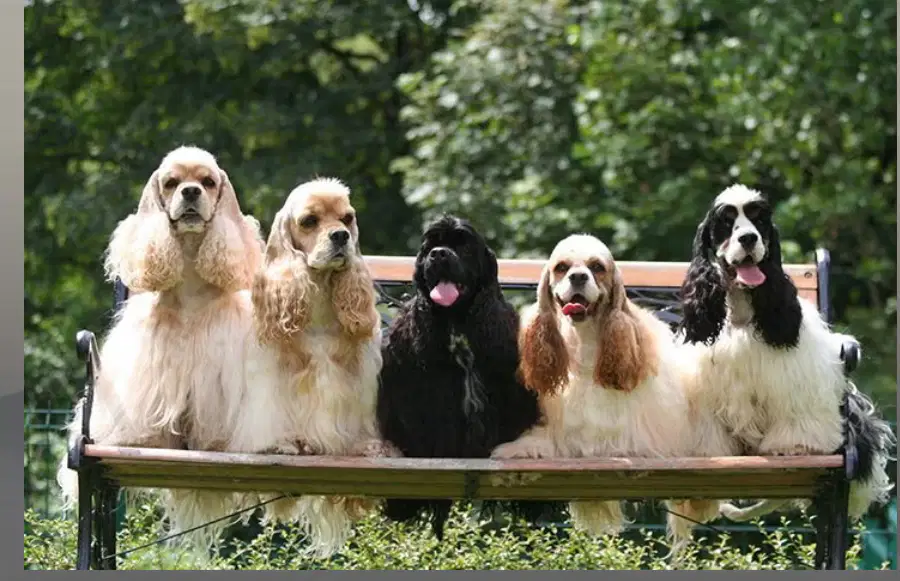
What breed of dog is shown in the images?
Cocker Spaniel
Golden Retriever
Poodle
Beagle
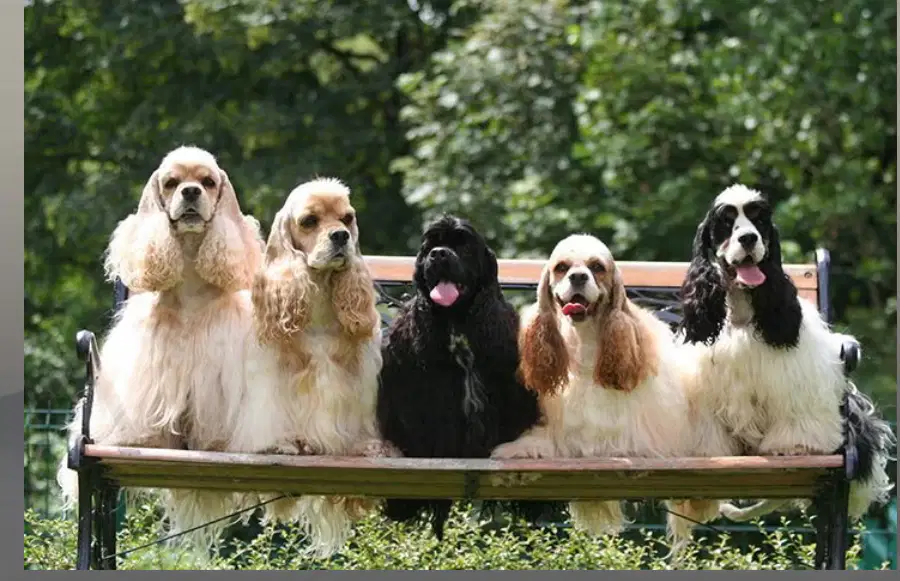
Which of the following is a characteristic feature of the Cocker Spaniel breed as seen in the images?
Short, straight fur and pointed ears
Long, wavy fur and floppy ears
Curly fur and upright ears
Short, wiry fur and docked tail
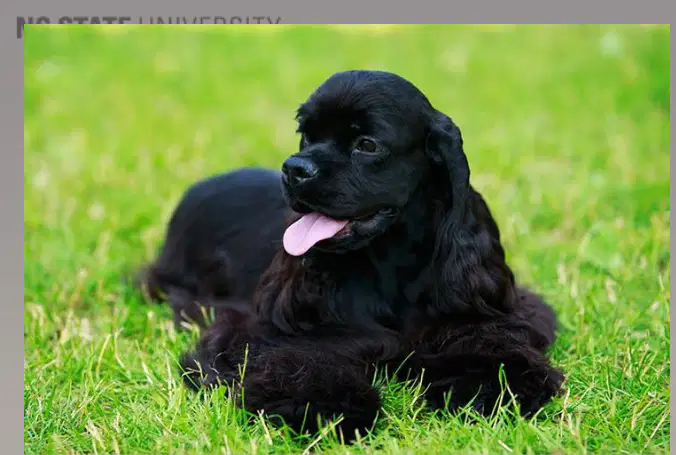
Based on the images, which environment do Cocker Spaniels seem to enjoy?
Desert
Snowy mountains
Grassy outdoor areas
Rocky cliffs
What was the original purpose for developing the Cocker Spaniel breed?
Bird hunting
Herding cattle
Guarding property
Racing
How many breed standard color options are there for the Cocker Spaniel, not including the additional colors that can be registered but not shown?
15
7
10
20
Which of the following best describes the typical coat of a Cocker Spaniel shown in competitions?
Floor-length, long silky double coat
Short, wiry single coat
Curly, medium-length coat
Thick, woolly undercoat
What is the average weight range for a Cocker Spaniel according to breed standards?
20-30 lb
10-20 lb
30-40 lb
40-50 lb
A dog breed is described as having a height at withers of 13.5-15.5 inches, a weight of 20-30 lb, and a life expectancy of 10-14 years. Which breed is this most likely to be?
Cocker Spaniel
German Shepherd
Great Dane
Chihuahua
If a Cocker Spaniel is to be shown in competitions, what is a key requirement for its coat?
It must be floor-length and well-maintained
It must be trimmed short
It must be naturally curly
It must be dyed a specific color
Why might owning a Cocker Spaniel require a significant investment of time for grooming?
Because of its long silky double coat
Because it sheds very little
Because it has a short, easy-care coat
Because it is hairless
Where was the Cocker Spaniel likely developed, according to the provided information?
England
Spain
France
Germany
Which health issues are Cocker Spaniels predisposed to?
Diabetes and heart disease
Hepatitis, some types of anemia, and bone and joint issues
Asthma and kidney stones
Obesity and dental problems
How is coat maintenance in Cocker Spaniels related to their health?
It is only for aesthetic purposes
It is strongly associated with skin and coat health and is affected by some allergies
It prevents obesity
It is unrelated to their health
A Cocker Spaniel is showing signs of cherry eye and frequent skin issues. Based on the information provided, what should be a primary concern for the owner?
The dog needs more exercise
The dog may have allergies affecting its skin and coat health
The dog is not eating enough
The dog needs more socialization
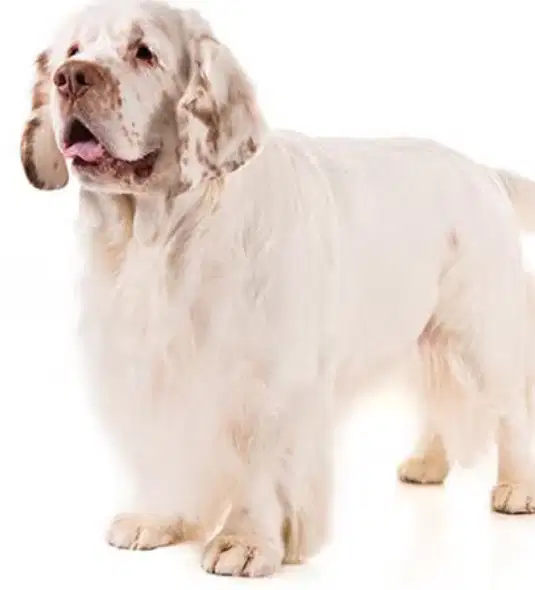
What breed of dog is shown in the images on the page?
Clumber Spaniel
Golden Retriever
Beagle
Dachshund
Which of the following best describes the Clumber Spaniel's appearance compared to typical dogs?
Legs appear much shorter due to grooming and limb shortening with breeding
Legs appear much longer due to selective breeding
Body is more circular than rectangular
Has a curly coat that makes it look taller
What is the typical behavior of a Clumber Spaniel regarding barking?
Barks frequently at strangers and noises
Only barks to alert others and is otherwise very quiet
Never barks under any circumstances
Barks constantly when left alone
What is the average life expectancy (LE) of a Clumber Spaniel?
5-7 years
8-9 years
10-12 years
13-15 years
Which of the following is true about the grooming needs of the Clumber Spaniel compared to other spaniel breeds?
Requires more grooming than most spaniel breeds
Is less of a grooming concern than most spaniel breeds
Needs daily professional grooming
Has no grooming needs at all
What is the only acceptable registration and show color for a Clumber Spaniel?
Black with white spots
Brown with tan markings
White with lemon to orange markings
Solid gray
A breeder is preparing a Clumber Spaniel for a dog show. Which of the following characteristics should they focus on to ensure the dog meets breed standards? (Select the best answer.)
Ensuring the dog is white with lemon to orange markings and has a rectangular body shape
Dyeing the coat black and trimming the legs to appear longer
Training the dog to bark frequently
Shaving the coat to remove all markings
Which of the following best describes the temperament of the Clumber Spaniel?
Aggressive and independent
Very gentle and easygoing, with an innate desire to please
Highly energetic and difficult to train
Shy and fearful around people
For what activities is the Clumber Spaniel especially known?
Herding cattle and sheep
Scentwork and excelling with bird hunting
Guarding property
Performing tricks in circuses
Which of the following is a health concern commonly found in Clumber Spaniels?
Diabetes
Hyperthyroidism
Cataracts
Epilepsy
Why is the Clumber Spaniel’s sturdy frame and musculature important?
It helps them swim long distances
It allows them to power through high grass in pursuit of game
It makes them better at climbing trees
It helps them run faster than other breeds
Which class of drugs should NOT be used to treat Clumber Spaniels?
Penicillin-class drugs
Sulfa-class drugs
Tetracycline-class drugs
Macrolide-class drugs
A veterinarian is treating a Clumber Spaniel puppy with hip dysplasia. Which additional health concern should the vet be aware of in this breed?
Eosinophilic panosteitis
Heartworm disease
Parvovirus
Kennel cough
A royal family is looking for a dignified hunting companion known for scentwork. Which breed would be most suitable based on the information provided?
Beagle
Clumber Spaniel
Greyhound
Poodle

