
Font size
 Worksheets
Ch. 3 Part II: Tissues
Total questions: 76
Worksheet time: 41mins
What is the most abundant EPITHELIAL tissue in the body?
Eccrine
Stratified squamous
Simple squoamous
Stratified columnar

True of False: The APICAL end of epithelial tissue is DIRECTLY connected to the BASEMENT membrane.
True!
False!
True or False: There is NO HAIR on the palms of your hands and soles of your feet!
True! (Look at your palm please)
False!
Simple squamous is known as simple...
SQUISHY because it's SQUISHED/flattened to allow the passage of materials by diffusion and filtration such as in your alveoili
SAND because it looks like a grain of sand
SALIVA because it has the capability to salivate
GYRUS because it circulates
What is the most abundant and widely distributed TISSUE TYPE?
Epithelial Tissue
Muscle Tissue
Connective Tissue
Nervous Tissue
Glands that secrete their products DIRECTLY into the blood are part of the ___________ system?
Apocrine
Exocrine
Endocrine
Extrovert
Ground substance is the structural element of the extracellular matrix made up of:
Interstitial fluid
Adhesion proteins ("glue")
Proteoglycans
Glucose
What is the STRONGEST and most ABUNDANT type of protein fiber found in the structural elements of the extracellular matrix of the connective tissue?
Elastic
Collagen
Reticular
Fibular
Select all the protein fibers which make up the structural elements of the extracellular matrix along with the ground substance
Collagen (strength)
Elastic (recoil)
Retricular
"Cytes" are mature cells
True
False
"Blasts" are mitotically active & secretory cells
False
True
The filler material between other tissues is:
Areolar connective tissue
Muscle connective tissue
Simple squamous epithelial tissue
Tendon
Which of the following are voluntary?
Skeletal muscle
Smooth muscle
Glands
Cardiac muscle
Which type of tissue would be used to create a structure that can deform under mechanical stretch but can go back to its original shape?
Reticular
Hyaline
Elastic
Stretchy
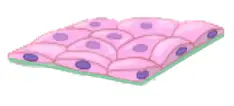
What is the function of this tissue?
Diffusion & filtration
Secretion & excretion
Spinning
Protection
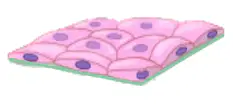
Location?
Ducts & tubules of kidneys
Mucus lining in respiratory system
Lining of heart, blood vessels, and lymphatic
Sweat & mammary glands
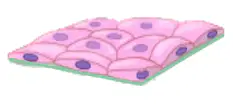
What cell is it?
Simple squamous
Stratified squamous
Simple cuboidal
Stratified cuboidal
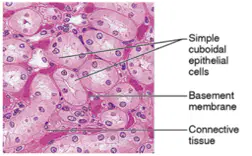
What cell is it?
Simple Squamous
Simple Columnar
Stratified Columnar
Simple Cuboidal
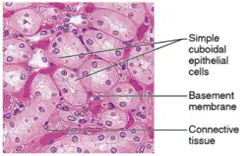
Function of this cell?
Secretion & absorption
Diffusion & filtration
Dancing
Protecting against mechanical stress
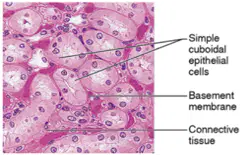
Location of this cell? Where would I find it in the body?
Sweat & mammary glands
Frontal lobe
Ducts & tubules of kidenys
Parietal lobe
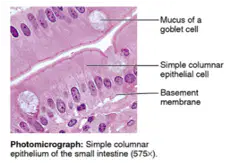
What cell is this?
Stratified Columnar
Simple Epithelial
Simple Columnar
Simple Squamous
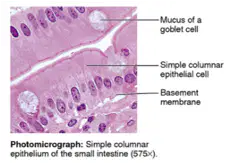
Function of this cell?
Stretching
Diffusion & filtration
Secretion & absorption
Protecting against intruders
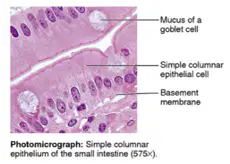
Where would I find this cell?
Sweat & mammary glands
Mucus lining in the respiratory system
Urinary organs
Epididymis
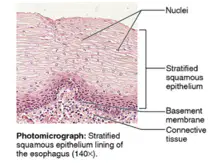
What cell is this?
Simple Squamous
Stratified Squamous
Stratified Squalor
Simple Squishy

Function/what it does?
Secretion & absorption
Diffusion & filtration
Stretching
Protects against mechanical stress
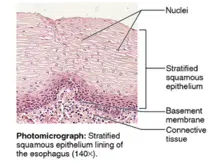
Where do I find this cell?
Keratinized = epidermis
Non-keratinized = lining of esophagus, mouth, & vagina
Keratinized = hypodermis
Non-keratinized = lining of male urethra
Keratinized = papillary layer of dermis
Non-keratinized = your least favorite friend
Keratinized = Endothelial layer of the bla bla bla
Non-keratinized = January
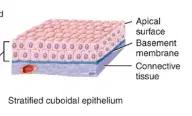
What cell is this?
Stratified Squamous
Simple Transitional
Stratified Cuboidal
Pseudostratified

Where is this cell?
Tummy
Freudian slip
Sweat & mammary glands
Pharynx, male urethra, & gland linings
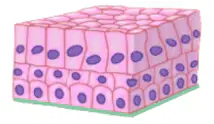
What cell is this?
Stratified Columnar
Simple Columnar
Stratified Endocrine
Stratified Cuboidal
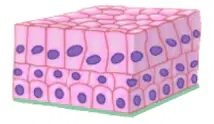
Where is this cell?
Epidymis
Pharynx, male urethra, & gland linings
Mucus lining in respiratory system
Ducts & tubules of kidneys
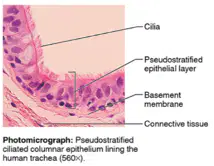
What cell is this?
Stratified Columnar
Stratified Columnar
Pseudostratified
Stratified Glandular
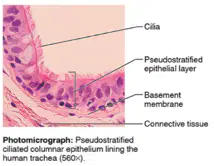
Function of this cell?
Stretches
Dances
Diffusion & filtration
Excretion & absorption
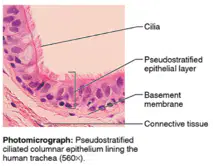
Where is this cell?
Bladder
Mucus lining in respiratory
Epidimys & male urethra
Heart, blood vessels, & lymphatic vessels lining
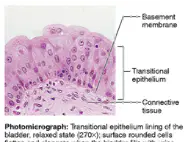
What is this cell?
Stratified Columnar
Stratified Cuboidal
Pseudostratified
Transitional
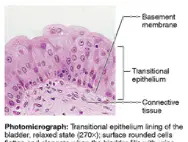
Function of this cell?
Stretches
Dances
Exercises
Secretion & absorption
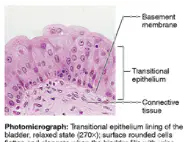
Where would I find this cell?
Behind the eyes
Urinary organs
Sweat & mammary glands
Mucus lining in respiratory system
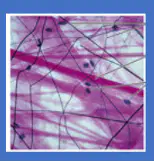
What is this tissue?
Areolar loose from connective proper
Dense irregular
Fibrocartilage
Elastic

What tissue is this?
Dense irregular
Areolar loose
Adipose loose
Reticular
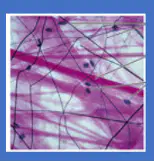
What is this cell?
Gel-like matrix of 3 fiber types (collage, elastic, & reticular) that wraps & cushions organs
Nutrient storage insulation fat cell
A mystery honestly
Invisible/transparent
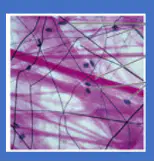
Where is this cell?
Kidney # 1
Male urethra
Embryonic skeleton
Under epithelia in papillary layer of dermis

What is this cell?
Fat that is nutrient storage, insulates against heat loss, and supports + protects organs
Withstands stress in MULTIPLE directions
Marshmallow
Allows recoil of tissue after stretching
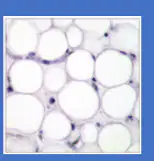
Where is this cell?
Epidermis
Dermis
Hypodermis
Hyperdermis
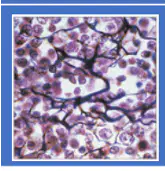
What cell is this?
Adipose loose
Reticular loose
Dense regular
Dense irregular
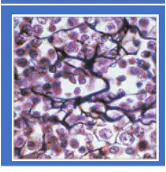
What is this cell/what does it do?
Withstands stress in multiple directions
Creates a soft, internal skeleton (stroma) that supports other cell types
Beautiful no matter what the other cells think
Withstands stress when pulled in ONE direction

Where is this cell found?
Where X marks the spot
Lymphoid organs like the lymph nodes, bone marrow, & spleen
Male urethra
Hypodermis
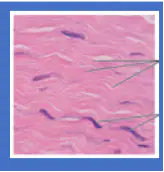
Who is this?
My great-aunt three times removed
Elastic connective proper tissue
Dense irregular connective proper tissue
Dense regular connective proper tissue
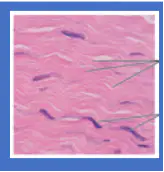
What is this cell's function?
Withstands stress when pulled in ONE direction because it's made of collagen fibers
Withstands stress when pulled in MULTIPLE directions because it's made of collagen fibers
To be happy
To allow recoil of tissue after stretching because it's made of elastic

Where is this cell found?
In the body duh!
In tendons (muscle to bone) BUT NOT ligaments (bone to bone)
In tendons (muscle to bone) and ligaments (bone to bone)
In the walls of large arteries
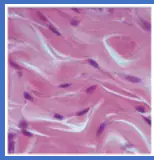
What cell is this?
Dense liar
Reticular loose
Dense regular
Dense irregular
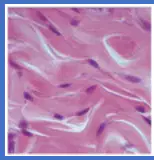
What is this cell's function?
Withstands stress in ONE direction because it's made with more elastic fibers
Withstands stress in MULTIPLE directions because it's made with more elastic fibers
It's still figuring out
To insulate organs
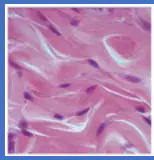
Where is this cell found?
Bladder
Lymphoid organs
Fibrous capsules of joints & organs
Somewhere
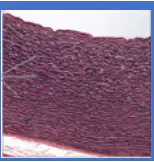
What connective proper tissue is this?
Areolar loose
Cell phone
Trick question that's elastic CARTILAGE!
Elastic
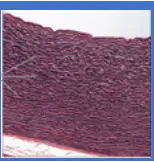
What is this connective proper tissue's FUNCTION?
Allows recoil of tissue after stretching
To be one with the other cells in its block
Jump up and down and move it all around
Withstand force in ONE direction

Where can this tissue be found?
It can't. It just can't.
Walls of large arteries
Everywhere.
In blood vessels and lymph vessels
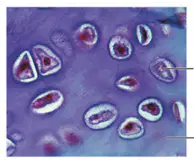
What is this connective cartilage?
Hyaline
Elastic
Fibrocartilage
TRICK QUESTION that's dense irregular connective tissue proper!
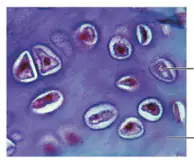
What is this cartilage made of?
Faith, trust, and pixie dust
Chondrocytes (mature) & chondroblasts (immature) which make up fibers that are not visible in the extracellular matrix and are avascular
A gel-like matrix with all 3 fibers (collagen, reticular, elastic)
Fat
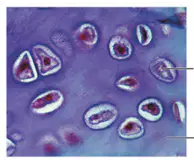
Where can I find this cartilage?
Embryonic skeleton
Ends of mature, long bones
Ribs (costal)
Nose
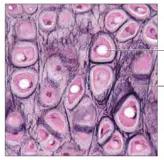
What is this connective cartilage?
Hyaline
Elastic
Fibrocartilage
TRICK QUESTION that's elastic CONNECTIVE TISSUE PROPER!
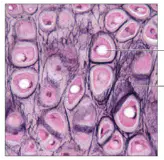
Function of this cartilage?
It's the middle-child glue of its family
Absorbs shock & withstands compression
Withstands stress in MULTIPLE directions
Maintains shape while providing flexibility

Where can I find this cartilage?
Embryonic Skeleton
External Ear
Epiglottis
Eyes (behind them)
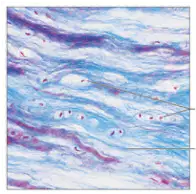
What connective cartilage is this?
The pretty AND smart one
Hyaline
Elastic
Fibrocartilage
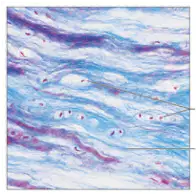
What is the function of this fibrocartilage?
Absorbs shock & withstands compression because it has thick collagen fibers for strength
Maintains shape while providing flexibility because it has elastic fibers for recoil
To get through the day like the rest of us.
Withstands force in ONE direction
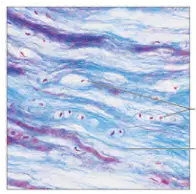
Where can I find this cartilage?
Embryonic skeleton
Intervertebral discs
Pubic symphysis
Meniscus
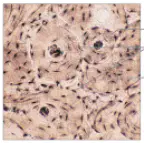
What connective tissue is this?
Bone
Blood
Cartilage
Connective Tissue Proper

What is the function of this connective tissue?
Looking cool
Maintains shape while providing flexibility & elasticity
Calcium homeostasis & protection & structure
Allows recoil of tissue after stretching

What connective tissue is this?
Bone
Blood
Connective Tissue Proper
Cartilage
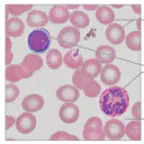
What is the function of this connective tissue?
Transport of nutrients & oxygen
Removal of carbon dioxide & waste products
Withstands compression for recoil
Insulates
What is the only voluntary muscle tissue?
Skeletal
Cardiac
Smooth
Epithelial tissues =
Avascular = no blood vessels but YES there are nerves
Defined by their cell
No extracellular matrix
Connective tissue = binds, supports, protects, inusulates, & transports
Muscle tissue = contracts & causes movements
Nervous tissue = brain, spinal cord, & nerves
d

Which of the following muscle tissues are striated?
Skeletal
Smooth
Cardiac

Which of the following muscle tissues are voluntary?
Skeletal
Smooth
Cardiac

Which of the following muscle tissues are INVOLUNTARY?
Skeletal
Smooth
Cardiac
Which of the following muscle tissues are INVOLUNTARY *AND* STRIATED?
Skeletal
Smooth
Cardiac
The most important UNICELLULAR exocrine gland is:
Goblet cell
Eccrine cell
Demosomes
Sebaceous cell
Which of the following is NOT a class of Connective Tissue?
Connective Tissue Proper
Cartilage
Bone Tissue
Blood
Epithelial
Which of the following make up the Extracellular Matrix:
Ground Substance (how the solutes diffuse = interstitial fluid, adhesion proteins "glue", proteoglycans)
Lipids
Protein Fibers (collagen, elastic, reticular)
Elmer's glue

