
 Worksheets
History of Manufacturing
Total questions: 65
Worksheet time: 33mins

What was the primary method of training for artisans before the 1700s?
University education
Online courses
Apprenticeship
Self-study
What system protected the privileges and trade secrets of urban artisans before the 1700s?
The guild system
The corporate system
The educational system
The legal system

How was production typically carried out before the 1700s?
Mass production
Assembly line
One item at a time
Automated processes

What invention did Eli Whitney improve to process cotton much faster?
Spinning jenny
Power loom
Cotton gin
Steam engine
Which concept did Eli Whitney popularize and improve while mass-producing muskets?
Assembly line
Interchangeable parts
Automation
Robotics

Eli Whitney was involved in the development of which early machine?
Lathe
Milling machine
Drill press
Printing press

What is the concept of "Interchangeable Parts" primarily associated with?
Unique, custom-made components
Identical components that can be easily replaced
Parts that require specialized tools for assembly
Components that are not meant to be replaced
Who pioneered the assembly line in modern manufacturing?
Thomas Edison
Nikola Tesla
Henry Ford
Alexander Graham Bell
What was a significant result of Henry Ford's introduction of the assembly line?
Decrease in production costs
Increase in production efficiency
Increase in product prices
Decrease in worker safety
How did Henry Ford change the car manufacturing process?
By using only skilled workers
By breaking down the process into smaller tasks
By increasing the number of parts
By reducing the number of workers

What was notable about the Model T introduced in 1908?
It was the first horseless carriage ever
It was the first car to have a gasoline engine
It was the first low-priced, mass-produced automobile with standard, interchangeable parts
It was the first car to have air conditioning

What innovation is Henry Ford most famous for in the manufacturing industry?
The invention of the automobile
The development of the assembly line
The creation of electric cars
The introduction of the steam engine
In what year was the Toyota Motor Company established?
1933
1935
1937
1940
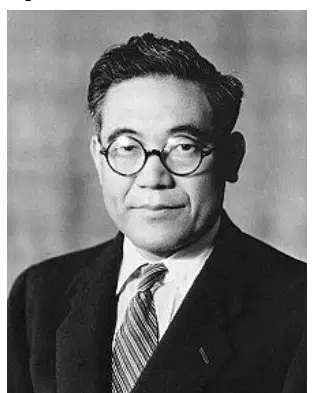
Who established an automobile department in his father’s Toyoda Automatic Loom company in 1933?
Akio Toyoda
Kiichiro Toyoda
Eiji Toyoda
Shoichiro Toyoda
Which of the following is a manufacturing technique developed by Toyota?
Six Sigma
Total Quality Management
Kaizen
Agile Manufacturing
What is one of the business philosophies developed by Toyota?
Just in Time Manufacturing
Mass Production
Total Productive Maintenance
Continuous Flow
What does the Japanese word "Kaizen" mean?
Good change
Quick change
Radical change
Temporary change
Which of the following best describes the concept of Kaizen?
One-time radical revolution
Continuous improvement in small bits
Sudden and complete overhaul
Isolated improvement by management

Who is involved in the process of Kaizen within a company?
Only the management
Only the employees
All employees
Only external consultants
What is the main principle of Just In Time (JIT) production?
Products are made based on predictions of demand.
Products are made only when customers request them.
Products are made in large quantities to reduce costs.
Products are made and stored in advance.
Which of the following is a pro of Just In Time (JIT) production?
Increases storage costs.
Reduces storage costs.
Requires large storage spaces.
Increases the risk of obsolete materials.

What is a potential con of Just In Time (JIT) production?
Excessive inventory.
Delays due to supplier issues.
High storage costs.
Overproduction.
What is the primary goal of Lean Manufacturing?
Increase production speed
Systematic elimination of waste
Maximize employee workload
Increase product variety

Which of the following is NOT considered a waste in Lean Manufacturing?
Transport
Innovation
Motion
Waiting
In Lean Manufacturing, what should be done with processes that do not add value?
Expand them
Ignore them
Reduce or eliminate them
Automate them
What is the primary goal of Lean Manufacturing?
Increase production speed
Systematic elimination of waste
Enhance product design
Improve employee satisfaction
In Lean Manufacturing, what is considered 'value'?
Any cost-saving measure
What a customer is willing to pay more for
Any feature of a product
The speed of production
What is defined as 'waste' in Lean Manufacturing?
Excessive production
Anything that does not add value
High employee turnover
Long production hours
Which of the following is a key benefit of implementing Lean Manufacturing?
Longer lead times
Higher production costs
Improved efficiency
Increased waste
Who is credited with developing the concept of 'Just In Time' (JIT) production?
Kiichiro Toyoda
Eli Whitney
Frederick Taylor
Henry Ford
What is the main purpose of using interchangeable parts in manufacturing?
To make each product unique
To simplify repairs and assembly
To reduce product quality
To increase manual labor
What is considered the primary "enemy" that businesses should focus on eliminating to improve their processes?
Competitors
Coworkers
Waste
Customers
In the context of Lean Manufacturing, what defines "value" from a customer's perspective?
The effort put into production
Whatever the customer is willing to pay for
The cost of the raw materials
The time it takes to deliver the product
What percentage of a typical process is generally considered to be "waste" in Lean Manufacturing?
10%
50%
75%
90%
Which of the following is NOT one of the eight wastes identified in Lean Manufacturing, as represented by the DOWNTIME acronym?
Defects
Overprocessing
Marketing
Waiting
Which of the following is NOT one of the deadly wastes in lean manufacturing?
Overproduction
Overstaffing
Defects
Waiting
Which of the following is NOT one of the 8 wastes of Lean?
Overproduction
Transportation
Innovation
Waiting
What does the waste "Defects" refer to in Lean?
Producing more than needed
Errors that require rework or correction
Unnecessary movement of people
Excess inventory
Which waste is associated with making more products than are needed by the next process or customer?
Overproduction
Motion
Inventory
Waiting
In Lean, what does the waste "Motion" refer to?
Unnecessary movement of people or equipment
Excess products in storage
Waiting for materials
Producing defective items
Which of the following best describes the waste of "Inventory" in Lean?
Storing more materials or products than necessary
Moving products between locations
Waiting for instructions
Repeating the same task
What is the main focus of Lean methodology?
Increasing the number of employees
Reducing waste and improving efficiency
Expanding product lines
Increasing inventory
Which waste involves unnecessary steps in a process that do not add value?
Overprocessing
Waiting
Defects
Motion
Which of the following is an example of the waste "Waiting"?
Employees searching for tools
Machines sitting idle due to lack of materials
Producing more than needed
Storing excess products
If a worker spends extra time searching for a tool, which type of waste does this represent?
Motion
Inventory
Overproduction
Defects
A company produces 1,000 units of a product, but only 700 are needed by the customer. Which waste is this an example of?
Waiting
Overproduction
Defects
Transportation
A factory stores large amounts of raw materials "just in case" they are needed. Which Lean waste does this illustrate?
Inventory
Overprocessing
Motion
Waiting
If a product is moved from one department to another multiple times before completion, which waste is being demonstrated?
Transportation
Defects
Overproduction
Waiting
A worker double-checks every item even though the process is already automated and reliable. What type of waste is this?
Overprocessing
Inventory
Motion
Defects
A customer receives a product that does not meet their requirements and must be returned. Which waste does this situation represent?
Defects
Waiting
Motion
Overproduction
A team spends time waiting for approval before starting the next step in a process. Which waste is this?
Waiting
Overproduction
Inventory
Transportation
A company has several employees performing the same task, even though one person could do it efficiently. Which waste is this?
Underutilized Talent
Overproduction
Defects
Inventory
A manager wants to reduce the waste of "Transportation" in their factory. Which strategy would be most effective?
Rearranging the layout to minimize movement between workstations
Increasing the number of products produced
Hiring more workers
Storing more materials
If a company identifies that employees are frequently idle due to machine breakdowns, what Lean tool or approach could they use to address this waste?
Implement preventive maintenance schedules
Increase inventory levels
Add more steps to the process
Reduce the number of employees
A business notices that it is producing many defective products, leading to rework and customer complaints. What should the company do to strategically address this waste?
Analyze the root causes of defects and improve quality control processes
Increase production speed
Store more finished goods
Hire more workers
A company wants to reduce the waste of "Overprocessing." Which of the following actions would be most effective?
Standardize work procedures to eliminate unnecessary steps
Increase the number of inspections
Store more raw materials
Move products more frequently between departments
Which Lean waste is demonstrated when employees must walk long distances to retrieve materials or tools?
Defects
Inventory
Overproduction
Motion
A company finds that it is performing extra polishing on products that customers do not require. What type of waste is this?
Overprocessing
Transportation
Inventory
Waiting
Which action would help reduce the waste of "Inventory" in a manufacturing process?
Increasing the number of inspections
Hiring additional workers
Implementing just-in-time delivery of materials
Adding more storage space
In which industry did Lean Six Sigma first get its start?
Healthcare
IT and Telecommunications
Electronic Manufacturing
Military
Lean Six Sigma is a versatile methodology applicable across which range of sectors?
Only manufacturing and production industries.
Primarily IT and telecommunications.
A wide range of industries including IT, healthcare, sales, finance, and military.
Exclusively for small businesses.
What is the primary objective of the Lean Six Sigma methodology?
To increase customer benefits
To maximize company profits
To reduce defects in processes
To streamline existing systems
In Lean Six Sigma, what does the term 'Sigma' primarily refer to?
The total number of operations performed
Deviations from an ideal level of operations
The average success rate of a project
The number of employees in a team
What is the approximate number of defects per million opportunities at a Sigma 6 level?
691,000
66,800
233
3.4
How does a Lean Six Sigma certification primarily help a manager?
It guarantees a higher salary regardless of performance.
It provides knowledge to identify and eliminate errors in business processes.
It focuses solely on increasing customer satisfaction.
It automates all decision-making processes.

