
NEW
Font size
 Worksheets
Bio - 1.1, 1.2, 1.3, 1.4
Total questions: 79
Worksheet time: 1hrs 19mins
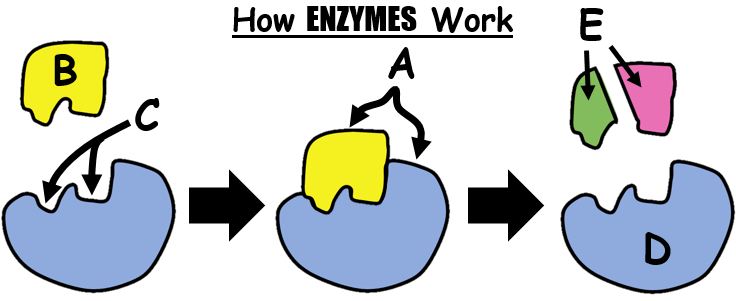
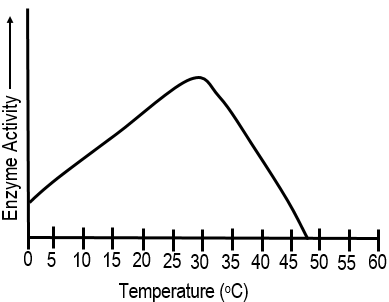
What happens to the reaction rate if an enzyme is denatured or nonfunctional?
No change in the reaction rate
Increase in reaction rate
Decrease in reaction rate
Decrease then increase in reaction rate
Which of the following would NOT denature an enzyme?
HIGH temperature
LOW pH
HIGH pH
LOW temperature
Which of the following can be used to determine the rate of an enzyme-catalyzed reaction?
The rate of substrate formed
The decrease in temperature in the system
The rate of enzyme used up
The rate of substrate used up

What is the cell's outer barrier that regulates what enters and leaves the cell?
cell wall
cytoskeleton
cytosol
cell membrane
What is the outer layer of a plant cell which is made up of cellulose polysaccharides?
cell wall
carbohydrates
cell membrane
cytoskeleton
Which membrane-bound organelle converts energy from the sun into chemical energy during photosynthesis?
ribosomes
cytosol
chloroplast
nucleolus
All of the contents within the cell except for the nucleus is also known as the...
cytoskeleton
cytosol
cytoplasm
mitochondria
What is the network of tiny tubes and filaments in the cytoplasm of the cell called?
cytoplasm
cytosol
cytoskeleton
cytosol
Which organelle resembles a flattened stack of membranes (kind of looks like pancakes) found next to the ER, near the nucleus?
Golgi apparatus
smooth endoplasmic reticulum
mitochondria
nucleus
Which organelle transports, modifies, sorts, and ships the products made by a cell?
lysosome
mitochondria
ribosome
Golgi apparatus
What's the digestive organelle which uses enzymes to break down molecules and cell junk?
mitochondria
ribosome
lysosome
nucleolus
Which organelle serves as the site of cellular respiration to make energy?
mitochondira
rough ER
smooth ER
Gogli apparatus
What's the name of the membrane-enclosed organelle with inner folds called christae?
rough ER
mitochondria
nucleus
nucleolus
The dark region in the nucleus where ribosomes are made.
nucleolus
nucleus
ribosome
vacuole
Which organelle contains the genetic material of a eukaryotic cell, as well as the nucleolus?
nucleus
nucleolus
cytoskeleton
rough ER
Which organelle works to bond amino acids together to make proteins?
ribosome
rough ER
smooth ER
nucleus
Which organelle ensures the proper folding of the proteins produced by ribosomes on its surface and makes cell membrane parts?
Golgi apparatus
smooth ER
rough ER
secretory vesicles
Which organelle has a function which varies depending on the cell type; could include synthesis of lipids, storage of Calcium, and detoxification?
smooth ER
rough ER
secretory vesicle
lysosome
Which membrane-bound organelle functions as storage? (tends to be quite large in plants)
vacuole
secretory vesicle
nucleolus
ribosome
Which organelles are tine membrane "packages" filled with cell products in need of transport throughout the cell?
vacuoles
secretory vesicles
ribosomes
Golgi apparatus
What are the two cell types?
Bacteria and Archaea
Prokaryotic and Eukaryotic
Rough ER and Smooth ER
Lipids and Proteins
What is a Prokaryotic Cell?
single-cell structures that lack a nucleus
multi-cell structure that lacks a nucleus
single-cell structure that has a nucleus
multi-cell structure that has a nucleus
What are the two categories of Prokaryotic Cells?
There is only one category
Plant and Animal
Bacteria and Archaea
Big and Small
What are Eukaryotic Cells?
Cells that contain a nucleus, membrane-bound organelles, and the basis of uni-cellular and multi-celled organisms
Cells that have a nucleus
Cells that do not have a membrane
Cells that have membrane-bound organelles

All of the following are Eukaryotic EXCEPT . . . .
animal cells
plant cells
fungi
bacteria
In which specimen were cells first identified?
cork bark
microorganism
All of the following are Eukaryotic EXCEPT . . . .
animal cells
plant cells
fungi
bacteria

Where is DNA found in a Eukaryotic cell?
in the nucleus
in the cell wall
in the vacuole
in the mitochondria
An organism that is made of a prokaryotic cell is called ....
mold
mushrooms
plants
bacteria

Which of the following is a characteristic of both eukaryotic and prokaryotic cells?
contains ribosomes
contains a nucleus
contains several membrane bound organelles
Carrie observes an electron micrograph of a cell during biology lab. The cell has a flagellum, ribosomes, cell wall, and no apparent nucleus. Which of the following is likely true of the cell that Carrie is observing?
The cell also contains mitochondria.
The presence of the organelles proves that the cell is eukaryotic.
The cell is a plant because of the cell wall.
The cell is prokaryotic.

Look at the cell organelles. Which of these organelles transports organic molecules that are responsible for providing structure and controlling cellular processes?
endoplasmic reticulum
mitochondria
ribosomes
Golgi apparatus
What are the small protein structures that unicellular organisms like the paramecium use as tiny paddles to swim around with?
cilia
pseudopodia
flagella
cytoskeleton
Which structure in the cell destroys invaders such as bacteria and viruses, while also helping with the digestion of food particles?
cell membrane
endoplasmic reticulum
Golgi apparatus
lysosomes

