Worksheets
A&P Exam 1
Total questions: 50
Worksheet time: 25mins
_______ is the study of the structure and shape of the body.
Biology
Physics
Physiology
Anatomy
The ability of the body to maintain a relatively stable internal environment is referred to as _______.
metabolism
homeostasis
equilibrium
negative feedback
Which body system is most closely associated with the support and protection of the body organs?
Endocrine
Nervous
Lymphatic
Skeletal
Which body system is most closely associated with transport and delivery?
Integumentary
Nervous
Cardiovascular
Respiratory
Which of the following statements regarding feedback mechanisms is FALSE?
Blood clotting is an example of a typical negative feedback mechanism.
Positive feedback mechanisms control infrequent events that occur "explosively."
In negative feedback mechanisms, the net effect of the responses to the stimulus is to shut off the original stimulus or reduce its intensity.
Positive feedback mechanisms tend to increase the original stimulus and to push the variable farther from its original value.
Metabolism is _______.
the ability to sense changes (stimuli) in the environment and then to react to them
the term that refers only to the process of breaking down ingested food into simple molecules that can then be absorbed into the blood for delivery to all body cells
a broad term that refers to all the chemical reactions that occur in the body
a term that refers to the chemical reactions in which large molecules are broken down into smaller ones
The _______ is the body's slow-acting control system and acts by means of _______.
nervous system; electrical and chemical signals
muscular system; contraction
endocrine system; hormones
nervous system; hormones
Place the following in correct sequence from simplest to most complex:
(1) Molecules; (2) Atoms; (3) Tissues; (4) Cells; (5) Organs
5-4-3-2-1
1-2-3-4-5
2-1-4-3-5
2-1-3-4-5
Which of the following is NOT a necessary life function?
Responsiveness
Thinking
Movement
Maintaining boundaries
Which of the following statements is FALSE?
An organ is made up of two or more tissue types.
Atoms are the building blocks of matter, and combine to form molecules.
Organ systems make up the living body or the organism.
The digestive system, reproductive system, and endocrine system are examples of organs.
What is the primary difference between negative and positive feedback mechanisms?
Negative feedback mechanisms stabilize physiological variables, while positive feedback mechanisms amplify a change.
Negative feedback mechanisms require energy, while positive feedback mechanisms do not.
Positive feedback mechanisms stabilize physiological variables, while negative feedback mechanisms amplify a change.
Negative feedback mechanisms are only found in humans, while positive feedback mechanisms occur in all animals.
A child feeding stimulates milk production which causes further feeding. This is a -
Negative Feedback Loop
Positive Feedback Loop
The four elements that make up about 96% of body matter are _______.
carbon, hydrogen, oxygen, and nitrogen
hydrogen, helium, nitrogen, and carbon
hydrogen, oxygen, calcium, and nitrogen
hydrogen, helium, carbon, and calcium
If neutral atoms become positive ions, they _______.
gain protons
lose electrons
gain neutrons
lose protons
Solution A has a pH of 4. Solution B has a pH of 13. Identify the correct statement.
Solution A is more basic than solution B (Solution B has more hydrogen ions).
Solution A is more acidic than solution B (Solution B has more hydrogen ions).
Solution A is more basic than solution B (Solution A has more hydrogen ions).
Solution A is more acidic than solution B (Solution A has more hydrogen ions).
Proteins are made up of many _______.
triglyceride molecules
fatty acid molecules
nucleotide molecules
amino acid molecules
The nucleus of an atom is the location of which kinds of subatomic particles?
Electrons and neutrons
Neutrons and protons
Electrons and protons
Protons only
Which of the following accurately describes enzymes?
They are lipoproteins.
They are consumed during chemical reactions.
They are organic catalysts.
They are major energy sources for the cell.
All of the following are true about the importance of water, an inorganic compound, in the body EXCEPT _______.
water absorbs and releases large amounts of heat before its temperature changes appreciably
water is an excellent solvent because it is nonpolar
water is an important reactant in some types of chemical reactions
water serves a protective function in the body
Energy that is in motion is _______.
energy found in a rock poised at the top of a hill
the energy stored in the bonds of chemical substances
potential energy
referred to as kinetic energy
Nucleotides, the building blocks of nucleic acids, are made up of _______.
a nitrogen-containing base and a phosphate group only
a nitrogen-containing base, a pentose sugar, and a phosphate group
a calcium-containing base, a pentose sugar, and a phosphate group
a nitrogen-containing base, any simple sugar, and a phosphate group
The atomic number identifies the element and refers to the number of _______.
neutrons
protons
neutrons and protons in the nucleus
molecules
The function of ATP is to _______.
provide a form of chemical energy that is usable by all body cells
form DNA
allow cells to use energy directly from simple sugars
act as a hormone
The only electrons that are important when considering bonding behavior are those in the _______ shell. This shell is called the _______ shell.
outermost; binding
outermost; valence
innermost; valence
next to last; valence
The term "_______" refers to a unique substance that cannot be decomposed or broken down into simpler substances.
compound
molecule
element
atom
What bonds are formed when electrons are shared equally?
Ionic bonds
Nonpolar covalent bonds
Hydrogen bonds
Polar covalent bonds

How many PAIRS of chromosomes do humans typically have?
23
46
12
92
What is the molecule called that carries genetic information?
Protein
Carbohydrate
DNA
Lipid
What is the significance of mitosis in multicellular organisms?
It helps in the reproduction of organisms.
It is responsible for genetic diversity.
It aids in growth and repair of tissues.
It produces gametes for reproduction.
Groups of cells that are similar in structure and function are called _______.
epithelium
tissues
nervous tissue
connective tissue
In _______, adjacent plasma membranes fuse together tightly, like a zipper.
tight junctions
gap junctions
desmosomes
connexons
In _______, the chromosomes are aligned at the center of the spindle, midway between the centrioles, so that a straight line of chromosomes is visible.
metaphase
telophase
prophase
anaphase
Most connective tissue types are well vascularized, meaning they have a rich blood supply. Which of the following connective tissues represent(s) an EXCEPTION?
Bone
Blood
Tendons and ligaments
Loose areolar connective tissue
Of the different types of muscle tissue, only _______ is both involuntary AND contains intercalated discs.
rough muscle
cardiac muscle
smooth muscle
skeletal muscle
Solution A has triple the salt content of a normal red blood cell that is floating in solution. The solution is _______ and the cell will _______.
hypotonic; shrink
hypertonic; expand and explode
isotonic; stay the same
hypertonic; shrink
The _______ scattered in the lipid bilayer is/are responsible for most of the specialized functions of the plasma membrane.
phospholipids
nucleic acids
nonpolar tails
proteins
The process whereby mRNA is made from the DNA in the nucleus is called _______. The process whereby information on mRNA is "decoded" at the ribosomes in the cytoplasm is called _______.
transcription; interpretation
transcription; translation
induction; translation
translation; transcription
The tendency of water to move down its own concentration gradient is a characteristic of the process called _______.
diffusion
osmosis
facilitated diffusion
fluid pressure
Which of the following cell organelles has/have double membranes and function(s) to supply most of the ATP used by the cell?
Mitochondria
Lysosomes
Cytoskeleton
Peroxisomes
Which of the following statements does NOT describe a function of adipose tissue?
It stores fat.
It protects the body from extremes of heat and cold.
It helps maintain blood pressure.
It provides cushioning to some organs.
Which of the following types of epithelial tissue usually forms membranes where filtration, or exchange of substances by diffusion, occurs?
Stratified squamous
Simple squamous
Simple columnar
Simple cuboidal
In an area where an epithelium is subjected to considerable wear and tear, you would expect to find _______.
transitional epithelium
stratified squamous epithelium
simple columnar epithelium
simple squamous epithelium
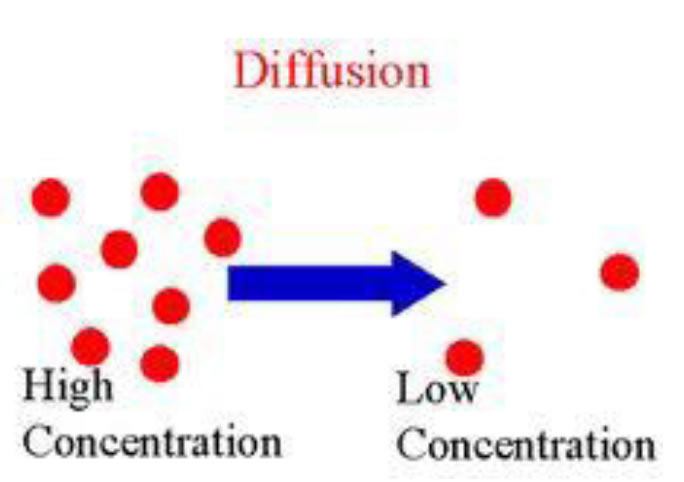
Passage of materials across the plasma membrane from a region of high concentration to one of lower concentration is termed _______.
phagocytosis
pinocytosis
diffusion
osmosis
The modification and packaging of proteins and their transport to the cell membrane for secretion is the role of the _______.
endoplasmic reticulum
lysosomes
Golgi apparatus
mitochondria
Which is the correct sequence of the following events of protein synthesis?
1. tRNA recognizes a complementary mRNA codon calling for its amino acid by binding via its anticodon to the codon.
2. Released tRNA reenters the cytoplasmic pool.
3. mRNA attaches to the ribosome, and translation begins.
4. mRNA is made on the DNA template.
5. As the ribosome moves along the mRNA, a new amino acid is added to the growing peptide chain.
4-3-1-5-2
2-5-1-3-4
4-5-3-1-2
3-4-1-2-5
Which statement best characterizes connective tissue?
It consists of cells arranged in many strata.
It is always arranged in a single layer of cells
It is found connecting the brain to the spinal cord.
It is usually composed of a large amount of extracellular matter.
A(n) _______ is the smallest living unit.
organelle
molecule
cell
atom