wayground logo

Free Printable Worksheets

NEW

Font size

S
M
L
XL
Worksheets

Test 1 : US Government

Total questions: 60

Worksheet time: 35mins

Name
Class
Date
1.

• A system of government that one person has absolute power.

• A single ruler

a)

Dictatorship

b)

Democracy

c)

Oligarchy

d)

Confederate

2.

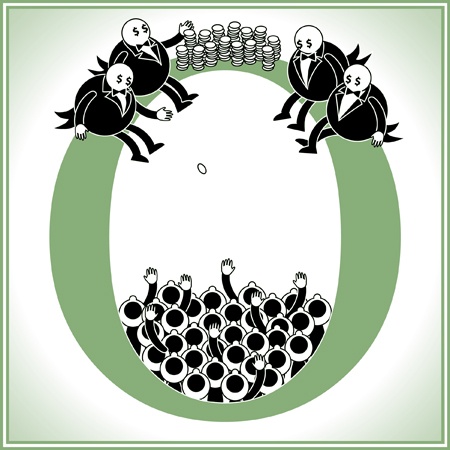
A system of government where a few people hold all the power.

a)

Autocracy

b)

Democracy

c)

Oligarchy

d)

Anarchy

3.
Kayla sat in the meeting hall and listened to the different candidates for her state's open Senate seat. The candidates debated about their positions on issues. When Election Day came along, she voted for the candidate she thought would best serve her community’s interests. What form of government does Kayla have? 
a)
Representative democracy
b)
Direct democracy
c)
Monarchy
d)
Oligarchy
4.
What do a republic and a direct democracy have in common?  
a)
rule by a single political party
b)
a small group of leaders 
c)
rule by the people
d)
a single leader
5.
 What does an absolute monarchy, dictatorship, and oligarchy have in common?
a)
A single individual or small group exercises control over government 
b)
The head of state is chosen by Parliament
c)
 Political power is exercised by representatives elected by the people 
d)
Their citizens decide public issues for themselves 
6.

Nobody has power over other members of the society.

a)

Representative Democracy

b)

Monarchy

c)

Dictatorship

d)

Anarchism

7.
Which of the following would someone who supports a democratic government most likely favor?
a)
Rule by a king or queen.
b)
Special privileges for the wealthy. 
c)
Control over the government by a single person.
d)
A society in which citizens freely elect their leaders.
8.
How are an absolute monarchy and a dictatorship similar?
a)
Both leaders come to power through popular elections.
b)
Both usually deny individual rights.
c)
Both seek to expand the power of labor unions.
d)
Both seek to establish a classless society.
9.
North Koreans have to vote, but have only ONE political party [choice]. What can you conclude?
a)
The country is a representative democracy.
b)
There are many political parties in North Korea.
c)

It sounds like a democracy, but is actually a dictatorship.
d)
North Korea is a theocracy.
10.
Which feature characterizes a theocratic government
a)
The existence of multiple political parties.
b)
Enforcement of religious laws.
c)
A written constitution.
d)
Direct elections for governmental decisions.
11.
Which statement was most likely made by an absolute monarch?
a)
"The government that rules is elected by the people."
b)
"Government must be based on a sound written constitution."
c)
"An elected legislature must pass all laws for our nation."
d)
"In this nation, I decide what the laws are."
12.
In this form of government, each citizen gets to vote directly on issues.
a)
Representative Democracy
b)
Direct Democracy
c)
Theocracy 
d)
Dictatorship
13.
Which form of government gives the most power to ordinary citizens?
a)
autocracy
b)
oligarchy
c)
absolute monarchy
d)
representative democracy
14.
A military leader who becomes the head of a country, often by force:
a)
Dictator
b)
Oligarch
c)
Governor
d)
Socialist
15.

Within this form of government, every citizen personally votes on all matters.

a)

Socialism

b)

Representative Democracy

c)

Direct Democracy

d)

Oligarchy

16.

In this form of government The Government is run by a small group of wealthy people.

Which form of government is being represented?

a)

Unitary

b)

Monarchy

c)

Autocracy

d)

Oligarchy

17.

This country is run by a dictator who makes all decisions regarding the government. Which form of government is being represented?

a)

Autocracy

b)

Parliamentary

c)

Socialism

d)

Communism

18.

Within this country, each the Citizens elect a person who will represent them in the governmental decisions. Which form of government is being represented?

a)

Federal

b)

Direct Democracy

c)

Republic

d)

Monarchy

19.

This form of government has a king who has inherited the power to run the county from his parents. Which form of government is being represented?

a)

Communism

b)

Unitary

c)

Autocracy

d)

Monarchy

20.

In a monarchy, kings and queens are determined by their family line.

a)

True

b)

False

21.
According to Locke, all humans share a set of __________.
a)
 internal organs
b)
natural rights
c)
hopes and dreams
d)
traits and motivations
22.
Locke's inalienable rights include...
a)
life, liberty, and property
b)
pizza, chips, and soda
c)
life, property, and travel
d)
freedom of speech, freedom to bear arms, and freedom of assemble
23.
Rousseau, Montesquieu, and Locke would all support:
a)
A dictatorship
b)
A democracy
c)
An absolute monarchy
d)
All of these
24.
Which of the following would NOT be an Enlightenment ideal?  
a)
one ruler should make laws
b)
the government should represent the people
c)
the government should be limited
d)
citizens should have their natural rights
25.
Which Enlightenment thinker believed in the "social contract"?
a)
Charles-Louis Montesquieu
b)
Jean-Jacques Rousseau
c)
Adam Smith
d)
John Locke
26.
Baron de Montesquieu established two ideas that helped mold today's government in the United States. Those two ideas were....
a)
reason and progress 
b)
Separation of Power and Checks and Balances 
c)
Laissee-faire and Supply & Demand
d)
General Will and Social Contract
27.
Why did Montesquieu believe that checks and balances were needed in governments?
a)
To make sure that each branch of government is correct
b)
Keep the different branches of government from getting too much power
28.

Who argued for freedom of speech and religion?

a)

Thomas Jefferson

b)

John Locke

c)

Voltaire

d)

Descartes

29.

Who argued the social contract theory?

a)

Rousseau

b)

Locke

c)

Jefferson

d)

Wollstonecraft

30.
Which of the following statements reflects Enlightenment arguments against the Divine Right Theory of government?
a)
God has chosen all government rulers
b)
Independence is built by Military Might 
c)
The power of government is derived from the governed
d)
A capitalist economic system is essential for a functioning Democracy
31.
An essential aspect of the Enlightenment was its advocacy of the . . .
a)
return to traditional medieval values
b)
overseas expansion by Western Europe
c)
the use of reason for logical and rational thinking
d)
strengthening the power of organized religions
32.
Thomas Jefferson adopted whose ideas when writing about inalienable rights to life, liberty, and the pursuit of happiness?
a)
Baron De Montesquieu
b)
John Locke
c)
Thomas Hobbes
d)
Voltaire
33.
The Enlightenment is considered a turning point in history because . . . 
a)
Europeans changed their ways of thinking about the role of government
b)
Martin Luther broke away from the Catholic Church
c)
The Columbian Exchange occured
d)
The factory system was used to mass-produce goods
34.

What is the primary belief of classical liberalism?

a)

Divine right of kings

b)

Liberty and individual rights

c)

State-sponsored economy

d)

Social hierarchy

35.

Government exists to serve the community. Which is it?

a)

Natural Rights

b)

Classical Republicanism

36.

people within a district or state-government official represents them.

a)

Enumerate

b)

Lobby

c)

Constituent

d)

Bicameral

37.

A change in, or addition to, a constitution or a law

a)

Amendment

b)

Bicameral

c)

Refute

d)

Enumerate

38.

The system of dividing power among the three branches of government to prevent any one from having too much power

a)

Amendment

b)

Consensus

c)

Filibuster

d)

Checks and Balances

39.
What is a problem with a direct democracy?
a)
People aren't mature enough to govern themselves
b)
People don't have the time to participate so actively
c)
They tend to favor the wealthy
d)
Women don't have rights
40.
Placing limits on government allows for more....
a)
crime reduction
b)
military strength
c)
personal freedoms
d)
economic restrictions
41.
The United States government was influenced by Ancient Rome which had a multi-branch government. Choose the best description for that government.
a)
Republic
b)
Monarchy
c)
Oligarchy
d)
Totalitarian
42.

What does the word democracy mean?

a)

Freedom

b)

Money

c)

rule by the people

43.

Direct democracy means....

a)

people debate and vote on every law

b)

people elect a representative to debate and vote on every law

44.

What type of democracy do we practice today?

a)

direct democracy 

b)

representative democracy 

45.

What does the legislative branch do?

a)

Make Laws

b)

Enforce Laws

46.

What does the executive branch do?

a)

Enforce the laws

b)

Make Laws

47.

What does the judiciary branch do?

a)

Act as the "judges" of the law by interpreting the law

b)

Make laws and enforce them

48.

What is NOT part of a democracy?

a)

The majority in power can hurt the powers and rights of minority groups

b)

Freedom to vote

c)

Holding government officials accountable

49.

What type of government do we have in the USA?

a)

Representative Democracy

b)

Direct Democracy

c)

Authoritarian Democracy

50.

Rule of law means?

a)

everyone is equal under the law

b)

people are innocent until proven guilty

c)

everyone has access to justice

d)

All of the above

51.

limited government means

a)

the government only has the power the people grant it

b)

constitution gives unlimited power to the government

c)

individual freedoms do not matter

d)

all of the above

52.

popular sovereignty is simply

a)

government rules

b)

the people rule

c)

the teacher rules

d)

All of the above

53.

In a unitary government system

a)

Authority is concentrated in a central government

b)

Authority is divided between central and state governments

c)

Authority is concentrated in states

d)

none of the above

54.

In a federal government system

a)

Authority is concentrated in a central government

b)

Authority is divided between central and state governments

c)

Authority is concentrated in states

d)

none of the above

55.

In a confederate government system

a)

Authority is concentrated in a central government

b)

Authority is divided between central and state governments

c)

Authority is concentrated in states

d)

none of the above

56.
Anna lives in a direct democracy. What does that mean?
a)
She will be brought up on charges if she does not vote
b)
As a citizen, she is a member of the government and sits in Congress. 
c)
She votes for representatives who decide on the issues and laws. 
d)
She personally votes on every issue and law. 
57.

Which activity is for the common good?

a)

Playing video games until 1am

b)

Going to the movies

c)

Jury Duty

d)

Eating veggie straws

58.
What is citizenship?
a)
Something that is given automatically when a person moves to a different country
b)
Being a member of a nation or country and having full rights  and responsibilities under the law. 
c)
That other grade on your report card that nobody really looks at
d)
A large boat that only carries passengers that are members of a certain country
59.
Violations against people's civil rights and liberties by governments
a)
Human Right Violations
b)
Suffrage
c)
Gandhi
d)
Civil Rights
60.

Things to which you are entitled, allowed; freedoms that are guaranteed

a)

being human

b)

natural law

c)

rights

d)

dictatorship