
 Worksheets
Polarity of Water: Solubility
Total questions: 75
Worksheet time: 38mins
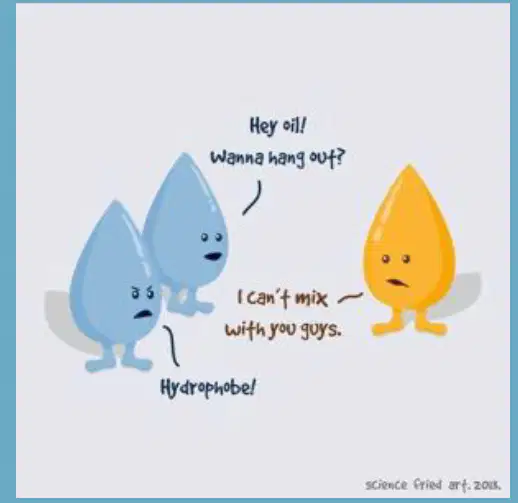
The polar nature of water allows it to dissolve polar substances. Water ____________ because a weaker attraction exists between polar and nonpolar molecules.
does not dissolve nonpolar substances
dissolves all substances equally
dissolves only ionic substances
dissolves nonpolar substances better than polar ones
Why do water molecules stick together?
Because they have the same charges
Because the opposite charges of the molecules attract one another
Because they are heavy
Because they are solid
What is the force of attraction that forms between water molecules called?
Hydrogen bonds
Ionic bonds
Covalent bonds
Van der Waals forces
The attraction between the oxygen of one water molecule and the hydrogen of a different water molecule forms a ________.
hydrogen bond
covalent bond
ionic bond
peptide bond
A single water molecule can form up to how many hydrogen bonds with other water molecules at the same time?
4
2
3
5
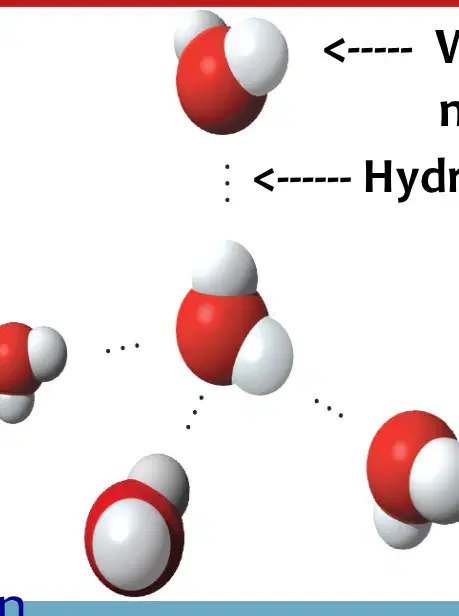
What does the dotted line between the water molecules represent?
Covalent bond
Ionic bond
Hydrogen bond
Metallic bond
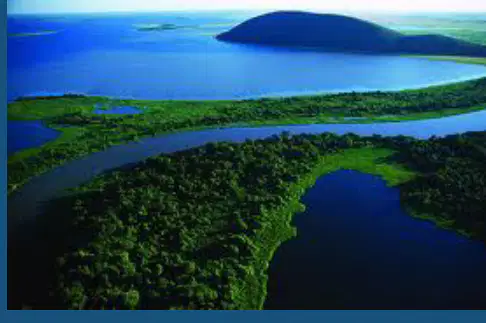
Life on Earth is dependent on which substance?
Water
Oxygen
Carbon dioxide
Nitrogen
Fill in the blank: Water is ________.
cohesive
opaque
flammable
metallic
Water is cohesive because:
its molecules stick to each other.
it evaporates quickly.
it dissolves all substances.
it is always cold.
At a wide range of temperatures, the sticking together of water molecules makes water ________.
liquid
solid
gas
plasma
What happens if the temperature gets too high for water?
It boils and turns into steam.
It freezes into ice.
It becomes denser and sinks.
It turns into a solid.
Water ________ temperatures on Earth. (Fill in the blank with the correct word from the passage.)
stabilizes
destroys
ignores
multiplies
Water is a very good "heat bank" because it can ________ a large amount of heat with only a slight change in its own temperature.
absorb or release
lose or gain
increase or decrease
evaporate or condense
Life could not exist in bodies of water if there were drastic changes in ________.
temperature
color
depth
shape
Large bodies of water ________ heat from the sun during the day, ________ landmasses.
absorb, cooling
reflect, warming
release, heating
block, freezing
Large bodies of water ________ heat at night, ________ the landmasses.
release, warming
absorb, cooling
reflect, heating
lose, freezing
Water is the solvent of life. Water is able to: ________ a wide variety of substances. (Fill in the blank with the correct word from the passage.)
dissolve
evaporate
freeze
condense
What is cohesion?
The attraction between molecules of the same substance.
The attraction between molecules of different substances.
The process of water evaporating.
The process of water freezing.
What is adhesion?
The attraction between molecules of the same substance.
The attraction between molecules of different substances.
The process of water boiling.
The process of water condensing.
Fill in the blank: Water molecules stick to one another because of ________.
cohesion
adhesion
diffusion
osmosis
Fill in the blank: When water sticks to other substances beside itself, it does so because of ________.
adhesion
cohesion
evaporation
condensation
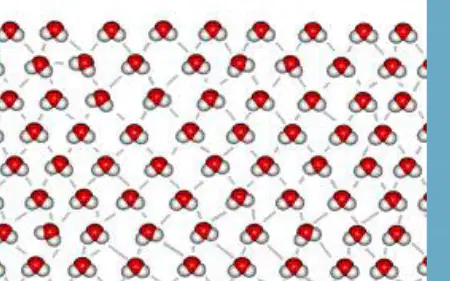
This image of water molecules best represents which property?
Cohesion
Adhesion
Evaporation
Condensation
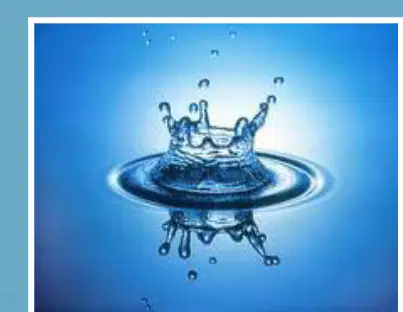
The image of a water droplet best represents which of the following?
Cohesion
Adhesion
Evaporation
Condensation
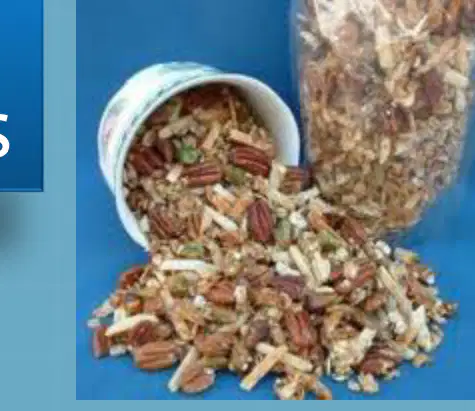
What is a mixture?
A substance composed of only one element
A substance composed of two or more elements or compounds that are physically mixed together but are not chemically combined
A substance that is chemically combined
A pure substance
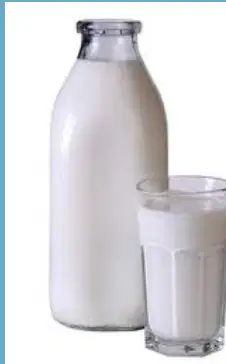
Fill in the blank: The parts of a homogeneous mixture are ________ mixed.
very evenly
randomly
barely
unevenly
Which of the following best describes a heterogeneous mixture?
The parts of the mixture are very evenly mixed
The parts of the mixture are unevenly mixed such as in oil mixed with water
The mixture is a pure substance
The mixture is chemically combined
In a homogeneous mixture, the parts of the mixture are very evenly mixed.
True
False
In a heterogeneous mixture, the parts of the mixture are unevenly mixed.
True
False
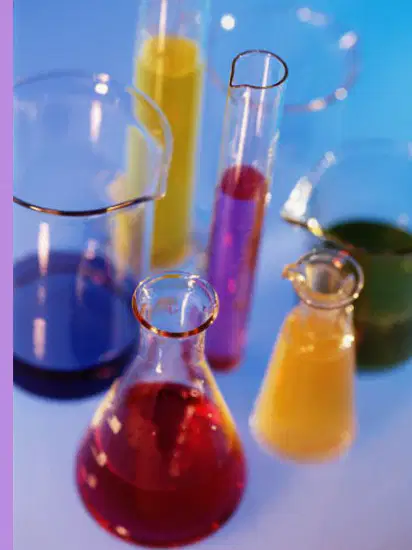
A solution is a __________ mixture. The parts of the solution are evenly mixed.
homogeneous
heterogeneous
colloidal
suspension
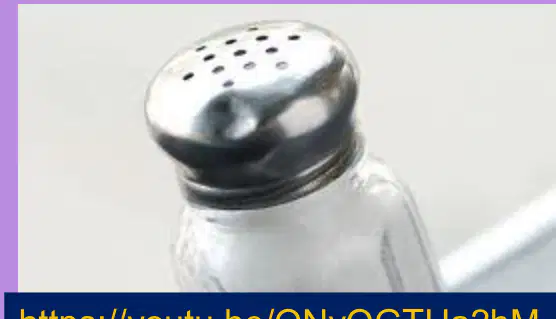
What is the solute in the example: Salt crystals will dissolve when placed in water?
Salt
Water
Sugar
Sand
What is the solvent in the example: Salt crystals will dissolve when placed in water?
Water
Salt
Sugar
Alcohol
Which of the following best describes a solute?
A) The substance that does the dissolving
B) The substance that is dissolved
C) The mixture of both substances
Which of the following best describes a solvent?
The substance that does the dissolving
The substance that is dissolved
The mixture of both substances
What is a suspension?
A mixture of water and dissolved materials
A mixture of water and undissolved materials
A pure substance
A type of gas
Fill in the blank: Some materials do not dissolve in water, but separate into pieces so small that they do not ______ out. These small pieces remain undissolved and are 'suspended' in the solution.
settle
float
evaporate
sink
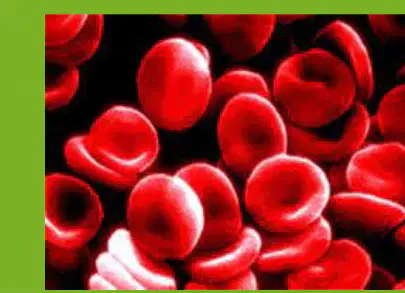
Which of the following is an example of a suspension?
Salt water
Blood
Sugar solution
Air
In a suspension, the small pieces remain undissolved and are suspended in the solution.
True
False
What is the range of the pH scale?
0 to 14
1 to 10
-5 to 5
0 to 7
A pH of 7 is a _______ solution. This is neither acidic nor basic. Pure water has a pH of 7.
neutral
acidic
alkaline
salty
Solutions with a pH below 7 are considered _______.
acidic
basic
neutral
alkaline
Solutions with a pH above 7 are considered _______.
basic
acidic
neutral
salty
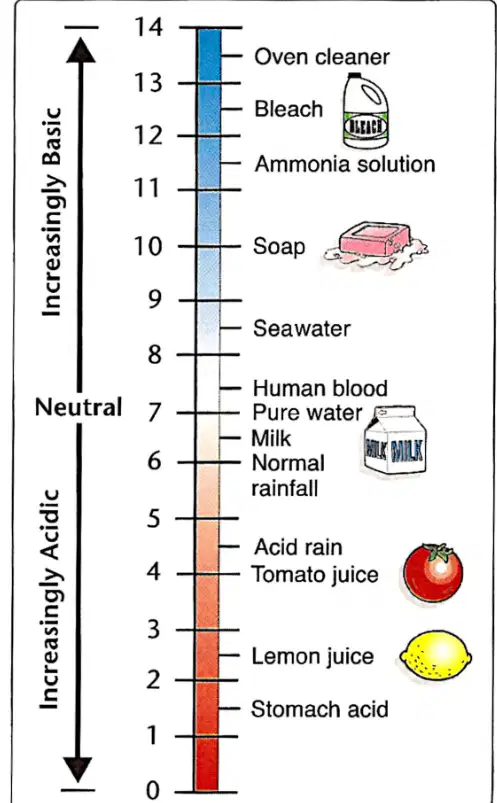
Which of the following substances is the most acidic according to the pH scale diagram?
Soap
Stomach acid
Seawater
Milk
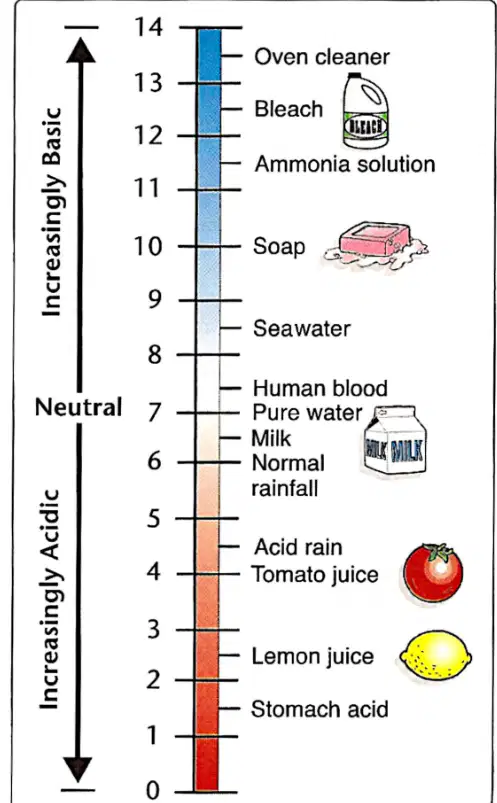
According to the pH scale diagram, which substance is closest to neutral?
Lemon juice
Pure water
Tomato juice
Ammonia solution
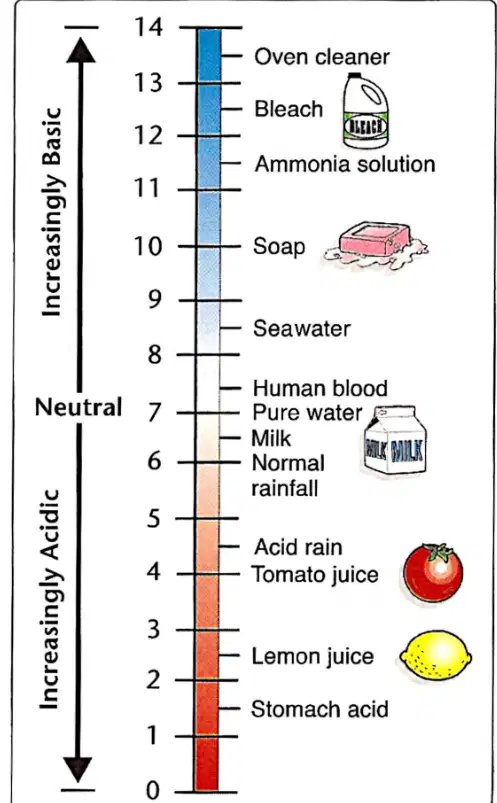
Which of the following is considered basic according to the pH scale diagram?
Acid rain
Bleach
Lemon juice
Tomato juice
What is an acid?
Any compound that forms H+ ions in a solution.
Any compound that forms OH- ions in a solution.
Any compound that forms Na+ ions in a solution.
Any compound that forms Cl- ions in a solution.
Acidic solutions have a greater H+ ion concentration than pure water.
True
False
Acids have a pH of ________.
below 7
above 7
exactly 7
between 7 and 14
Which of the following is NOT an example of an acid?
Lemon juice
Tomato juice
Carbonated drinks
Pure water
Select all that are examples of acids:
lemon juice, tomato juice, carbonated drinks, vinegar
milk, water, olive oil, sugar
baking soda, soap, bleach, ammonia
salt, sand, iron, copper
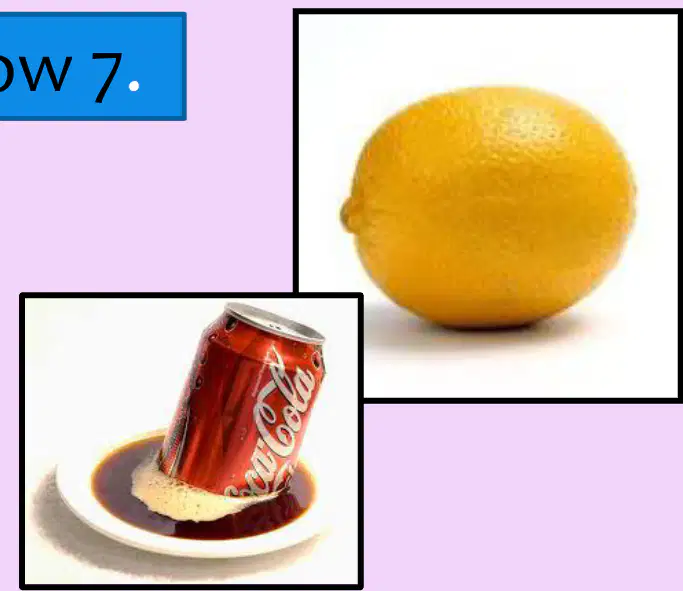
The image shows a lemon and a can of soda. Are these examples of acidic substances?
True
False
What is a base?
Any compound that forms H+ ions in a solution
Any compound that forms OH- ions in a solution
Any compound that forms Na+ ions in a solution
Any compound that forms Cl- ions in a solution
Basic solutions have a ______ H+ ion concentration than pure water.
lower
higher
equal
variable
Bases have a pH of above _____
7
5
3
0
Which of the following is an example of a base?
Lemon juice
Vinegar
Ammonia
Calumet
Examples of bases include ammonia, soaps, bleach, and ______ bicarbonate.
sodium
calcium
magnesium
potassium
What is the typical pH range for most human cells?
2 to 4
6 to 8
8 to 10
10 to 12
If the pH gets too high or too low, what does it affect in cells?
It affects the chemical reactions that take place within cells.
It affects the cell membrane structure only.
It only changes the color of the cell.
It increases the number of cells.
Cells must be able to control their _____
pH
temperature
pressure
volume
Buffers are substances produced by cells that prevent sharp, sudden changes in _____
pH
temperature
pressure
volume
Buffers help maintain a stable pH in cells by preventing sharp, sudden changes.
True
False
Fill in the blank: ________ are compounds that contain carbon atoms bonded to other carbon atoms.
Carbon compounds
Ionic compounds
Metallic compounds
Acidic compounds
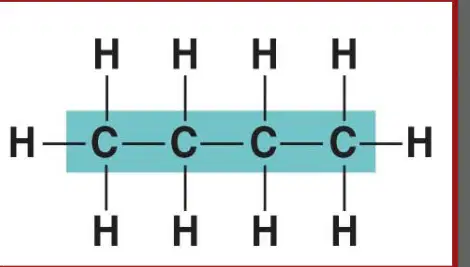
What does the diagram at the bottom left represent?
Water molecule
Carbon dioxide molecule
Carbon compound (showing carbon atoms bonded to other carbon atoms)
Oxygen molecule
Organic compounds ________
are made primarily of carbon atoms.
are always inorganic in nature.
do not contain any hydrogen atoms.
are composed only of metals.
Inorganic compounds ________
do not contain carbon atoms.
are always found in living organisms.
contain long chains of carbon atoms.
are always organic in nature.
A carbon atom has how many protons, neutrons, and electrons?
6 protons, 6 neutrons, 6 electrons
8 protons, 8 neutrons, 8 electrons
12 protons, 6 neutrons, 6 electrons
6 protons, 12 neutrons, 6 electrons
Fill in the blank: Carbon forms strong and stable _______.
bonds
colors
flavors
sounds
Fill in the blank: Carbon can form bonds with other _______ as well as a variety of other elements.
carbon atoms
hydrogen molecules
oxygen ions
nitrogen compounds
Fill in the blank: Carbon can form bonds with other elements such as _______, hydrogen, nitrogen, sulfur and phosphorus.
oxygen
calcium
aluminum
helium
Carbon can form chains that are almost unlimited in size.
True
False
Multiple Choice: Which of the following is NOT an element that carbon commonly bonds with?
Oxygen
Hydrogen
Nitrogen
Helium
Fill in the blank: Carbon can form _______ or rings.
chains
squares
pyramids
grids
Fill in the blank: In most organic compounds, clusters of atoms, called ________, influence the characteristics of the molecules they compose and the chemical reactions the molecules undergo.
functional groups
isotopes
ions
polymers
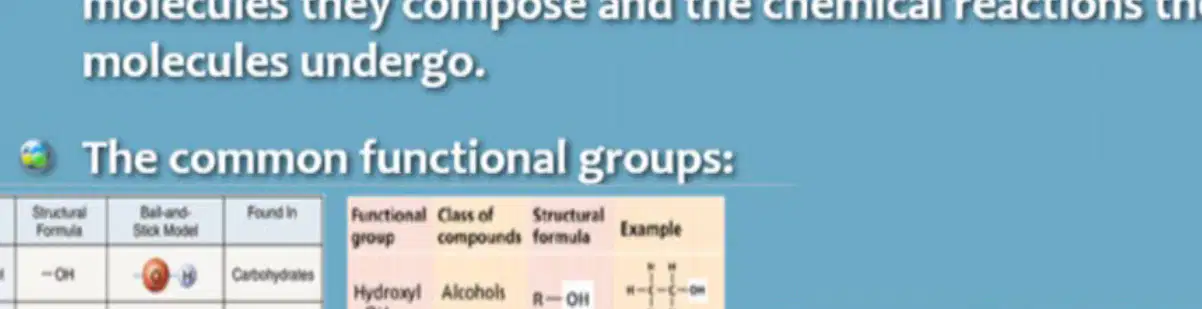
Which functional group is commonly found in carbohydrates?
Hydroxyl
Amino
Phosphate
Carbonyl
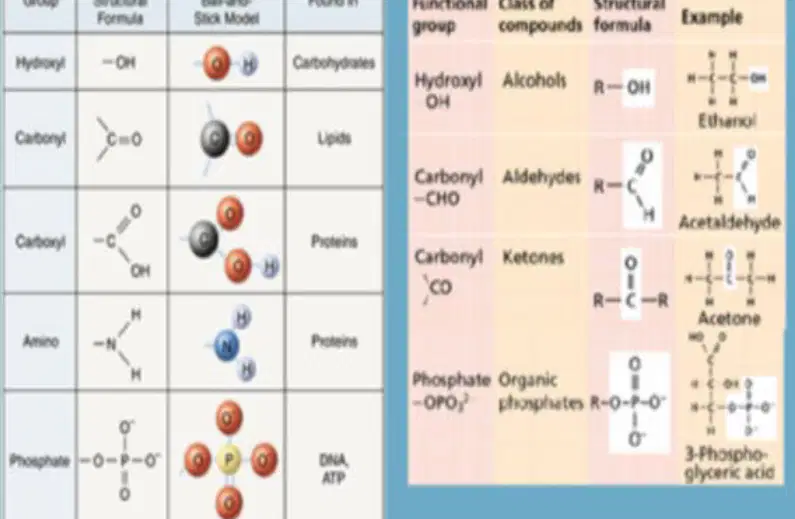
Fill in the blank: The structural formula for the amino group is ________.
—NH2
—COOH
—OH
—CH3
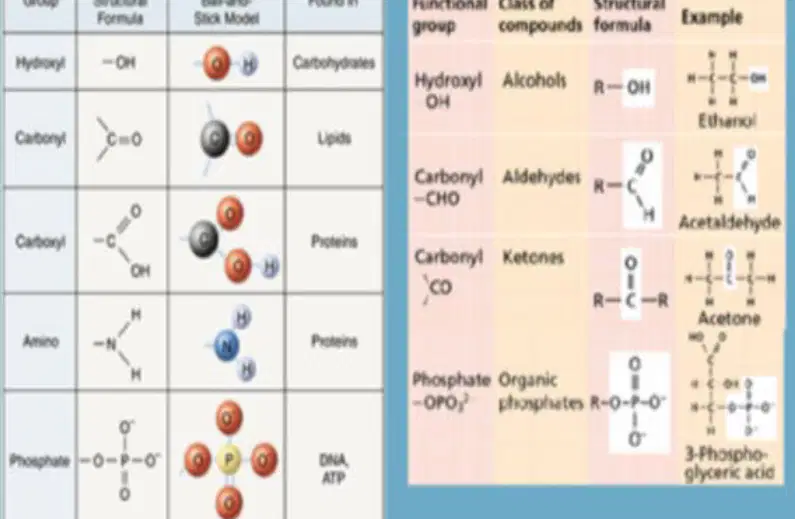
Which class of compounds contains the carbonyl group (—CO) in the middle of the carbon chain?
Alcohols
Aldehydes
Ketones
Phosphates

