
 Worksheets
BIOCHEM Quiz 2
Total questions: 68
Worksheet time: 34hrs 0mins

Read image attached.
A
B
C
D
E
Proteins have 4 primary functions in living organisms. They are:
(a)
Proteins are linked _____ _________, of amino acid monomer units
(a)
What is the folding of the 1-D structure of proteins like?
(a)

Answer the question in the image.
A
B
C
D
What are the main components of the amino acid structure?
Carboxyl group, Amino group, Bound to same (alpha) carbon. And differs in side chains (R-groups).
Hydroxyl group, Phosphate group, Attached to same beta carbon
Methyl group, Sulfhydryl group, Linked to same gamma carbon
Carbonyl group, Amino group, Connected via same peptide bond
Where does Biochemical naming come and end at?
Starts from alpha carbon and goes down the R-group.
Begins at the carboxyl group and ends at the amino group.
Starts from the peptide bond and ends at the terminal nitrogen.
Begins at the beta carbon and follows the hydrogen atoms.
What amino acid does not have the traditional foyr different substituents?
(a)
What is the D/L naming system based on?
(a)
Explain the CORN rule:
(a)
What type of amino acids are only found in proteins made from ribosomes?
(a)
What are the characteristics of the 7 non-polar, Aliphatic R-groups?
They all have hydrophobic side chains with varying size and shapes.
They all contain aromatic rings and are highly reactive.
They are polar and form hydrogen bonds with water with varying size and shapes.
They all have charged side chains that interact with anions.
What are the characteristics of the 3 Aromatic R-groups?
Planar, relatively non-polar, and side chains absorb uv light at 270-280 nm.
Highly polar, charged, and form ionic bonds with water molecules.
Non-planar, saturated, and do not interact with UV light.
Contain aliphatic chains and are classified as non-polar aliphatic amino acids.
What are the characteristics of the 6 polar, uncharged R-groups?
Side chains are hydrophilic and of varying sizes. Often forms hydrogen bonds.
Side chains are hydrophobic and repel water molecules.
All contain aromatic rings and absorb UV light strongly.
They are charged at physiological pH and form ionic bonds.
What types of bonds is cysteine capable of?
(a)
What are the characteristics of the 3 positively charged R-groups?
They are hydrophilic side chains with a significantly positive charge at pH 7.0
They are nonpolar and repel water molecules.
They carry a negative charge at physiological pH, 7.0.
They are neutral and do not participate in ionic interactions at pH 7.0.
What are the characteristics of the 2 negatively charged R-groups?
They are hydrophilic side chains with a mostly negative charge at pH 7.0.
They are nonpolar and do not interact with water molecules.
They carry a positive charge at 7.0 pH and stabilize DNA
They are neutral and participate only in hydrophobic interactions.
Ionic properties at acidic pH:
Carboxyl group is protonated; Amino group is protonated; Net charge of +1
Carboxyl group is deprotonated; Amino group is neutral; Net charge of –1
Both groups are deprotonated; Net charge is 0
Carboxyl group is negatively charged; Amino group is positively charged; Net charge is 0
Ionic properties at neutral pH:
Carboxyl group is deprotonated; Amino group is protonated; Net Charge of 0, zwitterionic
Carboxyl group is protonated; Amino group is deprotonated; Net charge of +1.
Both groups are deprotonated; Net charge of –1.
Carboxyl group is neutral; Amino group is neutral; Net charge of 0.
Ionic properties at basic pH:
Carboxyl group is deprotonated; Amino group is protonated; Net Charge of -1, anionic
Carboxyl group is protonated; Amino group is protonated; Net charge of +1
Both groups are neutral; Net charge of 0
Carboxyl group is deprotonated; Amino group is deprotonated; Net charge of +1
Where do zwitterions predominate? What does this indicate?
At the pKa of the side chain only.
Between the pKa of the amino and carboxyl groups; pI without side chains considered.
Below the pKa of both the amino and carboxyl groups.
Above the pKa of both the amino and carboxyl groups.

Type "yes" into the box once you have read and absorbed this slide.
(a)

Answer the image question.
A
B
C
D
E
How does an alpha carboxyl group and an amino group compare to carboxylic acids and amines?
Alpha carboxyl groups and amino groups destabilize the zwitterion due to charge repulsion.
Alpha carboxyl groups are less acidic than carboxylic acids, and amino groups are more basic than amines.
Alpha carboxyl groups are much more acidic than carboxylic acids, and amino groups are slightly less basic than amines. Works to stabilize zwitterion.
Alpha carboxyl and amino groups behave identically to isolated carboxylic acids and amines.
What are the eight essential amino acids for human function and metabolism? (Letters only).
(a)
Why are the amino acids C, Y, R, and H semi-essential for children?
(a)
What does post-translational modification do?
Alters functional group of the side chain; essential for protein function.
It determines the DNA sequence of the protein.
It breaks down proteins into amino acids for digestion.
It transports proteins directly into the nucleus without any signaling.
What type of bonds are amino acids held together by?
Ionic bonds formed between nitrogen and oxygen atoms.
Hydrogen bonds that permanently fuse amino acids into a crystal structure.
Metallic bonds that allow proteins to conduct electricity.
Covalent, peptide bonds, producing linear peptide chains.
What is a peptide bond linked to after the ridding of water done by condensation?
An amide functional group.
A glucose molecule to initiate carbohydrate synthesis.
A sulfur bridge that connects DNA strands.
A helium atom to stabilize protein folding in outer space.
(a) , reverse reaction is more favorable.

Take the time to absorb this image, type "yes" when finished.
(a)
How do you estimate the # of amino acid residues in a protein?
Use the Fibonacci sequence to approximate residue count based on protein shape.
Count the number of nitrogen atoms and subtract 42.
Divide its molecular weight by 110.
Multiply the protein’s length by Avogadro’s number.
What type of proteins have permanently associated components?
(a)
What is the non-amino acid part of a conjugated protein?
(a)
Lipoproteins contain (a) .
Glycoproteins contain ______ _____.
(a)
Metalloproteins contain a specific ______ ___.
(a)
What is a way of measuring your protein?
(a)
What does measuring concentration work best on?
(a)
Assay that deals with interactions on protein surface; Absorbance shift of a dye
(a)
What is the difference between activity and specific activity?
Activity refers to the enzyme’s mood; specific activity is how many compliments it receives per minute.
Activity is the total units of enzyme in solution. Specific Activity is the number of enzyme units per milligram of total protein.
Activity measures how fast a protein dances under UV light; specific activity tracks its rhythm.
Activity is the number of DNA strands produced; specific activity is the number of RNA strands per cell.

Answer question.
1
2
3
What conditions do you need to remove extraneous proteins without losing the activity of interest?
Extreme heat and acid exposure to dissolve all proteins instantly.
Use of radioactive isotopes to scare away unwanted proteins.
High-pressure centrifugation until proteins spontaneously organize by zodiac sign.
Mild conditions; # of different proteins should decease and approach 1
What is it called when you break open cells and release their proteins into a solution?
(a)
Protein source often stays in the (a) fraction.
What is a process commonly used for protein separation?
(a)
High salt concentrations increase solubility of most proteins. True or False?
(a)
In gel filtration, larger molecules elute earlier than smaller molecules. True or False?
(a)
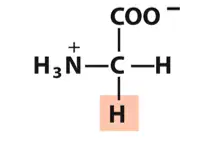
Classify the amino acid, naming, and associated group.
(a)
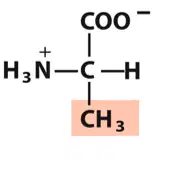
Classify the amino acid, naming, and associated group.
(a)
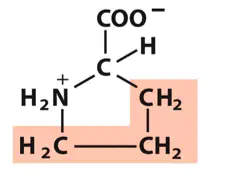
Classify the amino acid, naming, and associated group.
(a)
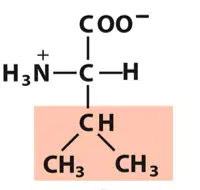
Classify the amino acid, naming, and associated group.
(a)
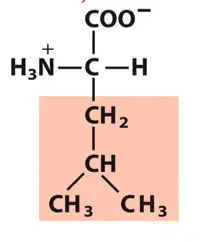
Classify the amino acid, naming, and associated group.
(a)
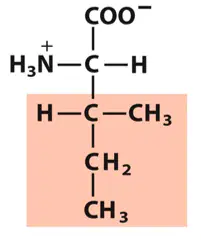
Classify the amino acid, naming, and associated group.
(a)
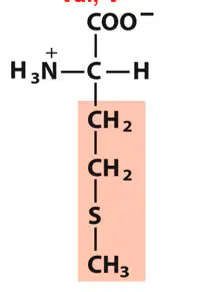
Classify the amino acid, naming, and associated group.
(a)
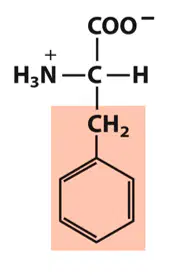
Classify the amino acid, naming, and associated group.
(a)
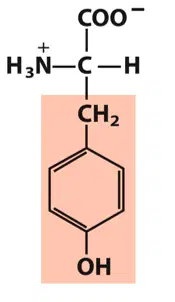
Classify the amino acid, naming, and associated group.
(a)
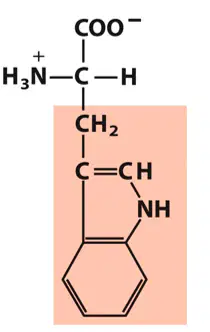
Classify the amino acid, naming, and associated group.
(a)
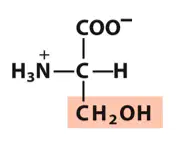
Classify the amino acid, naming, and associated group.
(a)
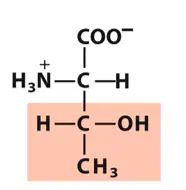
Classify the amino acid, naming, and associated group.
(a)
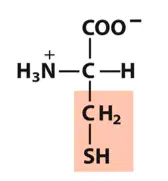
Classify the amino acid, naming, and associated group.
(a)
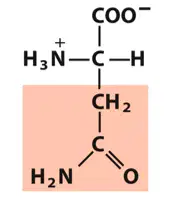
Classify the amino acid, naming, and associated group.
(a)
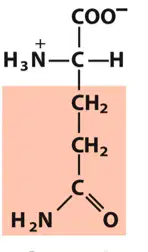
Classify the amino acid, naming, and associated group.
(a)
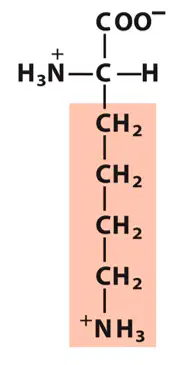
Classify the amino acid, naming, and associated group.
(a)
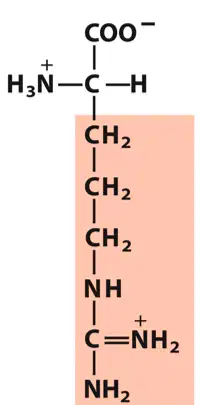
Classify the amino acid, naming, and associated group.
(a)
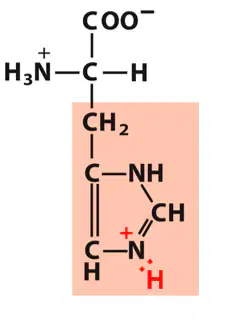
Classify the amino acid, naming, and associated group.
(a)
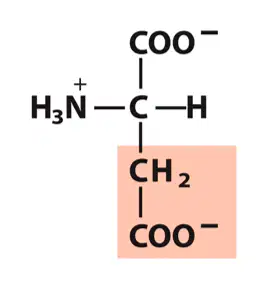
Classify the amino acid, naming, and associated group.
(a)
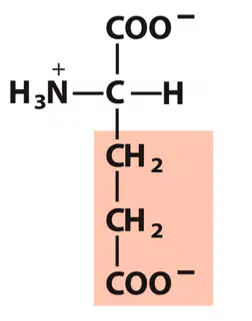
Classify the amino acid, naming, and associated group.
(a)

