wayground logo

Free Printable Worksheets

Font size

S
M
L
XL
Worksheets

Cell Organelle and Cell Transport Test

Total questions: 129

Worksheet time: 2hrs 26mins

Name
Class
Date
1.

Passive transport requires no

a)

concentration gradients

b)

osmosis

c)

motion

d)

energy

2.
This example of passive transport is the diffusion of water.
a)
osmosis
b)
concentration gradient
c)
isotonic
d)
facilitated diffusion
3.

This solution has the equal concentrations of water molecules and particles inside and outside the cell.

a)
hypertonic
b)
hypotonic
c)
isotonic
4.
This cell organelle helps organisms maintain homeostasis by controlling what substances may enter or leave cells.
a)
vacuole
b)
nucleus
c)
cell membrane
d)
cell wall
5.

Controlling what goes into or out of the cell with the help of energy is called

a)
active transport
b)
endocytosis
c)
passive transport
d)
exocytosis
6.

This releases substances outside a cell using a vesicle that merges with the cell membrane.

a)
endocytosis
b)
exocytosis
c)
both
7.
The movement of molecules against a concentration gradient
a)
simple diffusion
b)
facilitated diffusion
c)
active transport
d)
osmosis
8.

This takes very large substances into a cell with the use of energy

a)
endocytosis
b)
exocytosis
c)
both
9.
In which solution will water move out of the cell resulting in the cell shriveling up?
a)
Hypertonic
b)
Isotonic
c)
Hypotonic
10.
In which solution will water move into the cell resulting in the cell bursting?
a)
Hypertonic
b)
Isotonic
c)
Hypotonic
11.
diffusion is the movement of 
a)
water from low to high concentration
b)
particles from low to high concentration
c)
water from high to low concentration
d)

particles from high to low concentration

12.
an area with a large amount of particles is
a)
low concentration
b)
high concentration
c)
diffusion
d)
osmosis
13.

which of the following terms means the movement of water from high concentration to low concentration

a)
diffusion
b)
prokaryotes
c)
osmosis
d)
concentration
14.

which way would the purple molecules move through the semi permeable membrane without the use of energy?

a)
From the  A side  to the B-side
b)
From the B side to the A side
c)
none of the purple molecules would move
15.
Which transport does not require energy?
a)
Passive
b)
Active 
16.

The movement of atoms, ions, or molecules (NOT WATER) from an area of high concentration to an area of low concentration.

a)

osmosis

b)

active transport

c)

diffusion

d)

hypertonic

17.
Permeable means
a)
things can pass through
b)
the concentration levels are different
c)
it is permanent
d)
things are stuck
18.
What does it mean that a cell membrane is semi-permeable?
a)
It allows all substances in
b)

It allows some substances in but not others

c)
It allows nothing in
d)
It allows unhealthy substances in
19.
If there is 5 percent water inside a cell and 5 percent water outside a cell
a)
more water will move inside the cell
b)
more water will move outside the cell
c)

There will be equal movement into and out of the cell

d)
The water will be lost as sweat
20.
The picture is an example of...
a)
active tranport
b)
passive transport
c)
diffusion
d)
osmosis
21.
This image shows animal blood cells that have been placed in a(n) _____ solution.
a)
hypotonic
b)
hypertonic
c)
isotonic
22.
This image shows blood cells that have been placed in a(n) _____ solution.
a)
isotonic
b)
hypertonic
c)
hypotonic
23.
Against the concentration gradient
low to high uses energy/ATP
a)
facilitated diffusion
b)
osmosis
c)
active transport
d)
diffusion
24.

Particles are too large to enter the membrane.
Need help from channel proteins. No energy required. Moving particles from high concentration to low concentrations

a)
active transport
b)
passive transport
c)
facilitated diffusion
d)
osmosis
25.
A cell in an isotonic solution will
a)
swell
b)
shrink
c)
stay the same size
d)
impossible to tell
26.
Which way is the water moving in this cell?
a)
Water will move out of the cell
b)
Water will move into the cell
27.

The cell membrane contains channels and pumps that help move materials from one side to the other. What are these channels and pumps made of?

a)

Carbohydrates

b)

Lipids

c)

Bilipids

d)

Proteins

28.

Facilitated diffusion is the movement of molecules that_____

a)

does not require energy

b)

goes from high to low concentrations

c)

move through a carrier/transport protein

d)

All of the above

29.

Which of the following primarily makes up the cell membrane?

a)

carbohydrates

b)

nucleic acids

c)

proteins

d)

phospholipids

30.
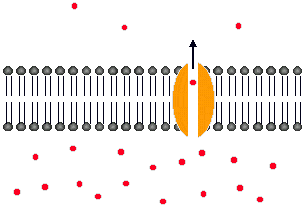
What type of transport is this?
a)
Endocytosis
b)
Diffusion
c)
Exocytosis
d)
Osmosis
31.
What type of organelle is used during endocytosis and exocytosis?
a)
Endoplasmic Reticulum
b)
Golgi Body
c)
Vesicle
d)
Lysosome
32.
What are 3 types of active transport?
a)
Riding a bike, Running through the mountains, walking on the beach
b)
Osmosis, Diffusion, Facilitated Diffusion
c)
Sodium/potassium Pump, Endocytosis, Exocytosis
d)
Throwing a ball, Playing tennis, driving a car
33.

Match the following types of transport to their descriptions:

a)

Movement from high to low concentration

1.

Diffusion

b)

Diffusion of Water

2.

Osmosis

c)

Diffusion with the help of a transport protein

3.

Facilitated diffusion

d)

Transport of large molecules into the cell

4.

Endocytosis

e)

Transport of large molecules out of the cell

5.

Exocytosis

34.
Question Image

Match the following:

a)

fluidity and maintains flexibility of cell membrane

1.

Cholesterol

b)

2 layers; allows small molecules to pass through the membrane

2.

Phospholipid bilayer

c)

regulates what goes in and out of the cell

3.

Plasma or Cell Membrane

d)

allows larger molecules to pass through the membrane

4.

Transport or Channel Proteins

e)

located outside of the membrane; helps with cell communication and cell recognition

5.

Carbohydrates

35.

Identify the structure in the diagram.

a)

Phospholipid

b)

Cholesterol

c)

Triglyceride

d)

Carbohydrate

36.

In the diagram, what is letter G?

a)

Phospholipid

b)

Phospholipid bilayer

c)

Cholesterol

d)

Carbohydrate

e)

Carrier or transport protein

37.

In the diagram, what is letter E?

a)

Phospholipid

b)

Phospholipid bilayer

c)

Cholesterol

d)

Carbohydrate

e)

Carrier or transport protein

38.

In the diagram, what is letter D?

a)

Phospholipid

b)

Phospholipid bilayer

c)

Cholesterol

d)

Carbohydrate

e)

Carrier or transport protein

39.

In PLANT cells, which part is the rigid outer layer that supports and protects the cell if in pure water from bursting?

a)

cell membrane

b)

cell wall

c)

chloroplast

d)

nucleus

40.

What would happen to to an animal cell with an internal salt concentration of 9% if it were placed in a salt solution with a concentration of 3%?

a)

It would shrink/ hypertonic

b)

It would stay the same/ isotonic

c)

It would swell/ hypotonic

41.
Passive transport requires no
a)
concentration gradients
b)
osmosis
c)
motion
d)
energy
42.
What is the definition of  Selective Permeability?
a)
The movement of materials across the cell membrane that requires NO ENERGY from the cell.
b)
The movement of materials through (or across) the cell membrane
c)
The ability of the cell membrane to allow some things to pass through while preventing other things from passing through.
d)
The movement of molecules from an area of high concentration to a area of low concentration 
43.

What type of solution is this red blood cell in?

a)

Isotonic

b)

Hypertonic

c)

Hypotonic

44.

What type of solution is this healthy looking red blood cell in?

a)

Isotonic

b)

Hypertonic

c)

Hypotonic

45.

After examining this diagram showing the concentration of water inside and outside of the cell, identify the tonicity of the solution.

a)

isotonic

b)

hypotonic

c)

hypertonic

46.

A cell has 80% water 20% solute, the surrounding solution has 60% water and 40% solute. What type of solution is this?

a)

Hypertonic

b)

Isotonic

c)

Hypotonic

d)

Equilibrium

47.
A water strider can skate along the top of a pond because:
a)

covalent bonds result in water cohesion

b)

hydrogen bonds result in water cohesion (surface tension) and the insects are light enough not to break these bonds

c)

adhesion holding water molecules together

d)

low surface tension of water

48.
What word describes when water is attracted to other substances?
a)
cohesion
b)
adhesion
c)
capillary action
d)
surface tension
49.
What two elements make up water?
a)
Helium and oxygen
b)
Hydrogen and oxygen
c)
helium and carbon
d)
oxygen and carbon
50.

bonds between water molecules are called
a)
Covalent bonds
b)
Ionic bonds
c)
Polar bonds
d)
Hydrogen bonds
51.
The attraction that causes water and other liquids to form drops on thin films is called ________________. This is also water’s ability to be attraction to other water molecules.
a)
adhesion
b)
capillary action
c)
cohesion
d)
surface tension
52.
molecule in which opposite ends have opposite electric charges
a)
cohesion
b)
polar molecule
c)
hydrogen bond
d)
solution
53.
Why does ice float?
a)
As water freezes, it expands and its density decreases.
b)
As water freezes, it takes up more hydrogen from the atmosphere, causing it to have a greater buoyancy.
c)
As water freezes, air becomes trapped between the hydrogen bonds of water molecules.
d)
As water freezes, it takes up more oxygen from the atmosphere, causing it to have a greater buoyancy.
54.
Water is a universal solvent because it...
a)
It can be found anywhere
b)
It freezes when it gets cold
c)
floats when frozen
d)

it's polarity allows it to Dissolves most substances

55.
A solvent is...
a)
a substance into which the solute dissolves
b)
a compound being dissolved
c)
a substance that does not dissolve
d)
None of the above
56.

The attraction that causes water and other liquids to to stick to other things is called ________________.

a)
adhesion
b)
capillary action
c)
cohesion
d)
surface tension
57.

Which property of water will cause water to take a long time to heat up and a long time to cool down?

a)
Adhesion
b)
Cohesion
c)
Ability to dissolve substances
d)
High specific heat
58.
Why does water move from the roots to the leaves of plants?
a)
Water is pushed by solutes
b)

Capillary action pulls the water molecules like a chain using the property of adhesion

c)
Water is pulled by gravity
d)
Water’s cohesion causes it to “pull” towards the leaves
59.
Water makes up approximately 60% of the human body and plays a vital role in regulating body temperature. Which property of water makes it good at regulating temperature?
a)
Water is a good solvent.
b)
Water exhibits strong cohesion.
c)
. Water has an unusual crystalline structure.
d)
Water has a high capacity for heat.
60.

Which of the following will not dissolve in water?

a)

hydrophobic substance

b)

hydrophilic substance

c)

polar substance

61.

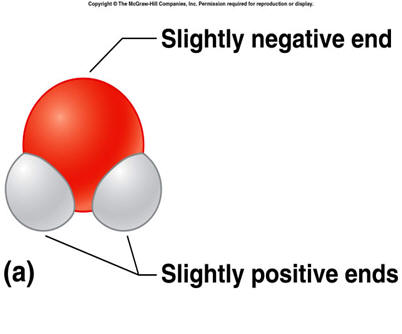
Which part of a water molecule has a slightly Positive Charge?

a)

The Hydrogen

b)

The Oxygen

c)

The Top

d)

The Bottom

62.

Which part of a water molecule has a slightly Negative Charge?

a)

The Hydrogen

b)

The Oxygen

c)

The Left

d)

The Right

63.

​ (a)   is water droplets sticking to each other.​ (b)   is water droplets sticking to other surfaces.

Choose from the below words
cohesion
adhesion
64.

_____________ is what allows water to flow upwards away from gravity, such as through roots and stems of plants.

a)

salinity

b)

cohesiom

c)

buoyancy

d)

capillary action

65.

What are the bonds called between a slightly positive hydrogen in a polar molecule and a negatively charged atom?

a)

Hydrogen Bonds

b)

Water Bonds

c)

Covalent Bonds

d)

Bail Bonds

66.
Large bodies of water do not quickly fluctuate in temperature. Why?
a)
Water is a solvent.
b)
Water has a high heat capacity.
c)
Water acts as a buffer.
d)
Water is non-polar.
67.
The fact that ice floats on liquid water is due to the fact that water's solid is ___________ than it's liquid form
a)
less polar
b)
more polar
c)
less dense
d)
more dense
68.

Water has a positive side and a negative side, making it a (a)   molecule.

69.

What is a water molecule made out of?

a)

One hydrogen and one oxygen atom.

b)

One hydrogen and two oxygen atoms.

c)

Two hydrogen and one oxygen atom.

d)

Two hydrogen and two oxygen atoms.

70.

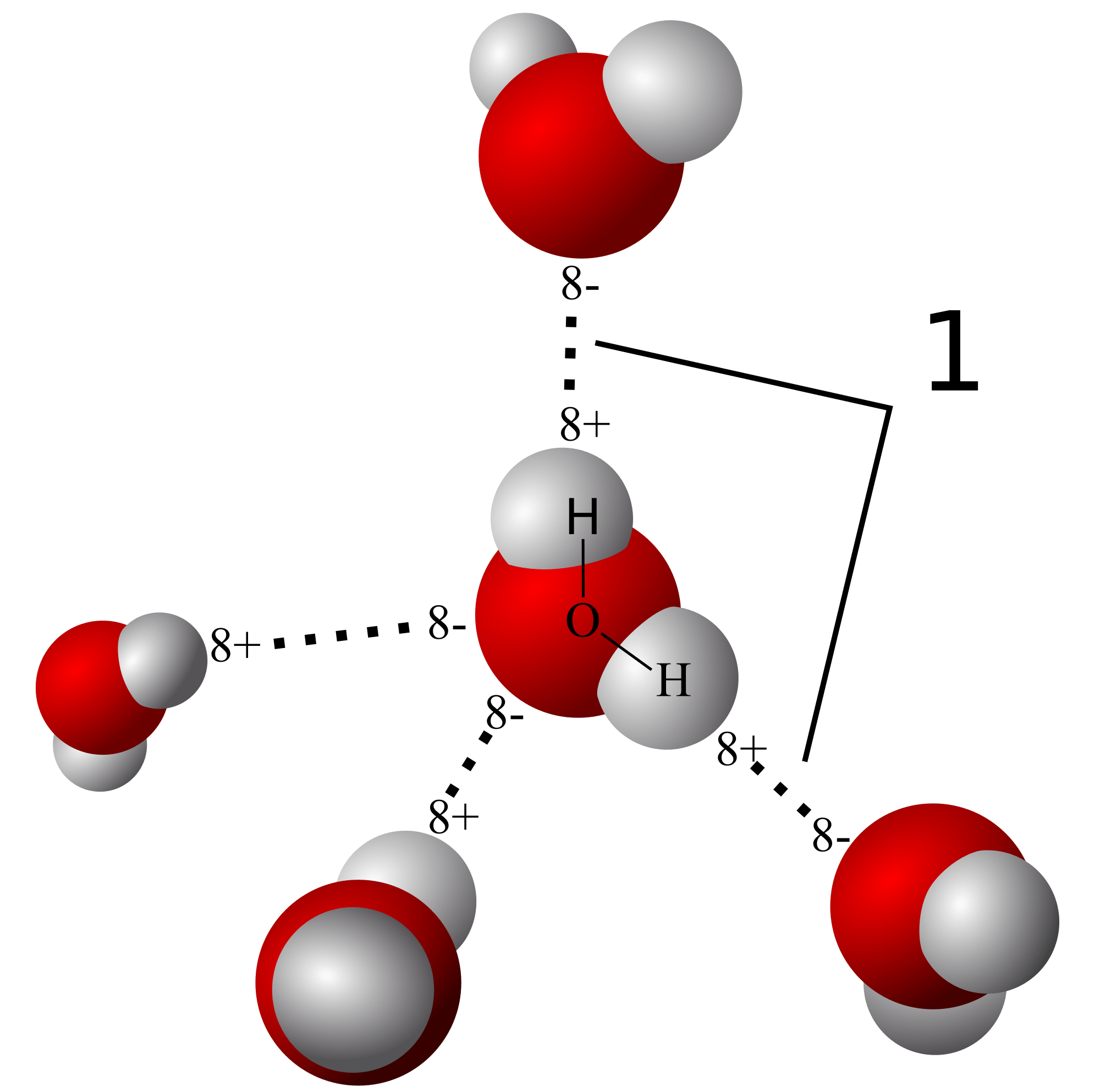
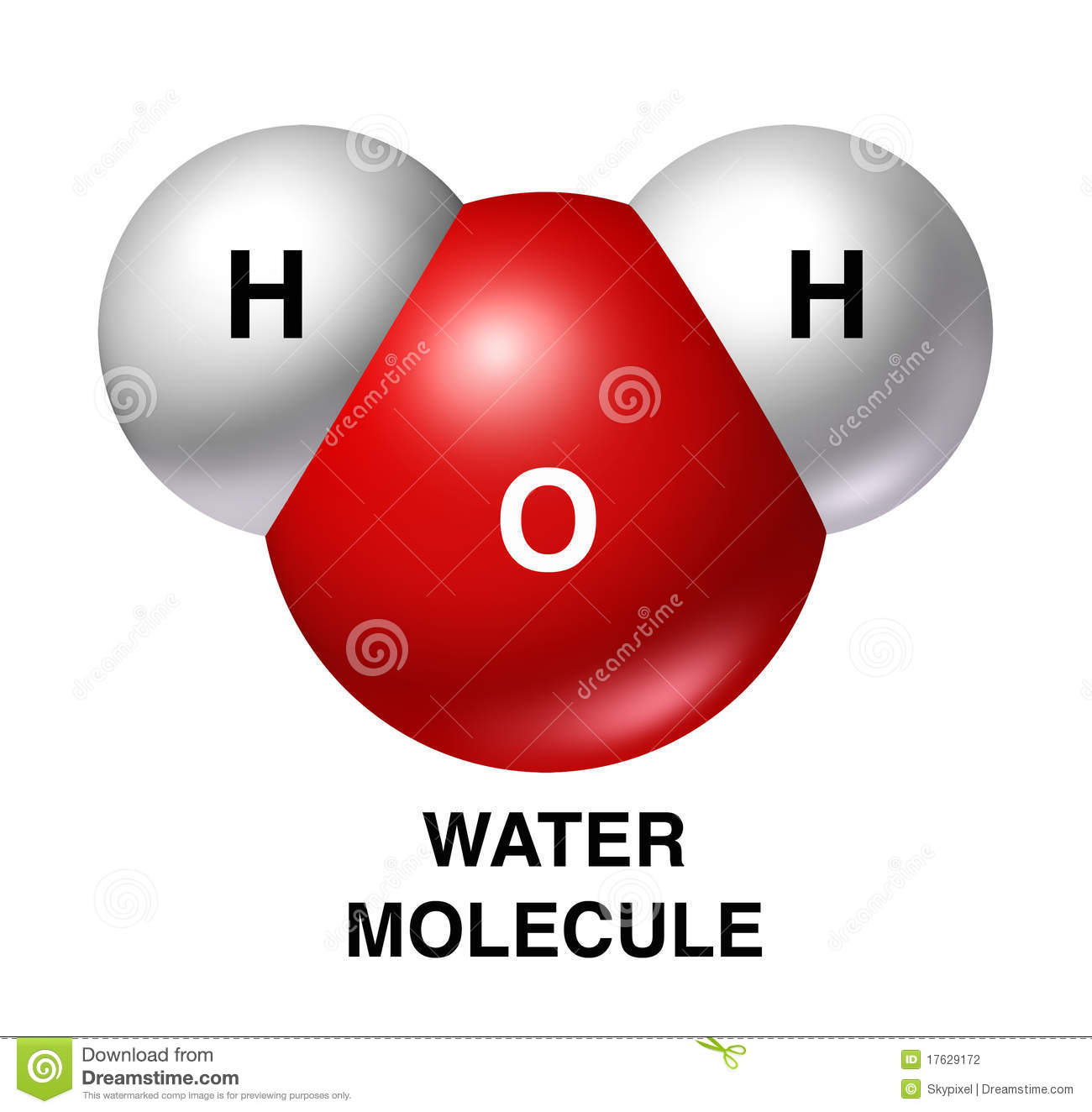
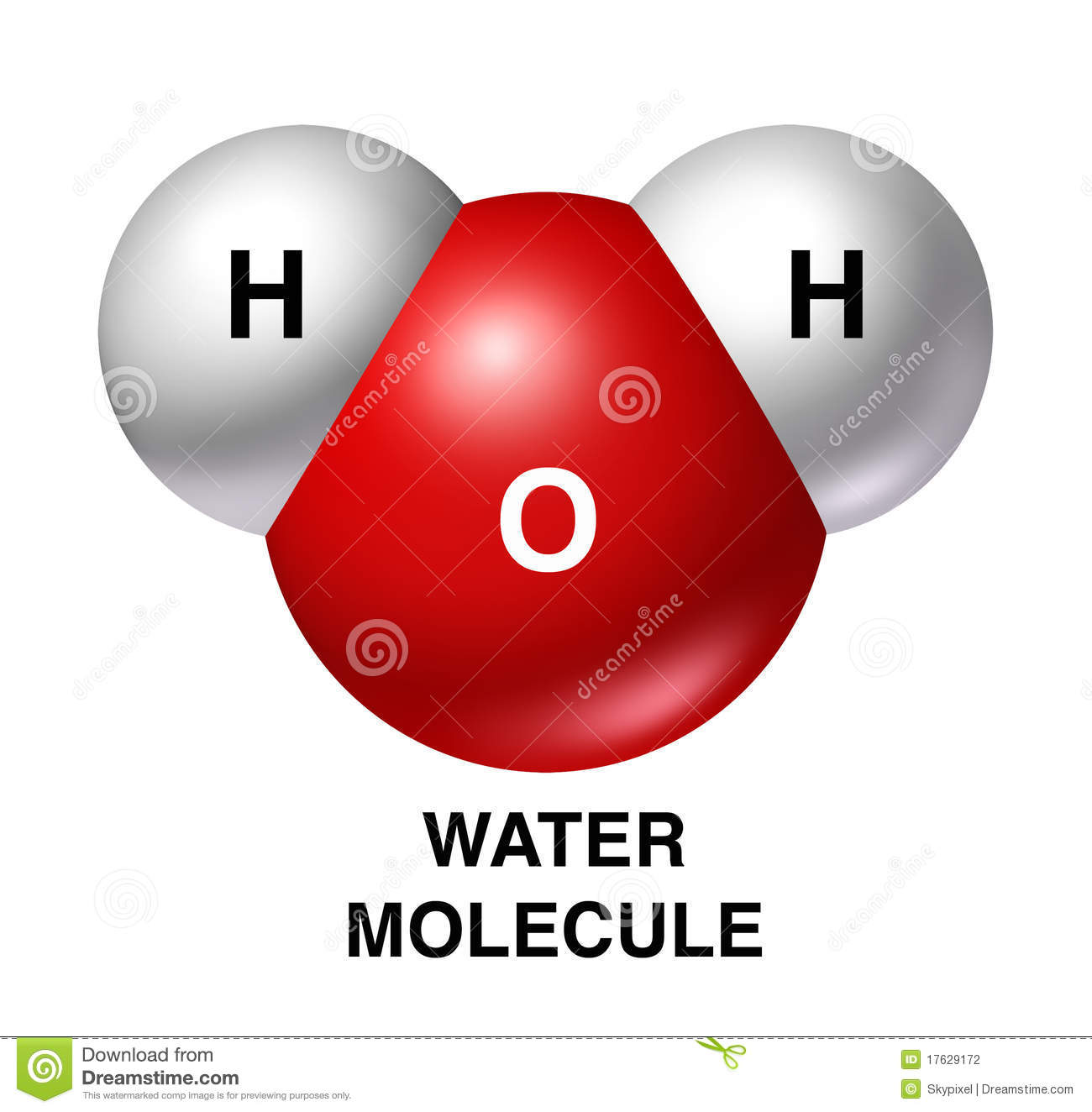
How many water molecules are in the picture?

a)

4

b)

5

c)

10

d)

15

71.

Name for the weak attraction between the negative oxygen of one water molecule and the positive hydrogen of another.

a)

Polarity

b)

Solvency

c)

Hydrogen Bonds

d)

Covalent Bonds

72.

Due to cohesion, water sticks to (a)   .

73.

What is this an example of: When we sweat in the sun, our body cools down.

a)

Water's cohesive ability

b)

Water's adhesive ability

c)

Water's high heat capacity

d)

Water's low density

74.

Why do the molecules on the surface of a body of water stick together to create surface tension?

a)

Cohesion - the water sticks together.

b)

Adhesion - the water sticks together.

c)

Low-density solid - the ice is there.

d)

Super solvency - there are dissolved molecules in it.

75.

Bonds that hold a water molecule together are called ____________.

a)

Covalent Bonds

b)

Ionic Bonds

c)

Hydrogen Bonds

d)

Water Bonds

76.

When salt is dissolved in water, water is the

a)

solvent

b)

solute

c)

solution

d)

reactant

77.
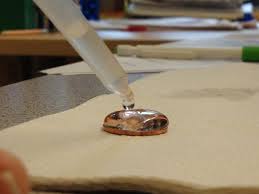
As you added drops to the coins, each drop stuck to the other water because of ________________.
a)
adhesion
b)
cohesion
c)
capillary action
d)
specific heat
78.

Touch EACH COVALENT bond

79.

Touch EACH HYDROGEN bond

80.

Touch the POSITIVE (+) AREAS of these water molecules

81.

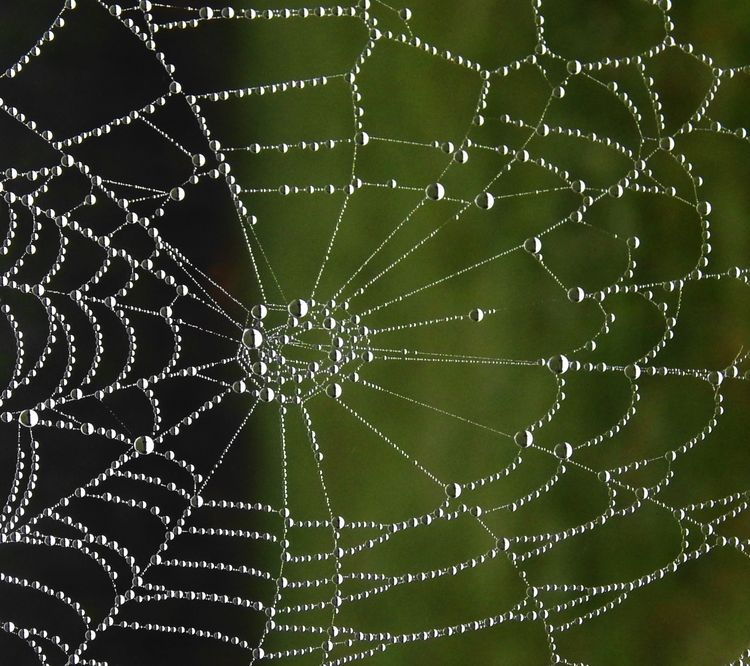
Match the following pictures with the most relevant property of water

a)

1.

Capillary action

b)

2.

High surface tension

c)

3.

Adhesion

d)

4.

Cohesion

82.

Features of plant cells that clearly make them different from animal cells are -

a)

larger and fewer chromosomes.

b)

rigid cell wall and chloroplasts.

c)

more cytoplasm and smaller vacuoles.

d)

changing size and indefinite shape.

83.
This organelle creates energy.
a)
Nucleus
b)
Ribosome
c)
Mitochondria
d)
ER
84.
Where is DNA stored in a cell? 
a)
Lysosomes
b)
Golgi Complex
c)
Ribosomes
d)
Nucleus
85.

What is the gel-like fluid inside a cell called? 

a)
Endoplasimic Reticulum
b)
Orange Juice
c)
Water
d)
Cytoplasm
86.
This organelle helps plants keep their rigid structure. 
a)
Cell wall
b)
Cell membrane
c)
Chloroplast
d)
Nucleus
87.

This organelle turns the light energy into a simple sugar

a)
Mitochondria
b)
ER
c)
Chloroplast
d)
Nucleus
88.
This organelle makes proteins. 
a)
Cell membrane
b)
Nucleus
c)
Ribosome
d)
ER
89.

Which organelle controls what goes in and out of the cell?

a)

nucleus

b)

nucleolus

c)

cell membrane

d)

nuclear membrane

90.

Which of the following is an enzyme filled organelle that breaks down waste in the cell as well as defends against viruses

a)
lysosomes
b)
chloroplast
c)
mitochondria 
d)
Golgi apparatus 
91.
Which of the following is found inside a prokaryote?
a)
cytoplasm
b)
DNA
c)
ribosomes
d)
all of these
92.

What is the function of the Vacuoles

a)

Store food, water and waste

b)

Receive proteins

c)

Assembles amino acids

d)

Found inside the nucleus

93.

Which organelle receives proteins and materials from the ER, packages them and distributes them

a)

Vacuoles

b)

Golgi Bodies

c)

Nucleus

d)

Chromatin

94.
Where does photosynthesis occur?
a)
mitochondria
b)
stomata
c)
xylem
d)
chloroplast
95.
What cell part is NOT found in all cells?
a)
Cell Wall
b)
Cell Membrane
c)
Cytoplasm
d)
Genetic Material
96.
Complex cell. Can be plant or animal. Contains membrane bound organelles. 
a)
Eukaryotic Cell
b)
Prokaryotic Cell
c)
Bacteria
d)
Blood cell
97.

Which organelle is larger in plants than in animals?

a)

Vacuole

b)

Mitochondria

c)

Chloroplast

d)

Nucleus

98.

Which organelle is colored purple in this photo?

a)

Vacuole

b)

Mitochondria

c)

Nucleus

d)

Ribosome

99.

Which organelle is colored blue in this photo?

a)

Nucleus

b)

Cell membrane

c)

Cell wall

d)

Vacuole

100.

Which of the following organelles is found in all living cells?

a)

Mitochondria

b)

Chloroplasts

c)

Vacuoles

d)

Ribosomes

101.

Which of the following types of cells DO NOT have a nucleus?

a)

Prokaryotes

b)

Eukaryotes

c)

Plants

d)

Animals

102.

Prokaryotes are always...

a)

Plants

b)

Animals

c)

Bacteria

d)

Eukaryotes

103.

Identify the structure that is indicated by the arrow in the image.

a)

cell wall

b)

central vacuole

c)

chloroplast

d)

cell membrane

104.

Which organelle serves as an internal transport system, and can be either "rough" or "smooth"?

a)

Nucleus

b)

Mitochondria

c)

Cell Wall

d)

Endoplasmic Reticulum

105.

Transports materials throughout the cell.  Acts as an assembly line for processing proteins.

a)
endoplasmic reticulum
b)
vacuole
c)
nucleus
d)
ribosome
106.
Contains digestive enzymes to break down worn out parts of the cell.
a)
vacuole
b)
lysosome
c)
ribosome
d)
nucleolus
107.

Which organelle captures energy from the sunlight and uses it to produce food in plant cells?

a)

mitochodria

b)

cell membrane

c)

chloroplast

d)

centrioles

108.
Who discovered cells when he looked a cork under his microscope?
a)
Schlieden
b)
Schwann
c)
Hooke
d)
Virchow
109.
Which of these is part of the cell theory
a)
Every living thing is made of cells
b)
Everything with cells will die
c)
All cells have a nucleus
d)
Plant cells and Animal cells have some differences
110.
Which of these is part of the cell theory
a)
Cells are the basic unit of life
b)
Only plant cells have a Chloroplast
c)
All cells have a nucleus
d)
Animal cells are round and blob like
111.

Which type of cell is this?

a)

Prokaryote

b)

Eukaryote

112.
Plants and animal cells are examples of ___ cells 
a)
prokaryotic cells 
b)
eukaryotic cells 
113.
Which is true of prokaryotic and eukaryotic cells?
a)
Prokaryotic cells are larger than eukaryotic cells.
b)
Eukaryotic cells do not have nuclei, and prokaryotic cells do have nuclei.
c)
Prokaryotic cells lack membrane-bound organelles, and eukaryotic cells contain membrane-bound organelles.
d)
Eukaryotic cells are simpler than prokaryotic cells.
114.

All of the following contain a cell wall except:

a)

prokaryotes

b)

animal cells

c)

plant cells

d)

bacteria

115.

Which do BOTH prokaryotes and eukaryotes contain?

a)

nucleus

b)

mitochondria

c)

ribosomes

d)

cell wall

116.
This is a picture of:
a)
Prokaryote
b)
Eukaryote
117.
Which of the following is not a characteristic of a Prokaryotic cell?
a)
unicellular
b)
floating DNA
c)
very small
d)
complex
118.
A fossilized cell is discovered, and evidence suggests it reproduced on its own and had DNA, but a membrane did not enclose its DNA. Which type of organism would this most likely be?
a)
prokaryote
b)
eukaryote
c)
plant cell
d)
animal cell
119.
A plant and an animal are both living things. According to the Cell Theory, what can you conclude about these two very different organisms?
a)
Plants have cells but animals do not.
b)
They are both made of one or more cells. 
c)
They both come from the same kind of cell.
d)
They both come from a non-living organism.
120.
Cell theory states:
a)
All living cells must have a cell wall.
b)
 All living cells require glucose for survival.
c)
The basic unit of life is a cell.
d)
All cells contain a nucleus
121.

According to cell theory, all ​ (a)   are made of ​cells, cells are the smallest units of life, and all cells come from other ​ (b)   .

Choose from the below words
living things
cells
122.
Robert Hooke, Anton van Leeuwenhoek, Theodor Schwann, Rudolf Virchow, and Matthias Schliden were all responsible for what theory?
a)
The Theory of Gravity
b)
The Theory of Relativity
c)
The Cell Theory
d)
The Theory of Continental Drift
123.
All cells come from___________ cells.
a)
pregnant
b)
pre-existing
c)
paternal
d)
pin size
124.
What is the smallest unit of life that can carry out all life functions?
a)
the nucleus
b)
the vacuole
c)
the mitochondria
d)
the cell
125.
The shape of this type of cell is rectangular.
a)
plant cell
b)
animal cell
c)
bacteria cell
126.
The shape of this type of cell can be round or oval.
a)
animal cell
b)
plant cell
c)
bacteria cell
127.

Do both plant and animal cells have a vacuole?

a)

Yes, but the plant cell have one large vacuole and the animal cells have many small vacuoles.

b)

Yes, but the animal cell have one large vacuole and the plant cells have many small vacuoles.

c)

No, only animal cells have vacuoles.

d)

No, only plant cells have vacuoles.

128.

Ribosomes are produced here

a)

nucleus

b)

nuclear membrane

c)

nucleolus

d)

chromosomes

129.

Supports cells structure & drives cell movement.  Composed of microfilaments and microtubules

a)
endoplasmic reticulum
b)
golgi apparatus
c)
cytoskeleton
d)
vacuole