
 Worksheets
Synapse and Neurotransmitter Quiz
Total questions: 71
Worksheet time: 36mins
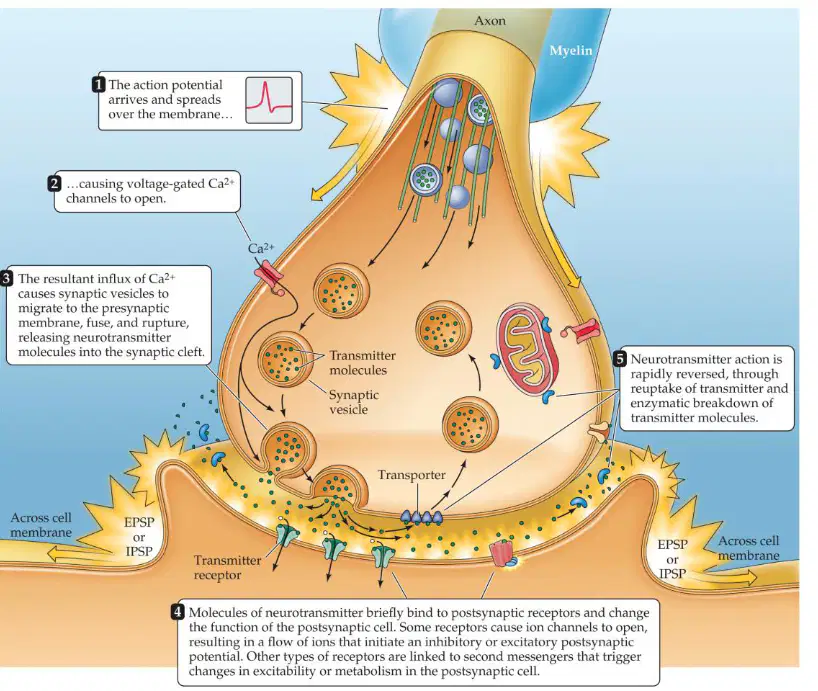
What happens when the action potential arrives at the synapse?
Voltage-gated sodium channels open
Voltage-gated calcium channels open
Potassium ions are released
Neurotransmitters are degraded

What is the role of synaptic vesicles when the intracellular concentration of Ca²⁺ ions rises?
They release potassium ions
They fuse with the postsynaptic membrane
They fuse with the presynaptic membrane and release neurotransmitters
They degrade neurotransmitters
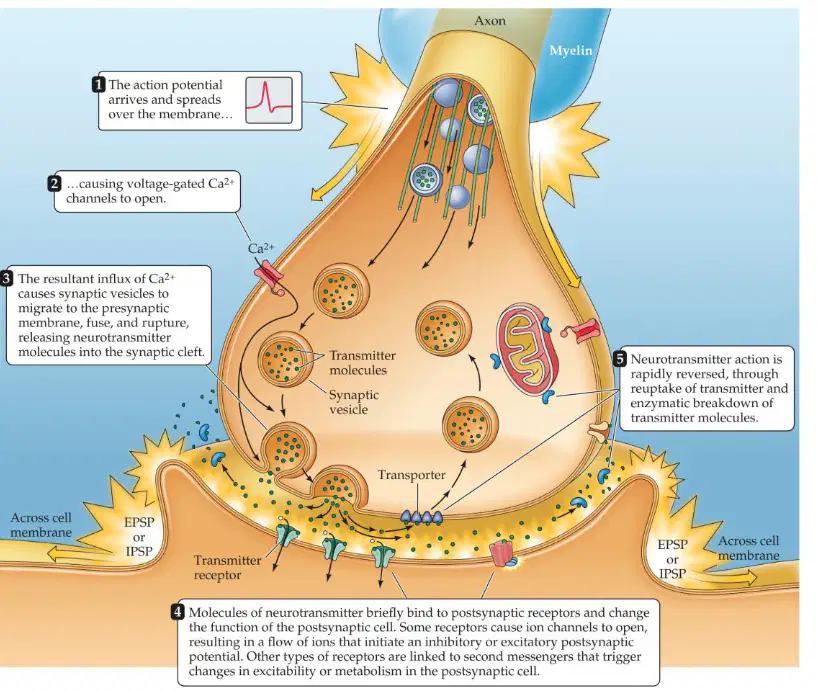
How is the neurotransmitter action reversed at the synapse?
By binding to the postsynaptic receptors
By being taken back into the presynaptic terminal or degraded by an enzyme
By opening voltage-gated sodium channels
By increasing the concentration of Ca²⁺ ions
Which neurotransmitter is the most abundant and important excitatory transmitter?
Gamma-aminobutyric acid (GABA)
Acetylcholine (ACh)
Glutamate
Dopamine
What type of receptors are GABA_A receptors?
Metabotropic
Ionotropic
Nicotinic
Muscarinic
Which receptors are crucial for muscle contraction?
AMPA receptors
GABA_B receptors
Nicotinic receptors
Muscarinic receptors
What is the primary function of GABA_A receptors in the brain?
Excitatory signaling
Inhibitory activity
Memory enhancement
Muscle contraction
Which neurotransmitter's receptors are involved in cholinergic transmission in the cortex?
Glutamate
Gamma-aminobutyric acid (GABA)
Acetylcholine (ACh)
Serotonin
Which neurotransmitter's receptors are involved in motor function, reward, and higher cognition?
Norepinephrine (NE)
Dopamine (DA)
Serotonin
Miscellaneous peptides
What is the primary function of norepinephrine (NE) in the brain?
Involved in mood, sleep, and higher cognition
Provides an alerting and arousing function
Involved in motor function, reward, and higher cognition
Controls feeding, sexual behaviors, and social functions
Which receptor family is particularly involved in nausea?
5-HT1
5-HT2
5-HT3
D1 through D5
What is a function of peptide transmitters?
Involved in complex behaviors including motor function
Important in sympathetic nervous system responses
Control of feeding, sexual behaviors, and social functions
Involved in mood, sleep, and higher cognition
What is the role of a neurotransmitter binding to a receptor on the postsynaptic membrane?
It acts as a lock that fits any key.
It causes a conformational change in the receptor.
It prevents ions from passing through the channel.
It deactivates the receptor permanently.
Which type of receptor is described as fast-acting and depends on ions passing through the channel?
Metabotropic receptors
G-protein-coupled receptors
Ionotropic receptors
Ligand-gated receptors
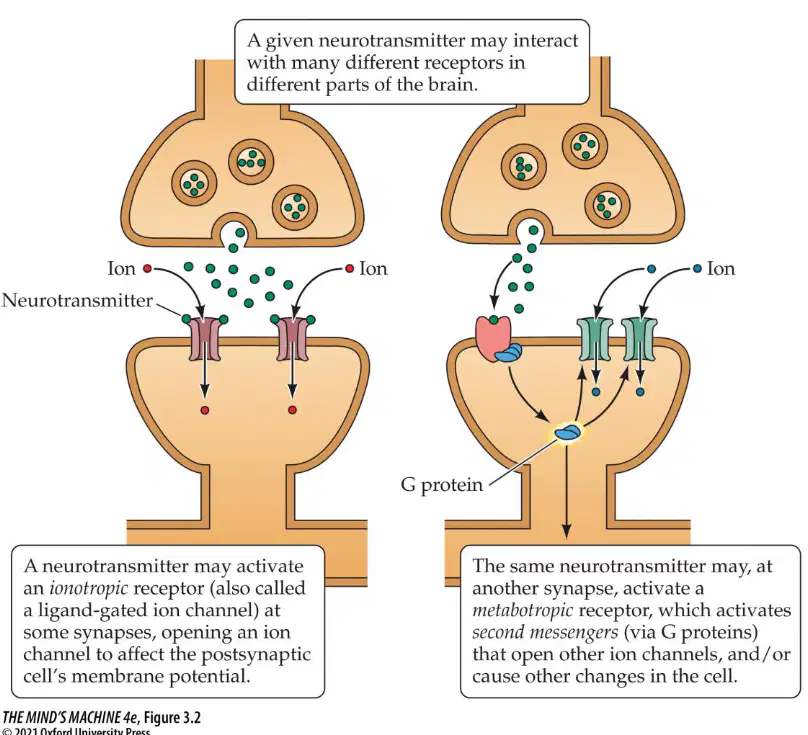
What is a characteristic of metabotropic receptors?
They are fast-acting and simple.
They involve more components and are slower-acting.
They only open ion channels.
They do not involve second messengers.
Which of the following statements is true about neurotransmitter binding?
No neurotransmitter can bind to more than one type of receptor.
The same neurotransmitter can have different effects depending on the receptor it binds to.
All neurotransmitters bind to the same receptor.
Neurotransmitters only bind to ionotropic receptors.
What type of receptor does acetylcholine bind to in skeletal muscle?
Metabotropic receptor
Ionotropic receptor
Muscarinic receptor
Nicotinic receptor

What effect does acetylcholine have when it binds to a metabotropic receptor in the heart?
Induces contraction
Slows rhythmic contractions
Causes depolarization
Increases heart rate
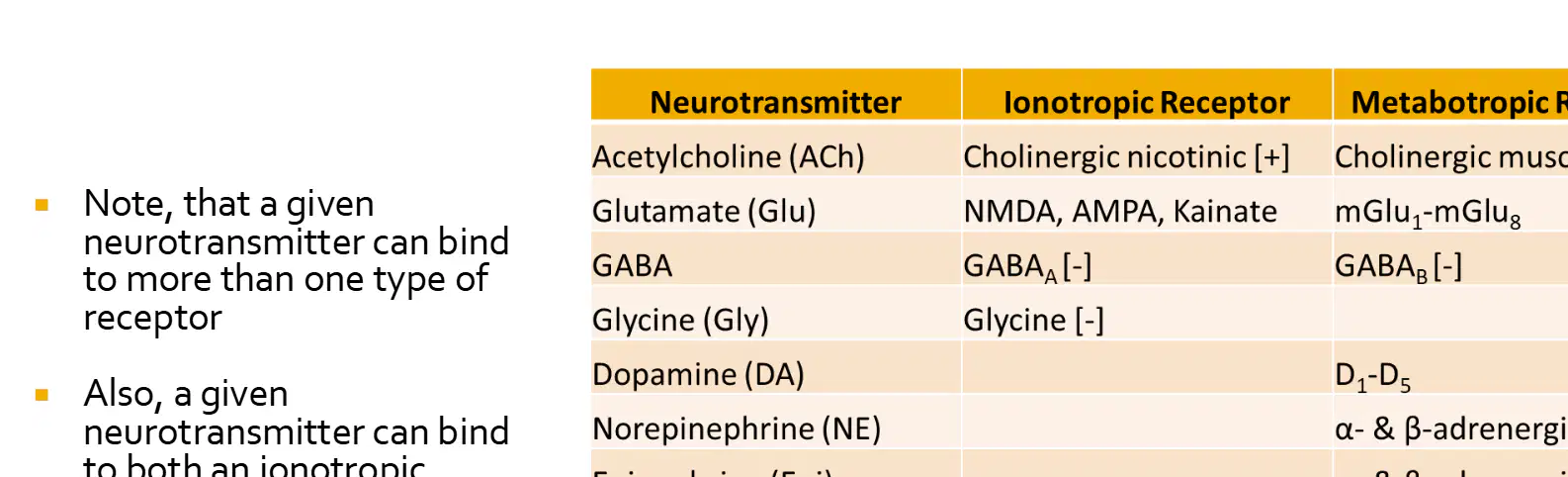
Which neurotransmitter binds to both cholinergic nicotinic and cholinergic muscarinic receptors?
Acetylcholine (ACh)
Glutamate (Glu)
GABA
Glycine (Gly)
What type of receptor does Glutamate (Glu) bind to in the ionotropic category?
GABA_A
NMDA, AMPA, Kainate
Glycine
5HT_3
Which neurotransmitter is associated with the metabotropic receptors D1-D5?
Dopamine (DA)
Norepinephrine (NE)
Epinephrine (Epi)
Serotonin (5-HT)
Identify the neurotransmitter that binds to GABA_A ionotropic receptors.
Glycine (Gly)
GABA
Acetylcholine (ACh)
Serotonin (5-HT)
Which neurotransmitter can bind to both α- and β-adrenergic metabotropic receptors?
Dopamine (DA)
Norepinephrine (NE)
Serotonin (5-HT)
Histamine
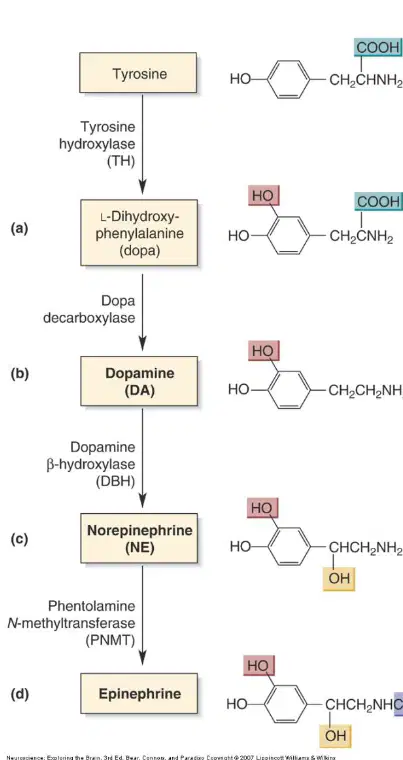
Which neurotransmitters are synthesized from tyrosine?
Serotonin, GABA, Glutamate
Dopamine, Norepinephrine, Epinephrine
Acetylcholine, Histamine, Serotonin
GABA, Glutamate, Acetylcholine
What is the rate-limiting step in the synthesis of catecholamine neurotransmitters?
Conversion of L-DOPA to dopamine
Conversion of tyrosine to L-DOPA
Conversion of norepinephrine to epinephrine
Conversion of dopamine to norepinephrine
Which enzyme is responsible for the destruction of catecholamines in the axon terminal?
Dopa decarboxylase
Dopamine β-hydroxylase
Monoamine oxidase (MAO)
Phentolamine N-methyltransferase
What structural feature do catecholamine neurotransmitters contain?
A pyridine ring with one hydroxyl group
A catechol ring (a benzene ring with two hydroxyl groups)
A thiophene ring with three hydroxyl groups
A pyrimidine ring with two hydroxyl groups
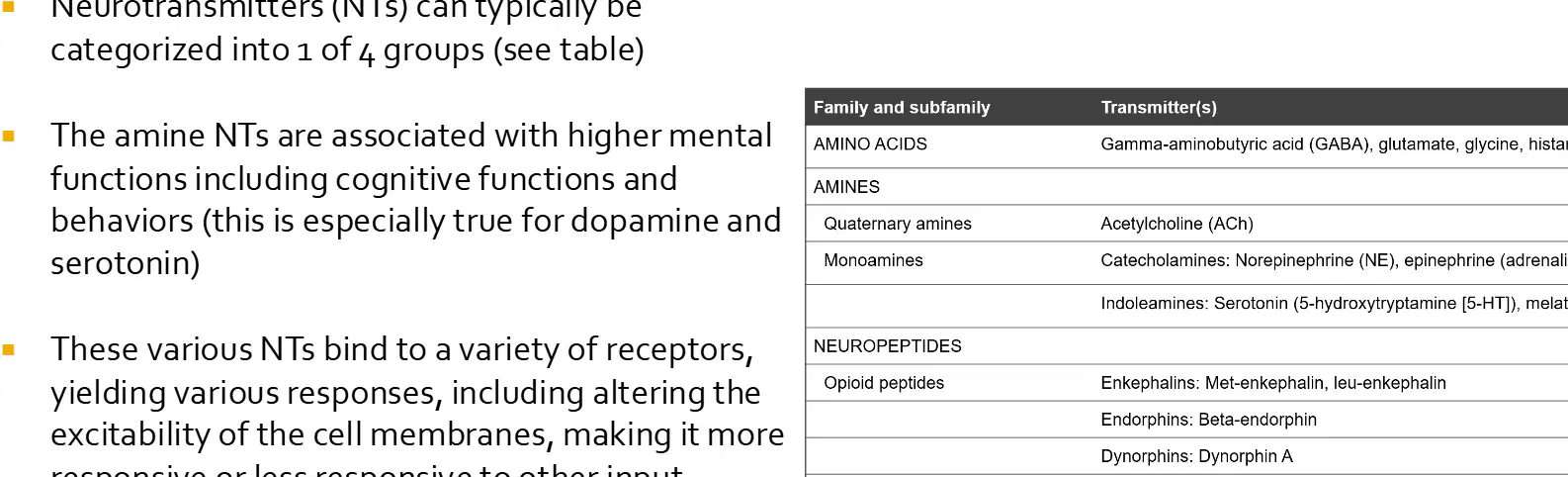
Which neurotransmitter is classified as an amino acid?
Acetylcholine
Gamma-aminobutyric acid (GABA)
Serotonin
Nitric oxide
What is a unique characteristic of gas neurotransmitters?
They bind to a variety of receptors.
They are associated with cognitive functions.
They can diffuse through the membrane without binding to a receptor.
They are classified as amino acids.
Which neurotransmitter is associated with higher mental functions and behaviors?
Histamine
Dopamine
Glycine
Carbon monoxide
Which family of neurotransmitters includes endorphins?
Amino acids
Amines
Neuropeptides
Gases
What was the first neurotransmitter to be discovered?
Dopamine
Serotonin
Acetylcholine
Norepinephrine
Who conducted the experiment to show that the heart could be slowed by a chemical signal?
Albert Einstein
Otto Loewi
Sigmund Freud
Ivan Pavlov
What was the purpose of Otto Loewi's experiment with the frog hearts?
To prove that the heart beats faster with electrical signals
To show that the heart could be slowed by a chemical "soup"
To demonstrate that the heart is unaffected by external stimuli
To illustrate that the heart can only be influenced by electrical signals
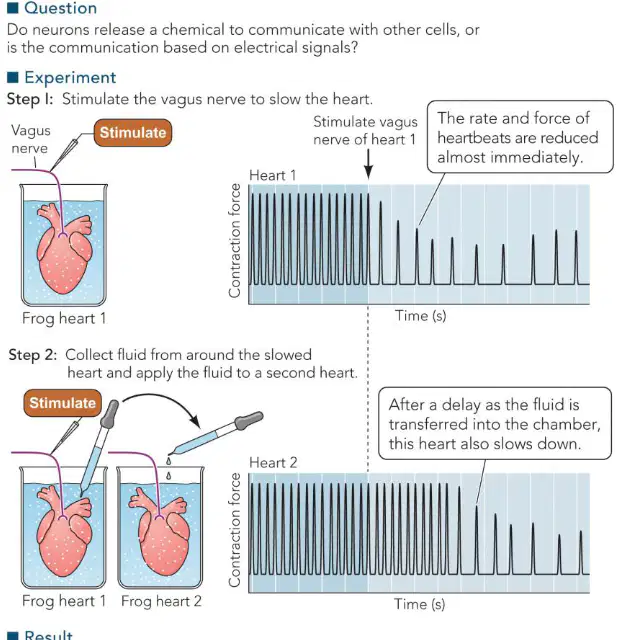
What did Otto Loewi use to slow the second heart in his experiment?
Electrical impulses
A chemical "soup"
Mechanical pressure
Heat application
Which neurotransmitter is associated with motor control and behaviors?
Acetylcholine
Dopamine
Serotonin
Norepinephrine
What is the primary function of acetylcholine in the brain?
Mood regulation
Transmission, learning, and memory
Alertness and mood
Anxiety and sleep
Which neurotransmitter is involved in behaviors such as mood, sex, anxiety, and sleep?
Acetylcholine
Dopamine
Serotonin
Norepinephrine

What is a characteristic of neurotransmitter systems in the brain?
They project to only one specific part of the brain.
They are composed of networks of neurons with overlapping functions.
They do not overlap in their projections.
They are limited to a single function.

Where are many of the neurons located according to the image?
Cerebellum
Brain stem
Frontal lobe
Occipital lobe

Which neurotransmitter is the major excitatory neurotransmitter in the brain?
GABA
Dopamine
Glutamate
Serotonin
What type of receptors does GABA bind to?
AMPA and NMDA
GABA_A and GABA_B
mGlu and kainate
Dopamine and serotonin
What is the function of GABA_A receptors?
Allow influx of Na+ ions
Allow influx of Cl- ions
Release neurotransmitters
Bind to dopamine
Which drug binds to GABA_A receptors to reduce anxiety?
Aspirin
Valium
Ibuprofen
Acetaminophen
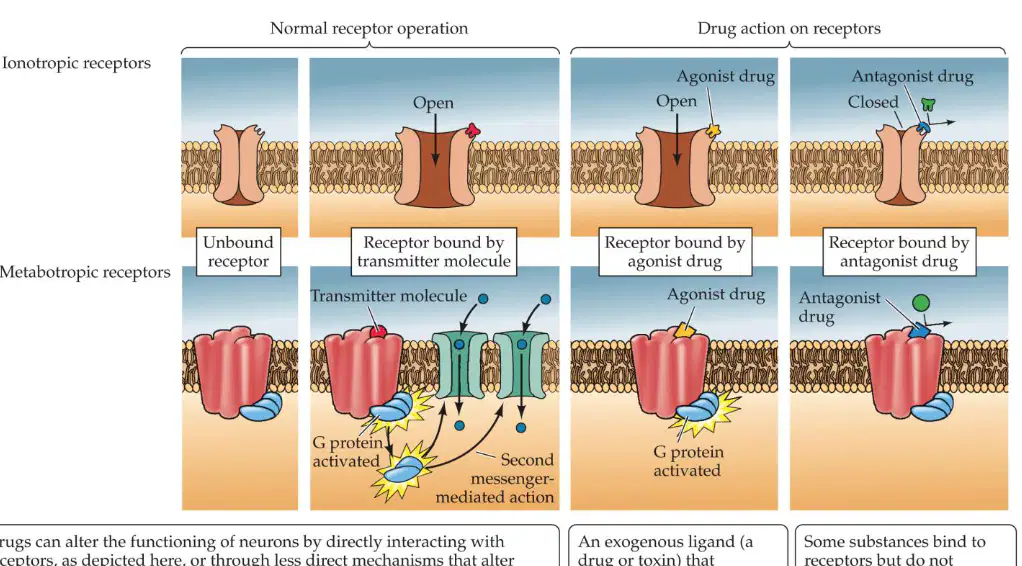
What is the role of a ligand in receptor binding?
It blocks the receptor permanently.
It acts as a key fitting into a lock.
It destroys the receptor.
It changes the receptor's structure.
Which of the following is true about endogenous substances?
They are not naturally occurring molecules.
They are always synthetic.
They are naturally occurring molecules.
They are always harmful.
What is the function of classic antipsychotic drugs like haloperidol?
They enhance dopamine receptors.
They block dopamine receptors.
They increase serotonin levels.
They block serotonin reuptake.
How do antidepressants like fluoxetine (Prozac) work?
They block dopamine receptors.
They enhance serotonin production.
They block the reuptake of serotonin.
They destroy serotonin molecules.

What does a dose-response curve illustrate in pharmacology?
The relationship between a drug's dosage and its observed effects
The chemical composition of a drug
The side effects of a drug
The cost of drug production
What factor affects how fast a drug gets into the body?
Route of administration
Color of the drug
Brand of the drug
Price of the drug
What is bioavailability in the context of pharmacology?
The amount of a drug available to bind to target tissue
The speed at which a drug is excreted
The cost of drug production
The side effects of a drug
What does ED₅₀ represent in drug trials?
The dose at which the drug produces half of its maximal effect
The time it takes for a drug to be excreted
The cost of drug production
The side effects of a drug
What is the therapeutic index of a drug?
The difference between the effective dose and the lethal dose
The sum of the effective dose and the lethal dose
The ratio of the lethal dose to the effective dose
The product of the effective dose and the lethal dose
What does LD50 represent in pharmacology?
The dose that is effective for 50% of the population
The dose that is lethal for 50% of the population
The dose that is safe for 50% of the population
The dose that is ineffective for 50% of the population
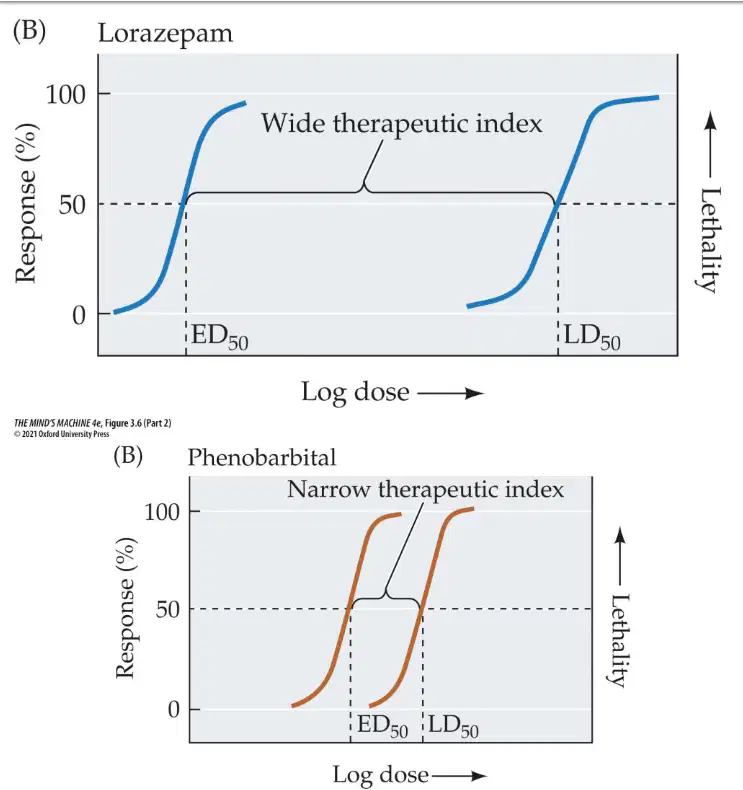
Why is lorazepam considered safer than phenobarbital according to the diagram?
Lorazepam has a wider therapeutic index
Lorazepam has a higher lethal dose
Lorazepam has a lower effective dose
Lorazepam is more potent
What is the body's response to repeated drug exposure?
Increased sensitivity to the drug
Decreased tolerance to the drug
Increased tolerance to the drug
No change in response to the drug
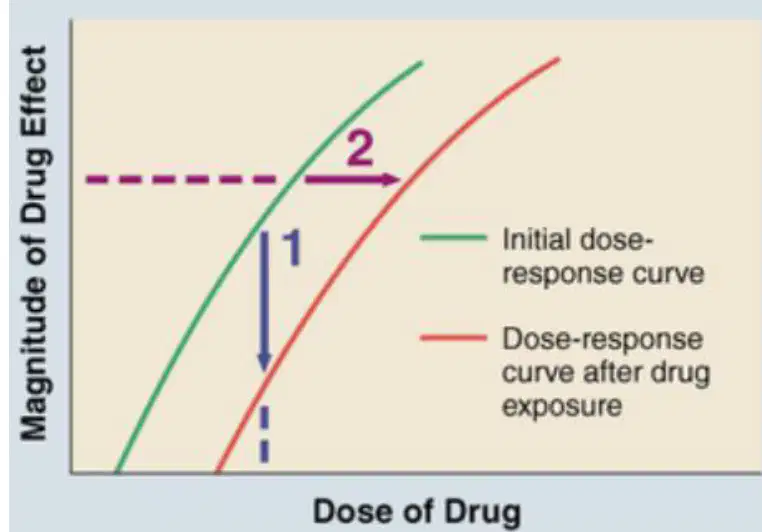
What happens to the dose-response curve after repeated drug exposure?
It shifts to the left
It shifts to the right
It remains unchanged
It becomes a straight line
Which type of tolerance involves the body becoming more efficient at eliminating the drug?
Functional tolerance
Cross-tolerance
Metabolic tolerance
Psychological tolerance
What is cross-tolerance?
Tolerance to a single drug
Tolerance to chemically unrelated drugs
Tolerance to chemically related drugs
Tolerance that decreases over time
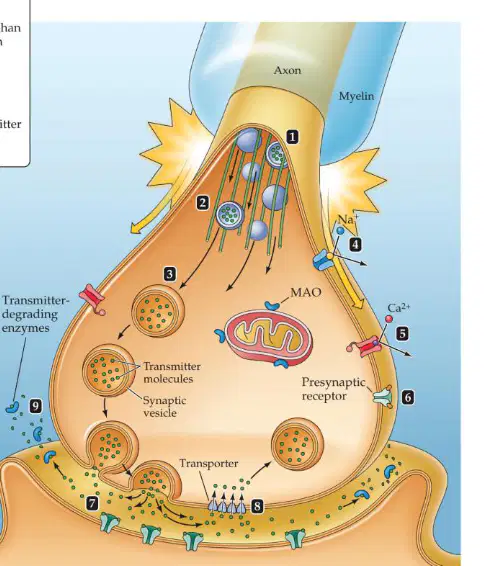
Which drug is known to inhibit the synthesis of serotonin by affecting tryptophan hydroxylase?
Reserpine
Cocaine
Para-chlorophenylalanine
Verapamil

What is the effect of tetrodotoxin on synaptic transmission?
Blocks voltage-gated Na+ channels
Inhibits calcium channel
Enhances neurotransmitter release
Inhibits reuptake of neurotransmitters

Which drug is used to block the packaging of transmitter molecules within vesicles?
Cocaine
Reserpine
Caffeine
Amphetamine
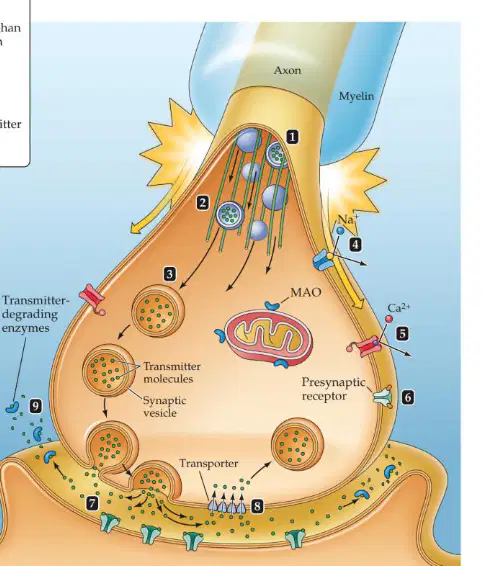
How does verapamil affect synaptic transmission?
Inhibits transmitter release by reducing calcium influx
Blocks voltage-gated Na+ channels
Enhances synaptic vesicle packaging
Inhibits neurotransmitter reuptake

What is the role of monoamine oxidase (MAO) inhibitors in synaptic transmission?
Enhance neurotransmitter release
Inhibit breakdown of neurotransmitters
Block calcium channels
Prevent synaptic vesicle formation
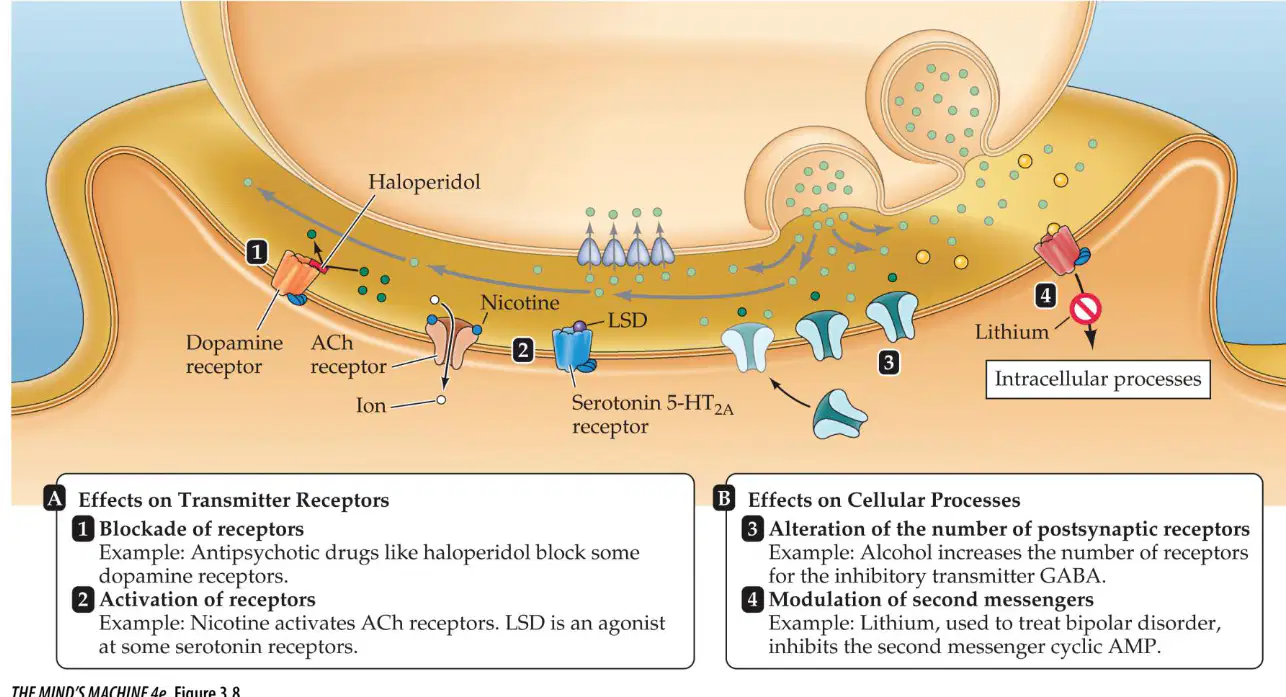
What is the effect of antipsychotic drugs like haloperidol on dopamine receptors?
Activation of receptors
Blockade of receptors
Modulation of second messengers
Alteration of the number of receptors

Which substance is known to activate ACh receptors?
Haloperidol
Nicotine
Lithium
Alcohol

What is the role of lithium in cellular processes?
Increases the number of GABA receptors
Blocks dopamine receptors
Inhibits the second messenger cyclic AMP
Activates serotonin receptors
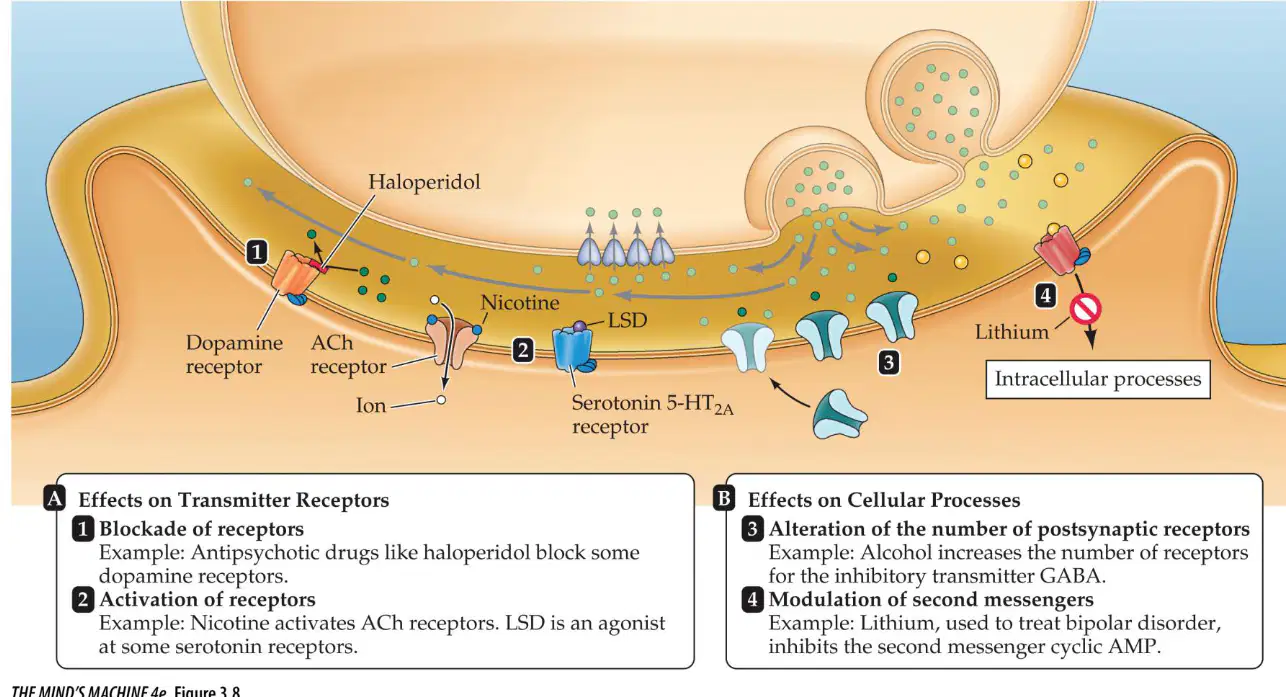
How does alcohol affect the number of postsynaptic receptors?
Decreases the number of dopamine receptors
Increases the number of GABA receptors
Modulates second messengers
Activates ACh receptors
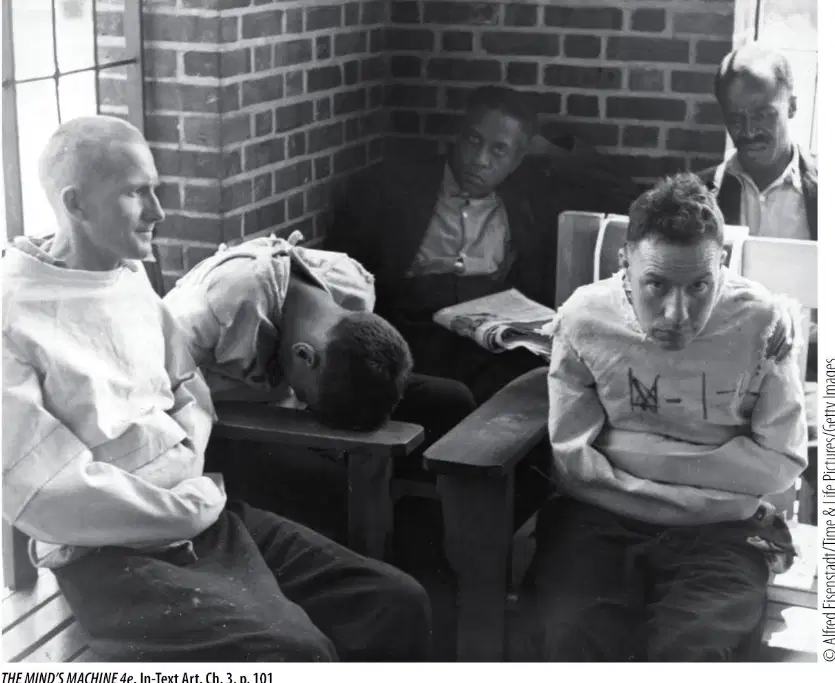
Which class of drugs is typically given to those suffering from delusions and hallucinations associated with schizophrenia?
Antidepressants
Anxiolytics
Antipsychotics
Antibiotics
What is the primary function of antidepressants according to the text?
Reduce synaptic transmission
Increase synaptic transmission
Reduce neuron excitability
Act on GABA receptors
Which of the following drugs is used to treat anxiety by acting on GABA receptors?
Chlorpromazine
Fluoxetine
Diazepam
Haloperidol

