
 Worksheets
Worksheet 1: Characteristics of Living Things and Life Functions
Total questions: 138
Worksheet time: 2hrs 38mins
Fill in each blank with the most appropriate term selected from the list below. 1. ____________ is the process by which living things make useable energy from food.
Cell respiration
Photosynthesis
Fermentation
Transpiration
Fill in each blank with the most appropriate term selected from the list below. 2. ____________ is the process by which living things eliminate metabolic wastes.
Excretion
Respiration
Photosynthesis
Transpiration
3. ____________ is the state of internal stability maintained by all living things.
Homeostasis
Metabolism
Photosynthesis
Osmosis
Fill in each blank with the most appropriate term selected from the list below. 4. ____________ is the process by which living things combine simpler substances to make a more complex substance.
Synthesis
Digestion
Respiration
Excretion
5. ____________ is the basic units of structure and function in living things.
Cell
Atom
Molecule
Tissue
6. ____________ is the process by which living things make more of their own species and pass on hereditary information.
Reproduction
Respiration
Photosynthesis
Digestion
Fill in each blank with the most appropriate term selected from the list below.
Cell, Cell respiration, Excretion, Growth, Homeostasis, Metabolism, Nutrition, Reproduction, Synthesis, Transport
7. ____________ is the process by which living things move materials.
Transport
Excretion
Synthesis
Nutrition
Fill in each blank with the most appropriate term selected from the list below. 8. ____________ is the sum of all chemical reactions that occur in living organisms.
Metabolism
Photosynthesis
Diffusion
Osmosis
9. ____________ is the process by which living things increase their size.
Growth
Respiration
Reproduction
Digestion
Fill in each blank with the most appropriate term selected from the list below.
Cell, Cell respiration, Excretion, Growth, Homeostasis, Metabolism, Nutrition, Reproduction, Synthesis, Transport
10. ____________ is the process by which living things obtain food.
Nutrition
Excretion
Transport
Synthesis
Which of the following lists four characteristics of all living things?
Growth, reproduction, response to stimuli, metabolism
Movement, color, size, shape
Breathing, eating, sleeping, thinking
Flying, swimming, running, jumping
Which of the following lists three reasons why a virus is considered a nonliving thing?
It cannot reproduce on its own, does not grow, and does not carry out metabolism.
It can move, it has a nucleus, and it can make its own food.
It breathes oxygen, it has organs, and it can reproduce sexually.
It is made of cells, it can grow, and it can respond to stimuli.
What is metabolism?
All chemical reactions that occur within an organism to maintain life
The process of breaking down only carbohydrates in the body
The movement of muscles during exercise
The absorption of water in the intestines
What is respiration? ____________
The process of breaking down food molecules to release energy
The process of absorbing sunlight for growth
The process of excreting waste from the body
The process of circulating blood throughout the body
What energy molecule is made in cellular respiration?
ATP
DNA
Glucose
Cholesterol
What is synthesis?
Building complex molecules from simpler ones
Breaking down molecules into simpler ones
Transferring energy between cells
Changing the state of matter
Name two molecules that organisms synthesize.
Proteins and DNA
Water and Oxygen
Carbon dioxide and Salt
Glucose and Sand
What is transport? ____________
Movement of materials in/out of or within a cell or organism
Process of photosynthesis in plants
Production of energy in mitochondria
Synthesis of proteins in ribosomes
Briefly describe material transport in: Amoeba: ____________ Elephants: ____________
Amoeba: Diffusion through the cell membrane. Elephants: Circulatory system moves blood and nutrients.
Amoeba: Uses lungs for breathing. Elephants: Absorbs food through skin.
Amoeba: Has a heart to pump blood. Elephants: Uses diffusion through the cell membrane.
Amoeba: Circulatory system moves blood. Elephants: Diffusion through the cell membrane.
What is reproduction?
Process of producing new individuals of the same species
Process of breaking down food to release energy
Process of removing waste products from the body
Process of converting sunlight into food
What is absorption?
Taking in materials or nutrients into cells or tissues
Breaking down food into simpler substances
Removing waste products from the body
Transporting oxygen in the blood
What is nutrition? ____________
Obtaining and processing food for energy and materials
The process of breathing in oxygen
The movement of muscles in the body
The circulation of blood in the body
What is an autotroph?
An organism that makes its own food using sunlight or chemicals
An organism that only eats other organisms
An organism that cannot survive without oxygen
An organism that lives only in water
List three organisms that are autotrophs.
Plants, Algae, some bacteria
Dogs, Cats, Humans
Mushrooms, Yeast, Molds
Lions, Tigers, Bears
What is a heterotroph?
An organism that obtains food from other living things
An organism that produces its own food through photosynthesis
A non-living thing that consumes energy
A plant that makes its own food using sunlight
List three organisms that are heterotrophs.
humans, dogs, fungi
grass, oak tree, algae
moss, pine tree, sunflower
cactus, fern, bamboo
What is growth? ____________
Increase in cell size or number in an organism
Decrease in cell size or number in an organism
No change in cell size or number in an organism
Loss of energy in an organism
What is excretion?
Removal of metabolic wastes produced by cells
Process of photosynthesis in plants
Absorption of nutrients from food
Production of energy in mitochondria
Briefly describe excretion in: Amoeba: ____________ Elephants: ____________
Amoeba: Diffusion through the cell membrane. Elephants: Kidneys remove waste through urine.
Amoeba: Lungs expel carbon dioxide. Elephants: Gills remove waste.
Amoeba: Kidneys filter blood. Elephants: Skin secretes urea.
Amoeba: Stomach digests waste. Elephants: Bladder produces bile.
What is regulation? ____________
Control and coordination of life processes
The process of photosynthesis in plants
The breakdown of food into energy
The movement of water through soil
What is homeostasis?
Maintaining a stable internal environment despite changes in the external environment.
The process of breaking down food to release energy.
The ability of an organism to move from one place to another.
The process of converting sunlight into chemical energy.
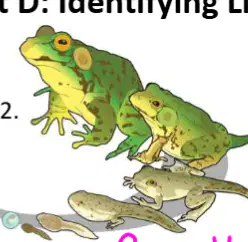
Look at the diagram. Life process: ________ Purpose: ________
Life process: Growth; Purpose: Increase size or number of cells
Life process: Respiration; Purpose: Exchange of gases
Life process: Reproduction; Purpose: Removal of wastes
Life process: Nutrition; Purpose: Transport of substances
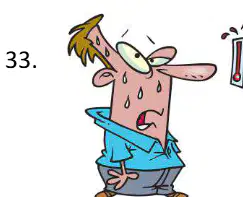
Look at the diagram. Life process: ________ Purpose: ________
Life process: Regulation/homeostasis; Purpose: Control and coordinate activities to maintain stable
Life process: Nutrition; Purpose: Break down food for energy
Life process: Respiration; Purpose: Exchange gases with the environment
Life process: Excretion; Purpose: Remove metabolic wastes
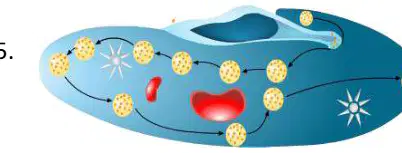
Look at the diagram. Life process: ________ Purpose: ________
Life process: Transport; Purpose: Move substance into/out of or around the organism
Life process: Respiration; Purpose: Break down food to release energy
Life process: Reproduction; Purpose: Produce offspring
Life process: Excretion; Purpose: Remove waste products from the body
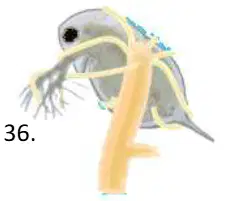
Look at the diagram. Life process: ________ Purpose: ________
Life process: Nutrition; Purpose: Obtain and process food for energy
Life process: Respiration; Purpose: Exchange of gases
Life process: Excretion; Purpose: Removal of waste products
Life process: Reproduction; Purpose: Production of offspring
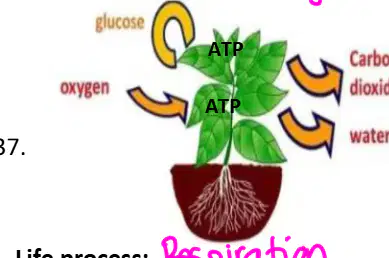
Look at the diagram. Life process: ________ Purpose: ________
Life process: Respiration; Purpose: Release energy (ATP) from food
Life process: Photosynthesis; Purpose: Absorb sunlight and produce glucose
Life process: Digestion; Purpose: Break down food into nutrients
Life process: Excretion; Purpose: Remove waste products from the body
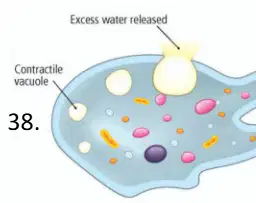
Look at the diagram. Life process: ________ Purpose: ________
Life process: Excretion; Purpose: Remove metabolic waste
Life process: Respiration; Purpose: Produce energy
Life process: Nutrition; Purpose: Absorb nutrients
Life process: Reproduction; Purpose: Produce offspring
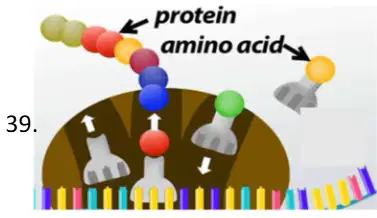
Look at the diagram. Life process: ________ Purpose: ________
Life process: Synthesis; Purpose: Build complex molecules
Life process: Digestion; Purpose: Break down food
Life process: Respiration; Purpose: Release energy
Life process: Excretion; Purpose: Remove waste
Which life process involves the breakdown of complex food substances into simpler forms that can be absorbed?
Excretion
Synthesis
Regulation
Digestion
Fill in each blank with the most appropriate term selected from the list below.
___________ is the process by which living things respond to changes in their environment to maintain balance.
Reproduction
Absorption
Transport
Regulation
What is the main function of the process of growth in living organisms?
Control of body temperature
Production of energy
Removal of waste products
Increase in size and number of cells
Which life process is responsible for maintaining a stable internal environment in living organisms?
Fermentation
Photosynthesis
Digestion
Homeostasis
Which of the following is an example of an organism carrying out synthesis?
A human exhaling carbon dioxide
A fish swimming in water
A plant making starch from glucose molecules
A bird eating seeds
What is the main function of the circulatory system in multicellular organisms?
Coordinating muscle movement
Transporting nutrients, gases, and wastes throughout the body
Producing energy from sunlight
Breaking down food into simpler substances
One characteristic of all living things is that they (a)
The ability to grow in size is characteristic of living organisms. Although an icicle may grow in size over time, it is considered nonliving because there is
an increase in matter, but no increase in the number of icicles
an interaction between the icicle and the environment
no way for the icicle to move away from heat
no metabolic activity present
Which term refers to the maintenance of a stable internal environment in an organism? (a)
A plant growing towards a light source is an example of which of the following?
attracting a mate
destroying infectious germs
responding to a stimuli
obtaining moisture from the air
Which of the following is a term used to describe all the chemical reactions that take place in a living thing?
Infants will often smile when they hear a parent’s voice. In this situation, the parent’s voice is considered
stimulus
response
adaptation
resource
Something has to move to be considered living.
True
False
Something has to breathe to be considered living.
True
False
All organisms have to obtain and use ____________ to stay alive.
oxygen
sunlight
energy
carbon dioxide
Something can be both living and nonliving.
True
False
A robot can move, respond to stimuli and, if programmed, can make another robot. They require energy by charging their batteries.
A robot is ....
Living
Non-living
Dead
Which characteristics definitely disqualifies viruses from being considered living organisms?
Reproduce
Made of similar chemicals
Made of cell(s)
Responds to stimuli
Which of the following is NOT a characteristic of living things?
Have cells
Sense and respond to changes in their environment
Ability to reproduce
Do not use energy to carry out activities of life
Grow and develop
Fill in the blank: Cells are very small membrane covered structures that contain all the materials necessary for life. They are found in all ________.
organisms
rocks
machines
minerals
Fill in the blank: The energy in food is made available to living things by the process of ________.
cellular respiration
photosynthesis
fermentation
transpiration
What are living things that make their own food called?
Heterotrophs
Autotrophs
Carnivores
Omnivores
Fill in the blank: All of the chemical reactions that occur within a living thing are called ________.
metabolism
osmosis
diffusion
respiration
Fill in the blank: The form of energy that all life runs on is ________.
ATP
DNA
Glucose
Chlorophyll
A tadpole becoming a frog is an example of ________.
development
photosynthesis
evaporation
respiration
A bear having thick fur is an example of species ________ over time.
evolving
hibernating
migrating
shrinking
What is homeostasis?
The ability to reproduce
The self-regulating ability of an organism to maintain a stable internal environment, such as body temperature
The process of cellular respiration
The ability to grow and develop
All living things carry out some form of cellular respiration.
True
False
Fill in the blank: A change in an organism's environment that affects the organism's activities is a ________.
stimulus
organism
reaction
nutrient
DNA contains information on how to make all the ________.
proteins
carbohydrates
lipids
vitamins
Which of the following is NOT one of the four necessities of life?
Air
Water
Food
Electricity
Living space
Plants, algae, and some bacteria need sunlight, water, and carbon dioxide to produce ______ and ______.
sugar and oxygen
protein and nitrogen
fat and water
starch and carbon dioxide
Both plants and animals grow in size.
True
False
Only living things have cells.
True
False
The sunlight changing the direction of the plant is an example of ______ and ______.
sense and respond
eat and grow
move and sleep
breathe and jump
Reproduce means animals have ______.
babies
wings
leaves
fins
Multicellular means made of many cells that are specialized to do ______ jobs.
particular
random
simple
temporary
If you touch something that is hot, you pull back your hand. This is an example of ______ and ______.
sense and respond
eat and drink
run and jump
see and hear
think and sleep
Yeast reproduces asexually.
True
False
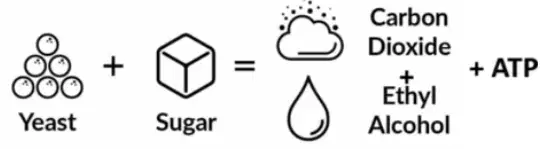
What are the products when yeast reacts with sugar?
Carbon dioxide, ethyl alcohol, and ATP
Oxygen, water, and glucose
Lactic acid, water, and ATP
Carbon dioxide, lactic acid, and glucose
What is the process called where cells use oxygen to release energy from food?
Cellular respiration
Photosynthesis
Fermentation
Transpiration
A worm is cut in half, each half develops into a whole worm. This is an example of ______ reproduction.
asexual
sexual
vegetative
spore
If something is living it must have all characteristics of life.
True
False
Match the following
Stimulus
any change internal or external
Heredity
passing of traits: parents to offspring
Metabolism
chemical processes in a cell
Homeostasis
maintain stable environment
Cell
has necessary materials for life
Match the following
sexual
two parents produce offspring
producer
uses sunlight, water, and CO2 for energ
asexual
single parent produces offspring
consumer
organism that eats others for energy
decomposer
gets energy by breaking down remains
Made of only one cell
(a)
Made of many cells
(a)
an action
(a)
Increase in size
(a)
changes in form that happen with growth
(a)
a change
(a)
When you step out into the cold, your body shivers in order to keep its temperature at 98.6F. Which characteristic of life does this represent?
All living things use energy
All living things contain cells
All living things maintain homeostasis
All living things grow
Which statement describes ALL living things?
They are composed of one or more cells.
They must reproduce sexually.
They have organ systems to carry out the processes of life.
They are capable of making their own food.
A baby song bird hatches from its egg with both parent songbirds watching. Which characteristic of life does this represent?
All living things reproduce
All living things maintain homeostasis
All living things use energy
All living things grow
The following are all characteristics of life EXCEPT:
made of cell(s)
eat food
respond stimuli
reproduce

Which of these is not true about all organisms?
all living things are multicellular
all living things obtain and use energy
all living things reproduce

The following list represents characteristics of a living thing :
made of cells, has lungs, can reproduce
made of cells, grows and develops, uses energy
has similar chemicals, makes noises, made of cells


Living things are based on a universal genetic
code. What molecule is responsible for that code?
RNA
Lipid
Protein
DNA
The combination of chemical reactions through
which an organism builds up or breaks down
materials as it carries out its life processes is called ...
absorption
metabolism
digestion
consumption
Maintaining a stable internal
environment is called
homeostasis
equilibrium
balance
evenness

The combination of chemical reactions through
which an organism builds up or breaks down
materials as it carries out its life processes is called ...
absorption
metabolism
digestion
consumption
Maintaining a stable internal
environment is called
homeostasis
equilibrium
balance
evenness
Green plants produce their own food through the process of photosynthesis. Which characteristic of life does this represent?
All living things use energy
All living things contain cells
All living things maintain homeostasis
All living things grow

Which characteristic of living things is represented in the picture?
Share similar chemicals
Grows and develops
Responds to stimuli
Evolves (as a population)

Which characteristic of living things is represented in the picture?
Respond to stimuli
Grow and develop
Evolution
Made of cells
The substance in plants and animals that act as an energy currency.
DNA
RNA
ADP
ATP
In which mode of nutrtion does an an organism make it's own food?
Saprophytic
Autotropic
Heterotrophic
Parasitic
The combination of chemical reactions through
which an organism builds up or breaks down
materials as it carries out its life processes is called ...
absorption
metabolism
digestion
consumption
True or False: Living things must be multicellular.
True
False
Which organelle contains genetic material?
Endoplasmic Reticulum
Golgi Complex
Nucleolus
Nucleus
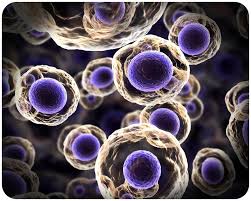

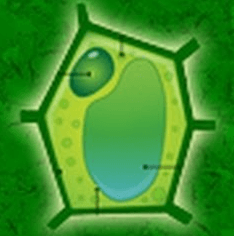


Which of the following shows the levels of organization in order from simple to complex?
1. Cell
2. Tissue
3. Organ
4. Organ System
5. Organism
1. Cell
2. Tissue
3. Organelle
4. Organ
5. Organ System
1. Tissue
2. Organelle
3. Cell
4. Organ
5. Organism
1. Organ
2. Tissue
3. Cell
4. Organism
5. Organ System

