
 Worksheets
Hematologic Abnormalities
Total questions: 71
Worksheet time: 36mins
Which of the following is a classification of abnormalities?
Cell number
Cell morphology
Both A and B
None of the above
Abnormalities can be characterized by increased cellularity, which is called ________.
hypercellular
hypocellular
acellular
metaplastic
Abnormalities can be characterized by decreased cellularity, which is called ________.
hypocellular
hypercellular
normocellular
acellular
Abnormalities can be characterized by absent cellularity, which is called ________.
aplastic
hyperplastic
dysplastic
neoplastic

The image shown is an example of which type of abnormality characterization?
Hypercellular
Hypocellular
Aplastic
Fill in the blank: ________ is defined as less than 25% myeloid cells.
Aplasia
Hyperplasia
Leukemia
Myelofibrosis
Fill in the blank: ________ is basophilia in bone marrow and peripheral blood.
Basophilic hyperplasia
Eosinophilic infiltration
Neutrophilic leukocytosis
Lymphocytic proliferation
Fill in the blank: ________ is abnormal erythrocyte maturation.
Dyserythropoiesis
Erythrocytosis
Leukopoiesis
Thrombocytopenia
Fill in the blank: ________ is abnormal granulocyte maturation.
Dysgranulopoiesis (dysmyelopoiesis)
Erythropoiesis
Thrombocytosis
Leukocytosis
Fill in the blank: ________ is abnormal megakaryocyte or thrombocyte maturation.
Dysmegakaryopoiesis (dysthrombopoiesis)
Erythropoiesis
Leukopoiesis
Hemostasis
Fill in the blank: ________ is eosinophilia in bone marrow and peripheral blood.
Eosinophilic hyperplasia
Neutrophilic leukocytosis
Basophilic anemia
Lymphocytic depletion
Fill in the blank: ________ is normal or increased cellularity with a normal or increased absolute neutrophil count and a low M : E ratio.
Erythroid hyperplasia
Myeloid hypoplasia
Aplastic anemia
Leukemoid reaction
Fill in the blank: ________ is normal or decreased cellularity with a normal or decreased absolute neutrophil count and a high M : E ratio.
Erythroid hypoplasia
Myeloid hyperplasia
Leukemoid reaction
Aplastic anemia
Fill in the blank: ________ is normal or increased cellularity with a normal or increased PCV and a high M : E ratio.
Granulocytic hyperplasia
Erythroid hypoplasia
Aplastic anemia
Lymphocytic leukemia
Fill in the blank: ________ is thickening of cortical bone.
Hyperostosis
Osteopenia
Osteomalacia
Osteoporosis
Fill in the blank: ________ is the presence of intact, viable blood cells within the cytoplasm of megakaryocytes.
Megakaryocyte emperipolesis
Megakaryocyte phagocytosis
Megakaryocyte apoptosis
Megakaryocyte endomitosis
Fill in the blank: ________ is an increase in numbers of megakaryocytes in bone marrow.
Megakaryocytic hyperplasia
Erythroid hyperplasia
Granulocytic hypoplasia
Lymphocytic atrophy
Fill in the blank: ________ is an increased presence of cells of the monocyte series.
Monocytic hyperplasia
Lymphocytic atrophy
Eosinophilic infiltration
Neutrophilic depletion
Fill in the blank: ________ is atypical cells with less than 30% blast cells present.
Myelodysplasia
Leukemia
Lymphoma
Polycythemia vera
Fill in the blank: ________ is increased presence of fibrous tissue that replaces hematopoietic tissue.
Myelofibrosis
Leukopenia
Erythrocytosis
Thrombocytopenia
Fill in the blank: ________ is atypical cells with more than 30% blast cells present.
Neoplasia
Anemia
Leukopenia
Thrombocytosis
Fill in the blank: ________ is neutrophilia in bone marrow and peripheral blood.
Neutrophilic hyperplasia, effective
Neutropenia, ineffective
Eosinophilic hyperplasia, effective
Lymphocytic hyperplasia, effective
Fill in the blank: ________ is neutrophilia in bone marrow concurrent with neutropenia in peripheral blood.
Neutrophilic hyperplasia, ineffective
Neutrophilic hypoplasia, effective
Eosinophilic hyperplasia, ineffective
Basophilic hyperplasia, effective
Fill in the blank: ________ is increased presence of active macrophages, often containing phagocytized material.
Reactive macrophage hyperplasia
Lymphoid follicular hyperplasia
Eosinophilic infiltration
Neutrophilic abscess
Fill in the blank: ________ is characterized by infiltration of bone marrow with fibrin exudate without inflammatory cells.
Fibrinous
Suppurative
Granulomatous
Hemorrhagic
Fill in the blank: ________ inflammation is characterized by increased numbers of plasma cells, mature lymphocytes, and mast cells.
Chronic
Acute
Granulomatous
Suppurative
Fill in the blank: ________ inflammation is characterized by increased numbers of macrophages.
Chronic granulomatous
Acute suppurative
Fibrinous
Serous
Fill in the blank: ________ inflammation is characterized by the presence of both macrophages and neutrophils.
Chronic pyogranulomatous
Acute serous
Fibrinous
Granulomatous
What is the common term for neoplasia?
Leukemia
Anemia
Diabetes
Arthritis
Neoplasia is characterized by a predominance of which type of cells in the bone marrow?
Blast cells
Plasma cells
Erythrocytes
Megakaryocytes
Neoplasia can be classified as lymphoproliferative and myeloproliferative.
True
False
What is the primary function of RBCs?
Fight infections
Transport and protect hemoglobin (O2 carrier)
Produce hormones
Store fat
The loss of RBCs each day should equal _________.
production
destruction
absorption
filtration
Which of the following is NOT a cause of anemia?
Decreased production of RBCs
Increased loss or destruction of RBCs
Increased hemoglobin concentration
Condition that involves O2 carrying capacity of RBCs
Anemia may be caused by reduced numbers of RBCs or decreased ________ concentration.
hemoglobin
glucose
calcium
cholesterol
Anemia is a condition that involves the O2 carrying capacity of RBCs.
True
False
Which laboratory test is used to evaluate anemia?
Reticulocyte counts
Erythrocyte indexes
RBC morphology
All of the above
Fill in the blank: Plasma color, turbidity, and total plasma protein concentration are laboratory tests used in the evaluation of _______.
anemia
fractures
hypertension
arthritis
What does MCV stand for in the context of anemia classification?
Mean Corpuscular Volume
Maximum Cell Value
Median Cell Volume
Microcellular Value
What does MCHC stand for in the context of anemia classification?
Mean Corpuscular Hemoglobin Concentration
Mean Cell Hemoglobin Content
Maximum Cellular Hemoglobin Concentration
Mean Corpuscular Hematocrit Count
Bone marrow is responding to the loss of blood in regenerative anemia.
True
False
Most animals exhibit signs of regeneration within how many days from the cause of anemia?
4 to 7 days
1 to 2 days
10 to 14 days
20 to 30 days
What is considered an adequate response in regenerative anemia?
Percentage of reticulocytes greater than or equal to the expected percentage for corresponding PCV
Decrease in white blood cell count below normal range
Increase in platelet count above normal range
Presence of spherocytes in peripheral blood smear
Horses rarely release reticulocytes, so bone marrow evaluations must be done.
True
False
What is nonregenerative anemia?
Bone marrow is unable to respond to blood loss
Bone marrow produces excess blood cells
Blood clots form excessively
Blood pressure increases rapidly
In nonregenerative anemia, reticulocytes are ______ in blood.
absent
increased
normal
fragmented
Which of the following is NOT a common cause of nonregenerative anemia?
Iron deficiency
Ehrlichiosis
Drug toxicity
Hypertension
In nonregenerative anemia, the bone marrow is able to respond to blood loss.
True
False
Which of the following is a common cause of nonregenerative anemia?
Hyperthyroidism
Hypothyroidism
Diabetes
Leukemia
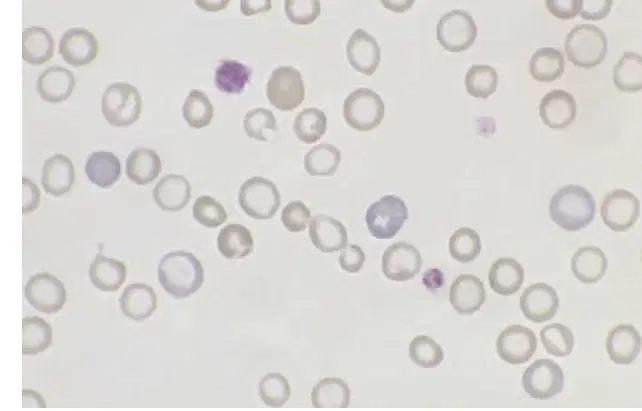
Fill in the blank: _______ are absent in blood in cases of nonregenerative anemia.
Reticulocytes
Neutrophils
Platelets
Erythrocytes
Which of the following is a cause of nonregenerative anemia?
Renal insufficiency
Vitamin C deficiency
Dehydration
Polycythemia
Which type of anemia is characterized by normal-sized RBCs and occurs secondary to acute or chronic disorders?
Normocytic anemia
Macrocytic anemia
Microcytic anemia
Which type of anemia is associated with large RBCs and a transitory increase in response to regenerative anemia?
Normocytic anemia
Macrocytic anemia
Microcytic anemia
Which type of anemia is linked to iron deficiency and small RBCs?
Normocytic anemia
Macrocytic anemia
Microcytic anemia
Fill in the blank: Hemoglobin concentration is dependent upon the ______ present in microcytic anemia.
iron
calcium
glucose
potassium
What does hypochromatic refer to?
Increased hemoglobin concentration
Reduced hemoglobin concentration
Normal levels of hemoglobin
Excessive hemoglobin in RBCs
Which of the following is associated with hypochromatic RBCs?
Iron deficiency
Vitamin B12 deficiency
Folate deficiency
Sickle cell anemia
Normochromic RBCs have ______ levels of hemoglobin.
normal
low
high
variable
Hyperchromatic is not possible as RBCs have a fixed capacity for _______.
hemoglobin
oxygen
glucose
iron
Which type of anemia is characterized by RBC destruction and is usually regenerative?
Hemolytic
Hemorrhagic
Iron Deficiency
Production Disorders
Hemorrhagic anemia is associated with which of the following?
RBC destruction
Acute or chronic blood loss
Microcytic RBCs
Erythropoiesis—reduced or defective
Fill in the blank: Iron Deficiency anemia is characterized by ________ RBCs and low MCHC.
Microcytic
Macrocytic
Normocytic
Spherocytic
Which of the following is NOT a cause of hemorrhagic anemia?
Trauma
Parasites
Erythropoiesis—reduced or defective
GI ulceration
Production Disorders anemia can be caused by which of the following?
Chronic renal disease
Hyperthyroidism
Parvovirus
All of the above
Hemolytic anemia is usually regenerative.
True
False
Which type of anemia is associated with nutritional or chronic blood loss?
Iron Deficiency
Pernicious Anemia
Sickle Cell Anemia
Aplastic Anemia
Fill in the blank: Production Disorders anemia is characterized by erythropoiesis that is ________ or defective.
reduced
increased
accelerated
enhanced
Which of the following is an example of immune-mediated destruction causing hemolytic anemia?
Anaplasma
Autoimmune hemolytic anemia
Leptospira
Onions
Fill in the blank: ________ is an erythrocyte parasite that can cause hemolytic anemia.
Anaplasma
Giardia
Leishmania
Trypanosoma
Which of the following is a bacterial or viral agent that can cause hemolytic anemia?
Babesia
Methylene blue
Feline leukemia virus
Acetaminophen
Fill in the blank: ________ is a toxic exposure that can cause hemolytic anemia.
Onions
Carrots
Potatoes
Lettuce

