
 Worksheets
8 Module Study Guide
Total questions: 50
Worksheet time: 37mins
Face, hands, underarms, back, buttocks and genital area
Face, neck, chest, and arms
Face, feet and legs
Hands, feet, chest and back
A complete bed bath would be given to a patient/resident who is:
(a)
A Nurse Assistant is bathing a patient/resident. Which of the following observations should be reported immediately to the nurse?
(a)
When bathing a patient/resident, the Nurse Assistant sees a swelling around the knee that is tender to touch. The Nurse Assistant should:
(a)
In preparing the bath for the dependent patient/resident, the Nurse Assistant should: Adjust the water to -
(a)
Leave the room at intervals to encourage the patient/resident to bathe on his own
Rinse off all soap completely and dry the skin thoroughly
Rub the skin vigorously to stimulate circulation
Apply soap to all areas before rinsing with fresh water
In a complete bed bath, the water is changed:
(a)
A surgical opening in the body for the discharge of body wastes.
(a)
On awakening, after each meal and at bedtime
After breakfast and after last meal or snack of the day
Before and after each meal
Before and after meals or snacks
In what position should an unconscious patient/resident be placed when performing oral care?
(a)
Send the dentures home with the family
Store them in a labeled container filled with cool water inside the bedside table drawer
Dry them and store in a plastic bag under the patient’s/resident’s pillow
Store them in a clean container in the clean utility room
When cleaning dentures, the Nurse Assistant should:
(a)
Prevent the patient/resident from aspirating (breathing in) any fluid
Hold the patient’s/resident’s mouth open with your fingers
Use large amounts of mouthwash for rinsing the patient’s/resident’s mouth
Wait at least 5 hours between each cleaning
As you brush Mrs. K’s teeth, you notice that her gums are bleeding. The Nurse Assistant should:
(a)
Soak his feet and then cut the nails using nail clippers
Report his request to the nurse
Give the patient/resident a nail clipper so that he may cut his nails himself
Use a sharp scissor to trim the excess nail after a bath
To clean under the fingernails of the patient/resident, the Nurse Assistant should:
(a)
Comb it into a new style each day
Style it according to the patient’s/resident’s wishes
Apply hair oil to reduce static
Wait until family comes in
Surface area between the thighs extending from the coccyx to the pubis that includes the anus posteriorly and the external genitalia anteriorly.
(a)
Remove tangles
Lower body temperature
Maintain cleanliness and well-being
Be part of daily care of patient/resident
An artificial body part, such as a leg, a heart, or a breast implant.
(a)
That the shampoo is left in the hair for a period of time before rinsing it out
That the medicinal solution is left in the hair without rinsing it out
Rinsing the hair with disinfectant solution
That the nurse perform the procedure rather than a Nurse Assistant
Apply an alcohol pre-shave solution
Keep the skin taut in the area being shaved
Move the razor in the opposite direction as the hair growth
Rinse the razor in a disinfectant solution during shave
Apply an oil based lotion to the skin
Clean the blades of the razor with a cleaning brush
Soak the razor in a disinfectant solution
Report the action to the charge nurse
A general rule for dressing a patient/resident who is paralyzed or injured is:
(a)
Weigh the patient/resident at different times each day
Have the patient/resident be NPO before weighing
Balance the scale before the patient/resident steps on it
Weigh the patient/resident fully dressed
Estimate the patient’s/resident’s height
Measure the patient’s/resident’s height while lying in bed
Ask the patient/resident how tall he was when ambulatory
Chart that the measurement was not done because the patient/resident could not stand
A discharge of the bowels
(a)
The Nurse Assistant is caring for a patient/resident who wants to shave with a safety razor. The patient/resident should not use the razor if the patient/resident is:
(a)
The Nurse Assistant is collecting supplies for colostomy care. Which of the following is NOT needed?
(a)
The colostomy bag must be changed every two hours
All colostomy patients/residents have liquid stools
The colostomy bag needs to be changed when the bag is leaking
A skin barrier will hold the bag in place without a belt
Prepare the patient/resident before bathing
Give a sponge bath if patient/resident resists tub or shower
Force the patient/resident into the shower or tub
Schedule bathing when patient/resident is agitated
Weigh the patient/resident at the same time of day
Hold the patient/resident on the scale, if unable to stand
Not weigh the patient/resident who is unable to stand on scale
Not allow the patient/resident to urinate before being weighed
When preparing to bathe a patient/resident, the Nurse Assistant should provide privacy curtains:
(a)
Bony areas such as shoulder blades, elbows, heels, and knees
Thicker areas such as thighs and upper arms
The abdomen and breasts
The genital area
Soak the feet in hot water after bathing
Wrap the feet in hot towels, trim toenails if needed, and lubricate feet
Wash and dry feet carefully and thoroughly, and check for any pressure signs
Wash feet carefully, trim toenails and apply lubricant to keep area between toes moist
Cannot control their bladder or bowels
Are lazy
Are able to control the bladder or bowels
Are confused
When putting in dentures, it is important to:
(a)
Every time the patient/resident uses the bathroom
Only when the patient/resident is soiled
Once a day and when the patient/resident is soiled
Once during each shift
Assist the patient/resident to bed and return later to clean the patient/resident
Give the patient/resident a washcloth and instruct him in proper cleaning techniques
Provide the patient/resident with privacy and clean him gently and thoroughly
Tell the patient/resident that he will be cleaned at bath time
Offer the patient/resident the toilet, bedpan or urinal at regular intervals
Tell the patient/resident that he will be assisted to the bathroom every four hours
Leave a bedpan under the patient/resident
Tell the patient/resident not to drink as much water
When caring for a patient/resident with dry skin, the Nurse Assistant should use:
(a)
Use the same size bedpan for all patients/residents
Wait until the patient/resident asks for a bedpan before giving one
Place the open end of the bedpan toward the patient’s/resident’s back
Allow privacy while the patient/resident is using the bedpan
When preparing to shave a patient/resident, the Nurse Assistant should soften the patient’s/resident’s facial hair by using:
(a)
Which bathing method should the Nurse Assistant select for a patient/resident on bed rest who needs total assistance?
(a)
Before breakfast and at bedtime
After breakfast and at bedtime
After breakfast, lunch and supper
Before breakfast, lunch, supper, and at bedtime
Bluish discoloration of the skin and mucous membranes, caused by a lack of oxygen in the blood.
(a)
When bathing a patient/resident, a Nurse Assistant should observe:
(a)
Tell the resident to wear the glasses only at mealtimes
Clean the glasses with a disinfectant solution
Put the glasses on the resident’s bedside table when not in use
Put the glasses in a labeled case when not in use
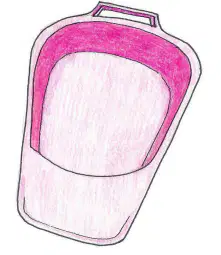
The bedpan shown below is a:
(a)

