
 Worksheets
Y9- Final Exam Review
Total questions: 109
Worksheet time: 57mins

What is a gene?
A molecule made of a nitrogen base, a sugar, and a phosphate
A short length of DNA that codes for a chromosome
A short length of DNA that codes for a protein
Coiled and condensed fibers that form chromosomes
Which of the following are the DNA nucleotides?
Adenine (A)
Thymine (T)
Uracil (U)
Cytosine (C)
Guanine (G)
What is the shape of DNA called?
Twisted Ladder
Double Helix
Spiraled Molecule
Ladder Helix
Which statement best describes DNA's relationship to a gene and chromosome?
A gene contains several chromosomes, and chromosomes are made from DNA.
A gene is a short section of DNA, and a chromosome is made from DNA.
DNA is made of chromosomes, and a gene contains DNA.
DNA is coiled into a chromosome, and a gene holds the chromosome together.

What is it?
cell
chromosome
nucleus
gene
In eukaryotes, chromosomes are found
in the nucleus
in the cytoplasm
in the cell wall
In prokaryotes (bacterial cells), DNA is found
in the nucleus
in the cytoplasm
In the cell wall

Eye color, hair color, having freckles, etc. are examples of:
DNA
Chromosomes
Genes
Traits
What do genes do?
Give the body chromosomes.
Control the DNA.
Control the production of proteins.

The sugar molecule that is part of a DNA nucleotide.
Phosphate Group
Nitrogenous Base
Deoxyribose

Which 2 molecules form the sides (backbone) of the DNA molecule?
deoxyribose sugar
hydrogen bonds
nitrogenous bases
phosphate groups
Which sequence of DNA bases would pair with this partial strand
ATG TGA CAG
ATG TGA CAG
TAC ACT GTC
GTA AGT GAC
CAT TCA CTG

The human genome contains a total of ____chromosomes.
23
46
92
all of the above
A group of similar organisms that do produce fertile offspring (offspring that can reproduce)
Species
Population
Generation
When species produce more offspring than can survive, this is called
Overproduction
Competition
Predation (predator/prey)
When resources are limited , organisms compete for these resources (food, land), and this is called...
Predation
Competition
Overproduction
Differences among individual members of the same species (think the finches) is called
natural selection
adaptation
variation
If green and brown moths live in a forest environment, the fact that the brown moths are easier to see and are less likely to survive is called
natural selection
overproduction
competition
What eventually happens to a species when the environment changes and the organisms do not adapt?
Classification
Extinction
Overproduction
A behavior or structure that allows organisms to survive, reproduce, and pass on traits to offspring is called an
competition
variation
adaptation
Which of the following is NOT one of the four conditions necessary for natural selection to occur?
Overproduction
Struggle to Survive/Competition
Symbiosis
Which term refers to an organism that hunts and kills for food?
Prey
Predator
Which term refers to an organism that is hunted and eaten for food?
Predator
Prey
Who studied on the Galapagos Islands and came up with the theory of evolution with natural selection?
Isaac Newton
Gregor Mendel
Charles Darwin
Individuals in a population that have a variation which gives them an advantage in their environment (cactus with thorns) are more likely to...
die and not reproduce
survive and reproduce
move to a different environment
According to Darwin's theory of natural selection, the organisms that tend to survive are those that have
the biggest bodies
the ability to change their bodies to fit the environment
variations best suited to their environment
If an organism has good fitness, what does that mean?
It runs fast and has ability to reproduce
It has great strength and the ability to reproduce
It survives and reproduces, passing on its favorable traits to offspring
The theory of use and disuse of organs was given by:
Lamarck
Darwin
Weismann
Hugo de Vries
According to Lamarckism, long necked giraffes evolved because:
nature selected only long necked ones
humans preferred only long necked ones
short necks suddenly changed into long necks
of stretching of necks over many generations by short necked ones
_________, an English biologist published the theory of natural selection, which preaches the survival of the fittest.
Hugo de Vries
George Beadle and Edward Tatum
Charles Darwin
Alfred Russel
Similarity in the bone structure of a human arm, a bulls leg, a bat's wing and a whale fin is_______
Anatomical evidence
Morphological Evidence
Paleontological evidence
Embryological evidence
The function of the Urinary System is to...
filter wastes from your blood.
move food around your systems.
regulate the amount of water in your cells.
help the body move.
The kidney's job is to...
make bile.
store urine.
filter waste from blood.
release urine outside of the body.

What is #1?
bladder
kidney
ureter
urethra

What is #2?
bladder
kidney
ureter
urethra

What is #3?
bladder
kidney
ureter
urethra

What is #4?
bladder
kidney
ureter
urethra
Which organ produces urea?
Liver
Pancreas
Kidneys
Bladder
Why does the volume of urine produced by a person change throughout the day?
The kidneys only work at night.
The bladder produces more urine when it is full.
The amount of water intake, sweating, and temperature affect how much water is excreted.
The body produces more urea at night than during the day.
An increase in water intake (drinking water) will increase the amount of urine produced.
True
False
This is the organ that excretes urea
Kidney
Liver
Bladder
Heart
What is the name of the gas that is excreted through the lungs?
Oxygen
Carbon dioxide
Ammonia
The process by which plant cells use energy from the sun to convert carbon dioxide and water into make sugar and oxygen is called __________.
Phototropism
Cellular Respiration
Mitosis
Photosynthesis
Multiple select: What are the products of photosynthesis?
oxygen
water
glucose
carbon dioxide
light energy
Where does photosynthesis occur?
Golgi Body
Chloroplast
Nucleus
Mitochondria
Cell Wall
How does carbon dioxide get into plant cells?
absorbed with water through the leaves
taken in through stomata on the underside of leaves
plants do no take in carbon dioxide
absorbed through roots

Which organelle is responsible making food (carbohydrates/Glucose) using sunlight?
Cell Membrane
Nucleus
Chloroplast
Mitochondria

Which of the following is the word equation for photosynthesis?
carbon dioxide + water --> glucose + oxygen
carbon dioxide + sugar + water --> oxygen
oxygen + water --> carbon dioxide + sugar
carbon dioxide + oxygen + water --> Sugar
Which of the following shows the balanced chemical equation for photosynthesis?
CO₂ + H₂O → C₆H₁₂O₆ + O₂
6CO₂ + 6H₂O → C₆H₁₂O₆ + 6O₂
C₆H₁₂O₆ + 6O₂ → 6CO₂ + 6H₂O
6O₂ + 6H₂O → C₆H₁₂O₆ + 6CO₂

Which are features of leaves of xerophytes? (tick all that apply)
thick cuticle
flat leaves
hairs on leaves
raised stomata
Two structures on a plant that work to reduce water loss include
Stomata
Roots
Waxy cuticle on leaves and stems
Stem

What is a correct statement for these results?
Carbon dioxide concentration is a limiting factor at 1
No enzymes are denatured at 3
Light intensity is a limiting factor at 4
Temperature is a limiting factor at 2
Which process removes carbon dioxide from the atmosphere?
Respiration
Combustion
Decomposition
Photosynthesis
What is the name of the green pigment found in chloroplasts?
Palisade
Mesophyll
Chlorophyll
Chloride
Which set of environmental conditions would cause the greatest rate of transpiration in a plant?
Low temperature, high humidity, and no wind
High temperature, low humidity, and windy conditions
High humidity, low temperature, and no wind
Low light intensity, high humidity, and still air
Genes code for
carbohydrates
proteins
lipids
chromosomes
Males have an _____ sex chromosome. They receive their ___ chromosome from their father.
XY, Y
XY, X
XX, X
XX, Y
Which type of data would student height be categorized as?
Categorical
Continuous
Discontinuous
Normal
Which of the following are example(s) of continuous variation?
seed color in peas
blood group
body mass
What is the best definition of biodiversity?
The variety of different species and the number of individuals within each species in an ecosyste
The number of plants in a habitat
The variety of abiotic factors in an environment
The total number of animals in an ecosystem
What is the effect of increasing temperature on the rate of photosynthesis in plants?
The rate decreases steadily as temperature increases.
The rate keeps increasing with temperature with no limit.
Temperature has no effect on photosynthesis.
The rate increases up to an optimum temperature, then decreases when enzymes denature.


What are the 3 reactants of photosynthesis? The reactants are the things needed for photosynthesis to occur.
oxygen, glucose, sunlight
sunlight, oxygen, water
water, oxygen, carbon dioxide
carbon dioxide, sunlight, water

Which of the following is a byproduct of photosynthesis?
oxygen
carbon dioxide
sugar
glucose
Which of the following is the correct equation for PHOTOSYNTHESIS?
light + carbon dioxide + water --> glucose + oxygen
carbon dioxide + sugar + water --> oxygen + light
oxygen + light + water --> carbon dioxide + sugar
carbon dioxide + oxygen + water --> Light+ Sugar
Exit: Carbon dioxide
Exit: Glucose
Exit: Oxygen
Exit: Water vapor
How does carbon dioxide get into the leaves of a plant?
It's absorbed by the roots
It's made in a chemical reaction in the stem
It enters through the stomata in the leaves
It goes through the flowers
How does most of the water needed by the plant get into its leaves?
It enters through the stomata
The roots absorb it and then it travels up the stem
It's made during a chemical reaction in the leaf
The flowers capture water and deliver it to the leaves
Which organelle is responsible making food (Glucose) using sunlight?
Cell Membrane
Nucleus
Chloroplast
Mitochondria
Urine leaves the Kidney via the _____________ to be stored
URETERS
BLADDER
URETHRA
What is the function of the urinary system?
To create solid waste
To pump blood
To filter blood and create urine
To only create urine
The urinary system removes toxins and waste from our body through...
Filtering out blood
Urine
Homeostasis
Producing hormones

Which structure is labelled "A"?
Urethra
Ureter
Kidney
Lung
How does urine leave the body?
Through the ureter
Through the bladder
Through the urethra
Through the kidney
Which structure is labelled "B"?
Urethra
Ureter
Kidney
Vein
Which structure is labelled "D"?
Urethra
Ureter
Bladder
Artery
Which structure is labelled "C"?
Urethra
Ureter
Bladder
Heart
Who would have a longer urethra?
Males
Females
They're both the same
Females don't have one
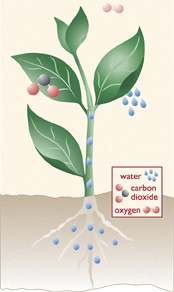
Where is xylem found in the plant?
leave -> roots -> stem
roots -> stem -> leaves
root hairs -> leaves -> veins
stem -> roots
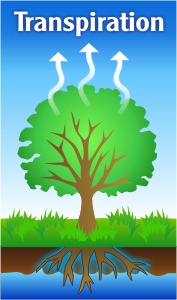
Which of the following indicates the pathway of water through a plant?
root hair cell --> xylem --> stomata
stomata --> root hair cell --> xylem
xylem --> stomata --> root hair cell
What is the function of waxy cuticle on the leaves surface?
Provide water for the plant through the leaves
Reduce the loss of water from the plants by evaporation
Protect the plants from danger
Transpiration process in plants occur
at night
during daytime

Specific type of plant tissue that transports food (sugar) made in the leaves to the entire plant
vascular plant
nonvascular plant
xylem
phloem
Select all of the environmental factors that would increase transpiration.
Increased humidity
Increased wind speed
Increased temperature
Decreased surface area

