
Font size
 Worksheets
Histology and Tissues Quiz
Total questions: 93
Worksheet time: 47mins
What is the term for an aggregate of cells that are similar in structure and function?
Organ
Tissue
System
Molecule
What does histology study?
Organs
Cells
Tissues
Bones
If a scientist is examining the structure and function of muscle tissue, which field are they working in?
Physiology
Histology
Pathology
Cytology
Which of the following best describes the relationship between histology and tissues?
Histology is a type of tissue
Tissues are the study of histology
Histology is the study of tissues
Tissues are unrelated to histology
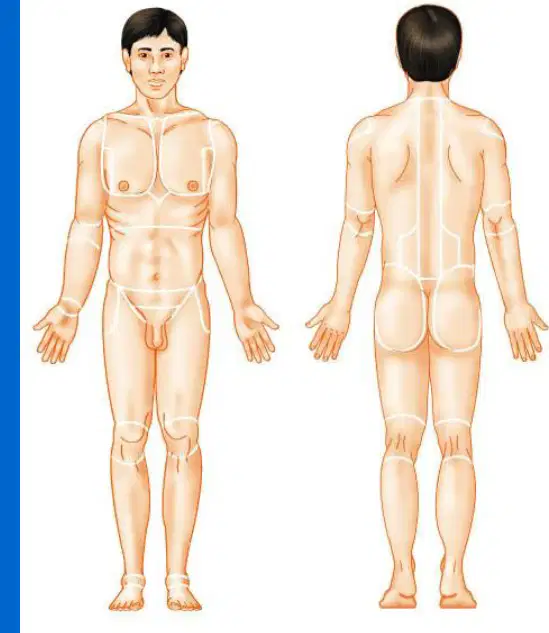
What is the primary function of epithelial tissue in the human body?
To transmit nerve impulses
To cover body surfaces or line body cavities
To store fat
To produce red blood cells
The upper layer of which organ is made up of epithelial tissue?
Heart
Liver
Skin
Brain
Explain why epithelial tissue is important for the function of the skin as the largest organ in the body.
It allows the skin to contract and relax
It provides a protective covering and helps in secretion and absorption
It stores minerals for the body
It transmits electrical signals
Which of the following best describes the cellularity characteristic of epithelium?
Composed of loosely arranged cells
Composed of close-packed cells
Contains only a few cells
Made up of fluid-filled spaces
What is the function of specialized contacts in epithelial tissue?
To allow free movement of cells
To bind adjacent cells together at many points
To provide nutrients to the cells
To store waste products
Which surface of epithelial cells may contain microvilli or cilia?
Lateral surface
Basal surface
Apical surface
Deep surface
What forms the basement membrane in epithelial tissue?
Only the basal lamina
Only the reticular lamina
Both basal and reticular lamina
Only the apical surface
Which statement about epithelial tissue is correct?
It is supplied by blood vessels but not nerves
It is avascular but innervated
It is neither avascular nor innervated
It is only supplied by blood vessels
Why is the regenerative capacity of epithelial tissue important?
It allows the tissue to store nutrients
It enables the tissue to quickly repair and replace damaged cells
It helps the tissue to conduct electrical impulses
It prevents the tissue from forming specialized contacts
Which type of epithelia consists of a single layer of cells?
Simple epithelia
Stratified epithelia
Pseudostratified epithelia
Transitional epithelia
What is a characteristic feature of stratified epithelia?
Single layer of cells
Multiple layers of cells
Cells that look like multiple layers but are not
Cells that can change shape
Which type of epithelia appears to have multiple layers but actually has only one?
Simple epithelia
Stratified epithelia
Pseudostratified epithelia
Transitional epithelia
Transitional epithelia are unique because they:
Are always a single layer
Have binucleated cells and can change shape
Are found only in the lungs
Are made of squamous cells only
A histologist observes a tissue sample with multiple layers of cells. Which classification of epithelia is most likely being observed?
Simple epithelia
Stratified epithelia
Pseudostratified epithelia
Transitional epithelia
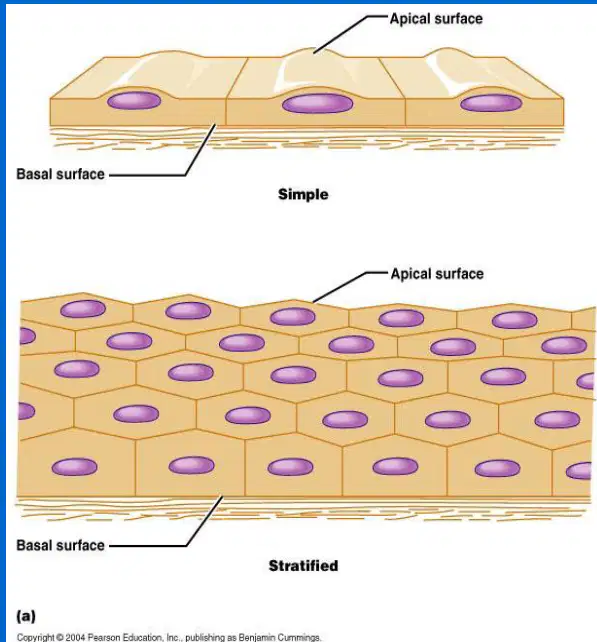
Based on the diagram, which surface is in contact with the external environment or the lumen?
Basal surface
Apical surface
Lateral surface
Deep surface
Why might transitional epithelia be important in organs such as the bladder?
They provide a rigid structure
They allow for stretching and shape change
They secrete hormones
They are always ciliated
Which type of epithelia consists of a single layer of cells?
Simple Epithelia
Stratified
Pseudostratified
Transitional
What is the main characteristic of stratified epithelia?
Single layer
Multiple layers
False layers
Binucleated cells
Pseudostratified epithelia are best described as:
Multiple layers of cells
Single layer that looks like multiple layers
Layered cells that change shape
Cells with multiple nuclei
Which type of epithelia contains layered cells that are able to change shape and may have binucleated cells?
Simple Epithelia
Stratified
Pseudostratified
Transitional
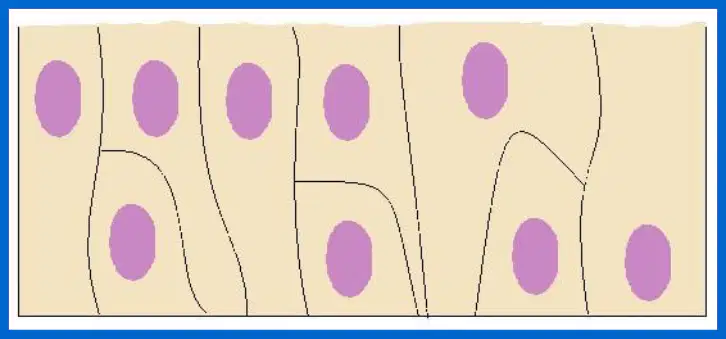
A tissue sample shows a single layer of cells, but it appears to have multiple layers under the microscope. Which classification does this tissue most likely belong to?
Simple Epithelia
Stratified
Pseudostratified
Transitional
Which type of epithelial cell is described as "flattened and scalelike or fried egg-shaped"?
Squamous
Cuboidal
Columnar
Transitional
What is the shape of cuboidal epithelial cells?
Tall and column-shaped
Boxlike or cubelike
Flattened and scalelike
Star-shaped
Columnar epithelial cells are best described as:
Flattened and scalelike
Boxlike or cubelike
Tall and column-shaped
Spherical
A tissue sample under the microscope shows cells that are tall and arranged in columns. Which classification of epithelia does this most likely represent?
Squamous
Cuboidal
Columnar
Transitional
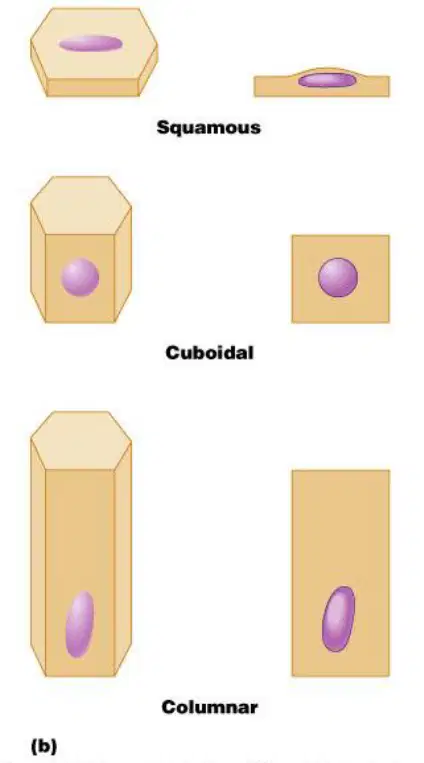
Based on the diagram, which cell type would be most effective for rapid diffusion due to its thin, flat shape?
Squamous
Cuboidal
Columnar
Transitional
Which type of simple epithelial tissue is found in the lungs?
Squamous
Cuboidal
Columnar
Transitional
What is the main characteristic of ciliated cells?
They have microvilli
They are found in the skin
They are stratified
They are transitional
Where would you most likely find stratified cuboidal epithelial tissue?
Sweat glands
Lungs
Stomach
Bladder
Which type of epithelial tissue lines the urethra?
Stratified columnar
Simple squamous
Simple cuboidal
Pseudostratified
Compare and contrast the locations of simple and stratified squamous epithelial tissues in the body. Why might their locations be functionally significant?
Simple squamous is found in the lungs for gas exchange, while stratified squamous is found in the skin for protection; their locations relate to their functions—simple for diffusion, stratified for protection.
Both are found in the stomach for digestion.
Simple squamous is found in sweat glands, while stratified squamous is found in the bladder.
Both are found in the urethra for secretion.
A patient has damage to the epithelial tissue lining their bladder. Which type of epithelial tissue is most likely affected?
Transitional
Simple columnar
Stratified squamous
Pseudostratified
Which of the following best describes the structure of simple squamous epithelium?
Single layer of flattened cells with disc-shaped central nuclei and sparse cytoplasm
Multiple layers of cube-shaped cells with large nuclei
Single layer of column-shaped cells with elongated nuclei
Multiple layers of flattened cells with abundant cytoplasm
What is the primary function of simple squamous epithelium?
Absorption of nutrients
Allows passage of materials by diffusion and filtration; secretes lubricating substances in serosae
Protection against mechanical stress
Production of hormones
In which of the following locations would you most likely find simple squamous epithelium?
Lining of the stomach
Kidney glomeruli and air sacs of lungs
Surface of the skin
Lining of the esophagus
Why is simple squamous epithelium particularly suited for areas where diffusion and filtration occur?
Its multiple layers provide extra protection
Its flattened, single-layer structure facilitates efficient exchange of materials
Its thick cytoplasm slows down the movement of substances
Its columnar shape increases surface area for absorption
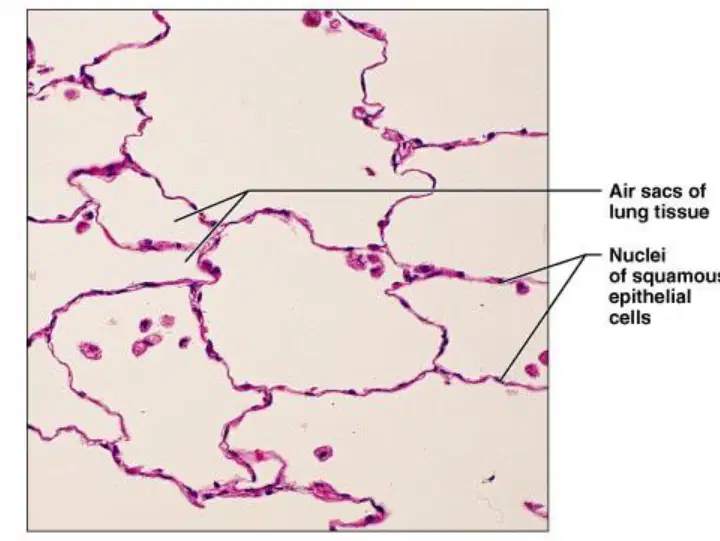
What does the photomicrograph in the image primarily show?
The structure of kidney tubules
The arrangement of squamous epithelial cells in the air sacs of lung tissue
The layers of the skin
The lining of the stomach
What is the main function of simple cuboidal epithelium?
Protection and support
Secretion and absorption
Filtration and diffusion
Sensory reception
Where is simple cuboidal epithelium commonly found in the human body?
Lining of the trachea
Kidney tubules and ducts of small glands
Outer layer of the skin
Alveoli of the lungs
Which of the following best describes the structure of simple cuboidal epithelium?
Multiple layers of flat cells
Single layer of cubelike cells with large, spherical central nuclei
Single layer of tall, column-like cells
Multiple layers of irregularly shaped cells
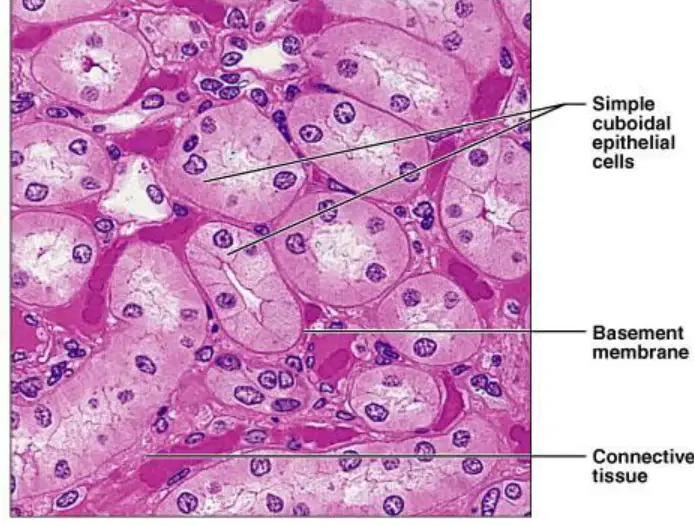
Based on the diagram, which labeled structure is responsible for supporting the simple cuboidal epithelial cells?
Basement membrane
Simple cuboidal epithelial cells
Connective tissue
Nucleus
Why is the simple cuboidal epithelium well-suited for secretion and absorption in kidney tubules?
Its multiple layers provide extra protection
Its cubelike shape and single layer allow efficient exchange of substances
It contains cilia to move fluids
It is highly vascularized
Which of the following best describes the structure of stratified squamous epithelium?
Single layer of cuboidal cells
Thick membrane composed of several cell layers with surface cells flattened
Single layer of columnar cells
Multiple layers of columnar cells with cilia
What is the primary function of stratified squamous epithelium?
Absorption of nutrients
Secretion of hormones
Protection of underlying tissues in areas subjected to abrasion
Filtration of blood
Where would you most likely find nonkeratinized stratified squamous epithelium in the human body?
Epidermis of the skin
Lining of the esophagus, mouth, and vagina
Alveoli of the lungs
Renal tubules
Which statement best explains the difference between keratinized and nonkeratinized stratified squamous epithelium?
Keratinized type is found in moist linings, nonkeratinized in dry membranes
Keratinized type is full of keratin and dead cells, nonkeratinized is not
Nonkeratinized type is only found in the lungs
Both types are identical in structure and function
A patient has a condition that causes frequent abrasion in the lining of their esophagus. Which tissue type is most likely to be affected?
Simple cuboidal epithelium
Stratified squamous epithelium
Transitional epithelium
Simple columnar epithelium
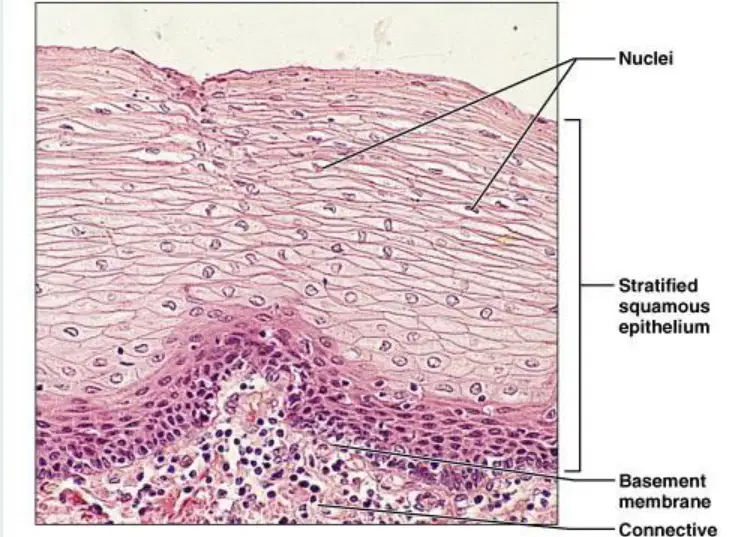
What does the photomicrograph in the image primarily illustrate?
The structure of simple columnar epithelium
The layers and organization of stratified squamous epithelium
The arrangement of muscle fibers
The structure of glandular tissue
What is the primary function of stratified cuboidal epithelium?
Absorption
Filtration
Protection
Secretion
Where is stratified cuboidal epithelium most commonly found in the human body?
Alveoli of the lungs
Largest ducts of sweat glands, mammary glands, and salivary glands
Lining of the stomach
Inner lining of blood vessels
How many layers of cells are generally present in stratified cuboidal epithelium?
One
Two
Three
Four
Which of the following best describes the appearance of cells in stratified cuboidal epithelium?
Flat and scale-like
Column-shaped
Cube-like
Irregular and multi-shaped
Why is the structure of stratified cuboidal epithelium particularly suited for its function in glandular ducts?
The multiple layers provide extra protection against abrasion and chemical stress.
The single layer allows for rapid diffusion.
The flat cells maximize surface area for absorption.
The irregular shape allows for flexibility.
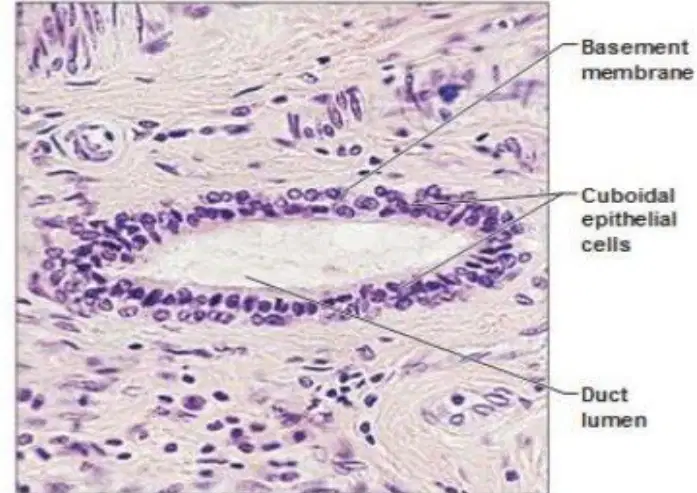
Refer to the diagram showing stratified cuboidal epithelium. What is the function of the basement membrane as labeled in the image?
It stores nutrients for the cells.
It provides structural support and anchors the epithelium to underlying tissues.
It produces hormones.
It acts as a barrier to water loss.
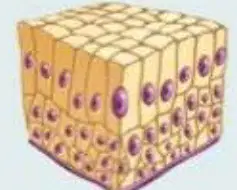
Which of the following best describes the structure of stratified columnar epithelium?
Single layer of flat cells
Several cell layers; basal cells usually cuboidal; superficial cells elongated and columnar
Single layer of cuboidal cells
Several layers of squamous cells only
What is the primary function of stratified columnar epithelium?
Absorption
Filtration
Protection and secretion
Sensory reception
Where in the human body is stratified columnar epithelium most likely to be found?
Lining of the stomach
Small intestine
Small amounts in male urethra and in large ducts of some glands
Outer layer of skin
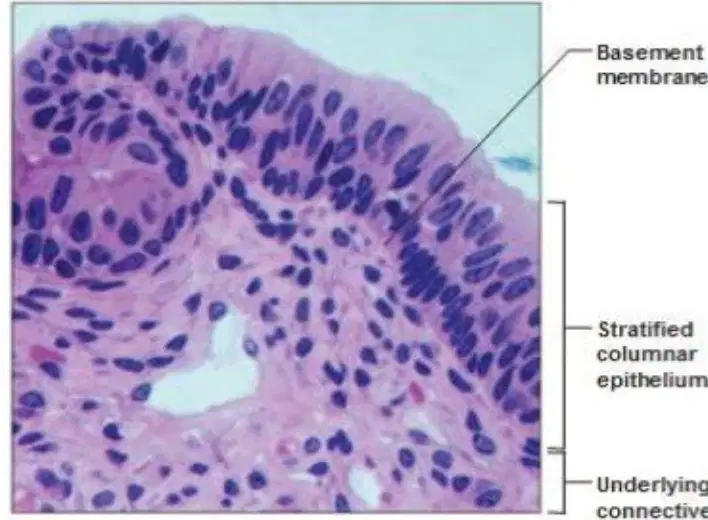
Based on the photomicrograph and description, why might stratified columnar epithelium be well-suited for its locations in the body?
Its multiple layers provide extra protection and allow for secretion in areas exposed to mechanical or chemical stress
Its thinness allows for rapid diffusion
Its cilia help move mucus
Its single layer allows for easy absorption
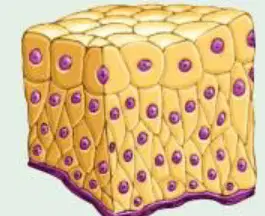
Which of the following best describes the appearance of transitional epithelium?
Resembles both stratified squamous and stratified cuboidal; surface cells dome-shaped or squamouslike depending on organ stretch
Single layer of flat cells with a central nucleus
Multiple layers of columnar cells with cilia
Single layer of cuboidal cells with microvilli
What is the primary function of transitional epithelium?
Absorption of nutrients
Stretching readily and permitting distension of urinary organ by contained urine
Secretion of mucus
Protection against pathogens
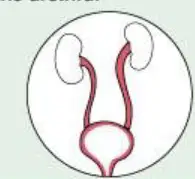
Where in the body is transitional epithelium most likely to be found?
Lining the small intestine
Lining the ureters, bladder, and part of the urethra
Covering the skin surface
Lining the trachea
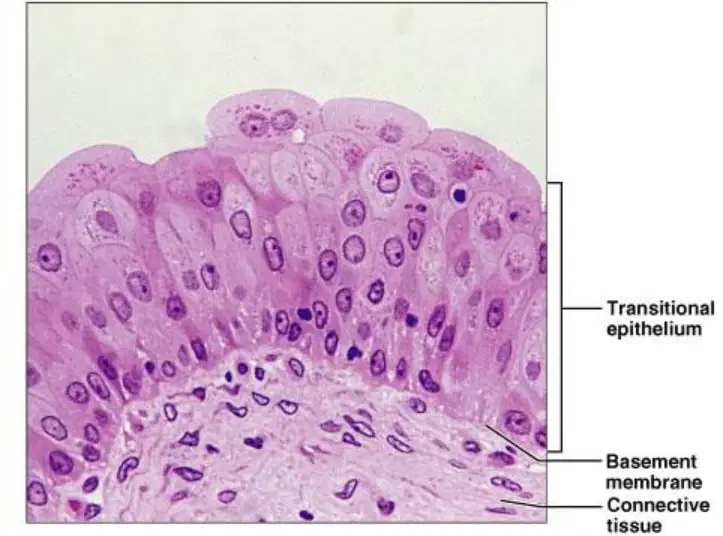
Based on the photomicrograph, what happens to the surface cells of transitional epithelium when the bladder is filled with urine?
The cells become more cuboidal
The cells flatten and become elongated
The cells become more columnar
The cells develop cilia
Why is the ability of transitional epithelium to stretch important for its function in the urinary system?
It allows for increased absorption of nutrients
It enables the urinary organs to accommodate fluctuating volumes of urine
It helps in the secretion of digestive enzymes
It provides a rigid barrier against mechanical injury
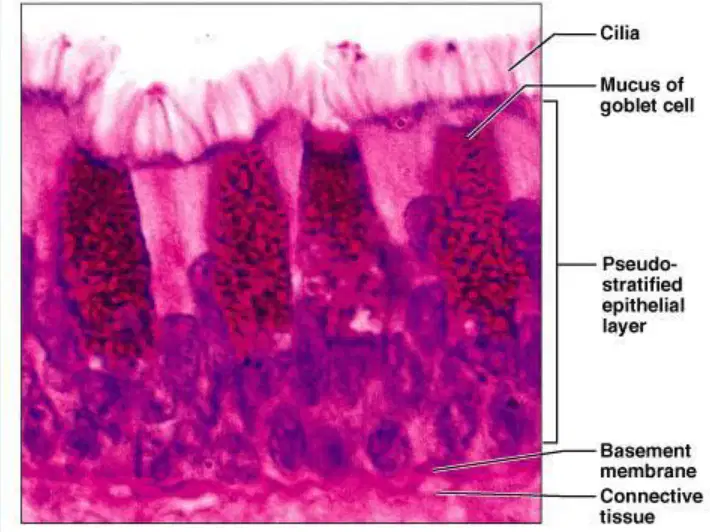
Which of the following best describes pseudostratified columnar epithelium?
Multiple layers of flat cells with nuclei at the same level
Single layer of cells of differing heights, some not reaching the free surface, with nuclei at different levels
Single layer of cube-shaped cells with nuclei in the center
Multiple layers of column-shaped cells with nuclei at the base
What is the primary function of pseudostratified columnar epithelium?
Absorption of nutrients
Secretion, particularly of mucus, and propulsion of mucus by ciliary action
Protection against mechanical stress
Filtration of blood
Where is ciliated pseudostratified columnar epithelium most commonly found in the human body?
Lining of the stomach
Lining the trachea and most of the upper respiratory tract
Covering the skin
Lining the urinary bladder
Explain how the structure of pseudostratified columnar epithelium supports its function in the respiratory tract.
The single layer of cells with varying heights and cilia allows for efficient secretion and movement of mucus, trapping and removing particles from the respiratory tract.
The multiple layers of flat cells provide a strong barrier against pathogens.
The cube-shaped cells absorb nutrients quickly.
The thick layer of cells prevents water loss.
What is a gland?
One or more cells that make and secrete a particular product
A type of connective tissue
A type of muscle cell
A blood vessel
What is the aqueous substance produced by glands called?
Secretion
Filtrate
Plasma
Enzyme
Which of the following best describes the function of endocrine glands?
Secrete a product called a hormone by exocytosis into the extracellular matrix
Secrete digestive enzymes into the stomach
Absorb nutrients from the intestine
Filter blood in the kidneys
How do exocrine glands release their products?
Either on the body surface or into body cavities
Directly into the bloodstream
Into the lymphatic system
Into the bone marrow
Compare and contrast endocrine and exocrine glands in terms of their secretion methods and targets.
Endocrine glands secrete hormones into the extracellular matrix, while exocrine glands secrete products onto body surfaces or into body cavities.
Both secrete products into the bloodstream.
Endocrine glands secrete digestive enzymes, while exocrine glands secrete hormones.
Both secrete products only onto the body surface.
Which of the following is a characteristic of unicellular exocrine glands?
They are made up of multiple cells
They secrete hormones directly into the blood
They include goblet cells that secrete mucin
They always have branched ducts
What happens to mucin secreted by unicellular glands in the presence of water?
It becomes a hormone
It becomes mucus
It forms a solid mass
It turns into an enzyme
Which type of multicellular gland contains unbranched ducts?
Compound gland
Simple gland
Tubuloalveolar gland
Alveolar gland
How do compound glands differ from simple glands?
Compound glands have unbranched ducts, while simple glands have branched ducts
Compound glands have branched ducts, while simple glands have unbranched ducts
Both have only one cell type
Both secrete hormones
A gland that has both tubular and alveolar structures is called:
Simple gland
Compound gland
Tubuloalveolar gland
Goblet cell
If a scientist discovers a gland with sac-like secretory units, how should it be classified?
Tubular
Alveolar
Simple
Tubuloalveolar
Explain how the structure of a tubuloalveolar gland differs from a purely tubular or purely alveolar gland.
Tubuloalveolar glands have only tubes, while tubular glands have both tubes and sacs
Tubuloalveolar glands have both tubes and sacs, while tubular glands have only tubes and alveolar glands have only sacs
Tubuloalveolar glands have only sacs, while alveolar glands have both tubes and sacs
Tubuloalveolar glands have neither tubes nor sacs
Which tissue type is described as the most abundant and widely distributed in the body?
Connective tissue
Muscle tissue
Nervous tissue
Epithelial tissue
What is one of the main functions of connective tissue in the body?
Producing hormones
Binding and support
Conducting nerve impulses
Contracting to produce movement
Connective tissue is found as the underlying layer of which of the following?
The heart
The largest body organ, the skin
The brain
The lungs
Which of the following is NOT a function of connective tissue?
Insulation
Protection
Transportation of substances
Secretion of digestive enzymes
A patient has a disorder affecting the transportation of substances in their blood. Which tissue type is most likely involved?
Muscle tissue
Connective tissue
Nervous tissue
Epithelial tissue
What is the common origin of connective tissue?
Ectoderm
Endoderm
Mesenchyme
Epithelium
Which of the following best describes the function of ground substance in connective tissue?
Provides energy for cells
Unstructured material that fills the space between cells
Transports oxygen
Produces hormones
Which type of fiber in connective tissue is described as long, thin fibers that branch to form networks?
Collagen
Elastic
Reticular
Keratin
Compare and contrast the roles of collagen, elastic, and reticular fibers in connective tissue.
All three fibers provide the same type of support and structure.
Collagen fibers are thick and provide strength, elastic fibers are long and thin for flexibility, and reticular fibers are fine and form networks for support.
Collagen fibers are only found in muscles, elastic fibers only in skin, and reticular fibers only in bones.
Collagen and elastic fibers are both thick, while reticular fibers are not present in connective tissue.
Which characteristic is NOT associated with connective tissue?
Common origin from mesenchyme
Wide variety of vascularity
Lack of extracellular matrix
Presence of protein fibers for support

