
 Worksheets
chapter 5
Total questions: 96
Worksheet time: 48mins
Define the term orbital. (Note: orbit and orbital are different)
An orbital is a region in an atom where there is a high probability of finding electrons. Orbit refers to a fixed path, while orbital is a probability region.
An orbital is a fixed path around the nucleus where electrons revolve.
An orbital is the distance between two atoms in a molecule.
An orbital is the energy required to remove an electron from an atom.
Which of the following correctly explains all four quantum numbers of an electron in an orbital?
Principal (n), Azimuthal (l), Magnetic (m), and Spin (s) quantum numbers describe the size, shape, orientation, and spin of an electron's orbital.
Principal (n), Azimuthal (l), Magnetic (m), and Charge (q) quantum numbers describe the size, shape, orientation, and charge of an electron's orbital.
Principal (n), Azimuthal (l), Magnetic (m), and Energy (e) quantum numbers describe the size, shape, orientation, and energy of an electron's orbital.
Principal (n), Azimuthal (l), Magnetic (m), and Mass (m) quantum numbers describe the size, shape, orientation, and mass of an electron's orbital.
The 3-D shapes of s and p orbitals are:
spherical for s orbital and dumbbell-shaped for p orbital
dumbbell-shaped for s orbital and spherical for p orbital
both are spherical
both are dumbbell-shaped
Deduce the relationships between n, ℓ, mℓ, ms, number of orbitals and number of electrons.
The values of n, ℓ, mℓ, and ms determine the number of orbitals and electrons in an atom.
n and ℓ only determine the number of electrons, while mℓ and ms are unrelated.
Only n and ms determine the number of orbitals, while ℓ and mℓ are unrelated.
The number of orbitals is independent of n, ℓ, mℓ, and ms.
The Aufbau principle explains the order in which electrons fill atomic orbitals. Deduce the relative energies of the 1s, 2s, 2p, 3s, 3p, 4s, and 3d orbitals.
1s < 2s < 2p < 3s < 3p < 4s < 3d
1s < 2s < 3s < 2p < 3p < 4s < 3d
1s < 2s < 2p < 3s < 4s < 3p < 3d
1s < 2s < 2p < 3s < 3d < 3p < 4s
Hund’s rule, Pauli exclusion principle, and the rule of stability in orbitals of an atom are explained as:
Hund’s rule states that electrons fill degenerate orbitals singly first, Pauli exclusion principle states no two electrons can have the same set of quantum numbers, and the rule of stability states that fully filled and half-filled orbitals are more stable.
Hund’s rule states that electrons pair up in orbitals before occupying them singly, Pauli exclusion principle allows two electrons in the same quantum state, and the rule of stability states that empty orbitals are most stable.
Hund’s rule and Pauli exclusion principle both state that electrons fill orbitals in pairs, and the rule of stability states that partially filled orbitals are most stable.
Hund’s rule states that electrons fill lower energy orbitals first, Pauli exclusion principle states that electrons can share quantum numbers, and the rule of stability states that unfilled orbitals are most stable.
Which set of principles governs the order and manner in which electrons are filled in atomic orbitals?
Aufbau principle, Hund’s rule, Pauli exclusion principle, and rule of stability
Bohr’s model, Dalton’s law, Avogadro’s law, and Gay-Lussac’s law
Heisenberg uncertainty principle, Charles’s law, Boyle’s law, and Avogadro’s law
Octet rule, Law of definite proportions, Law of multiple proportions, and Law of conservation of mass
Which of the following best describes how to write the electron configurations of atoms and ions given the proton number (and charge) in spdf notation and orbital box diagram?
By filling orbitals according to the Aufbau principle, using spdf notation and representing electrons with arrows in boxes for each orbital.
By listing only the number of protons and neutrons in the nucleus.
By arranging electrons randomly in any orbital without following any rules.
By writing the chemical symbol followed by the atomic mass.
The anomalous electronic configurations of chromium and copper can be explained using which rule?
Rule of stability
Aufbau principle
Hund's rule
Pauli exclusion principle
Bohr’s quantum theory cannot explain characteristics of a multi-electron atom; especially how the electrons are ________ (electron configuration & electron filling).
distributed
charged
excited
removed
Who modified and extended Bohr’s quantum theory in 1926, leading to the formulation of Modern Quantum theory?
Schrödinger
Newton
Rutherford
Planck
In 1926, Schrödinger modified and extended Bohr’s quantum theory. What was the new theory later called?
Classical Mechanics
Quantum/Wave Mechanics
Relativity Theory
Atomic Theory
Based on modern quantum theory, orbitals are ________ regions of space around the nucleus of an atom with different probabilities of having an electron.
mathematically derived
randomly assigned
physically visible
chemically bonded
In simple terms, orbitals are a place where ________ can be found.
electron
proton
neutron
atom
The location of the electrons can be represented by using ________ numbers.
quantum
atomic
mass
valence
How many types of orbitals are there?
Two
Three
Four
Five
Which of the following is NOT a type of orbital?
s
p
d
g
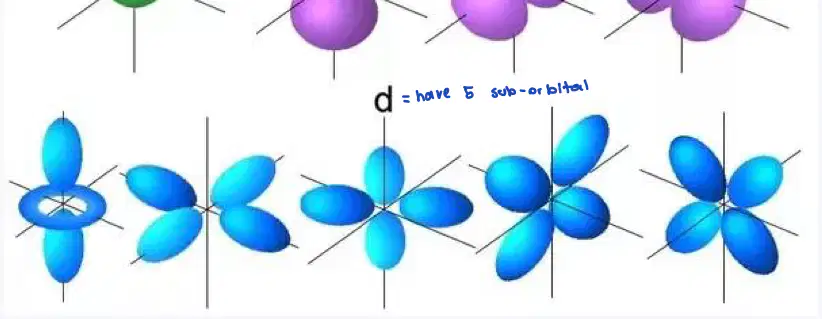
Which of the following atomic orbitals is spherical in shape?
s orbital
p orbital
d orbital
f orbital
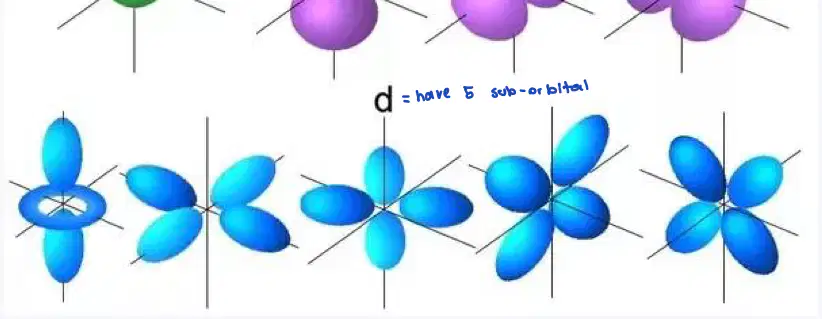
How many sub-orbitals does a d orbital have?
5
2
3
7
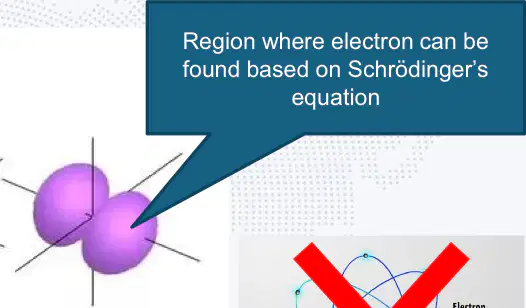
What is the region where an electron can be found based on Schrödinger's equation called?
Nucleus
Orbital
Shell
Subshell
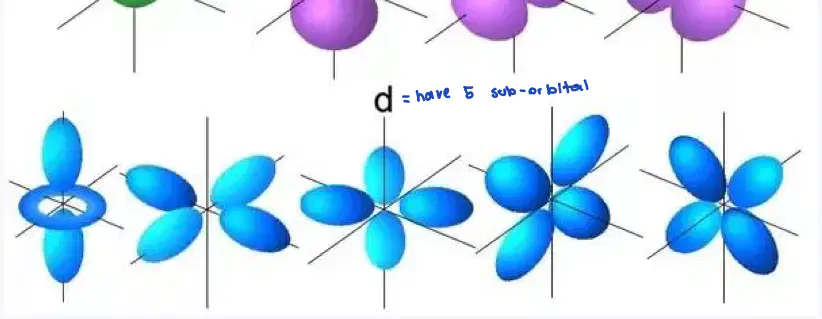
Which of the following diagrams correctly represents atomic orbitals according to quantum mechanics?
The diagram showing s, p, and d orbitals
The Bohr model diagram with electrons in fixed orbits
What are quantum numbers the solutions of?
Schrödinger, Heisenberg & Dirac equations
Maxwell's equations
Newton's laws of motion
Ohm's law
Which of the following is NOT a quantum number that comes from Schrödinger's wave equations?
Principal (n)
Angular (l)
Magnetic (ml)
Atomic (a)
The principal (n), angular (l), and magnetic (ml) quantum numbers describe the ______, shape, and orientation in space of the orbitals on an atom.
size
energy
mass
charge
The last quantum number is the spin quantum number (ms), which describes the direction of the electron’s magnetic fields. What are the possible values of ms?
+1/2 and -1/2
0 and 1
+1 and -1
0.5 and -0.5
The spin quantum number (ms) has only two possible directions.
True
False
Fill in the blank: The principal quantum number is represented by _____
n
l
m
s
Fill in the blank: The angular momentum quantum number is represented by _____
l
n
m
s
Fill in the blank: The magnetic quantum number is represented by _____
m_l
n
l
s
Fill in the blank: The spin quantum number is represented by _____
m_s
n
l
m_l
The principal quantum number (n) describes the ______ and energy of the orbital. For example, orbitals with n = 2 are larger than those with n = 1.
size
color
shape
mass
The principal quantum number is also known as ______.
shells
orbitals
subshells
nodes
As n increases, what happens to the energy of the electron?
The energy decreases
The energy increases
The energy remains the same
The energy becomes zero
The principal quantum number indirectly describes the energy of an orbital.
True
False
What does the angular momentum quantum number (ℓ) determine in an atom?
The shape of the electron cloud corresponding to an atomic orbital.
The energy level of the electron in the atom.
The orientation of the orbital in space.
The spin direction of the electron.
The principal energy level, n = 1, has how many subshells?
one subshell
two subshells
three subshells
four subshells
The principal energy level, n = 2, has how many subshells?
two subshells
one subshell
three subshells
four subshells
The principal energy level, n = 3, has how many subshells?
three subshells
two subshells
four subshells
one subshell
The principal energy level, n = 4, has how many subshells?
four subshells
two subshells
three subshells
five subshells
Fill in the blank: The letter designation for l = 2 is _____
d
s
p
f
Fill in the blank: The value of l for the 'p' subshell is _____
1
0
2
3
Which of the following is a possible value of l?
0
1
2
All of the above
Which letter designation corresponds to l = 3?
s
p
d
f
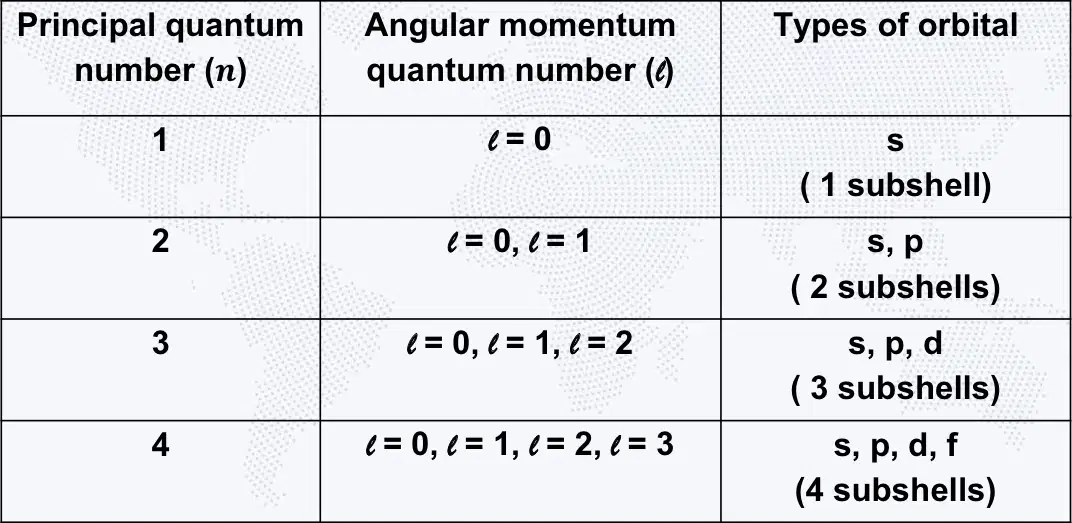
For principal quantum number n = 1, which type of orbital is present?
s
p
d
f
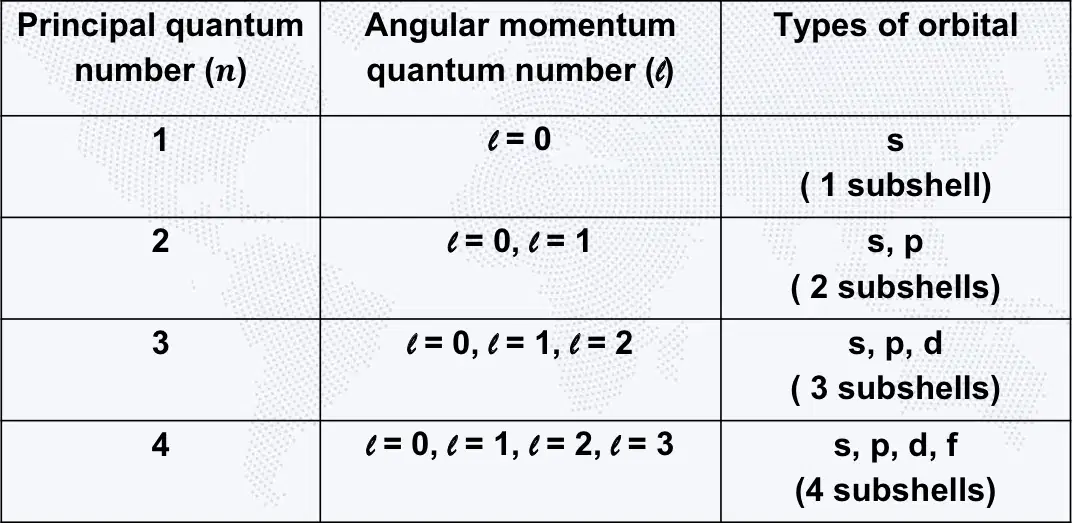
For principal quantum number n = 2, which types of orbitals are present?
s only
s and p
s, p, and d
s, p, d, and f
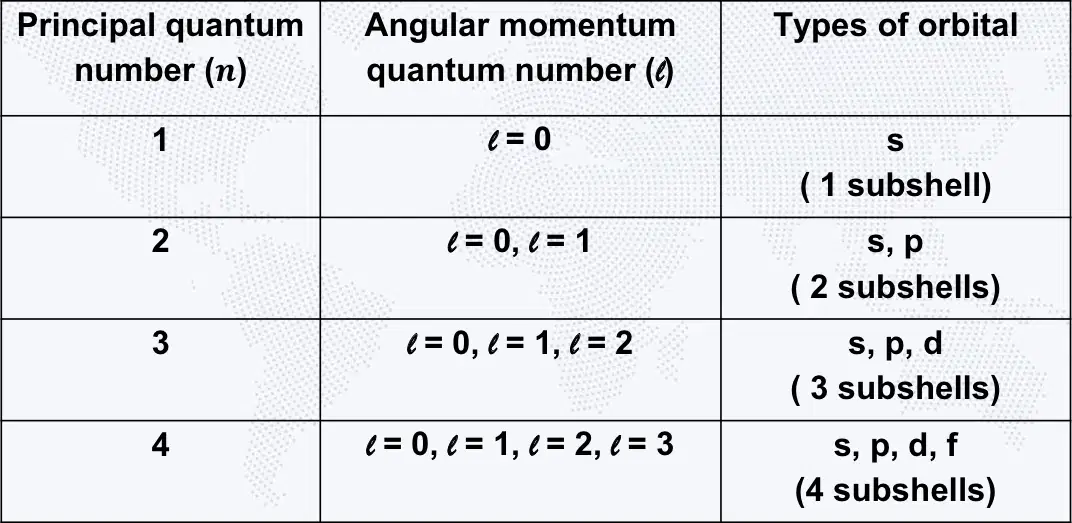
Fill in the blank: For principal quantum number n = 3, the possible angular momentum quantum numbers (l) are _______.
l = 0, l = 1, l = 2
l = 1, l = 2, l = 3
l = 0, l = 2, l = 3
l = 1, l = 2, l = 4
What does the magnetic quantum number (m_l) tell us about the electrons or atomic orbital?
It tells us the orientation of the magnetic field of the electrons or atomic orbital's orientation.
It tells us the energy level of the electrons or atomic orbital.
It tells us the shape of the electrons or atomic orbital.
It tells us the spin of the electrons or atomic orbital.
What is the symbol for the magnetic quantum number?
m_l
n
l
s
Fill in the blank: The total number of m_l is ________.
2l + 1
l + 1
l2+1
2l
If l = 1, what are the possible values of m_l?
0 only
+1, 0, -1
+2, +1, 0, -1, -2
+1, -1
If l = 3, list all possible values for m_l.
+3, +2, +1, 0, -1, -2, -3
+3, +2, +1, 0, -1, -2
+2, +1, 0, -1, -2, -3
+3, +2, +1, 0, -1
According to the information provided, if ℓ = 0 (or an s orbital), what is the value of mℓ?
0
1
-1
2
Which of the following statements is true about s orbitals? Choose the correct option.
s orbitals are not spherically symmetric.
s orbitals are spherically symmetric.
s orbitals have more than one value of mℓ.
s orbitals exist only for n = 1.
There is only one value of mℓ for an s orbital.
True
False
Refer to the diagram showing 1s, 2s, and 3s orbitals. Which orbital is the largest in size?
3s
1s
2s
4s
If ℓ = 1 (or a p orbital), what are the possible values of mℓ?
-1, 0, +1
0, +1, +2
-2, -1, 0
-1, 0, +2
How many values of mℓ are there for a p orbital?
3
1
2
5
What are the names of the three p orbitals?
px, py, pz
px, py, dz
px, dx, pz
dx, dy, dz
At what minimum value of n do p orbitals appear?
n = 2
n = 1
n = 3
n = 4
Which of the following best describes the shape of p orbitals?
Spherical
Peanut or dumbbell shaped
Cubic
Planar
p orbitals are directed along the axes of which coordinate system?
Cartesian coordinate system
Polar coordinate system
Cylindrical coordinate system
Spherical coordinate system
Quantum Numbers: What is the shape of p orbitals?
Spherical
Peanut or dumbbell shaped
Cubic
Planar
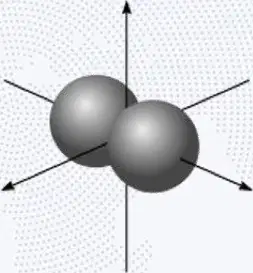
What is the value of the magnetic quantum number (mℓ) for the 2p_x orbital shown in the diagram?
-1
0
1
2
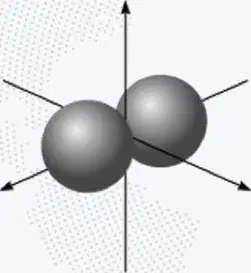
The magnetic quantum number (mℓ) for the 2p_y orbital is _____
0
+1
-1
+2
If ℓ = 2 (or a d orbital), what are the possible values of mℓ?
-2, -1, 0, +1, +2
-1, 0, +1
0, +1, +2, +3
-3, -2, -1, 0, +1
How many d orbitals are there per n value when n ≥ 3?
5
3
7
2
The first d orbitals appear in which shell?
n = 3 shell
n = 2 shell
n = 1 shell
n = 4 shell
How many different shapes do the five d orbitals have?
Two
One
Three
Five
Which of the following statements is true about the shapes of d orbitals?
All five are clover leaf shaped.
Four are clover leaf shaped and one is peanut shaped with a doughnut around it.
All five are peanut shaped.
None of the above.
Name the five d orbitals.
dxy , dyz , dxz , dx2−y2 , dz2
d_{xy}, d_{yz}, d_{xz}, dx2+z2 , d_y^2
dxz , dyz , dzx , dx2 , dy2
dxy,dyz,dxz,dx2,dz2
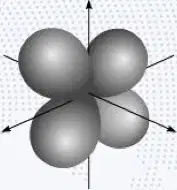
What is the value of the magnetic quantum number (m_l) for the 3dx2−y2 orbital?
-2
-1
0
2
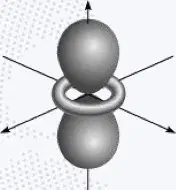
What is the value of the magnetic quantum number (m_l) for the 3dz2 orbital?
-1
0
+1
+2
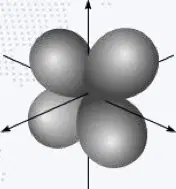
What is the value of the magnetic quantum number (m_l) for the 3d_{xy} orbital?
0
1
2
-2

What is the value of the magnetic quantum number (m_l) for the 3d_{xz} orbital?
1
0
2
-2
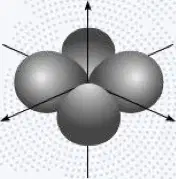
What is the value of the magnetic quantum number (m_l) for the 3d_{yz} orbital?
2
0
1
-2
How many d orbitals are there per n level?
2
3
5
7
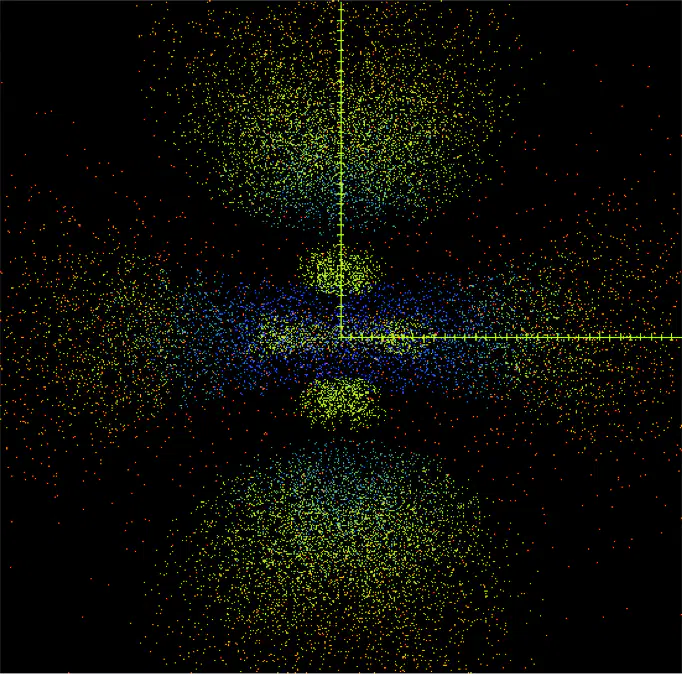
Observe the diagram shown. What type of scientific or mathematical phenomenon does this image most likely represent?
Diffraction pattern
Bar chart
Pie chart
Line graph
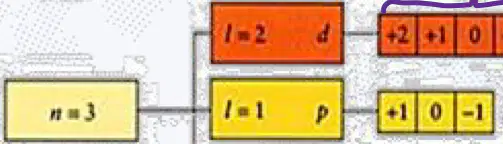
According to the diagram, what is the principal quantum number (n) for the shell that contains the d subshell?
n = 3
n = 1
n = 2
n = 4
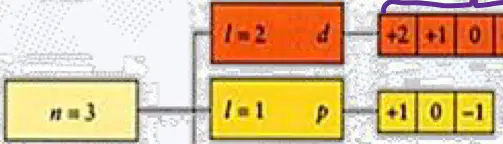
Based on the diagram, which values of the angular quantum number (l) correspond to the p subshell?
l = 1
l = 0
l = 2
l = 3
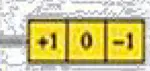
Which of the following is a possible value for the magnetic quantum number (ml) in the p subshell?
+2
+1
0
-2
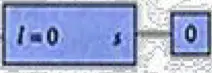
The s subshell has only one possible value for the magnetic quantum number (ml).
True
False
Name the orbital described by the following quantum numbers: n = 4, l = 0.
4s
4p
4d
4f
Name the orbital described by the following quantum numbers: n = 2, l = 1.
2p
2s
1p
3d
Name the orbital described by the following quantum numbers: n = 3, l = 2.
3d
3p
3s
2d
Name the orbital described by the following quantum numbers: n = 5, l = 3.
5f
5d
5p
5s
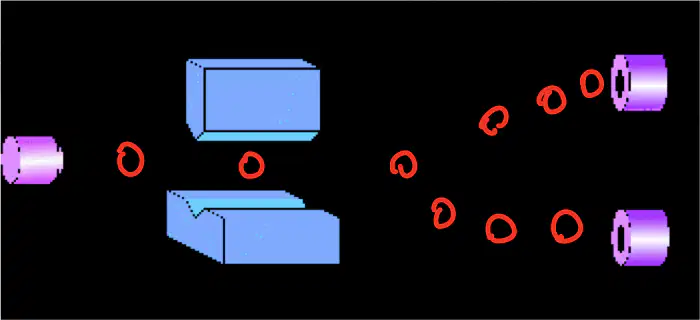
The Stern-Gerlach Experiment showed that the trajectory of electrons can be deflected by a magnet, but with how many possible outcomes?
One
Two
Three
Four
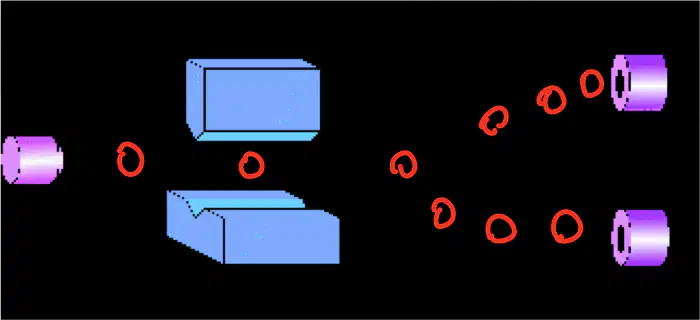
According to the Stern-Gerlach Experiment, the trajectory of electrons can be deflected by a magnet, resulting in only ____ possible outcomes.
two
three
four
one
What is the symbol for the spin quantum number?
ms
n
l
ml
How many possible values does the spin quantum number have?
One
Two
Three
Four
The spin quantum number (ms) can have which of the following values?
+1/2 and -1/2
0 and 1
+1 and -1
+2 and -2
What does the spin quantum number describe?
The direction of the electron’s magnetic fields.
The size of the electron.
The color of the electron.
The speed of the electron.
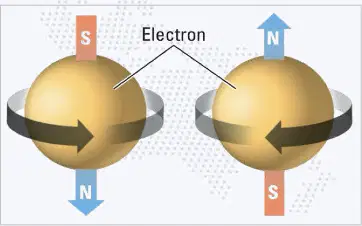
The two electrons shown are designated as having one spin up (↑) and one spin down (↓).
True
False
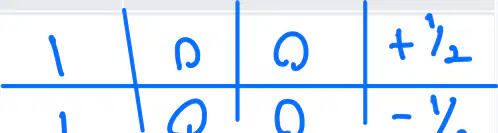
For the 1s orbital, what are the quantum numbers (n, l, ml, ms) for the first electron?
n = 1, l = 0, ml = 0, ms = +1/2
n = 2, l = 0, ml = 0, ms = +1/2
n = 1, l = 1, ml = 0, ms = -1/2
n = 1, l = 0, ml = 1, ms = +1/2
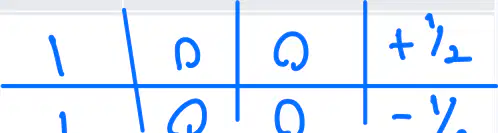
For the 1s orbital, what are the quantum numbers (n, l, ml, ms) for the second electron?
n = 1, l = 0, ml = 0, ms = -1/2
n = 1, l = 1, ml = 0, ms = +1/2
n = 2, l = 0, ml = 0, ms = -1/2
n = 1, l = 0, ml = 1, ms = +1/2
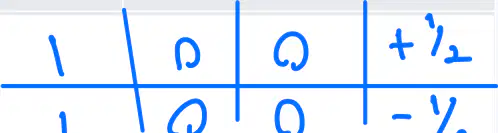
For the 2s orbital, what are the quantum numbers (n, l, ml, ms) for the first electron?
n = 2, l = 0, ml = 0, ms = +1/2
n = 2, l = 1, ml = 0, ms = +1/2
n = 2, l = 0, ml = 1, ms = -1/2
n = 1, l = 0, ml = 0, ms = +1/2
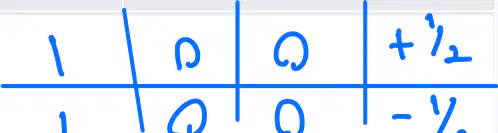
For the 2s orbital, what are the quantum numbers (n, l, ml, ms) for the second electron?
n = 2, l = 0, ml = 0, ms = -1/2
n = 2, l = 1, ml = 0, ms = +1/2
n = 2, l = 0, ml = 1, ms = +1/2
n = 1, l = 0, ml = 0, ms = -1/2

