
 Worksheets
Bonding Review
Total questions: 79
Worksheet time: 1hrs 2mins
Define covalent bond.
A covalent bond is a chemical bond that involves the sharing of electron pairs between atoms.
A covalent bond is a bond formed by the transfer of electrons from one atom to another.
A covalent bond is a force that holds oppositely charged ions together.
A covalent bond is a bond that only occurs between metals.
Define ionic bond.
An ionic bond is a chemical bond formed between two oppositely charged ions by the transfer of electrons.
An ionic bond is a bond formed by sharing electrons equally between atoms.
An ionic bond is a weak attraction between molecules due to temporary dipoles.
An ionic bond is a bond formed by overlapping atomic orbitals.
Define hydrogen bond.
A hydrogen bond is a weak bond between two molecules resulting from an electrostatic attraction between a proton in one molecule and an electronegative atom in the other.
A hydrogen bond is a covalent bond formed by sharing electrons between two hydrogen atoms.
A hydrogen bond is a metallic bond found only in metals.
A hydrogen bond is an ionic bond formed by the transfer of electrons between two atoms.
Define metallic bond.
A metallic bond is a chemical bond formed between positively charged atoms in which the free electrons are shared among a lattice of atoms.
A metallic bond is a bond formed by the sharing of electron pairs between nonmetal atoms.
A metallic bond is a bond formed by the transfer of electrons from one atom to another, resulting in oppositely charged ions.
A metallic bond is a weak attraction between molecules due to temporary dipoles.
Define van der Waals forces.
Van der Waals forces are weak, short-range electrostatic attractive forces between uncharged molecules, arising from the interaction of permanent or transient electric dipole moments.
Van der Waals forces are strong covalent bonds formed between atoms in a molecule.
Van der Waals forces are the forces responsible for radioactive decay in unstable nuclei.
Van der Waals forces are the magnetic forces between the north and south poles of a magnet.
Explain how valence electrons are involved in covalent bonds.
Valence electrons are shared between atoms to form covalent bonds.
Valence electrons are transferred from one atom to another in covalent bonds.
Valence electrons are lost completely in covalent bonds.
Valence electrons do not participate in covalent bonds.
Explain how valence electrons are involved in ionic bonds.
Valence electrons are transferred from one atom to another to form ionic bonds.
Valence electrons are shared equally between atoms to form ionic bonds.
Valence electrons are not involved in the formation of ionic bonds.
Valence electrons are lost by both atoms to form ionic bonds.
Explain how valence electrons are involved in hydrogen bonds.
Hydrogen bonds involve the attraction between a hydrogen atom with a partial positive charge and an electronegative atom with a partial negative charge, due to differences in valence electrons.
Hydrogen bonds are formed by the direct sharing of valence electrons between two hydrogen atoms.
Hydrogen bonds occur when hydrogen atoms lose all their valence electrons to another atom.
Hydrogen bonds are created when valence electrons are transferred from hydrogen to oxygen in a water molecule.
Explain how valence electrons are involved in metallic bonds.
Valence electrons are delocalized and shared among many atoms in metallic bonds.
Valence electrons are tightly bound to individual atoms in metallic bonds.
Valence electrons are transferred from one atom to another in metallic bonds.
Valence electrons are not involved in metallic bonds at all.
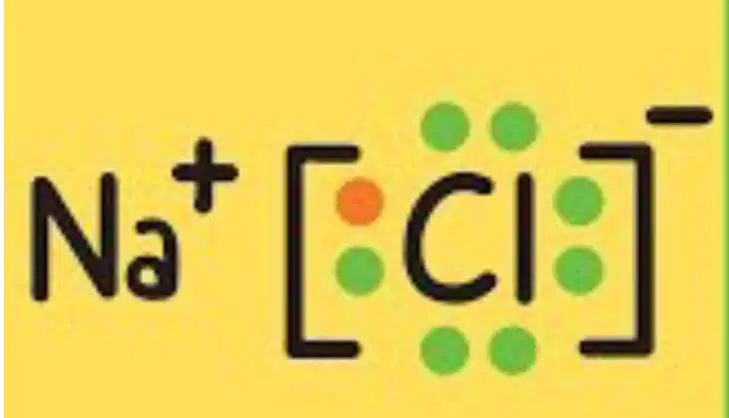
Look at the diagram. Which type of bond is shown between Na+ and Cl-?
Covalent Bond
Ionic Bond
Metallic Bond
Hydrogen Bond
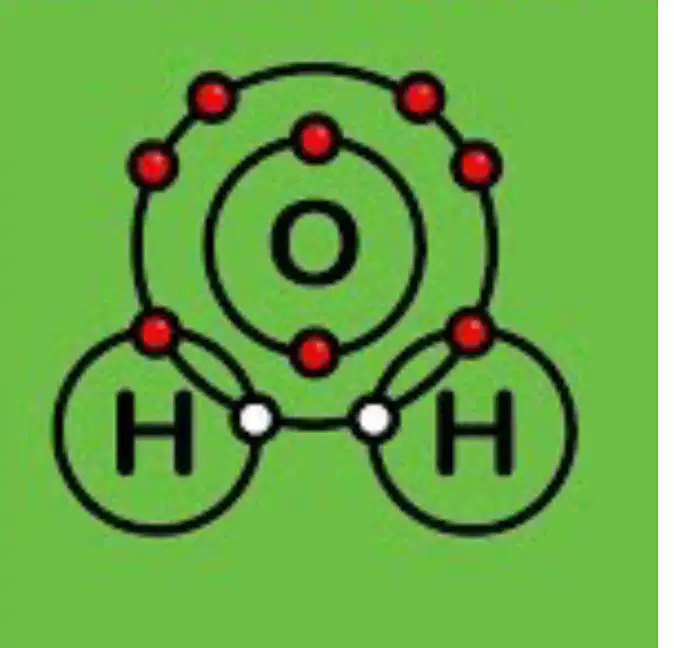
Look at the diagram. Which type of bond is shown in the water molecule (H2O)?
Ionic Bond
Covalent Bond
Metallic Bond
Hydrogen Bond
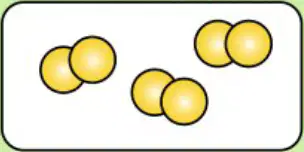
What is an element?
A substance made of 1 type of atom that cannot be broken down into simpler substances.
Two or more different atoms combined chemically and cannot be separated.
Combining two or more of the same elements with bonding.
Two or more different atoms or substances that are not combined chemically and can be separated.
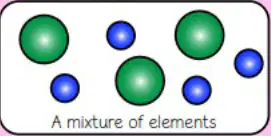
Which of the following is an example of a mixture?
H2O
O2
Oil and Water
NaCl
Match the following terms to their correct definitions:
A substance made of 1 type of atom that cannot be broken down into simpler substances.
Element
Combining two or more of the same elements with bonding.
Molecule
Two or more different atoms combined chemically and cannot be separated.
Compound
Two or more different atoms or substances that are not combined chemically and can be separated.
Mixture
What is a chemical bond?
The force that holds atoms together when two or more atoms combine
The process of breaking atoms apart
The energy released when atoms split
The movement of electrons between atoms
Atoms form chemical bonds to ________.
Complete their outer energy level
Become more stable
Both A and B
None of the above
What does the octet rule state?
The octet rule states that atoms tend to combine in such a way that they each have eight electrons in their valence shells.
The octet rule states that atoms always have eight protons in their nucleus.
The octet rule states that molecules must have eight atoms.
The octet rule states that all elements are stable with eight neutrons.
Which type of bond is formed between a metal and a nonmetal?
Ionic Bond
Covalent Bond
Metallic Bond
Hydrogen Bond
Fill in the blank: Covalent bonds are formed between ________ and _________.
Nonmetal and Nonmetal
Metal and Nonmetal
Metal and Metal
Metalloid and Metal
Fill in the blank: Metallic bonds are formed between ________ and _________.
Metal and Metal
Metal and Non-metal
Non-metal and Non-metal
Metal and Metalloid
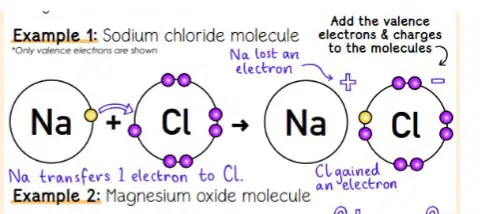
In the diagram showing sodium chloride (NaCl) formation, what happens to the electron from sodium?
It is shared with chlorine
It is transferred to chlorine
It is lost to the environment
It remains with sodium

In the diagram showing a chlorine molecule (Cl2), how many pairs of electrons are shared between the two chlorine atoms?
0
1
2
3
What is an ion?
An atom that is charged because it gained or lost an electron
An atom that is neutral
An atom that only gains electrons
An atom that only loses electrons
Ionic bonding occurs when a ______ atom donates one or more ______ to a non-metal atom. The metal becomes more positive (cation) and the non-metal becomes more negative (anion). Fill in the blanks.
metal; electrons
non-metal; protons
metal; neutrons
non-metal; electrons
In ionic bonding, the metal atom becomes a positive ion (cation) and the non-metal atom becomes a negative ion (anion).
True
False
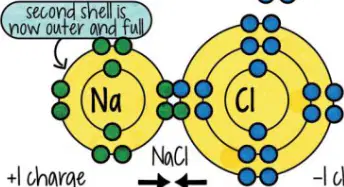
Fill in the blank: A sodium atom has ___ outer electron, and a chlorine atom has ___ outer electrons.
1; 7
2; 6
8; 1
7; 1
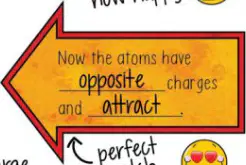
After sodium donates its outer electron to chlorine, both atoms become stable and have opposite charges.
True
False
Covalent bonds form when two ______ atoms share a pair of ______. The shared electrons are in the ______ shells, i.e. they are ______ electrons. By sharing, each atom can achieve a ______ outer shell of electrons, making it more ______.
nonmetal, electrons, outer, valence, full, stable
metal, protons, inner, core, empty, reactive
nonmetal, neutrons, inner, core, half, unstable
metal, electrons, outer, valence, empty, reactive
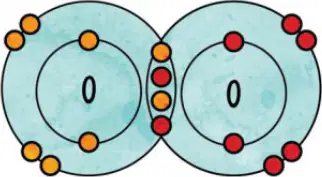
In an oxygen molecule (O2), how many pairs of electrons are shared between the two oxygen atoms?
2 pairs of electrons are shared.
1 pair of electrons are shared.
3 pairs of electrons are shared.
4 pairs of electrons are shared.
Which type of bond shares 1 pair of valence electrons?
Single bond (H-H)
Double bond (O=O)
Triple bond (N≡N)
Which type of bond has the longest bond length?
Single bond (H-H)
Double bond (O=O)
Triple bond (N≡N)
Which type of bond is the weakest?
Single bond (H-H)
Double bond (O=O)
Triple bond (N≡N)
Which type of bond has the lowest reactivity?
Single bond (H-H)
Double bond (O=O)
Triple bond (N≡N)
Which type of bond shares 2 pairs of valence electrons?
Single bond (H-H)
Double bond (O=O)
Triple bond (N≡N)
Which type of bond shares 3 pairs of valence electrons?
Single bond (H-H)
Double bond (O=O)
Triple bond (N≡N)
Which type of bond has the highest reactivity?
Single bond (H-H)
Double bond (O=O)
Triple bond (N≡N)
What type of covalent bond is present in a water (H2O) molecule?
Single bond
Double bond
Triple bond
How many electrons are shared in a double covalent bond?
4 electrons
2 electrons
6 electrons
8 electrons
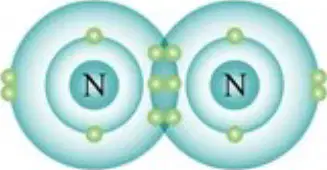
Which molecule contains a triple covalent bond?
H2O
CO2
N2
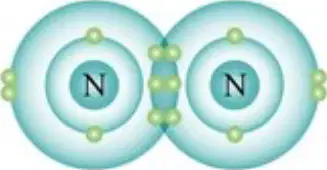
Fill in the blank: A triple covalent bond shares ___ electrons between two atoms.
6
2
4
8
Metallic bonds occur when atoms of metals give up ______ electrons, forming an electron "sea."
valence
core
nuclear
inner
The positively charged atoms are ______ to the negatively charged electrons.
attracted
repelled
unaffected
neutral
Which type of bond involves electrons being transferred?
Ionic
Covalent
Metallic
Which type of bond involves electrons being shared?
Ionic
Covalent
Metallic
Which type of bond involves an electron sea?
Ionic
Covalent
Metallic
Fill in the blank: The bond in an ionic compound is between _______.
metal to nonmetal
nonmetal to nonmetal
metal to metal
noble gas to noble gas
Fill in the blank: The bond in a covalent compound is between _______.
nonmetal to nonmetal
metal to metal
metal to nonmetal
noble gas to noble gas
Fill in the blank: The bond in a metallic compound is between _______.
metal to metal
metal to non-metal
non-metal to non-metal
hydrogen to oxygen
Which state is typical for ionic compounds?
Crystalline solid
Solid, liquid, or gas
Malleable & ductile solid
Which state is typical for metallic compounds?
Crystalline solid
Solid, liquid, or gas
Malleable & ductile solid
Covalent compounds conduct electricity.
True
False
Metallic compounds conduct electricity.
True
False
Which of the following is an example of an ionic compound?
NaCl
H2O
Cu
Which of the following is an example of a covalent compound?
MgO
CO2
Al
Which of the following is an example of a metallic compound?
Au
O2
NaCl
Match the following properties to the correct bond type:
Ionic
Electrons are transferred
Covalent
Electrons are shared
Metallic
Electron sea
What type of bond is formed between hydrogen atoms and other atoms?
Ionic bond
Covalent bond
Hydrogen bond
Metallic bond
Hydrogen bonds are ______ than Van der Waals forces.
stronger
weaker
shorter
less important

Match the following to form true statements:
When solid, ionic compounds
cannot conduct electricity
When melted ionic compounds
can conduct electricity
Ionic compounds have
high melting and high boiling points
There are many strong bonds
between ions in an ionic compound.
Elements in group 1 of the periodic table form ions
with a charge of 1+

This could be the dot diagram of
Mg
Cl
C
O
What is the goal of the Lewis Dot Structure?
To determine the electron position.
To show the element's valence electrons & bonding capabilities.
To find the atomic mass of an element.
To search for the number of electrons in an individual atom.
How many valence electrons should Lithium have in its Lewis dot model?
1
2
3
4

This is a correct dot diagram for nitrogen (N)
true
false

This is a correct dot diagram for carbon (C)
true
false

This is a correct dot diagram for neon (Ne)
true
false
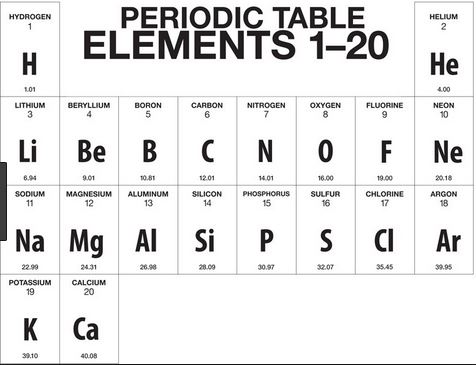
How many valence electrons does Aluminum Have?
1 Valence electron
2 Valence electron
3 Valence electron
4 Valence electron
5 Valence electron
How would you draw a Lewis dot diagram for Magnesium?


Which of the following shows a correct Lewis dot structure?


How many valence electrons does this element have?
2
3
5
10

Which element is shown in the Bohr-Rutherford model in the picture?
Lithium
Boron
Carbon
Neon
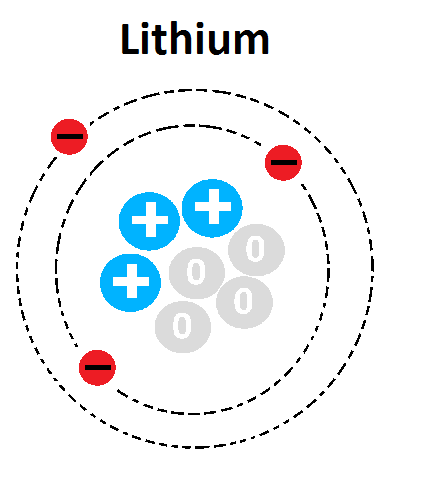

How many electrons can go in the first energy level?
2
8
18
32

Why do carbon, silicon, and tin all react similarly?
They are located in the same period
They have an even atomic number
They have the same number of energy levels
They are located in the same group
Which of these is in group 2?


Which element does this Bohr model represent?
Aluminum
Silicon
Magnesium
Cobalt


