
 Worksheets
Chapter 22 Notes: Spine and Traumatic Brain Injuries
Total questions: 64
Worksheet time: 32mins
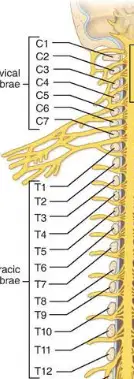
What are the three main regions of the spine?
Cervical, Thoracic, Lumbar
Sacral, Coccygeal, Thoracic
Cervical, Sacral, Thoracic
Lumbar, Coccygeal, Thoracic
What is a coup-contrecoup injury?
An injury where the head is stationary
An injury where the head is moving rapidly and hits a stationary object
An injury caused by a fall
An injury caused by a car crash
Fill in the blank: The most common modes of traumatic brain (head) injury are ________, struck by an object, and car crashes.
falls
burns
drowning
electrocution
Which of the following is a telltale sign of a concussion?
Headache
Amnesia
Nausea
Dizziness
Signs and symptoms of concussion may not occur until after several days in head injuries.
True
False
Which of the following lists three symptoms that may indicate a concussion?
Headache, confusion, dizziness
Fever, rash, cough
Nausea, sore throat, sneezing
Blurred vision, runny nose, chills
Monitoring LOC, change in speech, mentation (A&O), and breathing in patients with head injuries is important because:
It helps detect early signs of neurological deterioration.
It prevents all head injuries from occurring.
It guarantees a full recovery for the patient.
It eliminates the need for further medical evaluation.
The purpose of a neuro assessment in nursing care is to:
evaluate a patient's neurological status and detect changes early
monitor a patient's respiratory function
assess a patient's nutritional needs
measure a patient's blood glucose levels
What is a subdural hematoma?
A) A bleed above the dura mater due to a large artery tear
B) A slow bleed under the dura mater from a small blood vessel rupture
C) Blood in the space that surrounds the brain
D) Collection of blood outside of a blood vessel
Which type of hematoma is caused by a head injury that tears a large meningeal artery and results in rapid bleeding above the dura mater?
Subdural hematoma
Epidural hematoma
Intracerebral hematoma
Subarachnoid hemorrhage
Fill in the blank: Signs of an epidural hematoma include ___
nausea & vomiting, periorbital ecchymosis (black eye or raccoon eye), and a battle sign (bruising behind the ear)
gradual onset of headache, photophobia, and neck stiffness
persistent cough, hemoptysis, and night sweats
polyuria, polydipsia, and weight loss
What is the recommended position to elevate the head for a patient with intracerebral hematoma to prevent fluid overload?
10-15 degrees
20-30 degrees
45 degrees
Flat
Subarachnoid hemorrhage occurs when blood leaks into the space that surrounds the brain due to a ruptured aneurysm.
True
False
What is a contusion in the context of brain injuries?
A) A type of hematoma where blood collects outside of a blood vessel
B) A slow bleed under the dura mater
C) Blood in the space that surrounds the brain
D) A rapid bleed above the dura mater
Fill in the blank: CT scan (Computed Tomography Scan) is our go to test for head injuries or brain. It helps us detect ______ changes and disruptions of blood flow in the brain.
structural
chemical
hormonal
genetic
What is the main precaution to take before undergoing an MRI (Magnetic Resonance Imaging)?
Do not eat before the test
Cannot have any metal on you AT ALL
Must be fasting
No water intake
What is the purpose of an EEG (Electroencephalography) test according to the notes?
To check for heart activity
To rule out seizure disorders, sleeping disorders, and brain tumors
To measure blood pressure
To check for bone fractures
Skull fractures are categorized by location, appearance, degree of compression, and if they provide direct access to sinuses, the oropharynx, the ear or the skull through a skin wound.
True
False
Fill in the blank: Fractures that do not cause bone displacement are left to heal without ______ other than what might be needed for injury to the brain.
treatment
surgery
medication
exercise
What is required to remove bone fragments and prevent further brain injury in the case of skull fractures?
Medication
Surgical intervention
Physical therapy
Rest
Open wound means skin is open and they will need antibiotic and tetanus possibly.
True
False
Which of the following are outward symptoms of scalp injury? Select all that apply.
Bruising
Swelling
Lacerations
Bleeding
Fill in the blank: The actual damage to the underlying brain tissue is not as easy to identify and needs to be assessed ______.
carefully
quickly
rarely
loudly
Which of the following are symptoms of underlying brain tissue damage? Select all that apply.
Amnesia
Headache
Decreased level of consciousness
Hemiplegia and ipsilateral pupil dilation
What is always the way to get rid of extra fluid according to the notes?
Surgery
Diuretics
Antibiotics
Rest
What does a neuro check include?
Checking a full set of vital signs, assessing LOC, assessing pupil reaction, and performing a motor function test.
Only checking blood pressure and temperature.
Assessing only the patient's speech and memory.
Performing an ECG and checking blood glucose levels.
Brain bleeds require immediate surgery.
True
False
Which of the following is NOT a part of postoperative care to prevent increased intracranial pressure (ICP)?
A) Keep neck in midline with HOB at 30 degrees
B) Treat increased body temperature
C) Prevent constipation
D) Ignore changes in neurological status
Late signs of increased ICP include:
Headache
Unequal pupils
No response to pain stimuli
All of the above
Mannitol must be given slowly and must be pumped on a pump, not pushed through an IV.
True
False
Why is a Foley catheter used in patients receiving Mannitol for increased ICP?
To monitor the exact output of fluid.
To prevent infection.
To administer medication.
To reduce blood pressure.
Which of the following is NOT a recommended treatment for increased ICP?
Supportive care
Osmotic diuretics
Furosemide (Lasix)
Antibiotics
Fill in the blank: Dehydration is a huge no no in the treatment of increased ICP because it can lead to _______.
Hypovolemia
Hyperglycemia
Hypertension
Hyperkalemia
Which of the following is a complication of increased ICP?
Hydrocephalus
Diabetes Insipidus
Both A and B
None of the above
Extreme restlessness or excitability following a period of apparent calm should be immediately reported in patients with ICP.
True
False
Fill in the blank: Hydrocephalus is treated with a ________.
VP Shunt. Ventricular peritoneal shunt.
Pacemaker.
Dialysis machine.
Defibrillator.
What does the term 'Obtundent' mean?
The patient is very drowsy, difficult to arouse and keep awake
The patient does not respond to stimuli
Unequal size of pupils
Leakage of CSF from nose or ear
Fill in the blank: Stupor requires vigorous and repeated stimuli, however patient lapses back into an ________ state when no stimulation occurs.
unresponsive
alert
excited
responsive
What is the highest score possible on the Four Coma scale for coma patients?
16
12
20
8
Which of the following is NOT a finding to immediately report in patients with ICP?
Deepening stupor and decreasing LOC
Headaches that are unrelenting and increasing in intensity
Persistent projectile vomiting
Mild headache that resolves with rest
Fill in the blank: Injury in the _______ and _______ areas of the spine is more common.
cervical, lumbar
thoracic, sacral
coccygeal, thoracic
sacral, coccygeal
What are the two types of spinal cord injuries?
Complete and incomplete
Acute and chronic
Mild and severe
Internal and external
Incomplete injury: possible that motor function may or may not return after spinal cord swelling has subsided.
True
False
List one common cause of spinal cord injury
Automobile accidents
Allergic reactions
Common cold
Tooth decay
Name one main treatment objective for spinal cord injury.
Save the victim’s life
Increase spinal cord pressure
Delay medical attention
Encourage movement of the injured area
Which of the following is NOT a complication of injuries of the spine?
Spinal shock and neurogenic shock
Muscle spasms
Autonomic dysreflexia (hyperreflexia)
Diabetes
Autonomic dysreflexia (hyperreflexia) may cause which of the following symptoms?
Decreased heart rate
Excessive sweating
Low blood pressure
Loss of appetite
What is the most common trigger for autonomic dysreflexia (hyperreflexia) according to the text?
Distention of the bladder
Exposure to loud noises
High altitude
Excessive sunlight
What is the emergency treatment for orthostatic hypotension?
Sit the patient upright with legs dangling over the side of the bed
Elevate the head of the bed
Remove any jewelry
Give nitrites, hydralazine, labetalol or nifedipine
Fill in the blank: One of the first things we do for a patient with orthostatic hypotension is to elevate the ______ of the bed and make sure foley tubing has no kinks.
head
foot
side
end
Orthostatic hypotension is checked while lying, sitting, then standing.
True
False
What is given subcutaneously to prevent deep venous thrombosis (DVT)?
Warfarin/Coumadin
Levonox
Hydralazine
Nifedipine
List two complications that can arise from immobility according to the notes.
Pressure ulcers and deep vein thrombosis
Hypertension and diabetes
Asthma and eczema
Appendicitis and tonsillitis
Crutchfield tongs are used to immobilize the cervical spine after which type of injury?
Lower spinal cord injury
Neck or upper spinal cord injury
Arm fracture
Leg fracture
Fill in the blank: Crutchfield tongs help align the cervical vertebrae and relieve pressure on the ______ cord.
spinal
optic
vagus
sciatic
Halo traction vest is used to stabilize and align the cervical spine following a neck fracture, spinal surgery, or spinal instability.
True
False
Two risks associated with the use of a halo traction vest are:
Pin site infection and nerve injury
Improved mobility and increased appetite
Enhanced bone healing and reduced pain
Decreased risk of pressure sores and better sleep
Fill in the blank: Preventing back pain and disorders begins with proper ______ and the use of correct lifting techniques.
posture
nutrition
hydration
exercise
What is a common symptom of a lumbar herniated disk?
Pain in the shoulder and neck
Low back pain that radiates to the buttocks and down to below the knee
Headache
Chest pain
Cervical herniated disk typically causes pain in which areas?
Lower back and legs
Shoulder and neck, possibly radiating down the arm
Abdomen
Feet
Name two alternative treatments or therapies for herniated disk mentioned in the passage.
Acupuncture and massage therapy
Chemotherapy and radiation
Insulin and blood transfusion
Antibiotics and antiviral drugs
Which of the following is NOT a surgical procedure for herniated disk?
Discectomy
Spinal fusion
Laminectomy
Appendectomy
Repetitive lifting is the biggest risk factor for putting healthcare workers at risk for ______ and back injury.
back pain
headache
allergies
vision loss
List two nursing management considerations for herniated disk mentioned in the passage.
Preoperative and postoperative management
Nutritional therapy and exercise only
Medication administration and wound dressing only
Patient isolation and strict bed rest

