
Font size
 Worksheets
Chemical Nature of Carbohydrates
Total questions: 91
Worksheet time: 46mins
What are carbohydrates chemically defined as?
Polyhydroxyalcohols with a functional aldehyde or keto group
Proteins with a functional amine group
Lipids with a functional ester group
Nucleic acids with a functional phosphate group
Fill in the blank: The general formula for carbohydrates is _____.
Cn(H2O)n
C2H5OH
CH4
C6H12O6
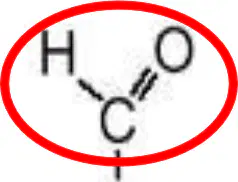
Which of the following carbohydrates contains an aldehyde group?
Glucose
Fructose
Both
Neither
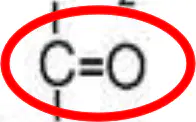
Which of the following carbohydrates contains a keto group?
A) Glucose
B) Fructose
C) Both
D) Neither
Carbohydrates are made up of which two elements as shown in the formula Cn(H2O)n?
Carbon and Water
Carbon and Oxygen
Hydrogen and Oxygen
Carbon and Hydrogen
Which organic molecules are the most abundant in nature?
Proteins
Carbohydrates
Lipids
Nucleic acids
Carbohydrates provide a significant fraction of the dietary ______ for most organisms.
calories
vitamins
minerals
enzymes
What is the storage form of energy in the body according to the slide?
Proteins
Lipids
Carbohydrates
Vitamins
Carbohydrates serve as cell membrane components that mediate some forms of intercellular communication.
True
False
Which of the following is NOT a type of carbohydrate according to the classification chart?
Monosaccharides
Disaccharides
Oligosaccharides
Proteins
Fill in the blank: The four types of carbohydrates according to the classification chart are Monosaccharides, Disaccharides, Oligosaccharides, and _________.
Polysaccharides
Lipids
Proteins
Nucleic acids
Which type of carbohydrate is classified as the simplest form according to the chart?
Monosaccharides
Disaccharides
Oligosaccharides
Polysaccharides
Which of the following is a monosaccharide?
Glucose
Maltose
Starch
Sucrose
Which of the following is a disaccharide?
Fructose
Sucrose
Starch
Cellulose
Which of the following is a polysaccharide?
Galactose
Lactose
Glycogen
Glucose
Fill in the blank: ________ is a monosaccharide found in carbohydrates.
Glucose
Sucrose
Starch
Cellulose
Fill in the blank: Polysaccharides are made up of ________ sugar molecules linked together.
many
few
single
double
What are monosaccharides?
Complex sugars
Simplest sugars
Disaccharides
Polysaccharides
Monosaccharides are classified by two methods according to:
Number of carbon atoms
Functional groups
Both A and B
None of the above
Fill in the blank: Trioses have ___ carbons.
3
4
5
6
Fill in the blank: Tetroses have ___ carbons.
4
3
5
6
Fill in the blank: Pentoses have ___ carbons.
5
4
6
7
Fill in the blank: Hexoses have ___ carbons.
6
5
7
8
What is the mother compound of all aldoses?
D-Glucose
Aldotriose glyceraldehyde
L-Galactose
Fructose
In D-sugars, the hydroxyl group of the penultimate carbon atom is on which side?
Left
Right
In L-sugars, the hydroxyl group of the penultimate carbon atom is on the ______ side.
left
right
top
bottom
Most of the naturally occurring monosaccharides are of which type?
D type
L type
Aldoses are further subclassified according to the number of carbon atoms present. Fill in the blank: Aldotrioses have ______ carbon atoms.
3
4
5
6
Aldoses are further subclassified according to the number of carbon atoms present. How many carbon atoms do Aldotetroses have?
3
4
5
6
Aldoses are further subclassified according to the number of carbon atoms present. Fill in the blank: Aldopentoses have ______ carbon atoms.
5
3
4
6
Aldoses are further subclassified according to the number of carbon atoms present. How many carbon atoms do Aldohexoses have?
3
4
5
6
Which sugar is classified as an Adotetrose?
D-Erythrose
D-Ribose
D-Xylose

Fill in the blank: The sugar with the structure shown below is called ________.
D-Erythrose
D-Ribose
D-Glucose
D-Galactose
Which of the following sugars is an Aldopentose?
D-Erythrose
D-Ribose
D-Xylose
Both B and C
Which aldohexose does this structure represent?
D-Glucose
D-Mannose
D-Galactose
Which aldohexose does this structure represent?
D-Glucose
D-Mannose
D-Galactose
Which aldohexose does this structure represent?
D-Glucose
D-Mannose
D-Galactose
The simplest ketose is the triose _________?
dihydroxyacetone
glyceraldehyde
fructose
ribulose
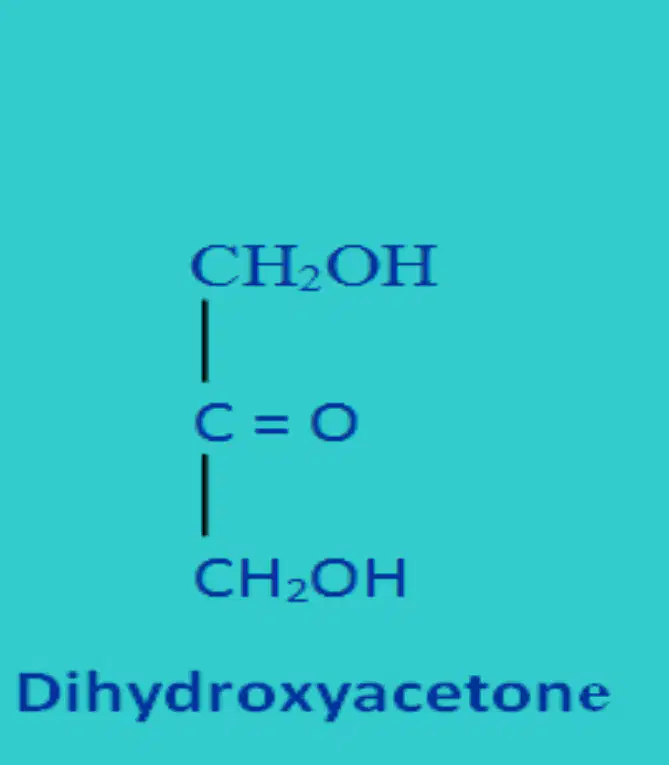
Which compound is shown in the diagram?
Fructose
Dihydroxyacetone
Glucose
Ribulose
Ketoses are further subclassified according to the number of carbon atoms present into: Which ketose has 3 carbon atoms?
Ketotrioses
Ketotetroses
Ketopentoses
Ketohexoses
Ketoses are further subclassified according to the number of carbon atoms present into: D-erythrulose is an example of which type of ketose?
Ketotrioses
Ketotetroses
Ketopentoses
Ketohexoses
Ketoses are further subclassified according to the number of carbon atoms present into: Fill in the blank: Ketopentoses have ______ carbon atoms.
5
4
6
7
Ketoses are further subclassified according to the number of carbon atoms present into: D-fructose is an example of ______.
Ketohexoses
Ketotrioses
Ketopentoses
Ketoheptoses
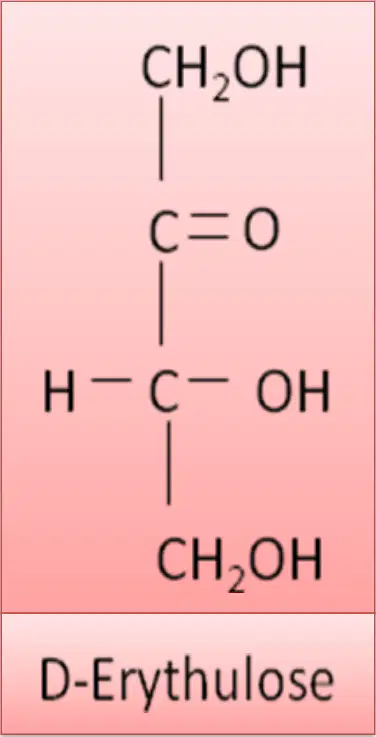
Identify the ketotetrose shown in the image with the following structure: CH2OH | C=O | H-C-OH | CH2OH
D-Erythulose
D-Ribulose
D-Xylulose
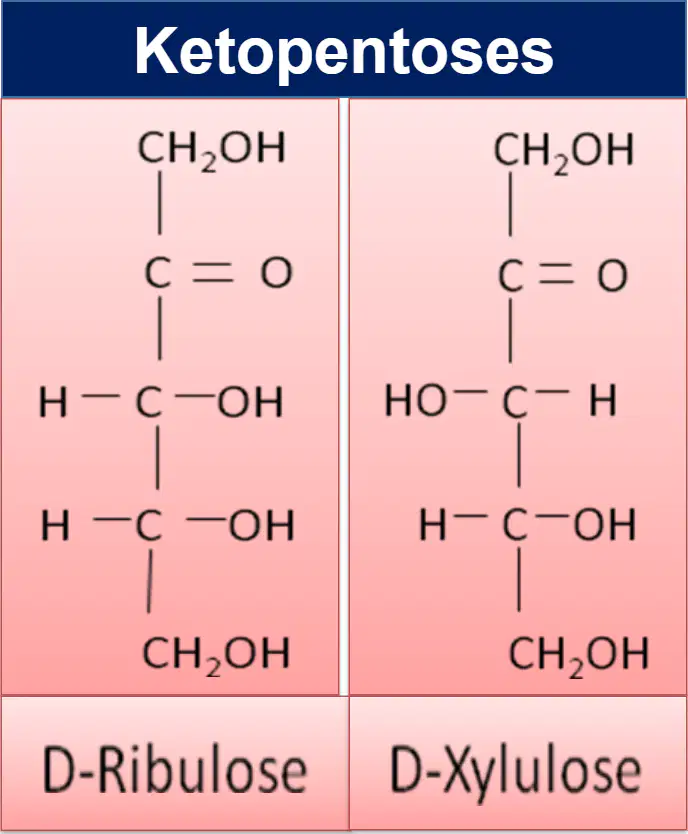
Fill in the blank: The structure shown below is called ________.
D-Ribulose
D-Glucose
D-Fructose
D-Xylose
Refer to the diagram of D-Fructose and D-Sedoheptulose. Which of the following is a ketohexose?
D-Fructose
D-Sedoheptulose
Both
Neither
Refer to the diagrams. Fill in the blank: The chemical formula for D-Fructose contains ___ carbon atoms.
6
5
7
8
Based on the diagrams, which sugar has seven carbon atoms?
D-Fructose
D-Sedoheptulose
Both
Neither
What are isomers?
Compounds with different molecular formulas
Compounds with the same molecular formula but different structural or steric formulae
Compounds with the same structural formula
Compounds with different types of atoms
Isomers have the ________ molecular formula, which means the same number and types of atoms.
same
different
complex
unique
Isomers have different:
Molecular formula
Structural formula
Number of atoms
Types of atoms
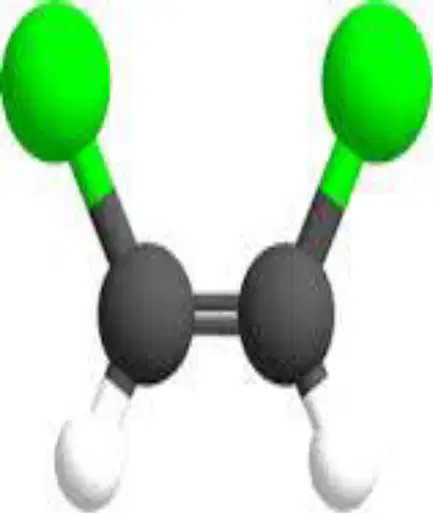
What are stereoisomers?
Stereoisomers are isomeric molecules that have the same molecular formula and sequence of bonded atoms (constitution), but differ in the three-dimensional orientations of their atoms in space.
Stereoisomers are molecules with different molecular formulas but identical three-dimensional structures.
Stereoisomers are isomeric molecules that have different sequences of bonded atoms but the same three-dimensional orientation.
Stereoisomers are molecules that have the same molecular formula and sequence of bonded atoms, but identical three-dimensional orientations.
Which of the following is a form of isomerism of monosaccharides?
Optical isomers
Geometric isomers
Structural isomers
Positional isomers
Which of the following is NOT a form of isomerism of monosaccharides?
A) Anomers
B) Epimers
C) Aldose-Ketose isomers
D) Cis-Trans isomers
Fill in the blank: The four forms of isomerism of monosaccharides are Optical isomers, Anomers, Epimers, and _________?
Aldose-Ketose isomers
Geometric isomers
Structural isomers
Positional isomers
Fill in the blank: _________ are a type of isomerism found in monosaccharides, along with Anomers, Epimers, and Aldose-Ketose isomers.
Optical isomers
Geometric isomers
Structural isomers
Positional isomers
What process leads to the formation of a new asymmetric carbon in monosaccharides?
Oxidation
Cyclization
Hydrolysis
Reduction
The new asymmetric carbon formed during cyclization of a monosaccharide is called the _________.
anomeric carbon
aldose carbon
chiral center
glycosidic carbon
How many possible configurations can the anomeric carbon have in cyclic monosaccharides?
1
2
3
4
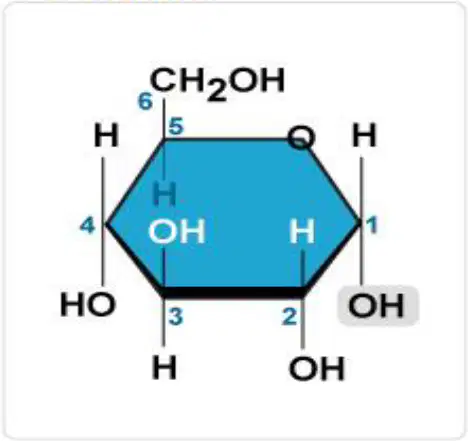
Which configuration has the OH group on the anomeric carbon pointing down?
α-D-glucose
β-D-glucose
What are the two possible configurations of the anomeric carbon in glucose called?
Anomers (α and β)
Epimers (D and L)
Isomers (cis and trans)
Tautomers (enol and keto)
What are anomers?
Isomers at C1 of cyclic aldoses and C2 of cyclic ketoses
Epimers at C1 of cyclic aldoses and C2 of cyclic ketoses
Enantiomers at C1 of cyclic aldoses and C2 of cyclic ketoses
Diastereomers at C1 of cyclic aldoses and C2 of cyclic ketoses
Fill in the blank: Anomers are ______ at C1 of cyclic aldoses and C2 of cyclic ketoses.
epimers
isomers
enantiomers
diastereomers
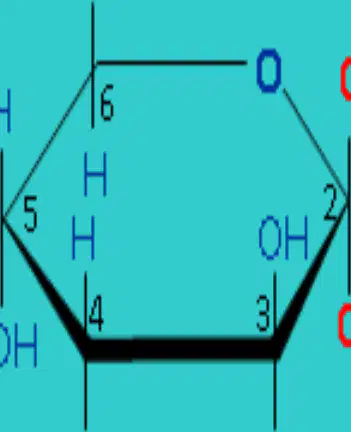
Which structure represents α-D-Fructopyranose?
The structure with the OH group at C2 down
The structure with the OH group at C2 up
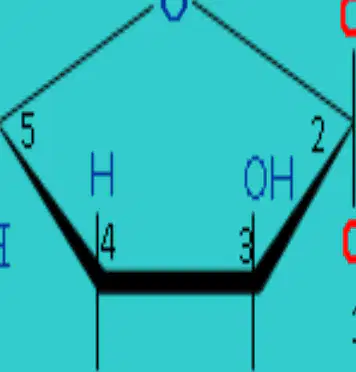
Which structure represents β-D-Fructofuranose?
The structure with the CH2OH group at C1
The structure with the OH group at C2 up
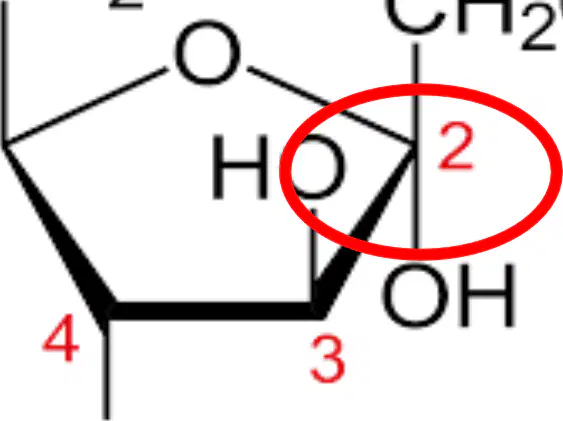
Refer to the diagram of Alpha-D-Fructose. Which carbon is the anomeric carbon in Alpha-D-Fructose?
Carbon 1
Carbon 2
Carbon 3
Carbon 6
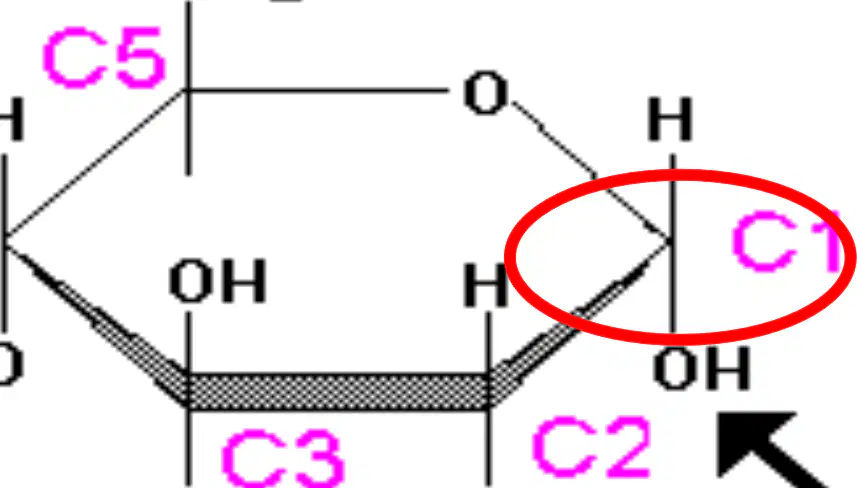
Refer to the diagram of Alpha-D-Glucose. The anomeric carbon in Alpha-D-Glucose is labeled as _____
C1
C2
C4
C6
Aldose-Ketose isomers have the same ________ but differ in their functional groups.
molecular formulae
structural arrangement
physical state
reactivity
Which of the following is a functional group isomer of glucose?
Sucrose
Fructose
Lactose
Maltose
Fill in the blank: Glyceraldehyde 3-phosphate is an intermediate during _______ in living cells.
glucose oxidation
fatty acid synthesis
protein translation
DNA replication
Fill in the blank: Dihydroxyacetonephosphate is an intermediate during _______ in living cells.
glucose oxidation
protein synthesis
fatty acid breakdown
DNA replication
Fill in the blank: Erythrose 4-phosphate is formed during _______ in living cells.
glucose oxidation
fatty acid synthesis
urea cycle
glycogen breakdown
Fill in the blank: D-ribose is a component of many nucleosides and nucleotides and ribonucleic acids (______).
RNA
DNA
ATP
Glucose
Fill in the blank: 2-deoxyribose is a component of deoxyribonucleic acid (______).
DNA
RNA
ATP
NADH
Which monosaccharide is known as grape sugar and is the main sugar present in blood, animal and plant cells, honey, and fruits?
D-glucose
D-fructose
D-galactose
D-mannose
D-glucose enters in the formation of many _______ and _______.
disaccharides and polysaccharides
amino acids and proteins
lipids and nucleic acids
enzymes and vitamins
Which monosaccharide is present in honey, fruits, and semen and is also known as fruit sugar?
D-fructose
D-glucose
D-galactose
D-mannose
D-fructose is a component of which two substances?
Sucrose and inulin
Lactose and maltose
Cellulose and starch
Glycogen and amylose
D-galactose is a component of lactose, which is present in which food?
Milk
Rice
Eggs
Potatoes
Which of the following is also found in glycosaminoglycans (GAGS), glycolipids, and glycoproteins?
D-glucose
D-fructose
D-galactose
Sucrose
Which of the following is a simple sugar or monosaccharide?
Galactose
Lactose
Maltose
Sucrose
Choose the Aldose sugar-
Sucrose
Ribulose
Fructose
Ribose
Choose the keto triose-
Glyceraldehyde
Erythrose
Dihydroxyacetone
Arabinose
4- α-D Glucose and β-D Glucose are-
Epimers
Keto- Aldose Isomers
Anomers
Optical isomers
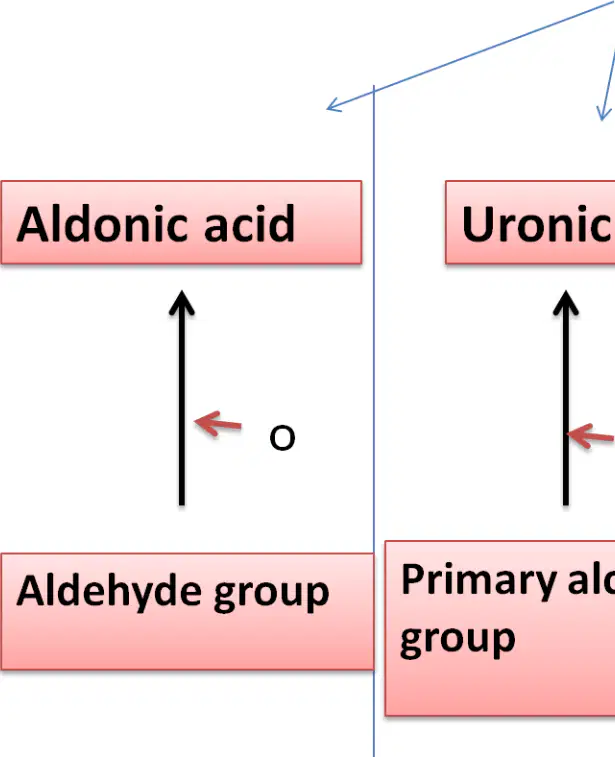
Which group is present in Aldonic acid?
Aldehyde group
Primary alcohol group
Aldehyde and Primary alcohol group
Ketone group
Which sugar acid contains a primary alcohol group?
Aldonic acid
Uronic acid
Aldaric acid
L-ascorbic acid
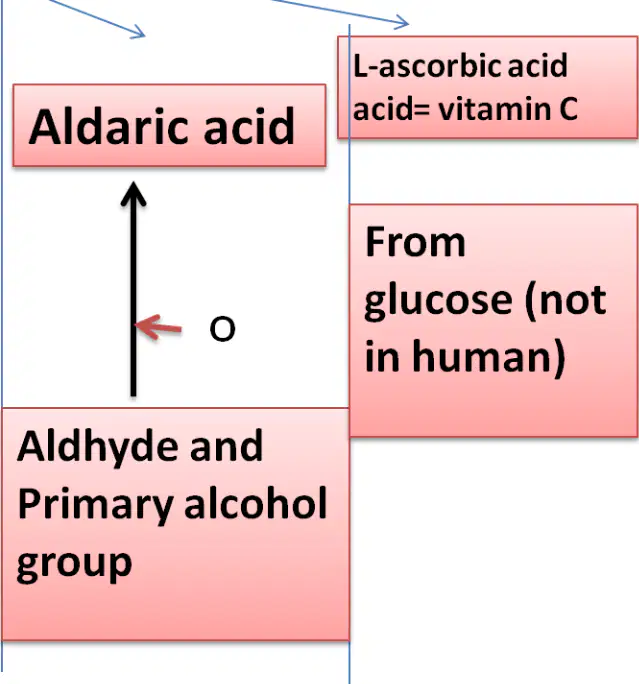
Aldaric acid contains which functional groups?
Only aldehyde group
Only primary alcohol group
Aldehyde and Primary alcohol group
Ketone and alcohol group
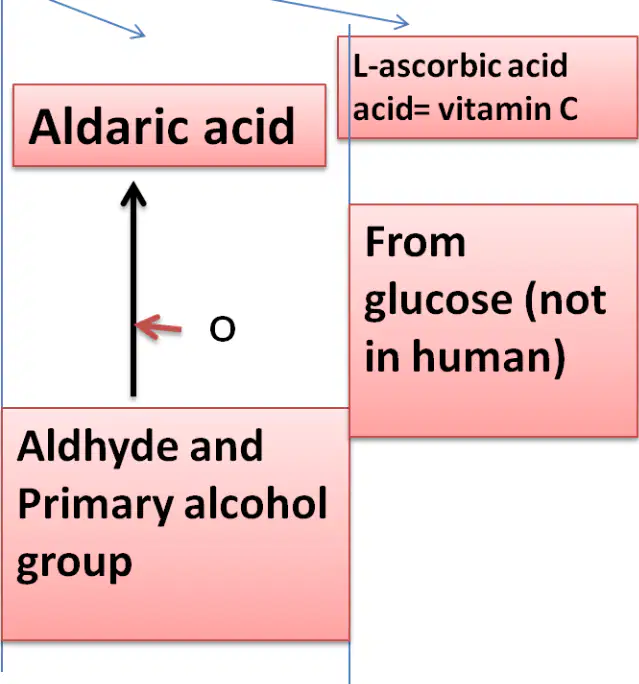
L-ascorbic acid is also known as _________.
vitamin C
vitamin D
citric acid
folic acid
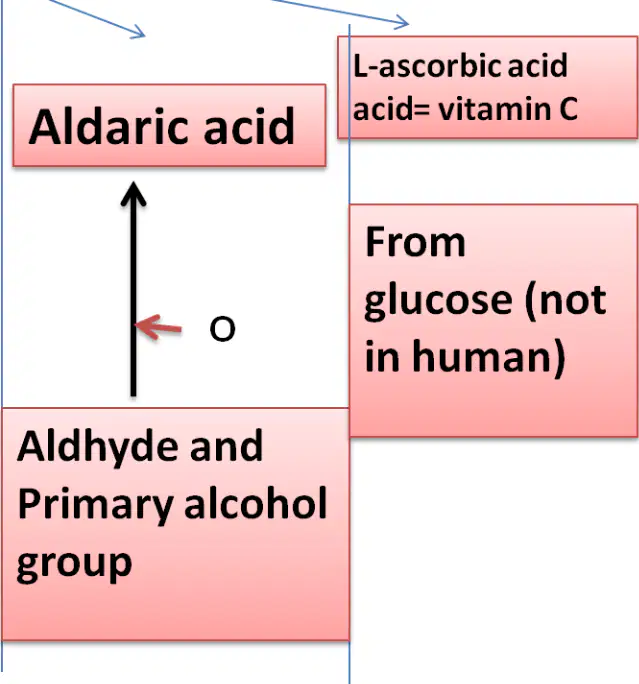
L-ascorbic acid is derived from glucose in humans.
True
False
The ________ of monosaccharides is oxidized to form the corresponding uronic acid.
primary alcohol group
aldehyde group
carboxyl group
secondary alcohol group
Glucose is oxidized to form which acid?
Galacturonic acid (GalUA)
Glucuronic acid (GlcUA)
Lactic acid
Citric acid

