wayground logo

Free Printable Worksheets

Font size

S
M
L
XL
Worksheets

Bio B Semester Exam Review

Total questions: 91

Worksheet time: 1hrs 10mins

Name
Class
Date
1.
Which of the following statements is true regarding ectothermic animals? 
a)
They must eat constantly to stay warm.
b)
They must sweat or pant to release excess body heat.
c)
They rely on the environment to control their temperature.
d)
Most animals on the earth are NOT ectothermic.
2.
Which of the following animals are NOT classified as an amphibian?
a)
lizard
b)
toad
c)
frog
d)
salamander
3.
Which animal would be in the same class as the animal in this picture?
a)
shark
b)
snail
c)
lobster
d)
whale
4.
Which of the following is NOT a characteristic of a vertebrate? 
a)
has a backbone
b)
has an exoskeleton
c)
has skin/scales
d)
has a brain
5.
What do fish use to breathe?
a)
Fish use gills to breathe dissolved oxygen.
b)
Fish use gills to breathe water.
c)
Fish use lungs to breathe air.
d)
Fish use lungs to breathe water.
6.
What is a characteristic of a sponge?
a)
it has many pores
b)
it is endothermic
c)
it has a brain
d)
it has a muscular foot
7.
All vascular plants have all of the following EXCEPT:
a)
vascular tissue
b)
seeds and pollen
c)
flowers and fruits
d)
stems and leaves
8.
Plants that have true roots, stems and leaves are called ____.
a)
nonvascular plants
b)
vascular plants
c)
seed plants
d)
spore plants
9.
____ are plants that produce naked, or not covered, seeds.
a)
Nonvascular
b)
Vascular
c)
Gymnosperms
d)
Angiosperms
10.

All of the following are vascular plants EXCEPT:

a)

ferns

b)

horsetails

c)

liverworts

d)

pine trees

11.

All of the following are nonvascular EXCEPT:

a)

moss

b)

liverworts

c)

hornworts

d)

stag ferns

12.
A seed is a form of ____ reproduction.
a)
sexual
b)
asexual
c)
simple
13.
The two groups of seed plants are....
a)
angiosperms and gymnosperms
b)
vascular and nonvascular
c)
spores and seeds
d)
short and tall
14.
Vascular seed plants that produce covered seeds are called....
a)
gymnosperms
b)
angiosperms
c)
sporophytes
d)
gametophytes
15.
This is a ____ plant.
a)
gymnosperm
b)
angiosperm
c)
vascular
d)
nonvascular
16.
Seedless plants reproduce with ___.
a)
spores
b)
seeds
c)
binary fission
d)
flowers
17.
The dots on the back of this fern plant are tiny reproductive cells called
a)
chloroplasts
b)
anthers
c)
spores
d)
ovaries
18.
Plants with flower parts in 4's or 5's
a)
monocots
b)
dicots
19.
Plants with flower parts in multiples of 3
a)
monocots
b)
dicots
20.
Seeds with one cotyledon
a)
monocots
b)
dicots
21.
Narrow leaves with parallel veins
a)
monocots
b)
dicots
22.
Vascular bundles arranged in rings
a)
monocots
b)
dicots
23.
Scattered vascular bundles
a)
monocots
b)
dicots
24.
What is D? (pg.134)
a)
Anther
b)
Ovules
c)
Pollen Tube
d)
Stigma
25.
To which group do mosses belong?
a)
Bryophytes
b)
Pteridophytes
c)
Gymnosperms
d)
Angiosperms
26.
The part of a flower that produces the male reproductive cells.
a)
anther
b)
style
c)
stigma
d)
filament
27.
Which of the following is NOT a characteristic of protists?
a)
All protists are single-celled
b)
Protists do not have specialized tissues
c)
Protists are less complex than other eukaryotic organisms are 
d)
Protists are less complex than other eukaryotic organisms are
28.
What is a parasite?
a)
All parasites help other organisms
b)
Parasites make their own food
c)
Parasites invade another organism to get the nutrients that it needs
d)
All heterotrophs are parasites
29.
What does an amoebas use to move?
a)
flagellates
b)
pseudopod
c)
legs
d)
flagella
30.
What is Cilia?
a)
A tail like structure that help protist move
b)
Hair like fibers that help protist move
c)
A place where spores are kept
d)
A fake foot that help protist move
31.

To what group of protists do Algae belong?

a)

Fungus-like

b)

Plant-like

c)

Animal-like

32.
Which protist is this?
a)
Amoeba
b)
Paramecium
c)
Plasmodium
33.
How do paramecium move?
a)
Cilia
b)
Flagella
c)
Cytoplasmic streaming (psuedopods)
34.

Lichens are a _______ relationship between _____ and a fungus.

a)

commenalistic; animal

b)

mutualistic; algae

c)

parasitistic; fungus

d)

mutualistic; root

35.

The taxonomic group with few common characteristics is?

a)

Kingdom

b)

Family

c)

Species

d)

Class

36.
Which two organisms have the fewest characteristics in common?
a)
Two organisms in the same kingdom
b)
Two organisms in the same genus
c)
Two organisms in the same species
d)
Two organisms in the same family
37.
Which two organisms would be able to reproduce and produce fertile offspring?
a)
Two organisms in the same class
b)
Two organisms in the same family
c)
Two organisms in the same genus
d)
Two organisms in the same species
38.
The scientific name for an organism is made from the:
a)
class and family name
b)
genus and species name
c)
domain and kingdom name
d)
kingdom and phylum name
39.
Algae, seaweeds, and protozoans belong to kingdom:
a)
Protista
b)
Animalia
c)
Plantae
d)
Fungi
40.
Members of this kingdom are multicellular and autotrophic
a)
Plantae
b)
Animalia
c)
Protista
d)
Fungi
41.
Members of this kingdom are multicellular and heterotrophic
a)
Plantae
b)
Protista
c)
Animalia
d)
Achaebacteria
42.
Members of this kingdom live in unusual conditions such as deep ocean trenches or volcanoes
a)
Eubacteria
b)
Protista
c)
Fungi
d)
Archaebacteria
43.
Molds, yeast, and mushroom belong to kingdom:
a)
Eubacteria
b)
Archaebacteria
c)
Protista
d)
Fungi
44.
The term given to describe the two name naming system is:
a)
Dichotmous key
b)
Binomial nomenclature
c)
Two scientific names
d)
Binomial key
45.
Amoeba, Paramecium, and Euglena are all members of which kingdom?
a)
Plantae
b)
Eubacteria
c)
Protista
d)
Archaebacteria
46.
An illustration and a dichotomous key are given. What is the correct classification for this organism?
a)
Class Insecta
b)
Order Amblygygi
c)
Order Araneae
d)
Order Scorpiones
47.
A table of arachnid and insect characteristics is shown. Which characteristic could be used to distinguish between
arachnids and insects?
a)
Jointed legs
b)
Body segments
c)
Presence of eyes
d)
Presence of antennae
48.
A dichotomous key for trees is provided. Hikers found a tree that has large brown cones and single sharp needles. What species of tree have the hikers found?
a)
Juniper
b)
Pine
c)
Spruce
d)
Fir
49.
What is the name of bird W?
a)
Certhidea
b)
Geospiza
c)
Camarhynchus
d)
Platyspiza
50.
Using this dichotomous key, identify the name of the circled Fish, J.
a)
peacock flounder
b)
band-tail puffer
c)
trumpet fish
d)
spotted goat fish
51.
A dichotomous key for insects is given. To what order does an insect with two pairs of scaly wings belong?
a)
Coleoptera
b)
Heteroptera
c)
Diptera
d)
Lepidoptera
52.
Which of the following animals is categorized as an arthropod?
a)
tree frog
b)
cricket
c)
earthworm
d)
lizard
53.
Over time, adaptions can lead populations to experience 
a)
environmental changes
b)
genetic changes
c)
geological changes
d)
extinction
54.
Why are advantageous traits more likely to be passed onto offspring?
a)
Because they are more likely to survive and reproduce.
b)
Because they come from dominant alleles.
c)
Because they come from recessive alleles.
d)
Because the trait is an acquired phenotype.
55.
Natural selection can best be defined as the _____.
a)
survival of the biggest and strongest in a population
b)
survival and reproduction of those in the largest area
c)
elimination of the smallest organism by the biggest
d)
survival and reproduction of those that are best adapted
56.
Comparing one rock to another rock to determine the age is considered to be called
a)
Absolute age
b)
Relative age
c)
Actual age
d)
Predicted age
57.
According to superposition, the fossils found in the lower layer of rocks are ________ than those found at higher layer
a)
older
b)
Same age
c)
Younger
d)
tougher
58.
Mutations are a change in what?
a)
DNA
b)
tRNA
c)
genotype
d)
phenotype
59.
Which of the three graphs shows disruptive selection?
a)
A
b)
B
c)
C
60.
Which of the three graphs shows stabilizing selection?
a)
A
b)
B
c)
C
61.
Some organisms that share a common ancestor have features that have different functions, but similar structures.  These are known as
a)
vestigial structures
b)
analogous structures
c)
homologous structures
d)
fossil structures
62.
Two organisms that are closely related would have
a)
very similar DNA sequence
b)
exactly the same DNA sequences
c)
no proteins in common
d)
completely different DNA sequence
63.
What do you call all of the genes in a population?
a)
Gene pool
b)
Relative Frequency
c)
Genetic Drift
d)
Allele pool
64.
Two groups of chipmunks cannot mate anymore because the grand canyon separates them; this is
a)
Behavioral isolation
b)
Geographic isolation
65.
An illustration and a dichotomous key are given. What is the correct classification for this organism?
a)
Class Insecta
b)
Order Amblygygi
c)
Order Araneae
d)
Order Scorpiones
66.
Which organism in the table shown is most closely related to the common dolphin?
a)
human
b)
killer whale
c)
giant kelp
d)
bat star
67.
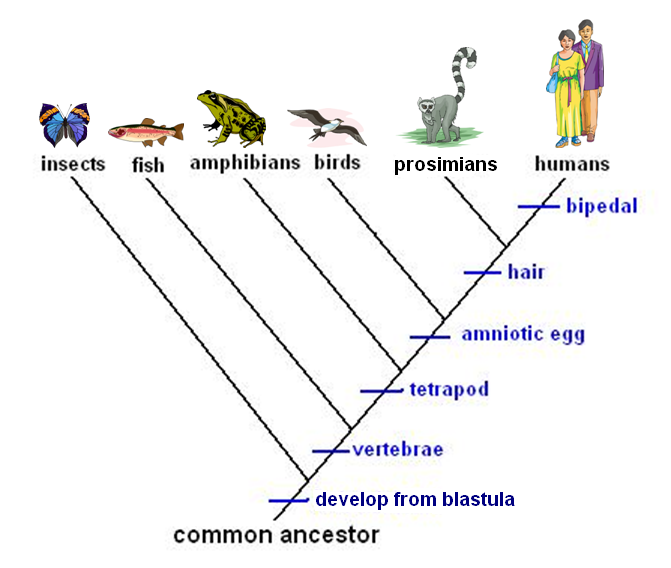
Which organisms pictured on the cladogram have hair?
a)
prosimians only
b)
prosimians and humans
c)
humans only
d)
prosimians and birds
68.
I am prokaryotic and am found everywhere. What kingdom do I belong to?
a)
Bacteria
b)
Archaebacteria
c)
Fungi
d)
Protista
69.

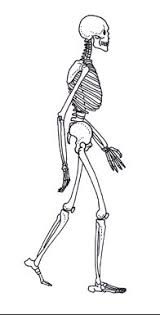
The ability to walk upright on two legs is called:

a)

bipedalism

b)

quadropedalism

c)

bicyclepedalism

d)

tripedalism

70.

All primates have the following features EXCEPT:

a)

large brains

b)

excellent vision

c)

grasping hands

d)

bipedalism

71.

Modern humans and their closest relatives belong to the same family. Members of this family are called:

a)

hominids

b)

primates

c)

homo sapiens

d)

Lucy

72.

According to the theory of evolution, which of the following statements is true?

a)

Humans evolved from chimpanzees

b)

Chimpanzees evolved from humans

c)

There is no evolutionary relationship between humans and chimpanzees

d)

Humans and chimps evolved from common ancestors

73.
The calculation of the age of an object by measuring the proportions of the radioactive isotopes of certain elements is 
a)
relative dating
b)
radiometric dating
c)
uranium dating
d)
isometric dating
74.
A radioisotope's _________________ is the time it takes for one half of the mass of the radioisotope to change into another substance.
a)
half-twist
b)
day-life
c)
half-life
d)
change over
75.
A scientist conducts a geological survey of an area and discovers fossils of Tropites in the sediment. Based on the evidence, approximately how long ago did the Tropites live?
a)
240 million years ago
b)
180 million years ago
c)
541 million years ago
d)
200 million years ago
76.
This image shows an example of a 
a)
Trace fossil
b)
Transitional fossil
c)
Cast fossil
d)
Incomplete fossil
77.
Prokaryotes are unlike all other organisms in that their cells 
a)
do not have a nucleus
b)
have organelles
c)
have cell walls
78.
Name the three cell shapes of prokaryotes
a)
rod, circle spiral
b)
cocci, bacilli, spirilli
c)
crystal, tube, spaghetti
79.

A disease causing organism

a)

pathogen

b)

poison

c)

vaccine

80.

Challenge....

Based on the figure, which chemical inhibited the growth of the bacteria the most?

a)

A

b)

B

c)

C

d)

D

81.

Challenge......

The name streptococcus tells you the bacteria are arranged as ___.

a)

pairs of round cells

b)

long chains of round cells

c)

groups of spirals

d)

chains of rods

82.

This organism has what type of symmetry?

a)

Bilateral

b)

Symetrical

c)

Radial

d)

No symmetry

83.

This organism belongs in the phylum...

a)

Arthropoda

b)

Osteiochythes

c)

Mollusca

d)

Porifera

84.
True or False: 
Vertebrates have an exoskeleton.
a)
True
b)
False
85.
Is the picture a vertebrate or invertebrate?
a)
Vertebrate
b)
Invertebrate
86.
All of the following animal groups are ectothermic except for one. Which one is NOT ectothermic?
a)
Birds
b)
Reptiles
c)
Fish
d)
Amphibians
87.
What are the five groups of vertebrates?  
a)
Mammals, bugs, spiders, fish, and birds
b)
Mammals, birds, fish, reptiles, and amphibians
c)
Snakes, turtles, frogs, bugs, birds
d)
Worms, insects, spiders, jellyfish, sponges
88.
To which phylum does the leech, earthworm, and sandworm belong?
a)
Porifera
b)
Cnidaria
c)
Annelida
d)
Molluska
89.
All animals ____________.
a)
have a backbone
b)
are able to regulate their body temperature regardless of environmental factors
c)
are heterotrophs
d)
all of the above
90.
What do protists, plants, fungi, and animals have in common?
a)
Multicellular
b)
Eukaryotic
c)
Prokaryotic
91.
A goldfish's scientific name is Carassius auratus.  What would a scientist in Germany call a goldfish?
a)
Goldfisch
b)
Carassius auratus
c)
Schnell fishy
d)
How should I know, I don't speak German