
Font size
 Worksheets
Unit 3 - Climate and Weather
Total questions: 77
Worksheet time: 39hrs 30mins
Nitrogen (N2)
Ozone (O3)
Water Vapor (H2O)
Carbon Dioxide (CO2)
Which of the following are greenhouse gasses found in Earth's atmosphere?
Nitrogen (N2)
oxides of nitrogen
NOx gasses
Oxygen (O2)
Methane (CH4)
Water Vapor (H2O)
Of the following greenhouse gasses, which is the most abundant in the atmosphere?
oxides of nitrogen
NOx gasses
Carbon Dioxide (CO2)
Water Vapor (H2O)
Methane (CH4)
Nitrous Oxide (N2O)
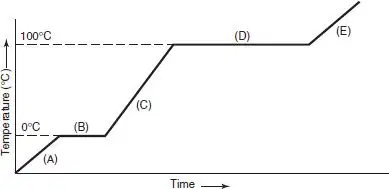
Which of the following is correct about a sample of water during segment A?
solid state (frozen)
Kinetic energy (KE) of molecules increasing
Energy is being absorbed as latent heat
Potential energy (PE) of molecules increasing
liquid
Which of the following is correct about a sample of water during segment B?
Change of state from liquid to solid (freezing)
Kinetic energy (KE) of molecules increasing
Energy is being absorbed as latent heat
Potential energy (PE) of molecules increasing
Change of state from solid to liquid (melting)
Which of the following is correct about a sample of water during segment C?
Potential energy (PE) of molecules is decreasing
Kinetic energy (KE) of molecules increasing
Energy is being absorbed
Potential energy (PE) of molecules increasing
Changing of state happening throughout the substance
Which of the following is correct about a sample of water during segment D?
Liquid --> gas
Kinetic energy (KE) of molecules remaining constant
Latent heat is absorbed
Potential energy (PE) of molecules increasing
Changing of state happening throughout the substance
Which of the following is correct about a sample of water during segment E?
Water is in a vapor (gas) state
Kinetic energy (KE) of molecules remaining constant
Water vapor is condensing to form liquid
Potential energy (PE) of molecules increasing
Kinetic energy (KE) of molecules is increasing

Which of the following is correct about a sample of water during segment A?
Water is in a vapor (gas) state
Kinetic energy (KE) of molecules is decreasing
Water vapor is condensing to form liquid
Potential energy (PE) of molecules increasing
Heat is being released
Which of the following is correct about a sample of water during segment B?
Latent heat is being released
Kinetic energy (KE) of molecules is decreasing
Water vapor is condensing to form liquid
Potential energy (PE) of molecules decreasing
Latent heat is being absorbed
Which of the following is correct about a sample of water during segment C?
Latent heat is being released
Kinetic energy (KE) of molecules is decreasing
Water vapor is condensing to form liquid
Potential energy (PE) of molecules decreasing
Water is in a liquid state
Which of the following is correct about a sample of water during segment D?
Latent heat is being released
Kinetic energy (KE) of molecules remains constant
Potential energy (PE) of molecules remains constant
Potential energy (PE) of molecules decreasing
Water is changeing state from a liquid to a solid
Which of the following is correct about a sample of water as it changes from segment A to C.
80 cal of heat is released
600 cal of heat is absorbed
680 cal of heat is released
600 cal of heat is released
80 cal of heat is absorbed
Which of the following is correct about a sample of water as it changes from segment C to E.
80 cal of heat is released
600 cal of heat is absorbed
680 cal of heat is released
600 cal of heat is released
80 cal of heat is absorbed
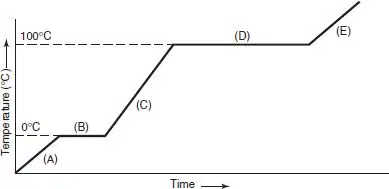
Which of the following is correct about a sample of water as it changes from segment A to E.
80 cal of heat is released
600 cal of heat is absorbed
680 cal of heat is released
600 cal of heat is released
680 cal heat is absorbed
The regions covering the north and south poles (66.5° north and south latitudes and the poles). The sun's rays strike at a very small angle.
tropical zone
temperate zone
polar zone
eye
Region north of the Tropic of Cancer and south of the Tropic of Capricorn. The sun's rays strike the Earth at smaller angle than the tropical zone.
tropical zone
temperate zone
polar zone
cold front
Region between the Tropic of Cancer and the Tropic of Capricorn. The sun's rays are most intense and the temperatures are always warm.
tropical zone
temperate zone
polar zone
warm front
The heating of the Earth's surface and atmosphere from solar radiation being absorbed and emitted by the atmosphere, mainly by water vapor and carbon dioxide
warm front
tropical zone
greenhouse effect
global warming
Which describes air circulation patterns in the atmosphere?
Cold air rises and warms as it does. Warm air sinks and cools at it does.
Warm air rises and cools as it rises. Cold air sinks and warms as it sinks.
Winds that occur along the equator; these carry cold air from NE to SW in the northern hemisphere and SE to NW in the southern hemisphere?
polar easterlies
westerlies
land breezes
tradewinds
sea breezes
winds that occur at mid-latitudes; these carry warm air from SW to NE
hurricanes
greenhouse gas
westerlies
easterlies
Bad weather, high humidity, many clouds, cyclones are probable
high pressure system
low pressure system
cold front
occluded front
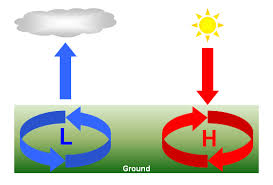


Places near the equator have higher temperatures because
the solar energy travelled the shortest to reach the surface of places near the equator
they receive the highest angle of incidence of sun rays (solar energy)
the solar energy is most concentrated near the equator
all of the above

Winds that blow from 300 latitude to the equator are called:
westerlies
polar easterlies
trade winds
horse latitudes

Winds that blow from 300 latitude to 600 latitude are called:
polar easterlies
prevailing westerlies
trade winds
doldrums

Winds that blow from the North and South pole toward 600 latitude are called:
trade winds
prevailing westerlies
polar easterlies
doldrums

If A is a low pressure band and B is a high pressure band, which direction does a global wind want to flow between these two areas?
North to south
South to north
East to west
West to east

Which areas typically have low pressure?
A and E
C
B and D
A, C, and E
Which areas typically have high pressure?
A and E
C
B and D
A, C, and E
The following are albedo values for three objects:
Object 1 = 0.83
Object 2 = 0.24
Object 3 = 0.05
Which of these objects best absorbs incoming radiation?
Object 1
Object 2
Object 3
None of these objects absorb incoming radiation
The following are albedo values for three objects:
Object 1 = 0.83
Object 2 = 0.24
Object 3 = 0.05
All three objects are placed under a heat lamp for the same amount of time. Which of these objects would most likely heat up at a slower rate?
Object 1
Object 2
Object 3
None of these objects absorb incoming radiation
The following are albedo values for three objects:
Object 1 = 0.83
Object 2 = 0.24
Object 3 = 0.05
All three objects are placed under a heat lamp for the same amount of time. Which object would radiate more thermal energy once the heat lamp is turned off?
Object 1
Object 2
Object 3
None of these objects absorb incoming radiation
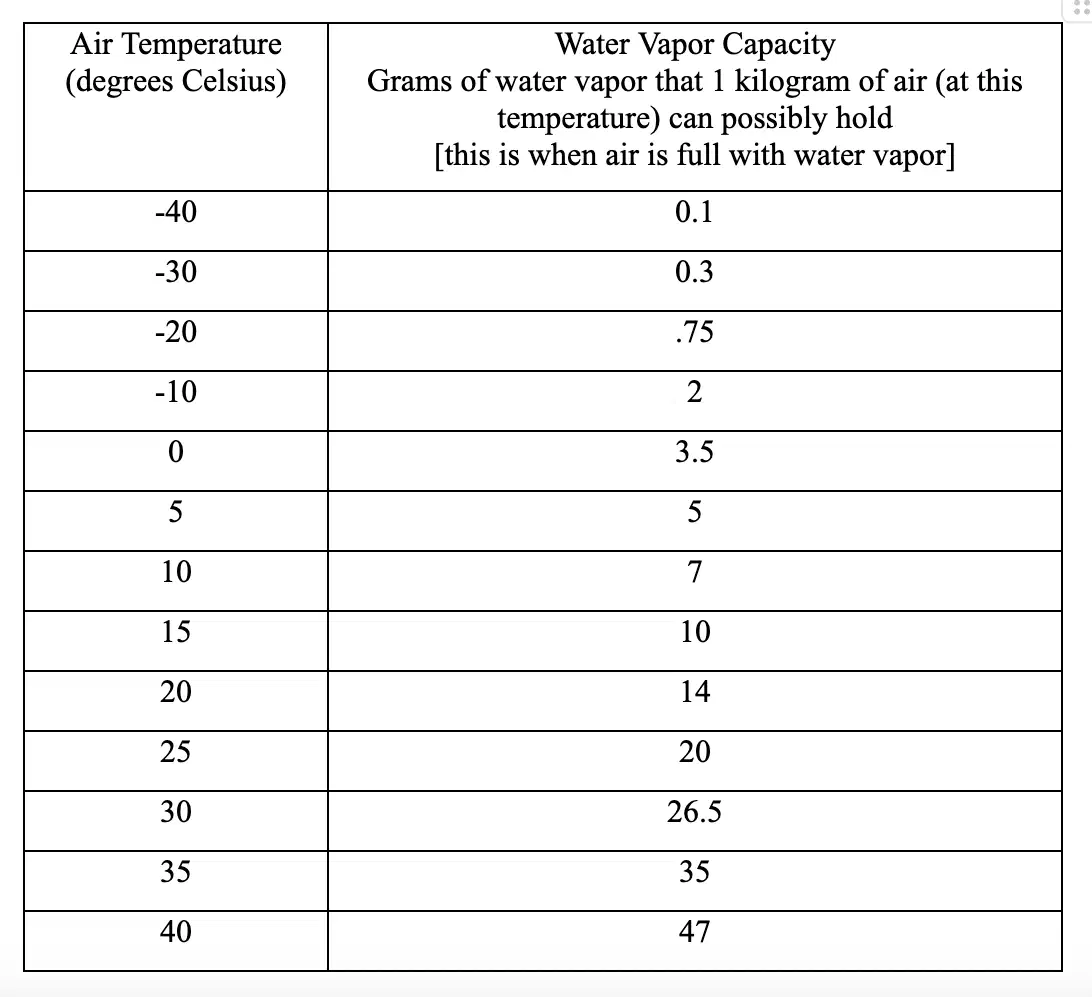
What is the dew point of a parcel of air with 0.75g water content?
-30 C
20 C
-20 C
35 C
A parcel of air just above the ground has 7g of water content is at a temperature of 35 degrees C.
How much will it need to cool to reach its dew point?
20 C
25 C
30 C
15 C
A parcel of air just above the ground has 0.3g of water content is at a temperature of 20 degrees C.
How much will it need to cool to reach its dew point?
20 C
30 C
40 C
50 C
What is the dew point for a parcel of air that has a content of 6.5 grams?
7.5 C
10 C
5 C
Cannot be determined
7 C
As temperature increases, the air's vapor capacity ___________.
Increases
decreases
remains constant
As temperature decreases, the air's vapor capacity ___________.
Increases
decreases
remains constant
Remember to write the FULL equation in words, then substitute then show solving steps on the TEST!
If a parcel of air is at 30% relative humidity and has a capacity of 5g, what is its vapor content?
1.5g
15g
3.33g
30g
Remember to write the FULL equation in words, then substitute then show solving steps on the TEST!
If a parcel of air is has a capacity of 13g and a content of 2g, what is its relative humidity?
~13%
~15%
~2%
~1.5%
Remember to write the FULL equation in words, then substitute then show solving steps on the TEST!
If a parcel of air has a relative humidity of 83% and a content of 6g, what is its capacity?
7.23g
6.5g
8.3g
9.6g

The greenhouse effect is caused by
more heat arriving at the Earth from the sun
the Earth releasing more heat at night
gases in the air trapping heat released by the Earth

The graph shows us that
the earth temperature is always increasing
the earth's temperature has steadily increased since 1900
the earth's temperature has steadily rising since the 1960s
the earth's temperature decreased during the 19th and 20th centuries
Which gases in Earth's atmosphere absorb infrared radiation (i.e. heat)? 2 correct answers.
CO2
Oxygen
Nitrogen
Water vapor
What is Wind?
The increased cooling that a wind can cause.
Cold air blowing away from the poles from East to West.
Movement of air parallel to Earth’s surface; from areas of high pressure to areas of low pressure.
At night, when land cools faster than water, warm air rises over the ocean, and cooler air flows in. This creates a __________.
Land Breeze
Trade Wind
Sea Breeze
Global Wind
During the day, land heats up faster than water causing air over the land to rise and expand. Denser ocean air moves into the area of low pressure producing a __________________.
Land Breeze
Global Wind
Sea Breeze
Trade Wind
Prevailing winds which travel across Earth's surface are deflected due to the Coriolis Effect. In the Northern Hemisphere they are deflected (turn) to the __________
right
left
up
down
Prevailing winds which travel across Earth's surface are deflected due to the Coriolis Effect. In the Southern Hemisphere they are deflected (turn) to the __________
right
left
up
down
What determines the major climate zones?
altitude
latitude
ocean currents
Which side of a mountain sees the most precipitation?
windward
leeward
both a & b
none of the above
Which of the following are associated with high pressure zones?
Clear skies
Heavier average Precipitation
Descending air masses
Rising air masses
Deserts
Which of the following are associated with low pressure zones?
Rain forests
Heavier average Precipitation
Descending air masses
Rising air masses
Deserts

On which side of continents do you normally find cold ocean currents?
West side of continents
East side of continents
On which side of continents do you mostly find warm ocean currents?
West side of continents
East side of continents

How does "nearness" to the center of a large land mass (located inland) affect temperature?
Temperature Range = (High Temperature - Low Temperature)
Larger range in temperature throughout the year
Smaller range in temperature throughout the year
Nearness to bodies of water has no affect on temperature

How does nearness to large bodies of water affect temperature?
Temperature Range = (High Temperature - Low Temperature)
Larger range in temperature throughout the year
Smaller range in temperature throughout the year
Nearness to bodies of water has no affect on temperature

How do mountains affect precipitation?
The windward side of mountains receive below average precipitation
The leeward side of mountains receive above average precipitation
The windward side of mountains receive above average precipitation
The leeward side of mountains receive below average precipitation

How does altitude affect temperature?
As altitude increases, temperature increases
As altitude increases, temperature decreases
As altitude increases temperature doesn't change

What is the relationship between latitude and average temperature?
As latitude increases, temperature decreases
As latitude Increases, temperature increases
As latitude increases, temperature does not change
Prevailing winds blow...
to the right in the northern hemisphere and to the right in the southern hemisphere
to the left in the northern hemisphere and to the left in the southern hemisphere
to the right in the northern hemisphere and to the left in the southern hemisphere
to the left in the northern hemisphere and to the right in the southern hemisphere
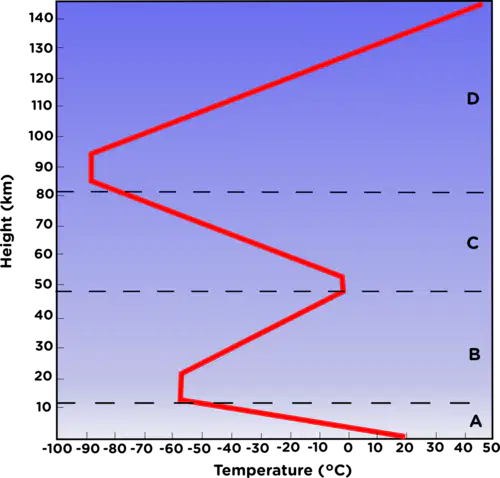
Why is the temperature increasing as altitude increases in layer B?
The higher up you get in layer B, the closer to the sun you are so temperature increases.
Pressure is decreasing as altitude is increasing so temperature increases.
Layer B contains Earth's weather which will heat up this region of the atmosphere the higher you get.
Layer B contains the ozone layer which absorbs incoming UV radiation leading to increasing temperatures.
Why is the temperature decreasing as altitude increases in layer A?
As altitude increases the air is less dense and closer to Earth's surface
As altitude increases the air is more dense and closer to Earth's surface
As altitude increases the air is less dense and is farther from Earth's surface
As altitude increases the air is more dense and farther from Earth's surface

