wayground logo

Free Printable Worksheets

Font size

S
M
L
XL
Worksheets

Earth Midterm Review

Total questions: 158

Worksheet time: 2hrs 19mins

Name
Class
Date
1.

What model of the Solar System has the Earth at the center of the universe?

a)

Geocentric

b)

Heliocentric

c)

Ptolemaic

d)

Copernican

2.

Which model of the universe has the Sun as the center?

a)

Geocentric

b)

Heliocentric

c)

Ptolemaic

d)

Copernican

3.

After the MIddle Ages, the astronomer who changed the model of the solar system by placing the sun at its center was

a)

Galileo

b)

Ptolemy

c)

Copernicus

d)

Kepler

4.

Which astronomer discovered that the planets orbit the sun in oval-shaped paths called ellipses?

a)

Kepler

b)

Brahe

c)

Galileo

d)

Archimedes

5.

Whose most important contribution to anstronomy was his description of the behavior of moving objects?

a)

Kepler

b)

Brahe

c)

Galileo

d)

Archimedes

6.

The geocentric model of the solar system was proposed by the astronomers of ancient

a)

Egypt

b)

China

c)

Germany

d)

Greece

7.

The planetary system of Ptolemy had the planets moving in circular orbits around the

a)

Earth

b)

Sun

c)

Mars

d)

Venus

8.

Which Danish astronomer made precise measurements of the locations of bodies in the solar system, especially Mars?

a)

Brahe

b)

Kepler

c)

Copernicus

d)

Newton

9.

The mass of an object is a measure of the total amount of _______ it contains.

a)

inertia

b)

atoms

c)

matter

d)

weight

10.

Earth is closest to the sun on about January 3 at ________, and is farthest from the sun on about July 4 at __________

a)

perihelion, aphelion

b)

perigee, apogee

c)

aphelion, perihelion

d)

apogee, perigee

11.

What does "geo-" mean?

a)

Earth

b)

sun

c)

Center

d)

Moon

12.

What is the biggest difference between the Geocentric Model and the Heliocentric Model?

a)

the shape of the planets' orbits

b)

the movement of the moon

c)

the center of the solar system

13.
Planets & stars move around earth in perfect circles
a)
heliocentric
b)
geocentric
14.
Most of the sun’s energy is a result of
a)
nuclear fusion  
b)
nuclear fission
c)
atomic reactions
d)
coronal mass ejection
15.
What elements make up most of the sun’s mass?
a)
carbon and oxygen
b)
carbon and hydrogen
c)
helium and nitrogen
d)
hydrogen and helium
16.
What type of galaxy is the Milky Way?
a)
Spiral galaxy
b)
Elliptical galaxy
c)
Nebula
d)
Globular cluster
17.
How many stars are there in the Milky Way?
a)
Hundreds
b)
Hundreds of thousands
c)
Hundreds of millions
d)
Hundreds of billions
18.

When does perihelion occur?

a)

summer

b)

fall

c)

spring

d)

winter

19.

In which season do you receive the most daylight hours?

a)

spring

b)

summer

c)

winter

d)

autumn

20.

A solar eclipse can occur during a

a)

new moon

b)

first moon

c)

full moon

d)

3rd quarter moon

21.

What is the name of the moon phase that comes after the waxing crescent?

a)

new moon

b)

full moon

c)

1st quarter

d)

3rd quarter

22.

In which season does the sun stay low in the sky and the its rays are more dispersed on the surface?

a)

summer

b)

spring

c)

fall

d)

winter

23.

What season is the Northern Hemisphere experiencing at position D in the diagram below?

a)

summer

b)

fall

c)

winter

d)

spring

24.

Which motion of Earth cause day and night?

a)

revolution

b)

precession

c)

orbit

d)

rotation

25.

What is the name of the leading theory of moon formation?

a)

Big Bang Theory

b)

Nebular Theory

c)

Great Divide Theory

d)

Giant Impact Theory

26.

What is the difference between rotation and revolution?

a)

Rotation is movement around an axis, revolution is the orbit of one body around another

b)

Rotation is the orbit of one body around another, revolution is movement around an axis

c)

Rotation always takes a longer period of time than revolution

d)

Rotation and revolution are synonyms

27.

What is an axis?

a)

An imaginary line around which an object revolves

b)

The plane of an object's orbit

c)

The invisible path of an object's orbit

d)

An imaginary line around which an object rotates

28.

Which of the following statements about tidal locking is TRUE?

a)

Rotation and revolution occur at the same rate

b)

The side of the Moon we see changes with the seasons

c)

In the spring, tides are higher

d)

The tidal cycle is shortened

29.

What causes the tides? (Select ALL that apply)

a)

Gravitational pull of the Sun

b)

Gravitational pull of the Earth

c)

Gravitational pull of the Moon

d)

Gravitational pull of the Planets

30.

What is the difference between Spring and Neap tide?

a)

Spring tides occur in the Spring, Neap tides occur in the Fall

b)

Spring tides are higher, Neap tides are lower

c)

Spring tides are lower, Neap tides are higher

d)

Spring tides have a greater tidal range, Neap tides have a lower tidal range

31.

What is the difference between the Umbra and Penumbra?

a)

The Umbra is the darkest part of the eclipse shadow, the Penumbra is the lighter part of the shadow

b)

The Penumbra is the darkest part of the eclipse shadow, the Umbra is the lighter part of the shadow

c)

The Penumbra is larger than the Umbra

d)

The Umbra is larger than the Penumbra

32.

Which of the following statements about a Lunar Eclipse is TRUE?

a)

Moon moves into the Earth's shadow

b)

Moon is between the Earth and the Sun

c)

It is only visible from the daylight side of the Earth

d)

It only occurs during a New Moon phase

33.

What happens during a Total Lunar Eclipse?

a)

The Moon turns into a black circle, similar to a New Moon

b)

The Moon turns red

c)

The Moon is totally blocked by the Sun

d)

The Moon's orbit is at 0 degrees

34.

Which of the following statements about Solar Eclipses is FALSE?

a)

The Earth moves into the Moon's shadow

b)

The Earth is between the Moon and the Sun

c)

Only occur during a New Moon phase

d)

Only occur over a small area of the Earth

35.

What is the difference between the Summer and Winter Solstice?

a)

The Summer Solstice is the shortest day of the year, the Winter Solstice is the longest day of the year

b)

The Summer Solstice is the longest day of the year, the Winter Solstice is the shortest day of the year

c)

The Summer Solstice is the longest day of the year, the Winter Solstice has the same amount of day and night

d)

Both the Summer and Winter Solstices have the same amount of day and night

36.

What does "waning" mean?

a)

Staying the same

b)

Having one side illuminated

c)

Getting bigger and brighter

d)

Getting smaller and darker

37.

The earth's axis is tilted (a)   degrees off center.

38.
Name the phase of the moon for letter a
a)
First Quarter
b)
Last Quarter
c)
Waxing Gibbous
d)
Waning Gibbous
39.
Name the phase of the moon for letter f
a)
Waning Gibbous
b)
Waxing Gibbous
c)
Waning Crescent
d)
Waxing Crescent
40.

When the Moon is between the Earth and the Sun you can have a:

a)

Lunar Eclipse

b)

Solar Eclipse

c)

Penumbra

d)

Umbra

41.

It takes ______________ days for Earth to "circle" the Sun

a)

27.4

b)

365

c)

365.25

d)

366

42.

During which season is the Earth FARTHEST from the sun

a)

Winter

b)

Spring

c)

Summer

d)

Fall

43.

What is the correct order of a Lunar Cycle

a)

Crescent, 1st Quarter, Gibbous, Full, 3rd Quarter

b)

Crescent, 3rd Quarter, Gibbous, Full, 1st Quarter

c)

Gibbous, 1st Quarter, Crescent, Full, 3rd Quarter

d)

Crescent, 1st Quarter, Gibbous, 3rd Quarter, Full

44.
A planet moves __________ when it is farthest from the sun.
a)
faster
b)
slower
45.
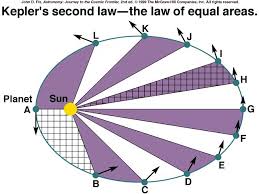
Kepler's 2nd Law deals with 
a)
the shape of the planets' orbits
b)
the speed/area the planet travels 
c)
the length of time it takes the planet to orbit the sun
46.
Kepler's first law states that the orbits of the planets are oval in shape or 
a)
ellipses
b)
perfect circles
47.
The farther away a planet is from the sun, the _______ it takes it to orbit the sun once. 
a)
longer
b)
shorter
48.
The path a planet travels around the sun is called its 
a)
orbit
b)
ellipse
c)
barycenter
d)
precession
49.
When do planets move the fastest?
a)
Close to the sun
b)
Far away from the sun
50.
Earth's orbit follows an elliptical path.
a)
Kepler's 1st law
b)
Kepler's 2nd law
c)
Kepler's 3rd law
d)
Nutation
51.
What did Kepler discover about planets and their orbital speed?
a)
Planets closest to the Sun will orbit with the fastest orbital speed.
b)
Planets with the greatest mass will orbit the Sun with the fastest orbital speed.
c)
Planets furthest from the Sun will orbit with the fastest orbital speed.
d)
Planets with the least mass will orbit the Sun with the fastest orbital speed.
52.

The diagram below represents a simple geocentric model. Which object is represented by the letter X?

a)

Earth

b)

Sun

c)

Moon

d)

Polaris

53.
Kepler's 2nd Law deals with 
a)
the shape of the planets' orbits
b)
the speed/area the planet travels 
c)
the length of time it takes the planet to orbit the sun
54.
A planet moves __________ when it is farthest from the sun.
a)
faster
b)
slower
55.
Kepler's first law states that the orbits of the planets are oval in shape or 
a)
ellipses
b)
perfect circles
56.
The farther away a planet is from the sun, the _______ it takes it to orbit the sun once. 
a)
longer
b)
shorter
57.
When do planets move the fastest?
a)
Close to the sun
b)
Far away from the sun
58.
Where is the planet moving faster
a)
Position A to B
b)
Position B to C
c)
Position H to I
d)
Position I to J
59.
What is true about the area between points A, B and the Sun, and the area between points H, I and the Sun?
a)
The area between A, B and the Sun is the largest.
b)
The area between H, I and the Sun is the largest
c)
Both areas are equal in size
d)
There is not enough information to determine the areas
60.
When Earth orbits around the sun, it slows down when it is close to the sun. It speeds up its orbit when it is further from the sun. This is because the sun's gravity is stronger when you are closer to it.
a)
Kepler's 1st law
b)
Kepler's 2nd law
c)
Kepler's 3rd law
d)
Nutation
61.
Earth's orbit follows an elliptical path.
a)
Kepler's 1st law
b)
Kepler's 2nd law
c)
Kepler's 3rd law
d)
Nutation
62.
Which term describes the time it takes for Earth to complete one circle around the sun.
a)
Rotation
b)
Revolution
c)
Kepler's 1st Law
d)
Barycenter
63.
Which term describes when the Earth spins on its axis.
a)
Rotation
b)
Revolution
c)
Kepler's Laws
d)
Precession
64.
What did Kepler discover about planets and their orbital speed?
a)
Planets closest to the Sun will orbit with the fastest orbital speed.
b)
Planets with the greatest mass will orbit the Sun with the fastest orbital speed.
c)
Planets furthest from the Sun will orbit with the fastest orbital speed.
d)
Planets with the least mass will orbit the Sun with the fastest orbital speed.
65.

A[n] ___________ tide occurs when the sun, Earth, and the moon are inline.

a)

spring

b)

high

c)

low

d)

neap

66.
What type of tides would this arrangement of earth-moon-sun create?
a)
neap tide
b)
spring tide
c)
new moon tide
d)
full moon tide
67.
What type of tide would this arrangement of earth-moon-sun create?
a)
full moon tide
b)
new moon tide
c)
neap tide
d)
spring tide
68.
Tides are caused by
a)
strong winds that blow over ocean waters.
b)
the interaction of Earth, the moon and the sun.
c)
the shifting of the plates on the ocean floor.
d)
variations in the salinity of ocean water
69.
If there is a high tide on the north side of the earth, what type of tide will occur on the south side?
a)
low tide
b)
high tide
c)
spring tide
d)
neap tide
70.

Carolina beaches have 2 high and 2 low tides every day. If the beach at 12 pm (noon) and it is high tide, then what tide will you see If you return about 6 hours later?

a)

high

b)

low

c)

none

d)

spring

71.
Which of the following pictures is showing a high tide?
a)
A
b)
B
c)
C
d)
D
72.

Neap tides happen at _________ and _________ phases of the moon.

a)

first quarter and new moon

b)

last quarter and full moon

c)

waxing and waning

d)

1st quarter and 3rd quarter

73.

During a neap tide, the sun, moon, and earth are at a ___________ angle.

a)

360 degree

b)

23.5 degree

c)

45 degree

d)

90 degree

74.

What type of tide is evident when the moon is in the full moon phase?

a)

high tide

b)

low tide

c)

spring tide

d)

neap tide

75.
A 3rd Quarter moon results in a ____ Tide
a)
Neap
b)
Spring
c)
Neither
76.
What does this symbol indicate on a weather map?
a)
warm front
b)
cold front
c)
stationary front
d)
occluded front
77.
What does this symbol on a weather map indicate? 
a)
High pressure system
b)
Low pressure system
c)
Cold front
d)
Warm front
78.
What does this symbol indicate on a weather map? 
a)
High pressure system
b)
Low pressure system
c)
Cold front
d)
Warm front
79.
What kind of weather is usually associated with a high pressure system?
a)
Sunny weather
b)
Precipitation (rain, snow, etc.)
80.
A cold front moving into an area can bring this type of weather...
a)
Warmer Temperatures, Clear Skies
b)
Colder Temperatures, Clear Skies
c)
Warmer Temperatures, Clouds
d)
Colder Temperatures, Clouds, and Precipitation
81.
This type of front results in the same weather for several days
a)
warm
b)
cold
c)
stationary
d)
occluded
82.
This type of front can bring violent storms
a)
cold
b)
warm
c)
stationary
d)
occluded
83.
What does this symbol on a weather map indicate? 
a)
High pressure system
b)
Low pressure system
c)
Cold Front
d)
Warm Front
84.
What does this symbol on a weather map indicate? 
a)
High pressure system
b)
Low pressure system
c)
Cold front
d)
Warm front
85.
What kind of pressure predicts good weather?
a)
high
b)
low
c)
cold
d)
stationary
86.
Located at the leading edge of a warm air mass. Brings gentle rain or light snow, followed by warmer, milder weather.  
a)
Warm Front
b)
Cold Front 
c)
Occluded Front 
d)
Stationary Front 
87.
Where the warm and cold air meet and stall, clouds and fog form, and it may rain or snow.  It could bring many days of clouds and precipitation.  
a)
Warm Front
b)
Cold Front
c)
Occluded Front 
d)
Stationary Front 
88.
When a cold front overtakes a warm front, the temperature drops as the warm air mass is cut off from the ground and pushed upward.  It can bring strong winds and heavy precipitation. 
a)
Warm Front
b)
Cold Front
c)
Occluded Front
d)
Stationary Front 
89.
When two air masses meet, there is a _____, or boundary.
a)
thunderstorm
b)
watch
c)
front
d)
cloud
90.
What type of storm front is this?
a)
cold front
b)
warm front
c)
stationary front
d)
occluded front
91.
What type of storm front is this?
a)
occluded front
b)
warm front
c)
cold front
d)
stationary front
92.
What characteristics are used to classify an air mass?
a)
pressure and temperature
b)
temperature and latitude
c)
temperature and humidity
d)
humidity and density
93.
What type of weather would you expect to see after a cold front has moved through an area?
a)
cool, clear skies
b)
warm and humid
c)
thunderstorms
d)
foggy
94.
Which type of air mass creates cool, dry air?
a)
continental tropical
b)
maritime tropical
c)
continental polar
d)
maritime polar
95.
The transfer of thermal energy between objects in direct contact
a)
Conduction
b)
Convection
c)
Radiation
96.
Air masses move from areas of _______ to areas of _______
a)
low pressure; high pressure
b)
high temperature; low temperature
c)
high pressure; low pressure
d)
low humidity; high humidity
97.
A warm, dry air mass that forms over land near the equator
a)
cP
b)
cT
c)
mT
d)
mP
98.
A cool, wet air mass that forms over oceans in northern latitudes
a)
cT
b)
mT
c)
mP
d)
cP
99.
A cool, dry air mass that forms over land in northern latitudes
a)
mA
b)
cT
c)
cA
d)
cP
100.
Due to the Coriolis Effect, wind in the Northern Hemisphere is deflected to the _____
a)
Right
b)
Left
c)
North
d)
South
101.
Which winds are mainly responsible for our weather in North Carolina?
a)
Northeast Trades
b)
Easterlies
c)
Southeast Trades
d)
Westerlies
102.
An instrument that measures air pressure
a)
thermometer
b)
barometer
c)
rain guage
d)
wind sock
103.
When air is heated, it ___.
a)
Expands
b)
Contracts
c)
Doesn't change
d)
Air cannot be heated
104.
____________ air sinks/falls because it is ____________dense.
a)
Cold, More
b)
Warm, Less
c)
Cold, Less
d)
Warm, More
105.
A high pressure system means we might have this weather.
a)
Snow blizzard
b)
Sunny and dry
c)
Rain storm
d)
Tornado
106.
In _______ pressure systems, air rises
a)
high
b)
low
c)
medium
d)
none
107.
In _________ pressure systems, air sinks:
a)
high
b)
low
c)
medium
d)
none
108.

What type of Tropical storm can be found near Japan?

a)

typhoon

b)

cyclone

c)

Hurricane

109.
How fast do winds have to be before it is considered a hurricane?
a)
50 mph
b)

74 mph

c)
100 mph
d)

86 mph

110.

What type of Tropical storm can be found near Australia?

a)

cyclone

b)

typhoon

c)

hurricane

111.
The Saffir-Simpson Scale measures
a)
Hurricane's rainfall
b)
Hurricane's area
c)
Hurricane's intensity
d)
Hurricane's storm surge
112.

How many categories of hurricanes are there?

a)

1

b)

2

c)

3

d)

4

e)

5

113.

When hurricanes reach land, they tend to lose strength. Why does this happen?

a)

The lack of cold, dry air to power the storm

b)

An increase in warm, wet air

c)

An increase in cold, wet air

d)

A lack of warm, wet air to power the storm

114.

An increase in barometric pressure would most likely cause which of the following?

a)

precipitation to end

b)

precipitation to begin

c)

no change in precipitation

115.

A decrease in barometric pressure would most likely cause which of the following?

a)

precipitation to end

b)

precipitation to begin

c)

no change in precipitation

116.

This scale is used to track the intensity of tornadoes.

a)

Enhanced Fujita Scale

b)

Saffir-Simpson Scale

117.
What are the 2 most abundant gases in Earth's atmosphere?
a)
Oxygen & Carbon Dioxide
b)
Nitrogen & Carbon Dioxide
c)
Nitrogen & Oxygen
d)
Hydrogen & Argon
118.
The amount of mass in a given volume of air is __.
a)
density
b)
pressure
c)
altitude
d)
air pressure
119.
The layer of the atmosphere where weather occurs is the _.
a)
thermosphere
b)
stratosphere
c)
mesosphere
d)
troposphere
120.
The amount of water vapor in the air is called the _____
a)
warm front
b)
precipitation
c)
humidity
d)
air pressure
121.
Which is the correct order of gases in the atmosphere from least to greatest amount?
a)
nitrogen, oxygen, other gases
b)
nitrogen, other gases, oxygen
c)
other gases, oxygen, nitrogen
d)
oxygen, nitrogen, other gases
122.
Which layer of the atmosphere holds the ozone layer?
a)
Troposphere
b)
Stratosphere
c)
Mesosphere
d)
Thermosphere
123.
An instrument used to measure how hot or cold something is
a)
barometer
b)
thermometer
c)
wind sock
d)
rain guage
124.
____________ air rises because it is ____________dense.
a)
Cool, Less
b)
Warm, Less
c)
Cold, More
d)
Warm, More
125.
An instrument that measures air pressure
a)
thermometer
b)
barometer
c)
rain guage
d)
wind sock
126.
Which layer of the atmosphere is closest to the Earth's surface?
a)
Stratosphere
b)
Mesosphere
c)
Troposphere
d)
Thermosphere
127.
Earth would be too cold to support life without _____________________.
a)
global warming
b)
the greenhouse effect
c)
tropics
d)
seasons
128.
____________ air sinks/falls because it is ____________dense.
a)
Cold, More
b)
Warm, Less
c)
Cold, Less
d)
Warm, More
129.
The ozone is in the stratosphere layer of the atmosphere. The purpose of the ozone is
a)
To generate heat for the earth
b)
To protect earth from the harmful solar radiation
c)
To produce weather
d)
To allow satellites to circle the earth
130.
The weight of air as it presses down on Earth's surface
a)
front
b)
air pressure
c)
air mass
d)
evaporation
131.
Ozone is made up of which element?
a)
Carbon
b)
Oxygen
c)
Water Vapor
d)
Nitrogen
132.
Which layer of the atmosphere is the hottest?
a)
Mesosphere
b)
Thermosphere
c)
Stratosphere
d)
Troposphere
133.
Which is the correct order of the layers of the atmosphere from closest to Earth to the farthest away?
a)
exosphere, thermosphere, mesosphere, stratosphere,  troposphere
b)
thermosphere, stratosphere, mesosphere, troposphere, exosphere
c)
exosphere, thermosphere, ionosphere, stratosphere, thermosphere
d)
troposphere, stratosphere, mesosphere, thermosphere, exosphere
134.
As altitude increases, air density ___
a)
Increases
b)
Decreases
135.

The layers of the atmosphere are divided or classified based on their ___.

a)

weather

b)

temperature

c)

altitude

d)

oxygen level

136.
What is the formula for density?
a)
Density = Mass x Volume
b)
Density = Mass + Volume
c)
Density = Mass ÷ Volume
d)
Density = Volume ÷ Mass
137.
Altitude is the distance above sea level
a)
True
b)
False
138.
Which gas makes up 21% of the Earth's atmosphere?
a)
Nitrogen
b)
Carbon Dioxide
c)
Oxygen
d)
Argon
139.
As altitude increases in the stratosphere, temperature ____.
a)
Increases
b)
Decreases
c)
Stays the same
140.
Would air at the top of a mountain be more or less dense than at sea level? 
a)
More dense
b)
Less dense
c)
Density stays the same
d)
Air doesn't have density
141.
Meteors tend to burn up due to friction in which layer of the atmosphere?
a)
Exosphere
b)
Mesosphere
c)
Ionosphere
d)
Stratosphere
142.
Which component of the atmosphere changes the most on a daily basis?
a)
Oxygen
b)
Nitrogen
c)
Water Vapor
d)
Hydrogen
143.
Which gas makes up 78% of Earth's atmosphere?
a)
Oxygen
b)
Hydrogen
c)
Carbon Monoxide
d)
Nitrogen
144.
When air is heated, it ___.
a)
Expands
b)
Contracts
c)
Doesn't change
d)
Air cannot be heated
145.
Ozone found in the troposphere is considered to be a ___.
a)
Form of protection against UV radiation
b)
Form of air pollution
c)
Healthy for human lungs
d)
None of these
146.
The troposphere is more dense than any other layer of the atmosphere.
a)
True
b)
False
147.
As altitude increases in the troposphere, temperature ____.
a)
Increases
b)
Decreases
c)
Stays the same
148.
Temperature in the Thermosphere decreases with altitude.
a)
True
b)
False
149.
Most of the mass of Earth's atmosphere is found in the ___.
a)
Troposphere
b)
Stratosphere
c)
Mesosphere
d)
Thermosphere
150.
As altitude increases in the mesosphere, temperature ____.
a)
Increases
b)
Decreases
c)
Stays the same
151.
James plans to climb to the top of Mt Everest. Which of the following statements about his climb will be most accurate?
a)
Air pressure will rise and the temperature on a thermometer will increase.
b)
Air pressure will fall and the temperature on a thermometer will decrease.
c)
Air pressure will rise and the temperature on a thermometer will decrease.
d)
Air pressure and thermometer will not change.
152.
Which of the following is NOT a reason why the atmosphere is important?
a)
it is made of many layers
b)
it provides gases living things need
c)
it keeps the Earth warm enough to support life
d)
it protects us from UV rays and meteors
153.
Where will you find the Aurora Borealis (the Northern Lights)?
a)
Stratosphere
b)
Exosphere
c)
Troposphere
d)
Ionosphere
154.
As altitude increases in the thermosphere, temperature ____.
a)
Increases
b)
Decreases
c)
Stays the same
155.
Which layer of the atmosphere has the lowest pressure?
a)
Troposphere
b)
Thermosphere
c)
Mesosphere
d)
Stratosphere
156.
The International Space Station (ISS) orbits in the ____.
a)
Exosphere
b)
Mesosphere
c)
Thermosphere
d)
Ionosphere
157.
Why does the troposphere experience the greatest amount of atmospheric pressure compared to the other layers?
a)
It produces the ozone layer
b)
It has the highest temperatures
c)
It contains a higher concentration of gas particles
d)
It is the region in which weather occurs
158.
Which explains why most of the rain that falls comes from the ocean?
a)
The majority of evaporation takes place over the ocean
b)
the majority of precipitation takes place over the ocean
c)
Most rivers deposit freshwater into the ocean
d)
Most clouds form near or over the ocean