
 Worksheets
Review
Total questions: 88
Worksheet time: 44mins
Which of the following is a lifestyle choice that can interrupt sleep?
Stress
Schedule or poor sleep hygiene
Sleep Apnea
Prescription Drugs
Which of the following is a psychological factor that can interrupt sleep?
Restless Leg Syndrome
Mental Health conditions
Caffeine
Pseudophedodrine
Which of the following is a medical condition that can interrupt sleep?
Stress
Chronic diseases such as COPD
Screen time
Alcohol
Which of the following medications can interrupt sleep?
Over-the-counter Drugs - Pseudophedodrine
Caffeine
Stress
Sleep Apnea
Fill in the blank: ________ is the #1 side effect of opioid use.
Constipation
Headache
Rash
Insomnia
Which of the following is NOT a side effect of opioid use?
Constipation
Drowsiness
Improved alertness
Nausea
What is the first step in setting up a sterile field?
Hand Hygiene
Gather Supplies
Open the Outer Wrap
Add Items into the Field
Fill in the blank: You should wash or sanitize your hands before beginning. This step is called ________.
Hand Hygiene
Sterilization
Disinfection
Gloving
When opening the outer wrap of a sterile package, you should open the top flap ________ from the body.
away
towards
under
beside
When adding items to the sterile field, hold them ________ inches (15 cm) above the field and drop them onto the surface.
6
2
10
12
Which of the following is NOT a factor of complicated grief?
Getting 'stuck' in the grief process
Unable to express feelings
Having strong social support
Suffering a loss that stirs up unresolved losses
Fill in the blank: The five stages of grief according to the Kubler-Ross model are Denial, Anger, Bargaining, Depression, and _________.
Acceptance
Rejection
Confusion
Isolation
A physician must certify that a patient's illness is terminal with 6 months or less to live for hospice admission.
True
False
Which of the following is a requirement for hospice admission?
The patient must be under 65 years old
The patient must be willing to forego any further curative treatment and seek only palliative care
The patient must have a contagious disease
The patient must be able to walk unassisted
Two causes of dysphagia in older adults are:
Stroke and esophageal cancer
Asthma and diabetes
Hypertension and arthritis
Glaucoma and cataracts
The significance of not being able to call 911 for a hospice patient is:
It respects the patient's end-of-life wishes and avoids unnecessary medical intervention.
It ensures the patient receives emergency treatment quickly.
It allows for immediate transfer to a hospital for advanced care.
It prevents family members from being involved in care decisions.
Fill in the blank: For Medicare and Medicaid, ______ doctors must certify that a patient has less than 6 months to live for hospice admission.
2
1
3
4
What does the Medulla Oblongata control?
Breathing (respiration) and blood pressure.
Vision and hearing.
Digestion and nutrient absorption.
Balance and coordination.
CHAPTER 10: THE NERVOUS SYSTEM
True
False
Which type of receptor detects chemical stimuli like taste, smell, and changes in blood chemistry?
Nociceptors
Chemoreceptors
Thermoreceptors
Photoreceptors
Which type of receptor is also known as a pain receptor and is stimulated by noxious stimuli that can cause tissue damage?
Nociceptors
Chemoreceptors
Thermoreceptors
Mechoreceptors
Which type of receptor detects changes in temperature?
Thermoreceptors
Mechoreceptors
Photoreceptors
Chemoreceptors
Which type of receptor senses mechanical forces such as pressure, touch, vibration, and stretch?
Mechoreceptors
Photoreceptors
Chemoreceptors
Nociceptors
Which type of receptor is located in the eyes and responds to light?
Photoreceptors
Chemoreceptors
Thermoreceptors
Nociceptors
A person with blood type O- can donate to which blood types?
All (Universal Donor)
Only O-
Only AB+
Only A and B
A person with blood type AB+ can receive blood from which blood types?
All (Universal Receiver)
Only O-
Only AB+
Only A and B
Which blood types can donate to A+?
A+, AB+
O-, B+
O+, AB-
B-, AB+
Which blood types can receive from O+?
A+, B+, AB+, O+
A-, B-, AB-, O-
AB+ only
O+ only
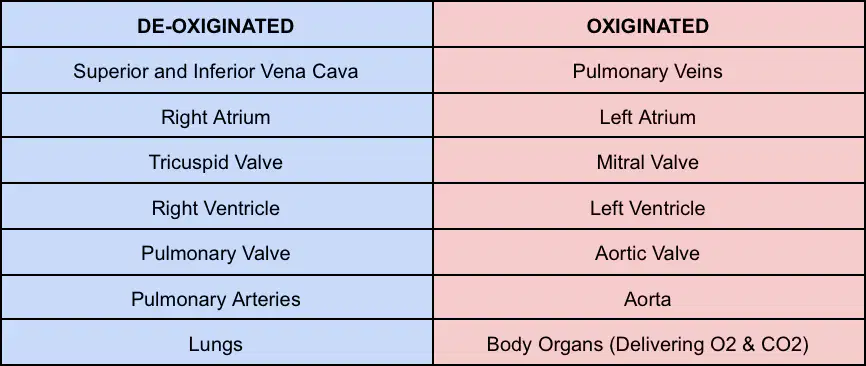
Which structure receives de-oxygenated blood from the body?
Superior and Inferior Vena Cava
Pulmonary Vein
Aorta
Left Atrium
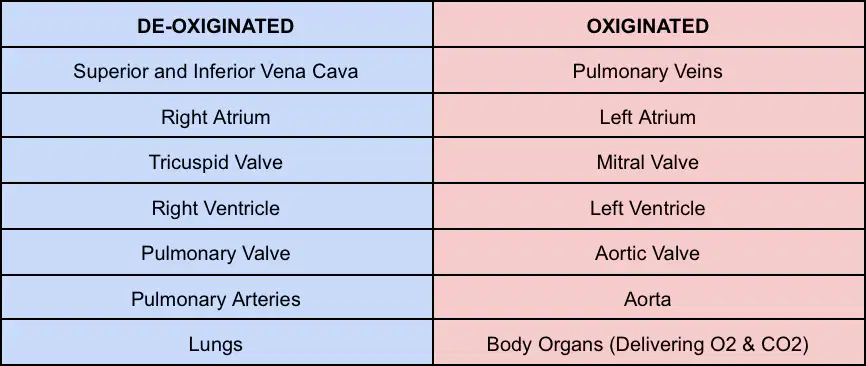
Which valve is located between the right atrium and right ventricle?
Mitral Valve
Tricuspid Valve
Aortic Valve
Pulmonary Valve
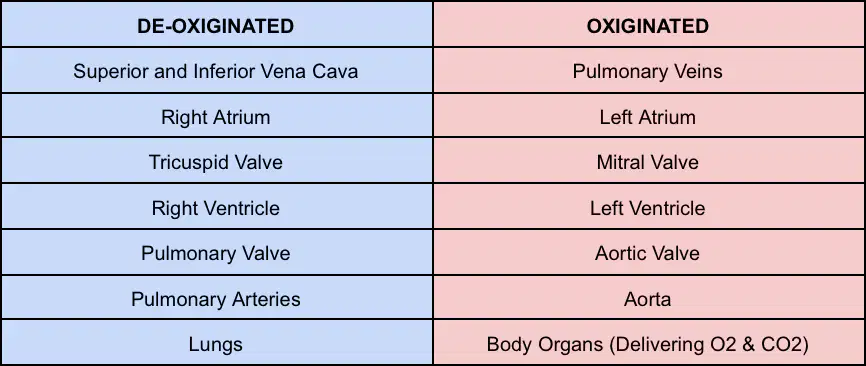
Which chamber of the heart receives oxygenated blood from the lungs?
Right Atrium
Left Atrium
Right Ventricle
Left Ventricle
What is the main regulator of respiration in the brain?
Medulla Oblongata
Cerebellum
Thalamus
Hypothalamus
The medulla oblongata controls breathing respiration and blood pressure.
True
False
Which of the following is most important for respiration?
Cerebellum
Pons and Medulla
Thalamus
Hypothalamus
What is the function of surfactant in the lungs?
Prevents the lungs from collapsing by reducing the surface tension inside the alveoli.
Increases the rate of oxygen diffusion into the blood.
Removes carbon dioxide from the alveoli.
Stimulates the contraction of respiratory muscles.
Surfactant allows for proper gas exchange by keeping the alveoli _______.
inflated
collapsed
dry
constricted
Pathway of Digestion to Elimination: What is the first organ food passes through?
Mouth
Stomach
Esophagus
Small intestine
Pathway of Digestion to Elimination: What is the last organ in the pathway?
Anus
Stomach
Small intestine
Esophagus
Arrange the following in the correct order of the digestive pathway: Mouth, Esophagus, Stomach, Small Intestine, Large Intestine (Colon), Rectum, Anus.
Mouth, Esophagus, Stomach, Small Intestine, Large Intestine (Colon), Rectum, Anus
Mouth, Stomach, Esophagus, Small Intestine, Large Intestine (Colon), Rectum, Anus
Mouth, Esophagus, Small Intestine, Stomach, Large Intestine (Colon), Rectum, Anus
Mouth, Esophagus, Stomach, Large Intestine (Colon), Small Intestine, Rectum, Anus
What is the function of the Salivary Glands?
Secrete saliva to moisten food, dissolve it for tasting, and contain enzymes for chemical digestion to begin in the mouth.
Absorb nutrients from digested food into the bloodstream.
Store bile produced by the liver for fat digestion.
Produce insulin to regulate blood sugar levels.
What is the function of the Liver?
Produces bile, which aids in the breakdown of fats, and performs other metabolic functions vital to the body.
Regulates the heartbeat and pumps blood throughout the body.
Absorbs nutrients from digested food and passes them into the bloodstream.
Filters air and facilitates the exchange of oxygen and carbon dioxide.
What is the function of the Gallbladder? Function: ________. Role: Releases bile into the duodenum to further aid in fat digestion.
Stores and concentrates bile produced by the liver.
Produces insulin for glucose metabolism.
Absorbs nutrients from digested food.
Secretes digestive enzymes into the stomach.
What is the function of the Pancreas?
Produces pancreatic juice containing digestive enzymes and bicarbonate ions.
Stores bile produced by the liver.
Absorbs nutrients from digested food.
Produces insulin only, without any digestive function.
What is Aldosterone?
A hormone from the adrenal glands in the blood sample.
A digestive enzyme produced in the stomach.
A neurotransmitter released by nerve cells.
A protein found in red blood cells.
What is Renin?
An enzyme from the kidneys in a blood sample.
A hormone produced by the liver.
A protein found in red blood cells.
A vitamin essential for bone health.
The RAAS System increases BP by activating a cascade that leads to ________ (narrowing of blood vessels) and increasing blood volume and BP.
VASOCONSTRICTION
VASODILATION
FILTRATION
DIURESIS
Which of the following is a trigger for the RAAS system?
High BP, high sodium levels
Low BP, low sodium levels
High BP, low sodium levels
Low BP, high sodium levels
What do the kidneys release to initiate the RAAS pathway?
RENIN
ALDOSTERONE
ANGIOTENSINOGEN
VASOPRESSIN
ANGIOTENSIN I is changed by ________ to ANGIOTENSIN II.
ACE
Renin
Aldosterone
Vasopressin
Production of ANGIOTENSIN II causes ________.
VASOCONSTRICTION
VASODILATION
HYPOGLYCEMIA
BRADYCARDIA
The adrenal glands are stimulated to release ________ as part of the RAAS system.
ALDOSTERONE
CORTISOL
EPINEPHRINE
INSULIN
What effect does the RAAS system have on the kidneys?
Causes the kidneys to retain sodium and water, increasing blood volume and BP.
Causes the kidneys to excrete more sodium and water, decreasing blood volume and BP.
Has no effect on the kidneys.
Causes the kidneys to retain potassium and excrete sodium.
What is the goal of wound irrigation?
To cleanse the wound, remove debris, and reduce bacterial contamination to promote healing.
To increase bacterial contamination.
To cause discomfort to the patient.
To avoid using any sterile technique.
Wound irrigation is an _______ technique procedure.
aseptic
sterile
contaminated
surgical
Before performing wound irrigation, what should be ensured for the patient?
The patient is properly medicated before the procedure.
The patient is not medicated.
The patient is left unattended.
The patient is not informed about the procedure.
Hand hygiene during wound irrigation includes:
Donning gloves, gown, and goggles if potential for splashing exists.
Only washing hands.
Wearing only a mask.
No protective equipment is needed.
During wound irrigation, cleanse in the direction of the _______ area to the _______ area with sterile saline irrigant.
least contaminated; most contaminated
most contaminated; least contaminated
outer; inner
upper; lower
The process of irrigation involves moving from clean areas of the wound to dirtier areas, using _______ to flush out debris.
gentle pressure
high heat
dry gauze
sharp instruments
Be sure that the irrigation solution flows from the _______ area to the _______ area.
least contaminated; most contaminated
most contaminated; least contaminated
cleanest; dirtiest
upper; lower
Wound irrigation may be performed with various devices such as:
Syringes, syringes with catheters attached, and syringes with needles.
Only with bare hands.
Only with cotton swabs.
Only with gauze.
When using a syringe for wound irrigation, keep the tip _______ above the wound or area being cleansed.
1 inch
1 foot
6 inches
3 inches
Which foods should be emphasized in a heart-healthy diet?
Fruits and vegetables, whole grains, lean proteins, healthy fats, minimally processed foods
High sodium foods, saturated fats, and trans fats
Sugary snacks and high cholesterol foods
Fried foods and processed meats
Fill in the blank: A heart-healthy diet should limit ________, saturated and trans fats, added sugars, high cholesterol foods, and alcohol.
sodium
fiber
protein
vitamin C
What is one benefit of a low sodium diet?
Increases blood pressure
Manages blood pressure
Increases fluid retention
Increases cholesterol
Fill in the blank: Reducing sodium helps prevent fluid ________ and its associated symptoms in patients with heart failure.
retention
loss
production
evaporation
In chronic kidney disease, sodium restriction is crucial for maintaining proper blood pressure and fluid balance.
True
False
A low potassium diet is often recommended for which condition?
Heart failure
Kidney health
Diabetes
High cholesterol
Fill in the blank: A low potassium diet involves limiting potassium intake to between ________ and ________ mg per day.
2,000 and 3,000
1,000 and 1,500
3,500 and 4,500
4,000 and 5,000
Which of the following is a low-potassium food?
A) Bananas
B) Oranges
C) White rice
D) Potatoes
Which of the following should be avoided in a low potassium diet?
Apples
Carrots
Bananas
White meat
What is the first step in the administration of enteral feedings?
Gather supplies
Verify the order
Perform hand hygiene
Check the formula
Fill in the blank: Before administering enteral feedings, you should confirm the correct formula, rate, and total amount with the ________ orders.
healthcare
kitchen
patient's family
insurance
The patient should be positioned in Fowlers or Semi-Fowlers (right side, slightly upright) to prevent aspiration during enteral feeding.
True
False
Flash the Tube: Flush the tube with ________.
water
oil
alcohol
sand
When should you check the GRV?
At the beginning of the feeding and follow facility guidelines.
Only at the end of the day.
After every meal regardless of guidelines.
Once a week during routine checks.
Position the Patient after Feeding: After the feeding, keep the patient in an upright position for at least ______ minutes.
30
10
5
60
Perform Hand Hygiene: What should you do after removing gloves?
Perform hand hygiene.
Put on a new pair of gloves immediately.
Wipe hands with a dry cloth only.
Wait for hands to air dry without washing.
What should you do with supplies after feeding?
Clean up supplies and dispose of them properly.
Leave them on the table for the next use.
Store them without cleaning.
Throw them anywhere convenient.
What information should be documented after feeding?
Amount of feeding administered, GRV, and patient assessment.
Patient's favorite food and color of feeding tube.
Time of day and nurse's favorite snack.
Type of music played during feeding and room temperature.
Maintain Equipment Hygiene: How often should the feeding bag be changed?
Every 24 hours, or per facility policy.
Every 7 days.
Every 48 hours.
Once a month.
Patient Safety: What should always be within the patient's reach for safety?
The call light.
A water pitcher.
A magazine.
A television remote.
Continuous Feeding: How often should you flush the tube during continuous feeding to prevent clogging?
Every 4 hours.
Every 12 hours.
Once a day.
Every 24 hours.
What is pernicious anemia?
A vitamin B12 deficiency anemia caused by the body's inability to absorb vitamin B12 due to a lack of intrinsic factor.
A type of anemia caused by iron deficiency.
An anemia resulting from chronic blood loss.
A genetic disorder affecting hemoglobin production.
How is pernicious anemia treated?
With B12 injections for life.
With iron supplements only.
With vitamin C tablets.
With folic acid only.
Untreated pernicious anemia can lead to which complications?
Neurological damage, a decrease in red blood cells, and other complications.
Increased bone density and improved vision.
Rapid hair growth and stronger nails.
Enhanced immune response and higher energy levels.
According to the Gate Control Theory, pain impulses can be regulated or blocked by what mechanisms?
Gating mechanisms located along the Central Nervous System.
Increased blood flow to the affected area.
Release of endorphins from the adrenal glands.
Direct stimulation of muscle fibers.
According to the Gate Control Theory, the brain can only focus on ______ at a time.
one thing
multiple things
visual cues
auditory signals
The Gate Control Theory is also used to cure diseases in certain cultures.
True
False

