
 Worksheets
Nutrition & Wellness Unit 1 Test
Total questions: 53
Worksheet time: 27mins
Which of the following is a leading cause of death in the United States that can be influenced by lifestyle choices?
Altitude sickness
Heart disease
Motion sickness
Seasickness
Paul eats an olive which is a healthy fat. How many kilocalories (kcal) are in one gram of fat?
4 kcal
5 kcal
7 kcal
9 kcal
Which of the following is considered a nonnutrient that may provide health benefits?
Essential amino acids
Minerals
Phytochemicals
Vitamins
What is malnutrition?
Only eating organic foods
A state of health when the body is improperly nourished
Consuming too many vitamins
Eating only plant-based foods
What is the caloric value of protein per gram?
7 kcal
9 kcal
2 kcal
4 kcal
What is the primary function of carbohydrates in the body?
Source of energy
Immune function
Fluid balance
Temperature regulation
Which nutrients are classified as macronutrients?
Vitamins and minerals
Water and fiber
Carbohydrates, fats, and proteins
Phytochemicals and antioxidants
Why are whole foods generally better than supplements?
They're always cheaper
They contain natural combinations of nutrients and phytochemicals
They have unlimited shelf life
They're always organic
An example of a deficiency disease is:
Diabetes
Heart Disease
Scurvy
Stroke
It is not important to eat a variety of foods, rather you can take supplements and get the same nutrients.
True
False
What label on food products indicates that the food was grown without synthetic pesticides or fertilizers?
Enrichment
Scientific method
Organic
Consumer
Some foods are labeled as "enriched." What does enrichment mean in nutrition?
The food is organic and natural
Nutrients lost during processing are added back
The food provides extra energy
The food is scientifically tested
How can you apply the scientific method when evaluating nutrition claims?
Accept all claims on food packages
Conduct experiments or research to test the claims
Trust only organic food labels
Ignore all nutrition information
As a consumer, what is the most important step to take before trusting nutrition information?
Check if the product is enriched
Understand where the information comes from and if it is supported by evidence
Only buy organic products
Look for the word "energy" on the label
Trustworthy nutrition information usually comes from: Government websites (ending in .gov) or registered organizations and qualified health professionals. Academic institutions with accredited nutrition programs are good resources too.
True
False
Which of the following is NOT a major food group according to MyPlate?
Grains
Dairy
Candy
Vegetables
The Recommended Dietary Allowance (RDA) is:
The minimum amount of a nutrient needed to prevent deficiency
The highest amount of a nutrient that is unlikely to be harmful
The average daily intake that meets the needs of most healthy people
The amount that meets the needs of exactly half the population
Which of the following is NOT a factor that influences nutrient needs?
Age and sex
Health status
Hair color
Physical activity level
Which of the following is considered a whole grain?
White rice
Enriched flour
Buckwheat
Refined wheat flour
Which food group is the primary source of calcium?
Protein foods
Grains
Dairy foods
Vegetables
What are "empty calories" typically found in?
Whole grain bread
Fresh vegetables
Sugar-sweetened soft drinks
Lean meats
How is the ingredients list on food labels organized?
Alphabetically
By nutrient content
By descending weight
By vitamin content
Which type of claim describes the relationship between a food and reduced disease risk?
Structure/function claim
Health claim
Nutrient content claim
Dietary claim
What is a "megadose"?
Regular recommended serving
Double the recommended amount
Half the recommended amount
Amount greatly exceeding recommendations
Which food group should make up at least half of whole grains in a healthy diet?
Proteins
Vegetables
Grains
Dairy
Match the following:
The main energy "currency" of cells
ATP
The organ that connects the mouth to the stomach.
Esophagus
The type of tissue that the stomach and small intestine are made from.
Smooth Muscle
process by which nutrients are taken up by the digestive tract
absorption
A disorder that has frequent heartburn due to the stomach acid coming up the esophagus.
Acid Reflux
Which organ is NOT part of the digestive system?
Stomach
Liver
Heart
Small intestine
What is the function of the lymphatic and immune system?
Provide structure
Pump blood
Protect the body from infection
Digest food
What is catabolism?
Building larger substances from smaller ones
Breaking down larger substances into smaller ones
Fighting infections
Absorbing nutrients
Which of the following is a sign of severe diarrhea?
Increased appetite
Dehydration
Swollen lymph nodes
Headache
Which system includes the brain, spinal cord, and nerves?
Respiratory
Nervous
Integumentary
Muscular
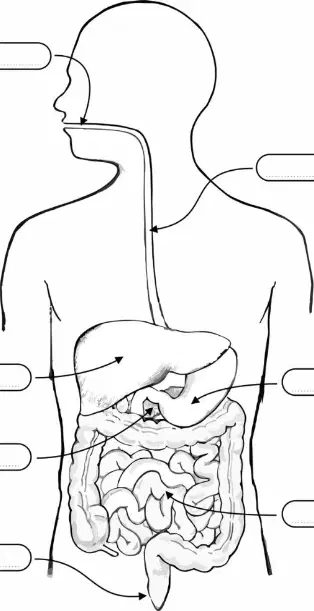
Identify the part labeled 5.
Small Intestine
Small Intestine
Large Intestine
Large Intestine
Anus
Anus
Esophagus
Esophagus
Mouth
Mouth
Which part of the digestive system is responsible for absorbing water?
Small intestine
Large intestine
Kidneys
Stomach
Which part of the digestive system contains hydrochloric acid and is coated with mucus for its protection?
Rectum
Small intestines
Stomach
Esophagus
Which of the following is the section of the digestive system where most enzymes are added?
Large intestines
Mouth
Stomach
Small intestine
Bile is made in which organ?
Liver
Stomach
Gallbladder
Small intestine
52. The following are not part of the digestive system:
Lungs
Stomach
Intestines
Esophagus
Where is solid waste or poop stored?
Anus
Rectum
Large intestines
Stomach
Villi are found in what part of the digestive system?
Mouth
Stomach
Large intestines
Small intestines
Diarrhea is when the ____________ ____________ does not absorb water.
Large intestines
Small intestines
Stomach
Esophagus
Which of the following best describes the role of the esophagus in the digestive system?
Mucus is secreted to protect the stomach
Sends food from mouth to the stomach
Helps absorb the nutrients.
Breaks food down to be absorbed in the bloodstream.
The main function of the stomach is to:
Temporarily store food
Produce Hydrochloric Acid
Break down food
All of the above
Which of the following organs help break down the food in the small intestine?
Liver, kidney, stomach
Mouth, esophagus, stomach
Liver, pancreas, gallbladder
Stomach, Small intestine, Large intestines
Who like structure along the small intestines are called:
Capillaries
Bile
Liver
Villi
The main function of the small intestine is to:
Extract and absorb nutrients
Kill bacteria
Excrete Solid Waste
Releases enzymes to break down food.
Bile is made in the liver and released into the small intestine its job is to break down:
Nutrients
Fats
Protein
Water
Digestion begins in the mouth which of the following statements is INCORRECT
The tongue helps absorb nutrients.
The saliva helps break down food.
The tongue keeps food in place in the mouth while the food is being chewed.
Teeth help chew food into smaller pieces.
Which dietary habit can help reduce the risk of colorectal cancer?
Eating a diet high in fruits, vegetables, and fiber
Consuming large amounts of red and processed meats
Avoiding all dairy products
Eating mostly fast food
Constipation can often be relieved by:
Reducing water intake
Increasing dietary fiber and fluids
Eating more sugary snacks
Avoiding physical activity
Metabolism refers to:
The process of digestion only
All chemical reactions in the body that maintain life
The storage of fat in the body
Breathing and circulation
Which of the following best describes ATP?
vitamin essential for metabolism
The energy currency of the cell used to power biological processes
A type of carbohydrate stored in muscles
A hormone that regulates appetite
The esophagus and the stomach experience peristalsis which is:
The shrinking of the tissue.
Muscle contractions of the digestive system.
An increase of mucus in their lining.
A paralysis of both structures.

