
 Worksheets
Food Metabolism
Total questions: 95
Worksheet time: 51mins
Which botanical fruit is treated as a culinary vegetable
grapes
watermelon
cucumber
tomato
squash
Which food type contains is CHARACTERIZED by edible seeds and pods of certain flowering plants
fruits
vegetables
cereals
legumes
Form of arabinose that is found in mixed sugars
D-arabinose
L-arabinose
D-arabinol
L-arabinol
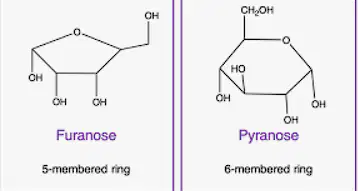
which pair ONLY contains monosaccharides found in D-form in a pyranose structure
arabinose and xylose
xylose and glucose
mannose and rhamnose
galactose and fructose
Glucose comes in many forms, which derivative is mainly found in plants
D-glucosamine
chitin
Quniovose
glucitol
What aspect of D-mannose, L-rhamnose and galactose is shared
only found in free state
only found as a constituent of a larger molecule
found in both forms but usually found as a constituent of a larger molecule
found in both forms but is usually found in its free state
What characteristic(s) of fructose make it a good candidate for syrups (e.g. high fructose corn syrups)
high sweetening capacity
hard to crystallize
found in furanose structure
only found in a combined state
Main sugar found in honey (natural invert sugar)
sucrose
maltose
lactose
raffinose
stachyose
has the lowest relative sweetness of common sugars
sucrose
maltose
lactose
raffinose
stachyose
disaccharide composed of 2 glucose monomers
sucrose
maltose
lactose
raffinose
stachyose
Raffinose, stachyose and verbascose differ from each other by
orientation of glucose-fructose bond
epimer at the galactose residue
number of galactose residues
form of fructose (pyranose vs. furanose)
location of the fructose residue
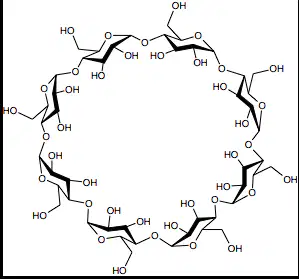
the cavity of schardinger dextrins is _____
very polar
amphipathic
nonpolar
slightly polar
A junior chemist suggests using sorbitol as the SOLE SUGAR in syrups, his senior tells them its a bad idea because
sweetening factor of 51
laxative effect
heat resistant
high level of water binding
_____ is metabolically similar to sorbitol
_____ is extracted from hemicellulose
mannitol, mannitol
xylitol, xylitol
mannitol, xylitol
xylitol, mannitol
most of the Phosphorous in passion fruit seeds are found as
ATP
ADP
AMP
Phytic Acid
Glucose-1-P
Where is starch unlikely to be found
free granules
deposited in vacuoles
in endosperm protein matrix
xylem tissues
What is not a common use of polysaccharides in food processing?
thickening agents
stabilizers for emulsions and dispersions
calorie dense sweetener
film coating substance
inert fillers
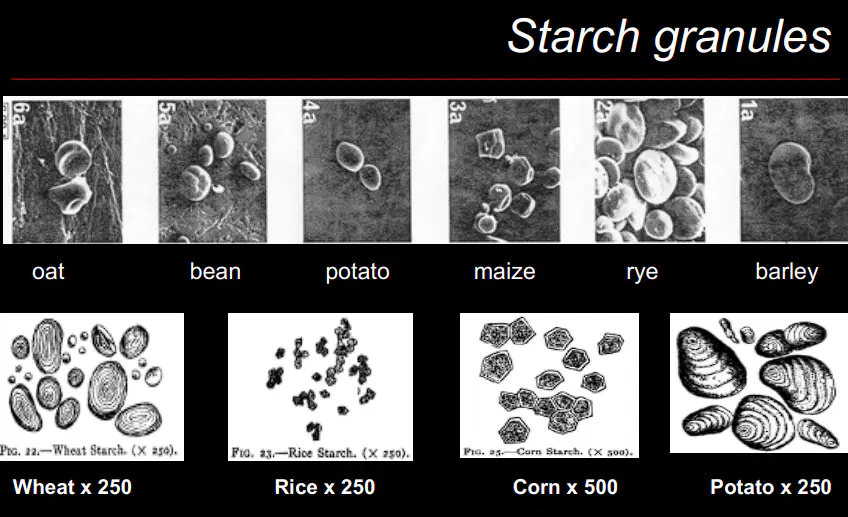
waxy starches are likely to have ____ % amylose
10
20
30
40
50
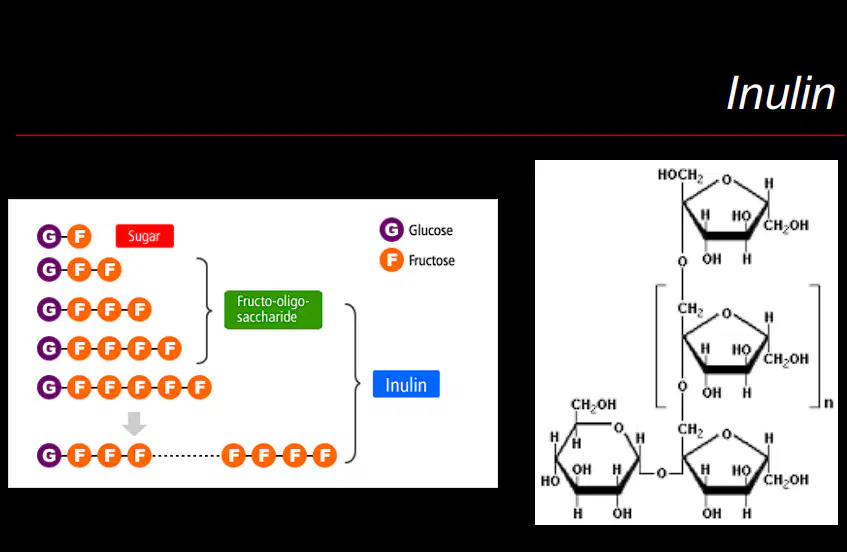
what plant does NOT contain Inulin
artichoke
dahlia bulbs
garlic
onion
potato
Cellulose is found _______ while hemicellulose is found ________
as part of the cell wall, in between layers of the cell wall
in between layers of the cell wall, as part of the cell wall
both as part of the cell wall layers
both found in between the cell wall layers
Gums are ____ when wet and ____ when dry
gelatinous, hard
hard, gelatinous
polar, non polar
non polar, polar
Select any two gums that apply to the statements below:
- the only low viscosity gum
- the gum that is NOT resistant to microbial digestion
Gum Karaya
Gum Arabic
Guar Gum
Gum Tragacanth
Pectin
Gums that are non ionic and heat stable can become colloidal dispersions when hydrated in cold water
Tree Gums
Seed Gums
Both
Neither
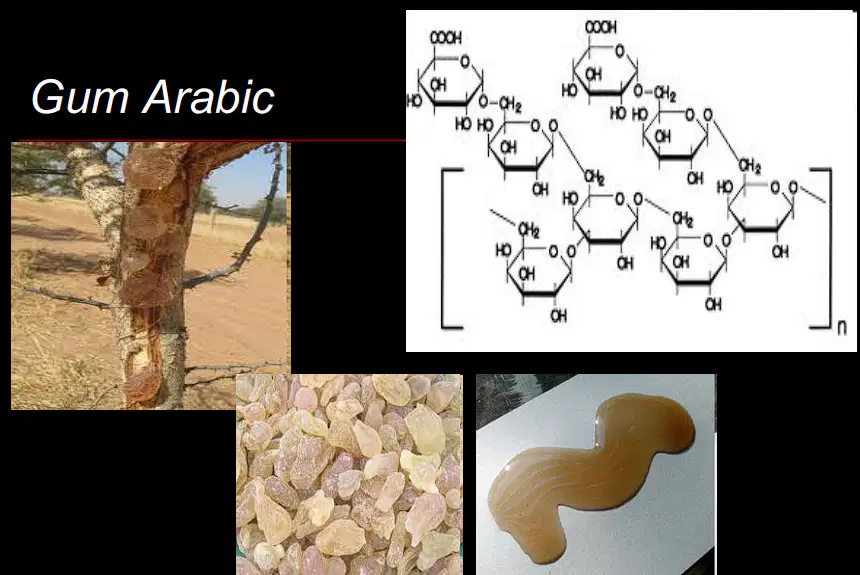
Gums that are neutral or slightly acidic salts of polysugars, with highly branched structures
Tree Gums
Seed Gums
Both
Neither
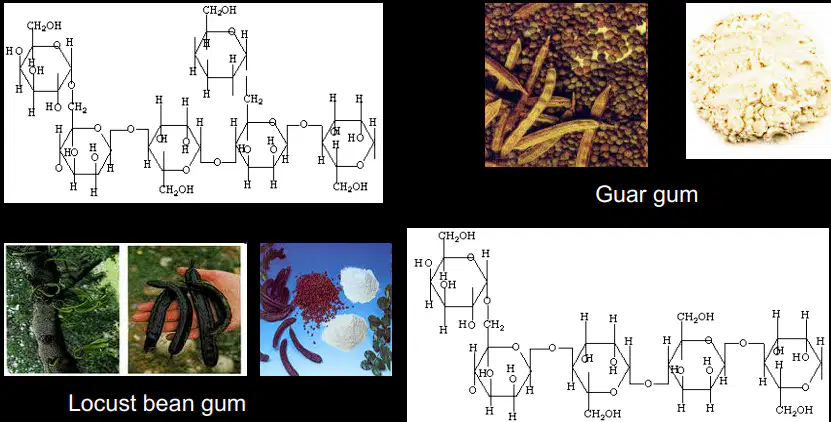
Gums that are heat stable, linked to lipid or protein subunits, with highly ordered but linear repeating structures with no branches
Tree Gums
Seed Gums
Both
Neither
Pectic units consist of anhydropolygalacturonic acid that are _____________
in chain like combinations
partly esterified by methyl groups
neutralized by bases
branched for every 4 residues
connected to an amine group with an amide bond
Pectin linkages
α (1 -> 6)
α (1 -> 4)
β (1 -> 6)
β (1 -> 4)
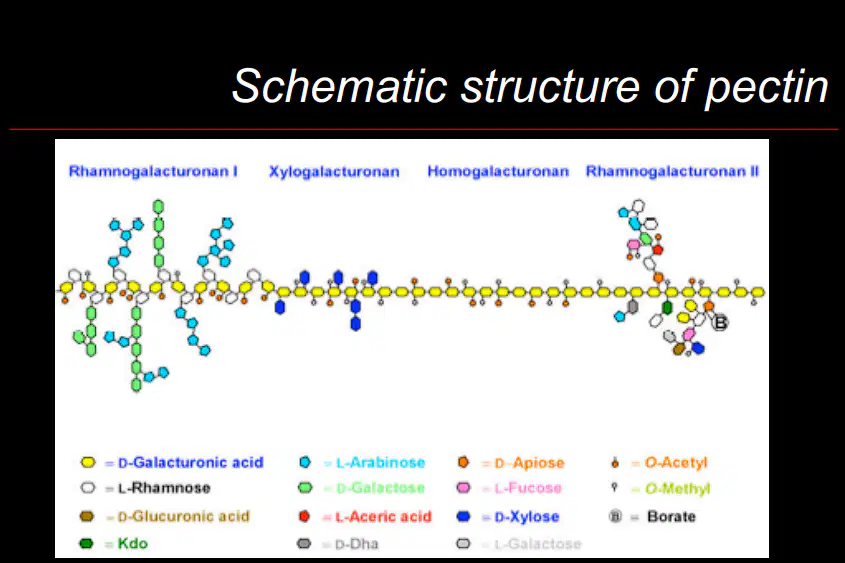
colloidal polygalacturonic acids containing more than a negligible proportion of methyl ester groups
protopectin
pectininc acids
pectic acids
pectin
Polysaccharide that is only soluble in extreme conditions
perfectly linear
branched
linearly branched
with carboxyl groups
Polysaccharide that is once dried, can be readily hydrated to form low viscosity solutions
perfectly linear
branched
linearly branched
with carboxyl groups
Polysaccharide that has a long backbone with many short side chains that allow it to form stable solutions even at high concentrations
perfectly linear
branched
linearly branched
with carboxyl groups
Polysaccharide that produces viscous and pH dependent solutions
perfectly linear
branched
linearly branched
with carboxyl groups
What is effective volume
volume of a linear chain
volume after intermolecular interactions
volume of a sphere with its diameter determined by the longest extension of the molecule
volume of a polysaccharide solution after solvation at standard temperature, and physiological conditions
Polysaccharide conformation that is zig zag from beta 1-4 linkages of glucose molecules
extended or stretched, ribbon type conformation
hollow helix conformation
crumpled type conformation
loosely-jointed confromation
Polysaccharide conformation with beta 1-3 linked glucose molecules or amylose (1-4 alpha D glucose units)
extended or stretched, ribbon type conformation
hollow helix conformation
crumpled type conformation
loosely-jointed confromation
Polysaccharide conformation with beta 1-2 linked glucose molecules
extended or stretched, ribbon type conformation
hollow helix conformation
crumpled type conformation
loosely-jointed confromation
Polysaccharide conformation with beta 1-6 linked glucose molecules, placing the monomers further apart
extended or stretched, ribbon type conformation
hollow helix conformation
crumpled type conformation
loosely-jointed confromation
What polysaccharides will make the MOST viscous solution
relatively small, neutral, and non linear
relatively large, charged and linear
relatively small, charged and linear
relatively large, charged and non linear
relatively small, neutral and non linear
What does this describe:
in all parts of plant, but only a small amount enters the diet. hydrolyzed in hot acid solution or by enzymes, important for diet in terms of physiological potency
glycosides
polysaccharides
derived monosaccharides
oligosaccharides
monosaccharides
O-glycosides that forms red, purple and blue pigments in fruits, usually with a bitter taste
beta carotene
chlorophyll
glucosinates
anthocyanidin
glucosinolates that are found in mustard seed or horseradish that can be broken down into toxicants or chemopreventative agents
O-glycosides
N-glycosides
S-glycosides
P-glycosides
_ is oxidized for energy or converted to fats for storage _ is converted to urea for excretion or made into non essential amino acids
C, C
N, N
C, N
N, C
none of the above
Free amino acids constitute for about ___ of soluble N compounds in fruit
25%
50%
75%
100%
forms of glutathione
free form
reduced form
oxidized dimer
protein bound
lipid bound
Which osborne classification does this describe:
soluble in 70% ethanol
Albumin
globulins
prolamins
glutelins
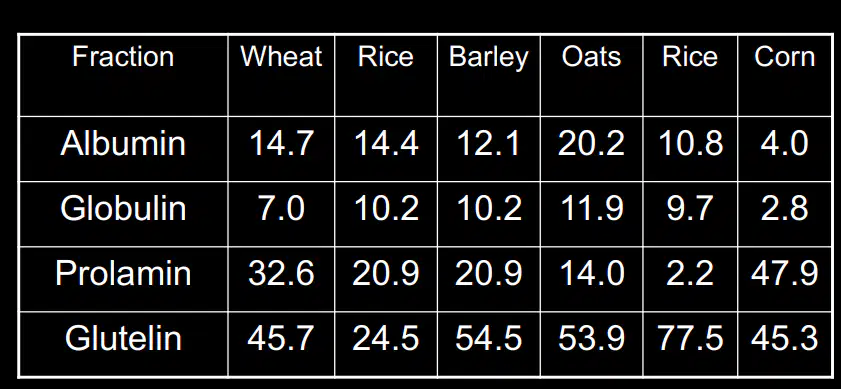
Which osborne classification does this describe:
fractions that contain enzymes
Albumin
globulins
prolamins
glutelins
Which osborne classification does this describe:
soluble in 70% ethanol
Albumin
globulins
prolamins
glutelins
85% of proteins in a cereal endosperm are ___ which contributes to why they are ____ in aqueous media
structural, insoluble
storage, insoluble
enzymatic, soluble
regulatory, soluble
Glutenin has a backbone of ___ units with short chains of ___ subunits, polymerized with disulfide bridges
HMW, LMW
LMW, LMW
LMW, HMW
HMW, HMW
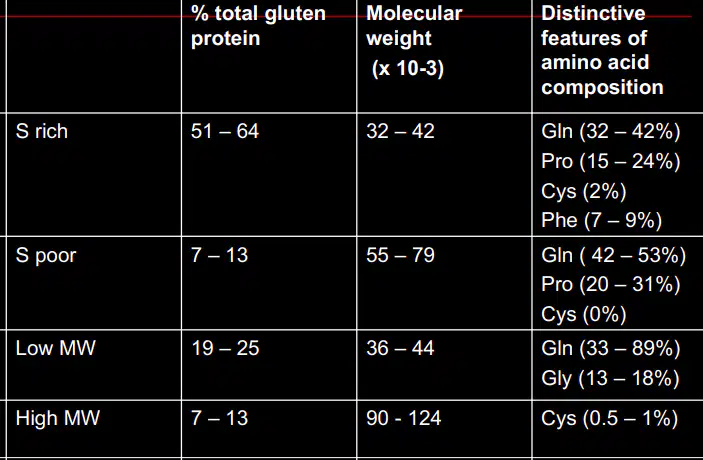
Gluten is composed of ______ which are S rich or S poor, and _____, which are HMW and LMW
glutenites, gliadins
gliadins, glutenins
glutenins, gliadites
glutenin, gliadins
gliadites, glutenites
Legumes function as storage proteins that are also mobilized as germination progresses, the proteins have gelling capacity and are used in food production for foams and emulsions, thus most legumes mainly contain
Albumin
Globulin
Glutelin
Prolamins
Minor fractions of soybean proteins once centrifuged
2S
7S
11S
15S
fractions of soybean proteins that are linked by disulfide bonds
2S
7S
11S
15S
Which conditions have maximum α-amylase activity
maturation of kernels
sprouting conditions
germination
low moisture, high temperature conditions
unfavorable harvest conditions
What reaction correctly describes the activity of phytase that occurs in dough making
Phytin -> myo-inositol + 6H3PO4
Phytin + myo-inositol -> 6H3PO4
myo-inositol + 6H3PO4 -> Phytin
myo-inositol -> 6H3PO4 + Phytin
Phospholipase activity that is most active in germinating cereal
A
B
C
D
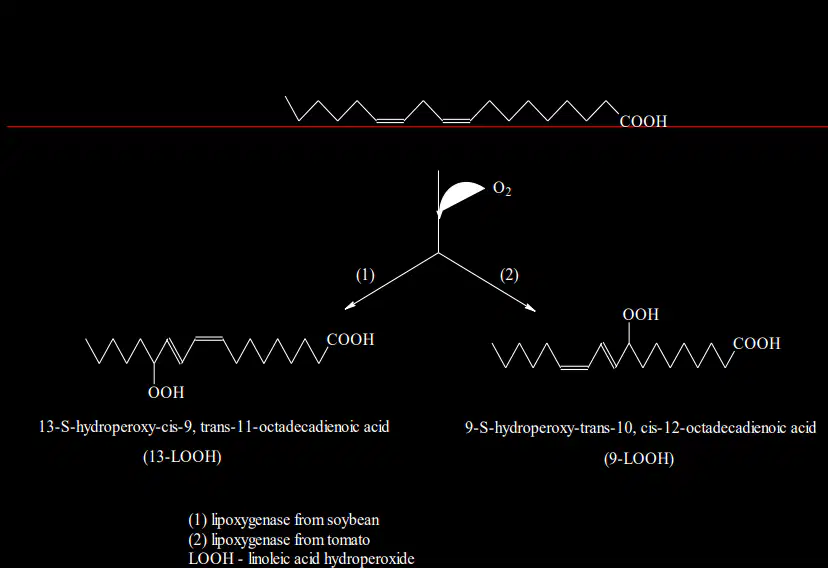
Most likely substrates for lipoxygenases
Linoleic Acids
Unsaturated Fatty Acids
Saturated Fatty Acids
Odd numbered Fatty Acids
Polyphenol Oxidase contains a _____ system
Cu2+/Cu+
Fe3+/Fe2+
Fe2+/Fe+
Mg2+/Mg
Na+/K+
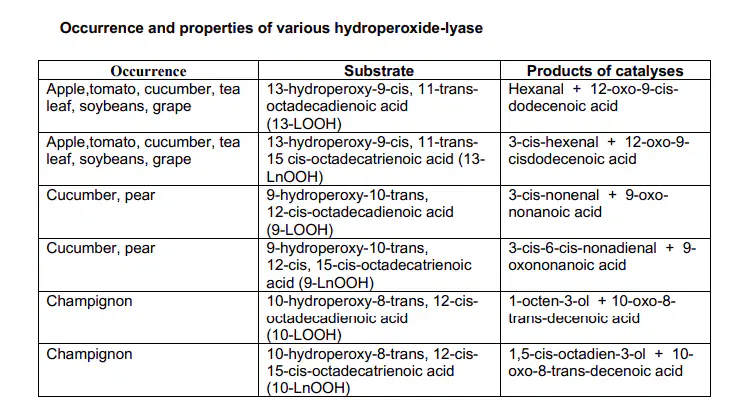
Hydroperoxide cleavage that occurs in the opposite direction
in conjugated di-ene systems
isolated double bonds
both
neither
Lugume enzyme that affects aroma
Urease
Lipoxygenase
hydrolase
Depends on the variety
Enzymes found in garlic and onion
Allinase
Oxidoreductases
Lyases and Ligases
Transferases
Hydrolases
What is NOT a hydrolase
Glycosidsase
Esterases
Proteinases
Allinase
What do enzymes in the fruit revolve around
Immune Response
Carbohydrate Metabolism
Nitrogen Metabolism
Lipid Metabolism
Photosynthetic Redirectioning
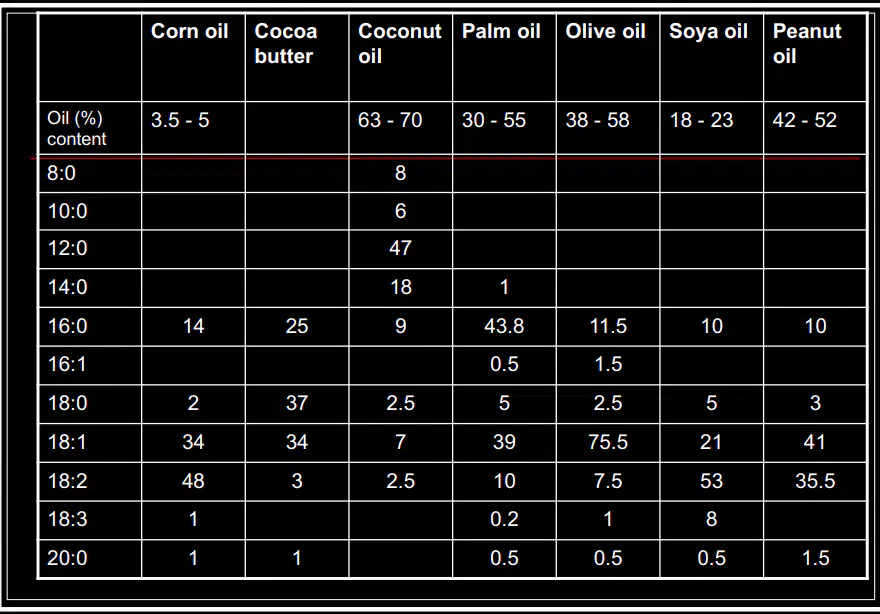
What are the two types of oils in plants
fruit
vegetable
oilseed
cold pressed
Acylglycerol mainly composed of palmitic. oleic and stearic acids with small amounts of short (4C - 12C) branched and odd numbered fatty acids
Milk Fats
Lauric Acids
Vegetable Butters
Oleic-Linoleic Acids
Linoleic Acids
Acylglycerol mainly composed of lauric acids, usually found in palm species
Milk Fats
Lauric Acids
Vegetable Butters
Oleic-Linoleic Acids
Linoleic Acids
Acylglycerol with narrow melting point range, many saturated fatty acids (not trisaturated tho) used in confectionaries
Milk Fats
Lauric Acids
Vegetable Butters
Oleic-Linoleic Acids
Linoleic Acids
Acylglycerol that is of vegetable origin with less than 20% saturated fatty acids
Milk Fats
Lauric Acids
Vegetable Butters
Oleic-Linoleic Acids
Linoleic Acids
Acylglycerol that has substantial linoleic acids, like soybean oil, wheat germ oil, etc that may develop a flavor reversion
Milk Fats
Lauric Acids
Vegetable Butters
Oleic-Linoleic Acids
Linoleic Acids
Most abundant type of fatty acids in animal fats
C-16
C-18
unsaturated
odd numbered fatty acids
Has fatty acid content less than 1.5%
Extra vierge
Fine vierge
Semi-fine vierge
Which oil extraction process is more complex
Regular seeds
Coconut oils
Microbial deterioration of lauric and myristic acid releases C-8 to C-12 fatty acids which degrade into
Aldehyde
Methyl Esters
Carboxylic Acids
Methyl Ketones
Alcohols
Melting point of palmitic and stearic acids
10-40 degrees
40-90 degrees
30-40 degrees
80-90 degrees
10-90 degrees
Which plant oil is known to be nearly crystal clear
peanut oil
rapeseed oil
sesame oil
soybean oil
T/F for the following statements:
all legumes are good sources of oil
fruits and vegetables have low oil content
T,F
F,T
T,T
F,F
β refers to which position for glycerol
sn-1
sn-2
sn-3
Select the FALSE statements
sn-1 and sn-3 prefer esterification with unsaturated acids
oleic and linoleic acids are equally distributed in all positions (except cocoa butter)
sn-2 is never filled with linoleic acid
If a plant has erucic acid, order the following positions from most likely to least likely
sn-2, sn-1, sn-3
sn-1, sn-3, sn-2
sn-1, sn-2, sn-3
sn-3, sn-1, sn-2
sn-2, sn-3, sn-1
pick the conformation of a mixed triglyceride where the middle chain is shorter or longer by at least 4C atoms


What demonstrates the polymorphic nature of fats and oils
a fat and oil can freely extend or shorten its chains without enzymatic assistance
conformation of a fat or oil changes with temperature
same liquid phases but different crystalline structure of the same fat and oil composition
fats and oils are liquid and solid at room temperature specifically
crystal arrangement that allows most compact packing
α
β'
β
α'
Which statement is false regarding vitamins
essential components of life
synthesized by all animals
only occur in small amounts
needed for growth, deficiency if absent
what feature of vitamin A makes it sensitive to oxygen and light
polyene structure
benzene ring
carboxylic acid side chains
alkyne links throughout
What describes processes that result in loss of vitamins into inactive products
Heat
Oxidation
Light
All of the above
None of the above
derived from beta carotene with deficiency causing twilight vision
A
D2
D3
E
K
may cause hypercalcemia or hypertension in excess consumption
A
D2
D3
E
K
no known deficiency in humans
A
D2
D3
E
K
involved with NAD/NADP carriers whose deficiency leads to pellagra
B1
B2
B3
B4
coenzyme to decarboxylases that help in assimilation and metabolism of carbohydrates and deficiency leads to beri-beri, neuritis and polyneuritis
B1
B2
B3
B5
closely linked with protein metabolism and can lead to dry mucus membrane and conjunctivitis in deficiency
B1
B2
B3
B5
allows synthesis of purine and pyrimidine bases and also involved in metabolism of tyrosine, ascorbic acid, folic acid and B12
B8
B9
B12
C
B6
deficiency blocks DNA synthesis, role in carbohydrate metabolism in CNS
B8
B9
B12
C
B6
active in saturation or desaturation of fatty acids, has role in synthesis of nicotinic acid, coenzyme of many transaminases and causes nervous problems in deficiency
B8
B9
B12
C
B6
role in collagen synthesis, can reduce iron for absorption and deficiency leads to scurvy and gum bleeding
B8
B9
B12
C
B6

