
 Worksheets
Cells Unit Test 25-26
Total questions: 76
Worksheet time: 1hrs 10mins
Which element is the "element of life," forming the backbone of organic molecules due to its ability to form four covalent bonds?
Oxygen
Nitrogen
Carbon
Hydrogen
Amino acids are the monomers, the building blocks, of:
Carbohydrates
Lipids
Proteins
Nucleic acids
What is the main function of nucleic acids in living organisms?
Store energy
Speed up chemical reactions
Store and transmit genetic information
Provide structural support
What is the process by which a cell divides into two daughter cells?
Photosynthesis
Cellular respiration
Mitosis
Diffusion
During which phase of the cell cycle does DNA replication occur?
G1 phase
S phase
G2 phase
M phase
What is the name of the process where the cytoplasm divides, forming two separate cells?
Cytokinesis
Mitosis
Meiosis
Interphase
What is the role of cyclins in the cell cycle?
They provide energy for cell division.
They regulate the timing of the cell cycle.
They form the spindle fibers.
They replicate DNA.
Uncontrolled cell growth can lead to which disease?
Diabetes
Cancer
Influenza
Asthma
What is the first step in cellular respiration?
Krebs cycle
Electron transport chain
Glycolysis
Fermentation
Which organelle is the site of most cellular respiration in eukaryotic cells?
Nucleus
Mitochondria
Ribosome
Chloroplast
What is the main purpose of cellular respiration?
To produce oxygen
To produce glucose
To release energy from food
To absorb sunlight
Which process occurs when oxygen is not present and allows glycolysis to continue?
Photosynthesis
Fermentation
Krebs cycle
Electron transport
Which type of fermentation occurs in muscle cells during rapid exercise?
Alcoholic fermentation
Lactic acid fermentation
Krebs cycle
Glycolysis
What is the ultimate source of energy for most life on Earth?
The Moon
The Sun
Water
Oxygen
Which molecule is the main energy currency of the cell?
DNA
ATP
Glucose
Protein
What is the process by which plants use sunlight to make food?
Cellular respiration
Photosynthesis
Fermentation
Diffusion
Which organelle is responsible for photosynthesis?
Mitochondria
Ribosome
Chloroplast
Nucleus
Which statement best describes the cell theory?
All cells have a nucleus.
All living things are made of cells.
Cells are only found in animals.
Cells do not reproduce.
Which structure controls what enters and leaves the cell?
Cell wall
Nucleus
Cell membrane
Ribosome
What is the process by which cells maintain a stable internal environment?
Photosynthesis
Homeostasis
Diffusion
Mitosis
This tough structure, found outside the cell membrane in plants, provides structure:
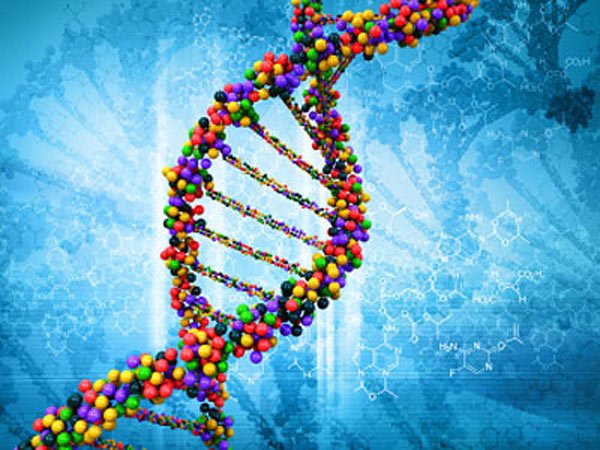
Which of the following is a characteristic of a Prokaryotic cell?
one-celled organism
linear DNA
large and complex
has a nucleus
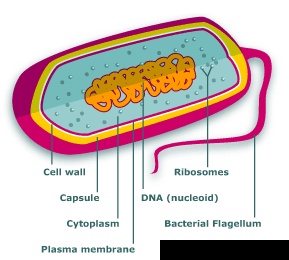
Which type of cell is pictured?
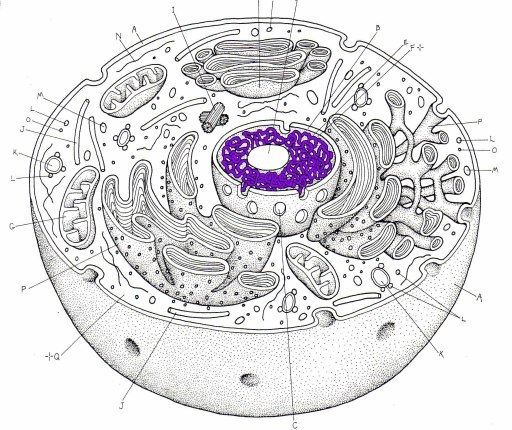
Which organelle breaks down (digests) worn out cell parts, and is mostly found in animal cells?
What is passive transport?
Movement of molecules from high to low concentration.
A transportation thats not aggressive.
Movement of molecules from low to high concentration.
An active transportation.
What does "isotonic" mean?
When comparing two solutions, the solution with the greater concentration.
When the concentration of two solutions is the same.
When comparing two solutions, the solution with the lesser concentration of solutes.
The tendency of an organism or cell to regulate the chemical processes that take place internally so as to maintain health and functioning, regardless of outside conditions.
What is active transport?
Movement of molecules from no concentration to high concentration.
Movement of molecules from low to high concentration.
Movement of molecules from high to low concentration.
Movement of proteins within the cell.
Diffusion through a protein channel embedded in the membrane is called:
Osmosis
Facilitated Diffusion
Diffusion
Osmotic Pressure
When materials are expelled from the cell, it is called:
Exocytosis
Diffusion
Lysosomes
Membrane
The "tails" of a phospholipid are:
The phosphate group "heads" of a phospholipid are:
In a _______ solution, water moves into the cell from a higher concentration outside the cell to a lower concentration inside the cell, causing the cell to swell.

What phase of mitosis is shown in the picture? Chromosomes have appeared, the nuclear envelope is being broken down, and the centrioles have moved to opposite poles.

What phase of mitosis is shown in the picture? Unduplicated chromosomes are uncoiling, the nuclear envelopes are forming around two nuclei, and the spindles are disappearing.

What phase of mitosis is shown in the picture? Unduplicated chromosomes are being pulled away from one another to opposite sides of the cell.
Chromosomes duplicate, the cell grows and develops during:

What phase of mitosis is shown in the picture? Duplicated chromosomes are lined up in the middle of the cell.


Explain how the structure of the cell membrane contributes to its function.
The cell membrane is rigid, providing structural support.
The cell membrane is composed of a phospholipid bilayer with embedded proteins, allowing selective permeability.
The cell membrane is made of cellulose, providing a barrier to all substances.
The cell membrane is a single layer of lipids, allowing free passage of all molecules.
Rachel is looking at plant and animal cells under a microscope in her biology class. She notices that one structure is present in the plant cells but not in the animal cells. Which structure is Rachel observing?
Cell membrane
Chloroplast
Mitochondria
N
What is the funciton of a ribosome?
Produce energy
Store genetic information
Packagin proteins
P
Scarlett places a raisin in a cup of water and notices that water moves into the raisin through its skin, which acts as a selectively permeable membrane. Which process describes this movement of water?
Diffusion
Active transport
Osmosis
Endocytosis
David is learning about how plants make their own food using sunlight. Which equation best represents the process of photosynthesis that David is studying?
6CO2 + 6H2O yields
C6H12O6 + 6O2
C6H12O6 + 6O2 yields
6CO2 + 6H2O
Select the area of the chart that represents CELL DIVISION (mitosis and cytokinesis)

Organelle that links amino acids together to make proteins.
ribosome
endoplasmic reticulum
vacuole
nucleus

Layered stack of flat membrane-enclosed spaces containing enzymes that process, sort, and deliver proteins.
Golgi apparatus
vacuole
cell wall
none of these

Small membrane-bound sac that contains and transports materials within the cytoplasm; for storage.
vesicle
nucleolus
chloroplast
cytoskeleton
Small membrane-bound sac that contains and transports materials within the cytoplasm; for storage.
vesicle
nucleolus
chloroplast
cytoskeleton

Bean-shaped organelle that supplies energy to the cell and has its own ribosomes and DNA.
mitochondria
nucleus
cell wall
smooth endoplasmic reticulum

This organelle is found only in plants; it takes up a lot of space and strengthens cells and helps to support the entire plant.
central vacuole
chloroplast
mitochondroa
nucleus

Organelle composed of many membranes used to convert solar energy into chemical energy; contains chlorophyll and is where photosynthesis occurs.
chloroplast
smooth endoplasmic reticulum
nucleus
vesicle

A double-layer of phospholipids that forms a boundary between the cell and surrounding environment and controls the passage of materials into and out of the cell.
cell membrane
cell wall
cytoplasm
lysosome

An interconnected network of thin, folded membranes that produce, process, and distribute proteins. Is covered in ribosomes.
rough endoplasmic reticulum
cell wall
smooth endoplasmic reticulum
centriole

Which structures shown in the Figure make up the ATP molecule?
How is oxygen used in cellular respiration?
It accepts electrons and protons to form water.
It is an electron carrier.
It drives ATP synthesis.
It reduces NADH + H+ and FADH2.

What are the reactants (taken into) of cellular respiration? (Mark all of them!)
oxygen
glucose
carbon dioxide
water
energy

Match the following:
Carbohydrates
CHO; main sources of energy
Lipids
CHO; store energy, form membranes
Proteins
CHON(S); form structures, enzymes
Nucleic Acids
CHONP; genetic code
Chlorophyll:
Absorbs green light
Reflects green light

