
Font size
 Worksheets
REVIEW: Plate Tectonics
Total questions: 141
Worksheet time: 1hrs 11mins
Scientists study Earth’s interior primarily by analyzing seismic waves from earthquakes. Which instrument records these waves, and what do scientists infer from their behavior?
Thermometers; temperature changes reveal rock types
Seismographs; wave speed, bending, and disappearance reveal materials
Barometers; pressure fluctuations map density
Spectrometers; light absorption shows mineral composition
Which list correctly names Earth’s four main layers from the outside inward?
Crust, mantle, inner core, outer core
Crust, mantle, outer core, inner core
Mantle, crust, inner core, outer core
Crust, outer core, mantle, inner core
Which property is correctly matched to the layer described in the text?
Crust — thin, solid outer shell
Mantle — thick, solid but slowly flowing
Outer core — liquid where S-waves cannot pass
Inner core — solid where P-waves speed up
What evidence from seismic waves indicates a liquid outer core?
P-waves stop entirely at the mantle
S-waves cannot pass through the outer core
P-waves move more slowly in the crust
S-waves speed up in the inner core
Which pair correctly compares the two types of crust described?
Continental crust is thinner and more dense; oceanic crust is thicker and less dense
Continental crust is thicker and less dense; oceanic crust is thinner and more dense
Both continental and oceanic crust are equally thick and equally dense
Oceanic crust is thicker and less dense; continental crust is thinner and more dense
Which statements about the crust are true? Select all that apply.
It is the outermost layer of Earth
It is thin and solid, like the skin of an apple
It is made of rock and divided into tectonic plates
It is primarily liquid beneath the continents
Why are seismic waves described as an “X-ray” for Earth?
They heat the interior so it glows
They allow scientists to see the interior directly
Their travel patterns provide a clear picture of hidden structure
They only measure surface vibrations without revealing internal layers
Which statement best distinguishes oceanic crust from continental crust?
Oceanic crust is thicker and less dense than continental crust.
Oceanic crust is thinner, composed mostly of basalt, and more dense than continental crust.
Oceanic crust is thicker, composed mostly of granite, and less dense than continental crust.
Oceanic crust is thinner, composed mostly of granite, and less dense than continental crust.
What is the approximate thickness range of Earth’s crust?
3–40 miles (5–70 km)
100–300 miles (160–480 km)
1,400 miles (2,300 km)
1,800 miles (2,900 km)
Which description accurately characterizes the mantle?
A thin, brittle layer made of basalt.
The thickest layer beneath the crust, composed of hot solid rock that can flow slowly like thick putty.
A liquid layer of iron and nickel that generates the magnetic field.
A solid metallic sphere with a radius of about 750 miles (1,200 km).
Which statements about mantle convection are true? Select all that apply.
Heat within the mantle drives convection currents.
Convection currents in the mantle help move tectonic plates.
Convection occurs only in the inner core.
Mantle convection requires the mantle to be entirely liquid.
Which pair correctly matches an Earth layer with its primary composition as given?
Outer core — hot, solid silicate rock
Inner core — liquid iron and nickel
Mantle — hot solid rock able to flow slowly
Crust — liquid basalt and granite
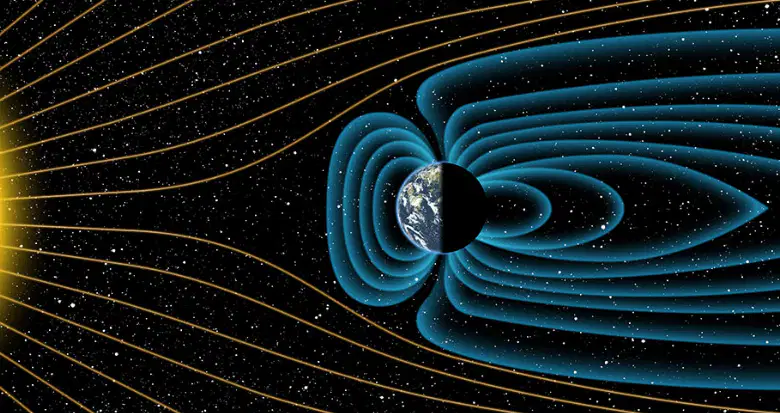
Which statements about the outer core are accurate? Select all that apply.
It is made of liquid iron and nickel.
Its movement creates Earth’s magnetic field that protects us from harmful solar radiation.
It has a thickness of about 1,400 miles (2,300 km).
It is cooler than the mantle and therefore solid.
Which temperature description for the outer core is true?
Below 1,000°F (540°C)
Around 3,000°F (1,650°C)
Over 7,000°F (4,000°C)
Exactly 10,000°F (5,540°C)
What is the best explanation for why Earth’s inner core remains solid despite extreme heat?
It is composed of silicate minerals that cannot melt.
Pressure at the center is so high that metals stay solid even at temperatures hotter than the surface of the Sun.
The inner core is continually cooled by ocean water circulation.
The inner core is made of ice and rock, which are naturally solid.
Which measurement correctly states the inner core’s size?
Thickness: 1,400 miles (2,300 km)
Radius: about 750 miles (1,200 km)
Thickness: 1,800 miles (2,900 km)
Thickness range: 3–40 miles (5–70 km)
Which Earth layer is directly beneath the crust and is the thickest overall?
Outer core
Inner core
Mantle
Lithosphere
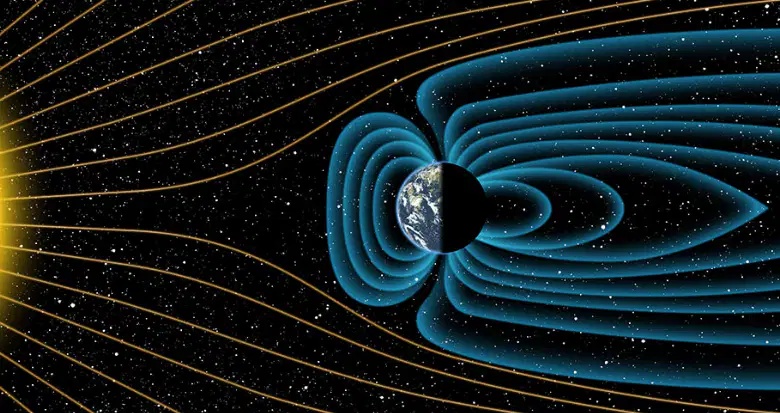
A visual shows Earth surrounded by blue magnetic field lines deflecting solar wind from the Sun. Which process is responsible for producing these magnetic field lines?
Convection in the mantle’s silicate rocks
Rotation of the solid inner core only
Movement of liquid iron and nickel in the outer core
Heating of the crust by solar radiation
Which statement best defines the lithosphere?
A rigid outer layer that includes the crust and uppermost solid mantle
A hot, soft layer of the lower mantle that is entirely liquid
Only the continental crust without any mantle components
A layer composed of molten outer core material above the mantle
Which description correctly characterizes the asthenosphere?
A brittle layer broken into tectonic plates
A hotter and softer part of the upper mantle that is solid but can flow slowly
A fully molten layer located within the outer core
A thin layer confined to the crust only
Which pair of properties represents the key difference between the lithosphere and asthenosphere?
Lithosphere is rigid; asthenosphere is softer and flows
Lithosphere is liquid; asthenosphere is solid and brittle
Lithosphere is entirely mantle; asthenosphere is entirely crust
Lithosphere is hotter; asthenosphere is cooler
What allows tectonic plates to move?
Convection in the inner core pushing plates directly
Slow flow within the asthenosphere beneath the lithosphere
Rapid melting of the crust into magma oceans
Wind-driven erosion of the continents
Which components are included within the lithosphere?
All of the crust and the uppermost solid part of the mantle
Only the oceanic crust and outer core
Entire mantle and inner core
Sedimentary deposits and plastic asthenosphere only
What approximate thickness range is given for the lithosphere?
10–50 miles (16–80 km)
60–200 miles (100–300 km)
300–600 miles (480–960 km)
1,000–1,500 miles (1,600–2,400 km)
What approximate thickness is noted for the asthenosphere layer relevant to plate motion?
About 10 miles (16 km)
About 60 miles (100 km)
About 125 miles (200 km)
About 500 miles (800 km)
Which statement about the physical state of the asthenosphere is accurate?
It is a liquid layer beneath the crust
It is solid but behaves plastically, able to flow slowly like taffy or putty
It is a rigid, brittle layer that cannot deform
It is gaseous due to high temperatures
In the brownie pan analogy, what does the lithosphere correspond to?
The gooey, softer brownie underneath
The crispy top crust of the brownie
The baking pan heating the brownie
The melted chocolate chips representing the outer core
In the brownie pan analogy, what does the asthenosphere correspond to?
The crispy top crust that cracks and shifts
The gooey, softer brownie underneath that lets the top crack and shift
The solid metal pan representing the inner core
The icing spread on the surface representing sediments
Which of the following best describes the relationship between tectonic plates and the asthenosphere?
Plates are submerged within the asthenosphere and melt
Plates float on the softer asthenosphere, which enables their movement
Plates are fixed to the inner core and cannot move
Plates sit atop the liquid outer core directly
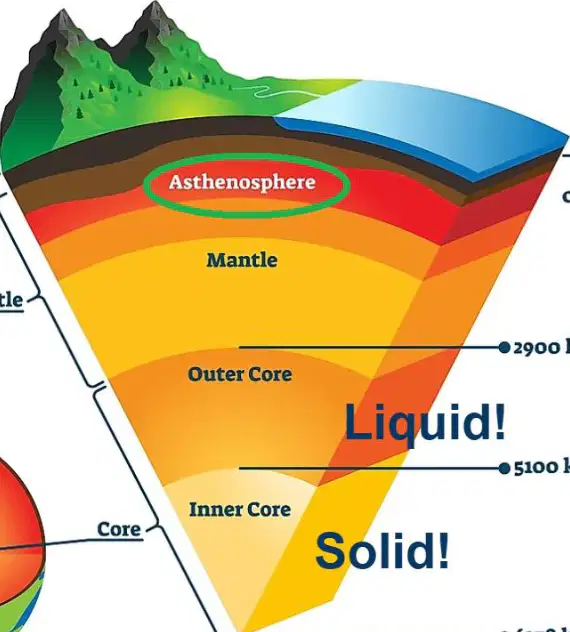
Using the labeled diagram of Earth’s layers, which layer is identified as liquid and which as solid in the deep interior?
Outer core is liquid; inner core is solid
Mantle is liquid; outer core is solid
Crust is liquid; mantle is solid
Asthenosphere is liquid; inner core is gas
Which statement best describes the theory of plate tectonics as introduced in the material?
Earth’s rigid outer shell is a single unbroken layer that never changes.
Earth’s outer shell, the lithosphere, is broken into large pieces called tectonic plates that move over the asthenosphere.
Earth’s core controls surface features while the crust remains stationary.
Earth’s oceans determine the movement of continents by changing sea level.
In the context of Earth’s structure, what is the lithosphere?
The soft, slowly flowing layer beneath Earth’s plates
The rigid outer layer consisting of the crust and uppermost mantle
Only the continental crust
The liquid outer core
What role does the asthenosphere play in plate tectonics?
It is a rigid layer that locks tectonic plates in place.
It is a softer, slowly flowing layer on which tectonic plates float.
It is the ocean floor composed of basalt.
It is the uppermost part of the crust beneath continents.
According to the text, how do tectonic plates fit together?
They overlap randomly without boundaries.
They fit like a giant jigsaw puzzle and float on the asthenosphere.
They are separated by wide gaps filled with magma.
They stack vertically beneath continents.
Identify the main difference between continental and oceanic lithosphere categories.
They differ in composition, thickness, density, and average age.
They differ only in color and map labels.
They differ solely in elevation above sea level.
They differ only in the presence of volcanoes.
Which characteristics describe continental lithosphere based on the material? Select all that apply.
Thicker (about 30–70 km on average)
More dense (basalt-rich)
Less dense (granite-like)
Older (some parts billions of years)
What is the typical thickness range of continental lithosphere mentioned in the text?
5–10 km
10–20 km
30–70 km
80–120 km
Which set of traits matches oceanic lithosphere in the material?
Thinner, more dense, younger
Thicker, less dense, older
Thicker, more dense, older
Thinner, less dense, older
What rock type is the oceanic lithosphere mostly made of according to the text?
Granite-like rocks
Basalt, a heavier rock
Sandstone
Gneiss
What age is typical for oceanic lithosphere as described?
Rarely more than 200 million years old due to recycling at boundaries
Frequently billions of years old because it is stable
Always less than 10 million years old due to rapid formation
Exactly 500 million years old across all oceans
Summarize the contrast between continental and oceanic lithosphere using the phrasing from the text.
Continental is thin, heavy, and young; oceanic is thick, light, and old.
Continental is thick, light, and old; oceanic is thin, heavy, and young.
Continental is thick, heavy, and young; oceanic is thin, light, and old.
Continental is thin, light, and old; oceanic is thick, heavy, and young.
How fast do lithospheric plates typically move according to the material?
Several meters per day
A few centimeters per year, about fingernail growth speed
About one kilometer per year
They are stationary and do not move
Which observation helps scientists determine the locations of plate boundaries?
Mapping areas with the deepest ocean water
Tracking the distribution of earthquakes and volcanoes
Measuring the average age of nearby rocks
Observing seasonal changes in temperature
Why do earthquakes and volcanoes help trace plate boundaries, as explained in the material?
They occur randomly and therefore highlight entire continents.
Most of them happen along plate boundaries, outlining where plates meet.
They only occur within the middle of plates and avoid boundaries.
They are unrelated to plate movements.
What is the "Ring of Fire" used to illustrate in the text?
A region with the oldest continental rocks
A belt around the Pacific marking many plate boundaries where earthquakes and volcanoes are common
A line of mountains formed in the Atlantic Ocean
An area where plates are stationary
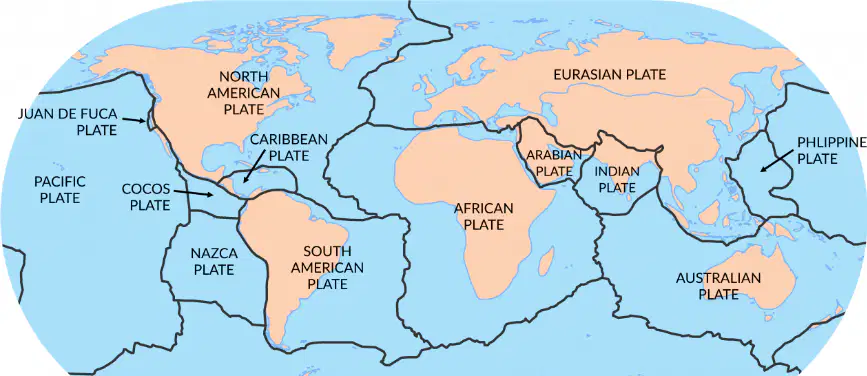
Refer to the world map of tectonic plates. Which named plate borders the Pacific Plate along the west coast of North America?
Nazca Plate
North American Plate
African Plate
Indian Plate
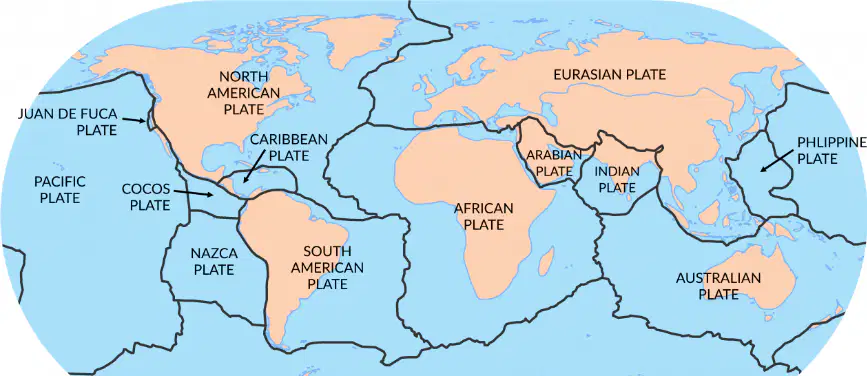
Refer to the world map of tectonic plates. Which plate lies south of the South American Plate and surrounds Antarctica?
Australian Plate
Antarctic Plate
Philippine Plate
Eurasian Plate
Refer to the world map of tectonic plates. Which plate is positioned between the Pacific Plate and North American Plate offshore of the Pacific Northwest?
Juan de Fuca Plate
Caribbean Plate
Cocos Plate
Arabian Plate
In the lava lamp analogy, what happens to the wax when it reaches the top and cools?
It becomes less dense and rises further
It becomes denser and sinks back down
It stays suspended at the top without moving
It evaporates into the air
Which statement best describes convection currents in Earth’s mantle?
Random horizontal motion of cold rock within the crust
Continuous cycle where heated mantle rock becomes less dense and rises, then cools, becomes denser, and sinks
Explosive upward movement of magma that never sinks
Surface winds that push tectonic plates across oceans
Identify the role of Earth’s core in driving mantle convection as described:
The cold core chills the mantle, stopping motion
Heat from the hot core warms the lower mantle, initiating rising motion
The core rotates plates directly with magnetic forces
The core provides water that lubricates plate boundaries
Which term refers to the rigid outer layer moved by convection currents?
Asthenosphere
Lithosphere
Inner core
Moho
Select the statements that accurately compare the lava lamp to Earth’s mantle convection.
Heating at the bottom makes material less dense and rise
Cooling at the top increases density and causes sinking
The cycle creates a slow up-and-down motion
The motion is identical in speed to a lava lamp
According to the text, convection currents act like which large-scale mechanism within Earth?
Giant conveyor belts that move tectonic plates
High-speed jet streams that propel continents
Hydraulic pumps that inject water into faults
Static supports that hold plates in place
Which surface features are explained by plate tectonics as summarized in the passage? Select all that apply.
Mountain ranges
Deep ocean trenches
Earthquakes
Sand dunes
What does the section emphasize about Earth’s surface over time?
It is fixed and unchanging
It is dynamic and constantly changing
It changes only during ice ages
It changes only due to human activity
Which statement captures the idea of plate tectonics as a unifying theory?
It explains a single volcano type
It connects geology, geography, and Earth’s history by showing the planet is active and reshaping itself
It focuses only on seafloor processes
It denies the role of mantle heat
In short, what are convection currents called in the text with respect to Earth’s internal processes?
Earth’s engine
Earth’s brakes
Earth’s filter
Earth’s compass
Which sequence correctly represents the density changes in mantle rock during convection?
Cooler → less dense → rises
Hotter → less dense → rises; cooler → denser → sinks
Hotter → denser → sinks; cooler → less dense → rises
Density remains constant throughout motion
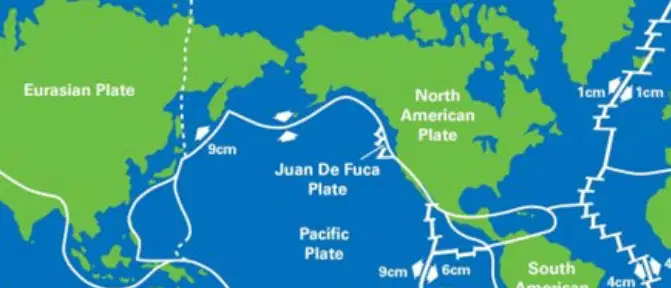
Refer to the world plate boundary map: Which feature is primarily moved by mantle convection currents, leading to the relative motions shown?
The lithosphere plates such as Pacific and Eurasian plates
The tropospheric air masses over oceans
Ocean currents like the Gulf Stream
River systems like the Amazon
Which description best defines a divergent plate boundary as presented in the material?
A location where two tectonic plates collide and one subducts beneath the other
A region where two tectonic plates slide horizontally past each other
A place where two tectonic plates move away from each other, allowing magma to rise and create new crust
An area where plates remain stationary and crust is neither created nor destroyed
Why are divergent plate boundaries also called Constructive Margins?
They construct high continental mountain chains by collision
They create new crust as magma from the mantle rises to fill gaps
They build deep ocean trenches through subduction
They form stable cratons that resist change
Select all features commonly produced at divergent plate boundaries according to the section.
Mid-ocean ridges
Rift valleys
Deep-focus earthquakes
New crust formation
Where are most divergent boundaries located?
Along continental interiors far from water bodies
On the ocean floor forming mid-ocean ridges
At the edges of subduction zones near trenches
Under polar ice sheets where crust is thickest
What process renews parts of Earth’s surface at divergent boundaries?
Erosion by wind and water
Crustal melting beneath continents
Magma rising from the mantle to create new crust
Sediment accumulation on the seafloor
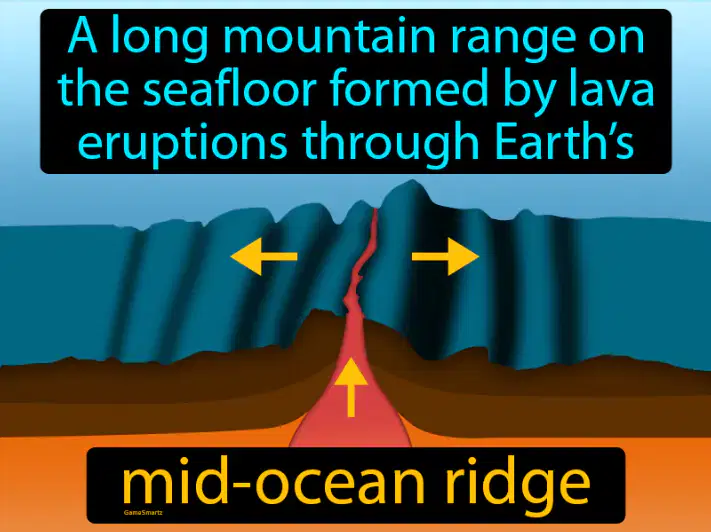
Based on the labeled visual of a mid-ocean ridge, what causes the long mountain range on the seafloor? Refer to the image showing arrows pulling apart with magma rising.
Compression forces that push plates together
Lava eruptions through Earth's crust as plates separate
Sediment deposition along passive margins
Glacial carving of the ocean floor
Which named example in the material represents a mid-ocean ridge?
East African Rift
Andes Mountain Chain
Mid-Atlantic Ridge
Mariana Trench
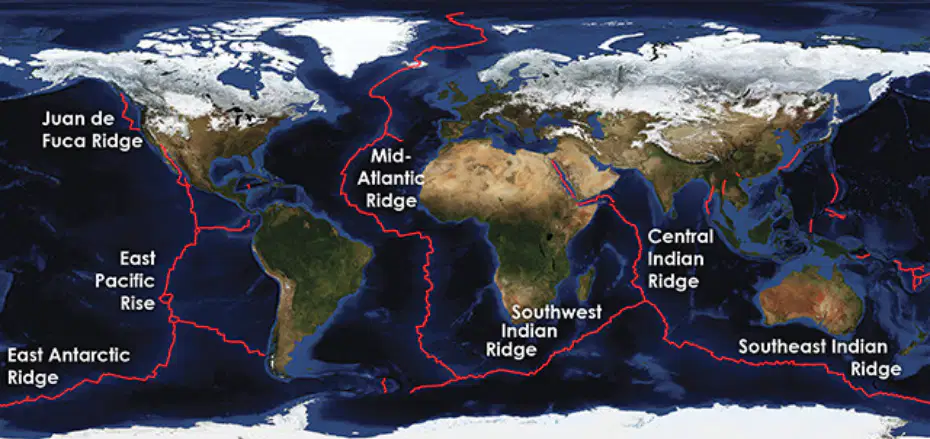
According to the world map of spreading centers, which statement is accurate about mid-ocean ridges?
They form continuous chains along many ocean basins where plates diverge
They occur only in the Atlantic Ocean
They form where plates converge and one subducts
They are isolated volcanic islands unrelated to plate boundaries
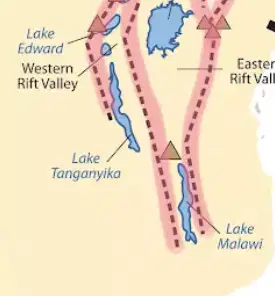
Sometimes divergent boundaries occur on land. What feature do they form there, as illustrated by the East African Rift map?
Fold-and-thrust belts
Rift valleys that are lowland regions where plates move apart
Accretionary wedges
Transform fracture zones
Select the statements that correctly describe rift valleys as presented.
They form when tectonic plates move apart on land
They are high-elevation plateaus built by compression
They are lowland regions associated with extensional tectonics
They develop only beneath oceans
Which hazards or phenomena are associated with divergent boundaries in this section?
Volcanic activity
Shallow earthquakes
Deep subduction-related quakes
Tsunamis triggered by megathrust faults
Over millions of years, what can the slow processes at divergent boundaries do to Earth’s geography?
Reshape continents and oceans by rifting and sea-floor spreading
Stabilize continental interiors and prevent change
Create only trenches without affecting continents
Erase all mountain ranges through erosion
Which list best summarizes the features associated with divergent boundaries provided at the end of the section?
Subduction, trenches, folded mountains
Rifting, sea-floor spreading, earthquakes, volcanoes, mountains
Transform faults, strike-slip quakes, plate locking
Hot spots, island arcs, accretionary prisms
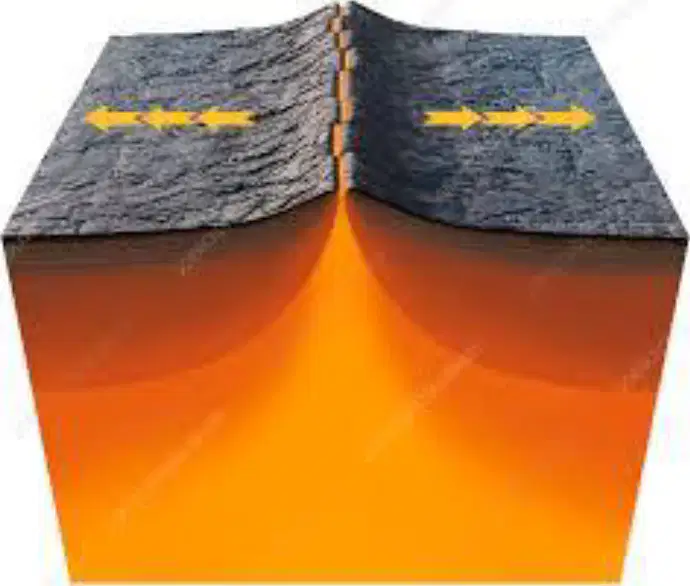
Consider the cross-sectional illustration where plates move apart and magma rises. Which sequence correctly describes the formation of new oceanic crust there?
Subduction pulls one plate beneath another, melting crust that later accretes
Plates diverge, mantle magma upwells to fill the gap, cools, and solidifies into new crust
Plates lock together, compressing sediments into mountains
Erosion removes old crust which is replaced by sediments
Which combination of location and feature correctly matches a divergent boundary example from the section?
East African Rift — continental rift valley
Mariana Trench — mid-ocean ridge
Andes — transform boundary
Himalayas — sea-floor spreading center
Which statement best defines a convergent plate boundary as described in the section?
A location where two tectonic plates move away from each other
A location where two tectonic plates slide past one another laterally
A location where two tectonic plates move toward each other, often destroying or recycling crust
A location where plates remain stationary and crust is preserved
Convergent plate boundaries are often called Destructive Margins or Destructive Boundaries because:
They always build new oceanic crust through seafloor spreading
The colliding plates frequently destroy or recycle portions of the crust
They only produce gentle folding without any crustal loss
They exclusively form transform faults that preserve crust
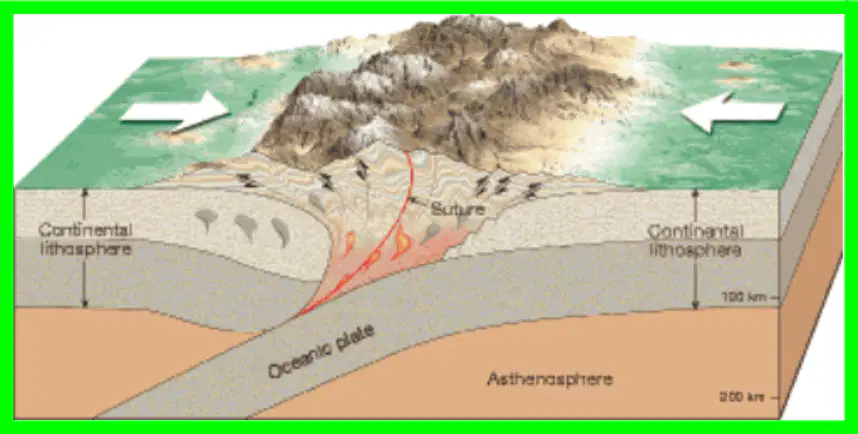
In continental–continental convergence, what primary landform results when two continental plates collide?
Deep-ocean trenches just offshore
Huge mountain ranges formed by upward crumpling of crust
Mid-ocean ridges created by magma upwelling
Volcanic island arcs far from continents
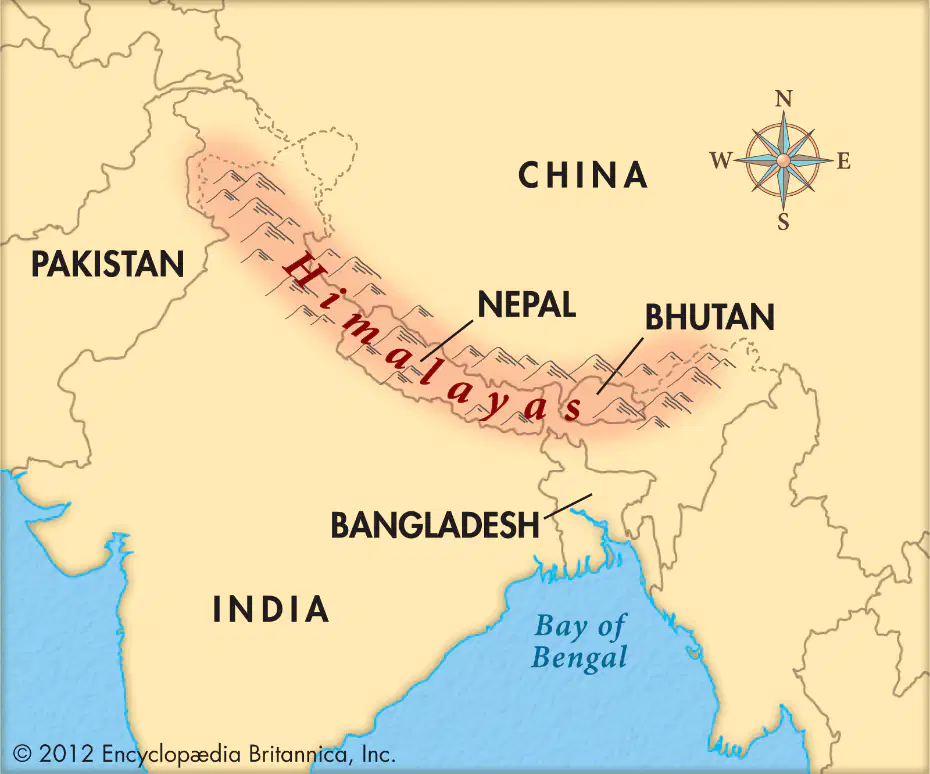
Which real-world example illustrates continental–continental convergence in this section?
Andes Mountains
Himalayas
Mariana Trench
Mid-Atlantic Ridge
According to the section, which features are associated with continental–continental convergent boundaries? Select all that apply.
Earthquakes
Mountains
Deep-ocean trenches
Continental volcanic arcs
What is subduction, as defined in the context of convergent plate boundaries?
The process where one plate slides horizontally past another
The process where one tectonic plate sinks beneath another into the mantle
The process of magma rising to form mid-ocean ridges
The process where plates break apart forming rift valleys
Oceanic–continental convergence occurs when a denser plate collides with a less dense plate. In this case, which plate is denser and what happens?
The continental plate is denser and subducts beneath the oceanic plate
The oceanic plate is denser and is forced downward into the mantle beneath the continental plate
Both plates have equal density and neither subducts
Density is irrelevant; the older plate always subducts regardless of type
Where do deep-ocean trenches form during oceanic–continental convergence, according to the section?
At the center of continents far from coasts
On the ocean floor just off the coast of continents where the oceanic plate subducts
Along mid-ocean ridges in the middle of ocean basins
Only beneath volcanic islands in the open ocean
Which description correctly characterizes a deep-ocean trench as presented in the material?
A broad, shallow basin formed by sediment deposition
A long, narrow depression representing the deepest part of the ocean
A circular caldera produced by explosive volcanism
A raised ridge formed by upwelling mantle
During oceanic–continental convergence, what happens to the subducting oceanic plate and how can this lead to surface features?
It remains solid and pushes up plateaus
It melts as it is forced into the mantle, and resulting magma can rise to form continental volcanic arcs
It fractures and creates transform faults only
It cools and forms new oceanic crust at the trench
Which mountain range is identified as having formed through the development of a continental volcanic arc related to oceanic–continental convergence?
Himalayas
Andes Mountains
Appalachian Mountains
Ural Mountains
Which sequence best describes the formation of a continental volcanic arc at an oceanic–continental convergent boundary?
Oceanic plate subducts, melts, magma rises through continental crust, volcanoes form on land
Continental plate subducts, cools, ridges form, island arcs emerge
Plates diverge, mantle upwells, seafloor spreading creates new crust
Plates slide laterally, shear stress builds, strike-slip faults generate volcanoes
Which pairing correctly matches boundary type to its typical primary surface feature based on the section?
Continental–continental convergence — deep-ocean trench
Oceanic–continental convergence — continental volcanic arc
Transform boundary — mid-ocean ridge
Divergent boundary — Himalayan-type mountain range
At convergent boundaries, why are they referred to as 'destructive' in this material? Select all reasons implied by the processes described.
Crust is often destroyed or recycled during collision and subduction
Trenches and arcs consume ocean water causing sea-level fall
Mountain-building removes sediments from basins
Subducting oceanic plates melt, leading to recycling of material into the mantle
At an oceanic–oceanic convergent boundary, which plate typically subducts?
The younger, less dense oceanic plate
The older, denser oceanic plate
The continental plate adjacent to the oceanic plates
Neither plate; they both crumple to form a mountain range
Which surface features are most directly produced by oceanic–oceanic subduction as magma rises through the oceanic crust?
Continental volcanic arcs
Mid-ocean ridges
Volcanic island arcs
Transform fault valleys
Choose the set that correctly lists phenomena associated with convergent boundaries described in the material.
Earthquakes
Deep-ocean trenches
Subduction
Hot spot seamount chains
Why do volcanoes in oceanic–oceanic convergence form on the ocean floor rather than on a continent?
Because convergence only occurs far from land
Because subduction happens beneath the ocean where both plates are oceanic
Because magma cannot travel through continental crust
Because oceanic crust is thicker than continental crust
Which statement best explains the origin of magma at oceanic–oceanic convergent boundaries?
Friction between plates melts the upper crust directly
The subducting plate melts in the mantle and the magma ascends
Solar heating warms shallow waters, generating magma
Hydrothermal vents dissolve the crust into magma
Identify the named real-world example in the material that illustrates island arc formation from oceanic–oceanic convergence.
Andes Mountains
Himalayas
Caribbean Islands
East African Rift
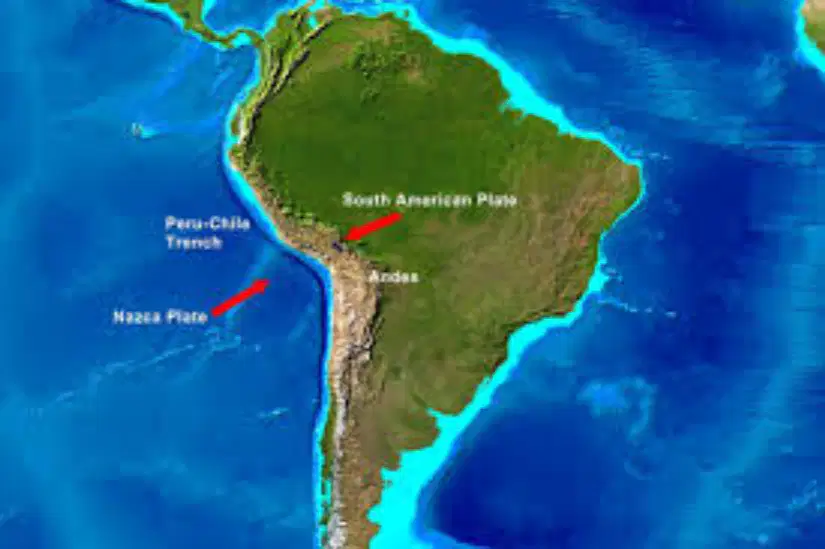
In the labeled South America map showing the Nazca Plate and the Peru–Chile Trench, what boundary process is depicted along the trench?
Oceanic–continental divergence causing rift valleys
Transform motion producing strike-slip faults
Subduction at a convergent boundary
Seafloor spreading at a mid-ocean ridge
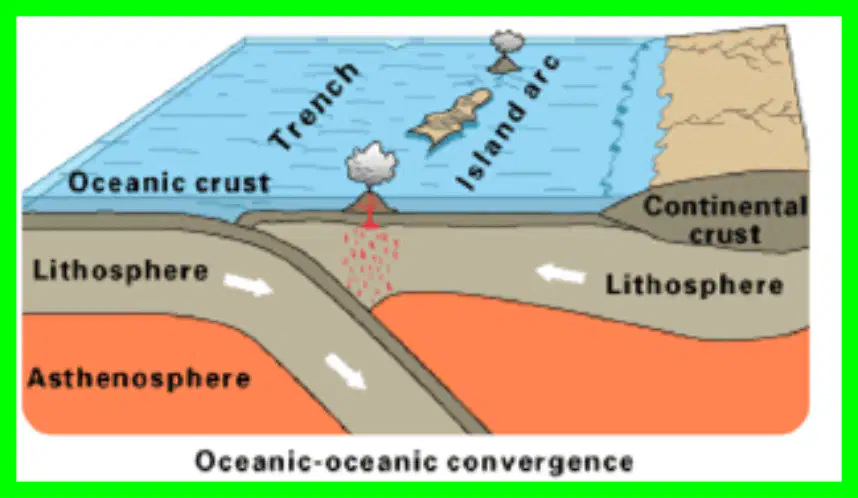
Refer to the schematic of oceanic–oceanic convergence with a trench and an island arc. Which sequence is correct?
Collision → crust thickening → continental mountain belt
Subduction → melting → magma rise → island arc
Seafloor spreading → transform faulting → rift formation
Erosion → sediment deposition → passive margin
Which features commonly form at oceanic–oceanic convergent boundaries? Select all that apply.
Island arcs
Deep-ocean trenches
Fold-and-thrust continental ranges
Underwater volcanoes
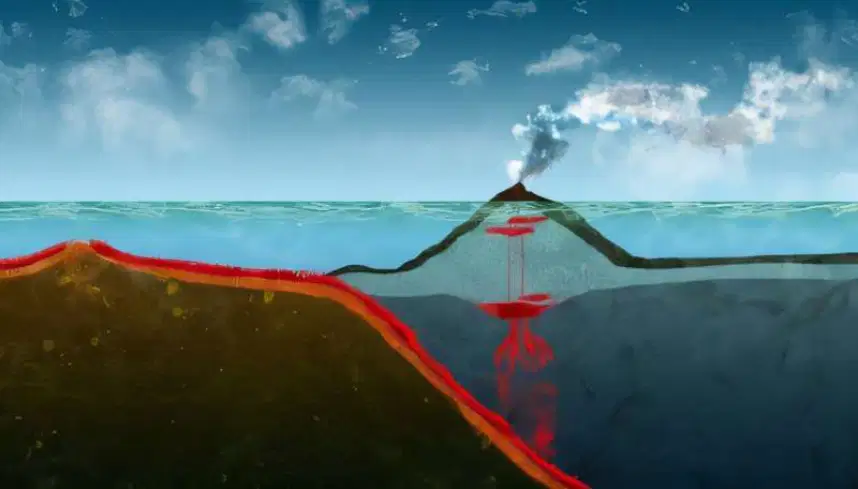
Based on the cross-section illustration with a volcano rising above the ocean surface, what is the most direct cause of the volcanic peak?
Compression of continental crust uplifting a plateau
Magma generated by subducted oceanic lithosphere reaching the surface
Erosion of a seamount exposing older rocks
Transform fault movements focusing stress at a point
Which statement best describes motion at a transform plate boundary?
Two plates collide and one subducts beneath the other
Two plates move apart and new crust forms
Two plates move past each other horizontally without creating or destroying crust
A single plate stretches and thins due to mantle upwelling
Transform boundaries are also called Conservative Margins because:
They conserve mantle heat by trapping magma
They neither create nor destroy crust as plates slide side by side
They conserve water by limiting seafloor spreading
They reduce tectonic stress by slowing plate speeds
What surface feature is most directly produced by the sideways motion at transform boundaries?
Volcanic island arcs
Fault lines where the crust cracks under stress
Deep-ocean trenches from subduction
Folded mountain ranges from compression
Which famous example illustrates a transform boundary in the United States?
Cascade Subduction Zone
Mid-Atlantic Ridge
San Andreas Fault in California
Yellowstone Caldera
Compared with other plate boundaries, transform boundaries most commonly cause which hazard?
Frequent earthquakes due to grinding between plates
Large explosive volcanoes from melting at depth
Broad rift valleys from crustal thinning
Wide accretionary prisms from sediment scraping
Why do transform boundaries rarely create volcanoes?
Their motion pulls hot mantle directly to the surface
No crust is being created or destroyed to generate magma
Water from subducting slabs prevents melting
They occur only beneath oceans far from heat sources
Identify the labeled features in the transform boundary diagram: earthquakes occur primarily along which zone?
Within the asthenosphere beneath the plates
Along the zone of shearing at the lithosphere where displaced rock slides
At the mid-ocean ridge crest far from faults
Inside deep subduction trenches
Which statement correctly pairs a boundary type with its typical product?
Transform — volcanic island arcs
Convergent — rift valleys
Divergent — deep-ocean trenches
Transform — fault lines and earthquakes
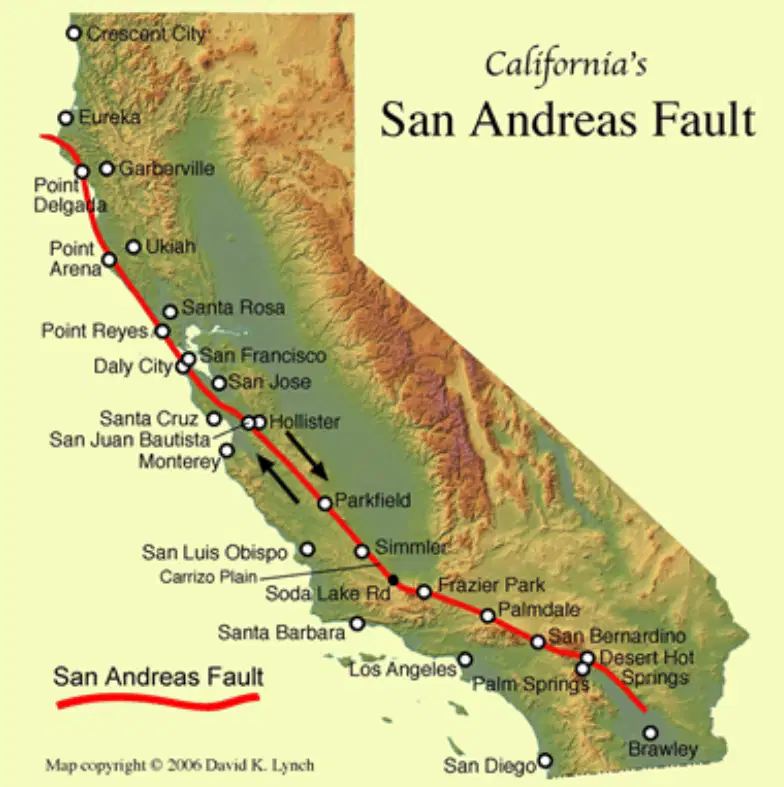
Select all statements that are true about the San Andreas Fault as shown on the map.
It traces a long, continuous fault zone across California
It marks a convergent boundary where one plate subducts
Communities such as San Francisco and Los Angeles lie near the fault
It is associated with frequent earthquakes along the transform boundary
Which feature is explicitly listed as associated with transform boundaries in the material?
Earthquakes
Volcanic island chains
Mountain building by collision
Deep-ocean trenches
What defines a hotspot volcano according to the passage?
A volcano that forms where two plates diverge
A volcano that forms at subduction zones from water-induced melting
A volcano created in the middle of a plate by a plume of very hot mantle rock rising and melting the crust
A volcano produced by crustal compression at continental collisions
Hotspots are described as intraplate volcanism because they:
Occur at the boundaries between plates
Form within the interiors of tectonic plates rather than at boundaries
Are limited to oceanic ridges only
Require deep subduction to supply water
Which sequence best describes how a hotspot leads to a volcanic eruption?
Cold crust sinks, pressure increases, and lava erupts
A plume of very hot mantle rock rises, heats and melts the crust, creating magma that erupts
Two plates grind, generating frictional heat that melts rock and erupts
Seafloor spreads, magma cools, and mountains rise
Which pairing correctly contrasts transform boundaries and hotspots?
Transform boundaries commonly build volcanoes; hotspots never erupt
Transform boundaries slide plates side by side with no crust creation; hotspots form volcanoes away from plate boundaries
Transform boundaries occur only in oceans; hotspots occur only on continents
Transform boundaries are driven by mantle plumes; hotspots are driven by subduction
Hotspots remain stationary while tectonic plates move over them. What pattern does this create on oceanic plates, as illustrated by the Hawaiian Islands example?
A single large shield volcano that persists in one location
A chain of volcanoes that becomes progressively older in the direction of plate movement
Randomly scattered volcanoes with no age pattern
A continuous mid-ocean ridge parallel to the plate boundary
Based on the listed features, which outcomes are commonly associated with hotspots on oceanic plates? Select all that apply.
Earthquakes
Volcanoes
Mountains
Island formation
Which feature distinguishes hotspots on continental plates from those on oceanic plates according to the provided lists?
Continental hotspots produce island chains; oceanic hotspots do not
Oceanic hotspots cause island formation, while continental hotspots typically do not
Continental hotspots lack earthquakes; oceanic hotspots have frequent earthquakes
Oceanic hotspots create folded mountain belts; continental hotspots create mid-ocean ridges
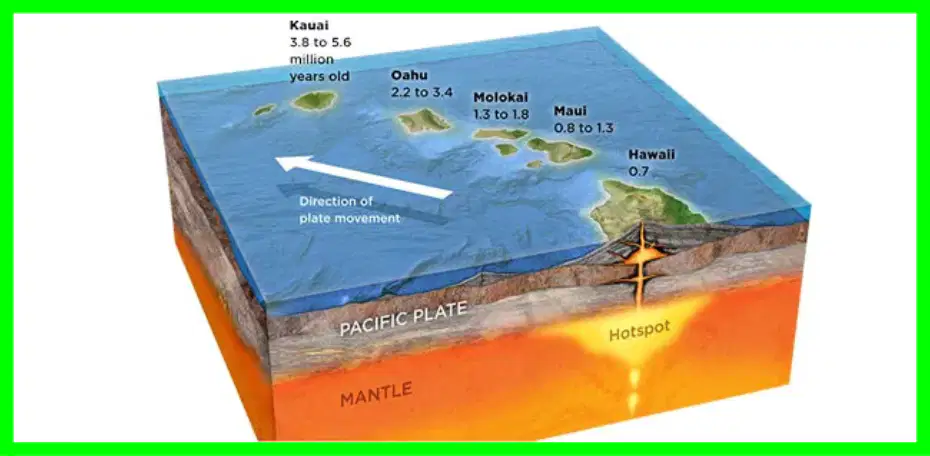
Refer to the diagram showing the Pacific Plate moving northwest over a stationary hotspot and labeling islands (Kauai, Oahu, Molokai, Maui, Hawaii) with different ages. Which island is currently over the hotspot and therefore youngest?
Kauai
Oahu
Maui
Hawaii
Which statement best explains why the older Hawaiian Islands lie to the northwest of the Big Island?
The hotspot migrated northwest over time
Sea-level changes exposed older volcanoes only in the northwest
The Pacific Plate moved northwest over a fixed hotspot, forming progressively older islands in that direction
Older islands eroded faster in the southeast, leaving only northwest remnants
Which statement best describes the theory of plate tectonics as introduced in the section?
Earth’s crust is a single unbroken shell that occasionally cracks during earthquakes.
Earth’s lithosphere is divided into large plates that move slowly over the softer mantle.
Only oceanic regions move while continents remain fixed in place.
Plates move rapidly, reshaping Earth on a yearly timescale.
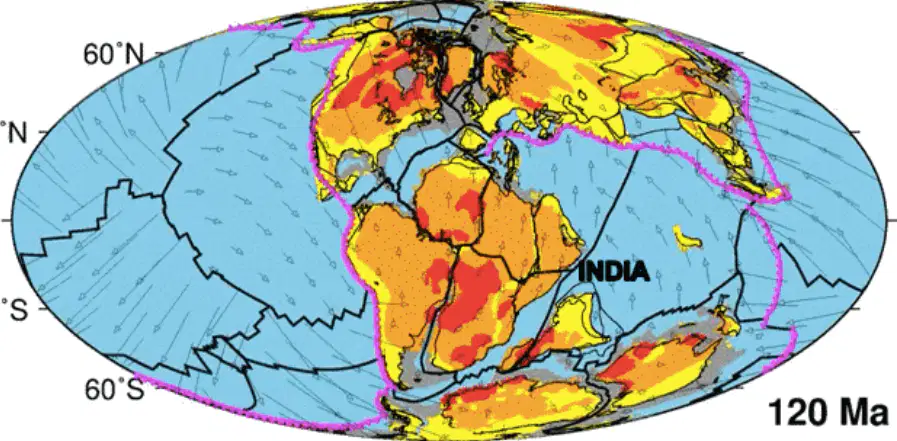
South America and Africa appear to fit together like puzzle pieces. What does this observation most strongly suggest?
The continents formed independently but coincidentally have similar shapes.
They were once joined as part of a supercontinent (Pangaea) and later drifted apart.
Ocean currents eroded the coasts into complementary outlines.
Tectonic plates only move vertically, not horizontally.
Which evidence uses fossil distributions to support continental connection in the past?
Similar freshwater reptile fossils, such as Mesosaurus, occur on continents now separated by oceans.
Deep-sea trenches contain no fossils, indicating past subduction.
Glacial striations only occur at high latitudes today.
Volcanic ash layers are identical worldwide every year.
What is the lithosphere in the context of plate tectonics?
Earth’s liquid outer core that generates the magnetic field.
Earth’s outer shell composed of rigid plates.
A layer of soft mantle that flows easily.
The atmosphere above the continents.
Select all statements that correctly describe seafloor spreading.
New oceanic crust forms at mid-ocean ridges as magma rises and hardens.
Rocks farther from mid-ocean ridges are older than those near the ridges.
Seafloor spreading proves continents are immobile.
Seafloor spreading is driven by plate motion over the mantle.
Which organism listed in the section is specifically identified as a freshwater reptile used as fossil evidence for past continental connections?
Glossopteris
Lystrosaurus
Mesosaurus
Cynognathus
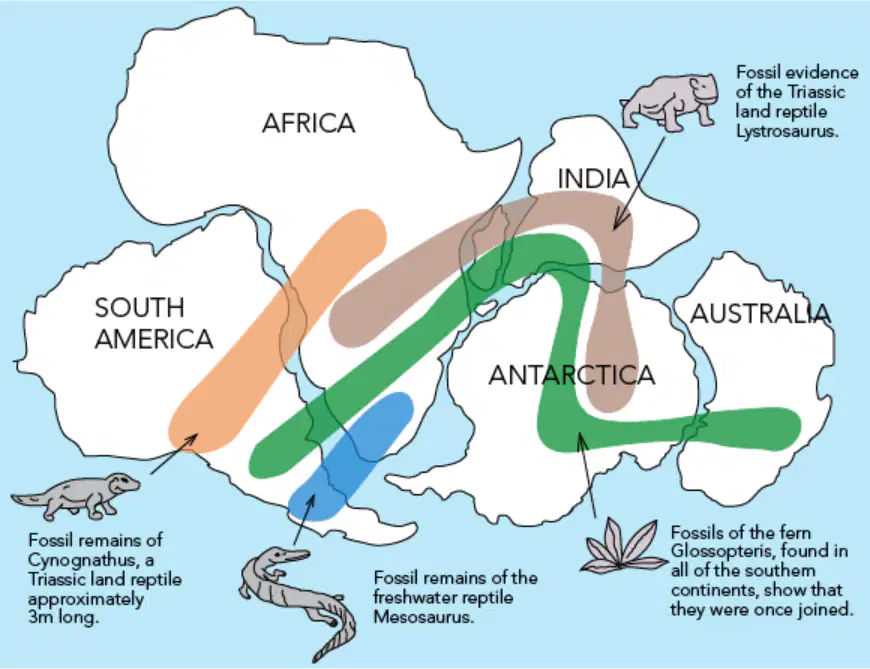
In the fossil distribution diagram, which conclusion is supported by the presence of Glossopteris across multiple southern continents?
Glossopteris evolved independently on each continent after separation.
Southern continents were once joined, allowing the plant to spread across them.
Glossopteris seeds were carried across oceans by modern ships.
The plant only grew along mid-ocean ridges.
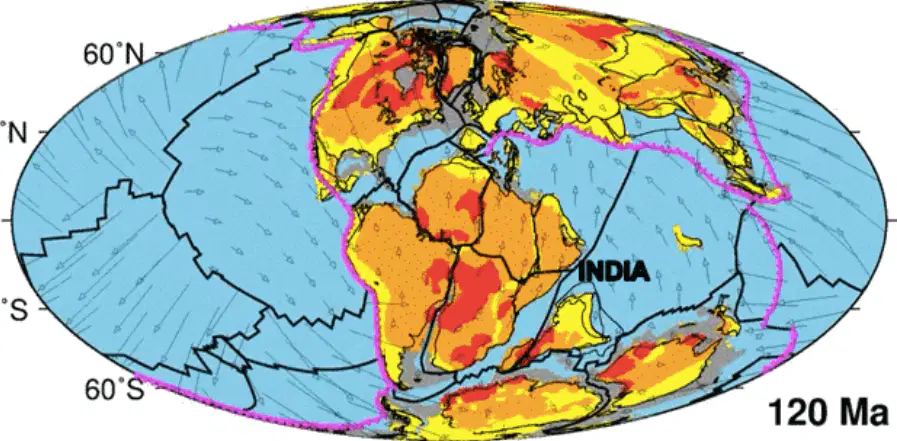
Which pair of continents is highlighted in the section as fitting together, supporting the idea of continental drift?
North America and Europe
South America and Africa
Australia and Antarctica
India and Asia
Which statement best connects fossil evidence with plate movement?
Finding identical fossils on distant continents indicates those continents were once connected before plate motion separated them.
Fossils only form near plate boundaries, so their presence proves subduction.
Only marine fossils can cross oceans, proving continents never moved.
Identical fossils show climates were the same everywhere, not that continents moved.

Based on the described pattern of oceanic crust ages, where would geologists expect to find the youngest rocks in the Atlantic Ocean?
At the Mid-Atlantic Ridge crest
Halfway between the ridge and the continents
Along the continental margins
Near deep-ocean trenches
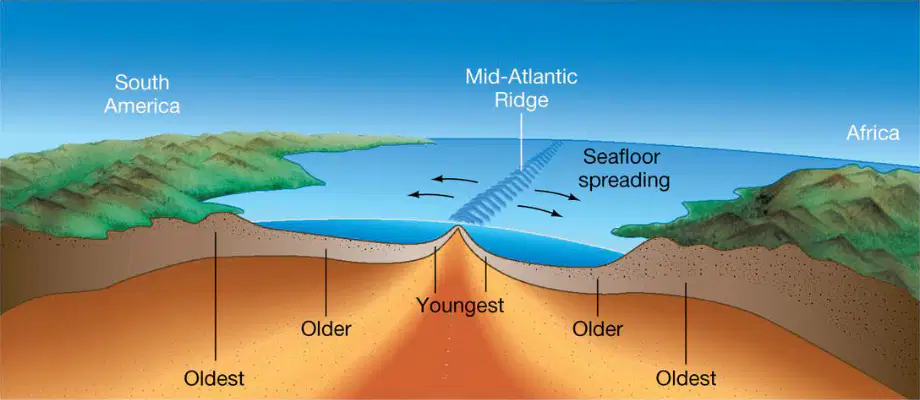
Which sequence correctly describes the process occurring at mid-ocean ridges that explains the age pattern of the seafloor?
Magma rises, cools to form new crust, which is pushed outward by moving plates
Old crust sinks beneath continents, where it becomes younger and moves toward the ridge
Water infiltrates cracks, dissolving rock and making it younger near the continents
Crust forms at trenches and moves inward toward the ridge
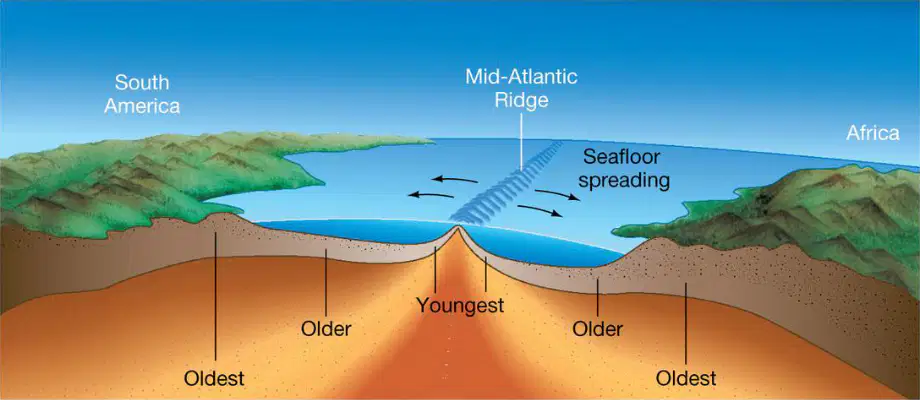
Which statements are supported by the seafloor age pattern described? Select all that apply.
New oceanic crust is created at mid-ocean ridges
Rocks become progressively older with distance from the ridge
The oldest oceanic crust is found at the ridge crest
Seafloor spreading pushes crust away from the ridge

Consider the labeled regions near South America and Africa in the Atlantic. Which comparison of seafloor age is accurate?
Crust near the continents is older than crust at the ridge
Crust near the continents is the youngest portion of the seafloor
Age is uniform from the ridge to the continents
Crust near the ridge and continents are equally old
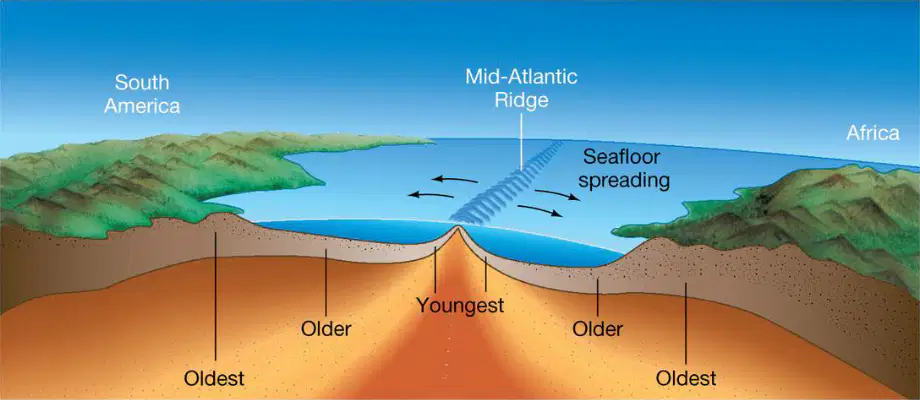
What evidence pattern most directly supports the idea that tectonic plates are moving apart at the Mid-Atlantic Ridge?
Symmetric bands of increasingly older crust on both sides of the ridge
Random distribution of crust ages across the ocean basin
Youngest crust concentrated along continental shelves
Oldest crust found along the ridge axis
Based on the text: "Near the ridges, the seafloor is young, so only a thin layer of sediments has had time to build up," which statement best explains why sediment thickness changes with distance from a mid-ocean ridge?
Sediments are constantly blown off ridges by strong winds, so thickness increases only on continents.
Older crust farther from the ridge has had more time for sediments to accumulate, producing thicker layers.
Sediments dissolve in warm ridge waters, making thickness uniform across the seafloor.
Younger crust near trenches traps more sediments, so thickness is greatest there.
Which observation most strongly supports seafloor spreading according to the section?
Sediment depth decreases with distance from the ridge.
Sediment depth increases with distance from the ridge.
Sediment depth is identical at all distances from the ridge.
Sediment depth increases toward continental shelves but not away from ridges.
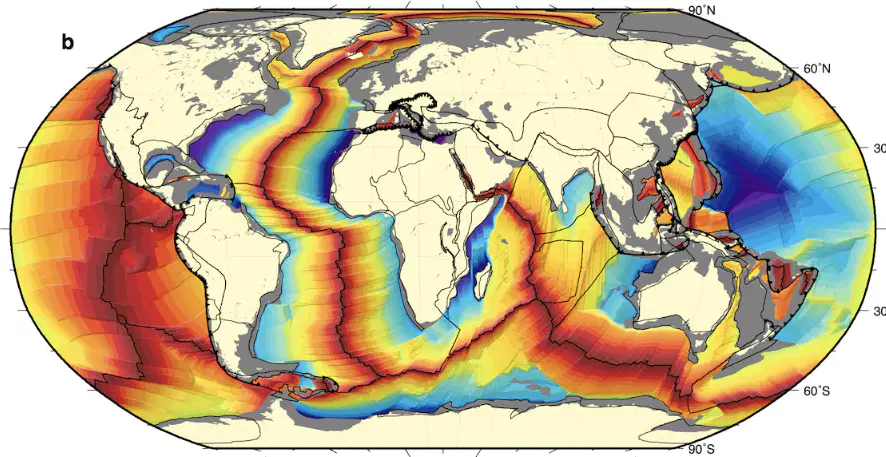
Use the global map of oceanic crust age (caption provided). What pattern does the map show about the age of oceanic crust relative to mid-ocean ridges?
Crust age is youngest near ridges and becomes progressively older away from them.
Crust age is oldest near ridges and becomes progressively younger away from them.
Crust age is random and unrelated to ridge location.
Crust age is uniform across all oceans regardless of ridges.
Which pair correctly matches location with expected sediment thickness in a spreading ocean basin?
Near a mid-ocean ridge — thickest sediments; far from ridge — thinnest sediments.
Near a trench — thinnest sediments; on continents — no sediments.
Near a mid-ocean ridge — thinnest sediments; far from ridge — thicker sediments.
Near a hotspot — no sediments; far from hotspot — thick sediments.
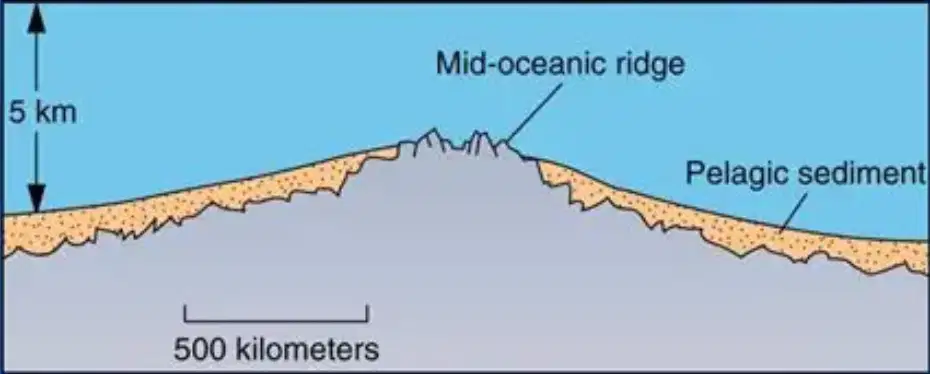
According to the cross-sectional diagram of a mid-ocean ridge, what feature borders the ridge and thickens away from it?
Basaltic lava flows only at the crest
Pelagic sediment that accumulates with distance
Continental crust overriding oceanic crust
Glacial deposits that thin away from the ridge

Which statement best describes the global distribution of earthquakes and volcanoes shown on the map?
Earthquakes and volcanoes occur randomly with no relation to plate boundaries.
They cluster along narrow belts that trace plate boundaries.
They are confined to continental interiors, away from oceans.
They occur only near the equator.
Select all lines of evidence from this section that support the theory of plate tectonics.
Increasing sediment thickness with distance from mid-ocean ridges
Random distribution of earthquakes across continents
Young seafloor near ridges and older crust farther away
Volcanoes and earthquakes concentrated along plate boundaries
Why is a thicker layer of ocean sediments expected farther from mid-ocean ridges?
Sediment production rates increase linearly with latitude.
Older oceanic crust has existed longer, allowing more sediment to accumulate.
Ocean currents remove sediments near continents and deposit them only in the deep ocean.
Volcanic ash settles exclusively on the oldest crust.
Together, what do the observed patterns of sediment thickness, earthquake locations, and volcano locations indicate about Earth’s plates?
Plates are stationary and Earth’s surface is constant.
Plates are constantly moving, reshaping the surface and causing geologic activity.
Plates move only during rare catastrophic events.
Plates move beneath continents but not oceans.

