
Font size
 Worksheets
Plant Pollination Quiz
Total questions: 98
Worksheet time: 49mins
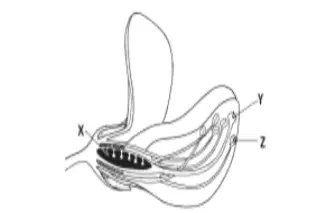
The diagram shows the structure of a flower. Where do pollination and fertilisation take place?
X - Y
Y - X
Y - Z
Y - Y
Mrs. Nathan saw a plant which caught her attention because its flowers had the following characteristics: - Bright red petals with yellow stamens - Wet with nectar - Strong scent. Identify the most likely method for pollination of these flowers.
By air
By wind
By water
By insects
Which of the following correctly classifies plants based on their way of reproduction? Reproduce through underground stems: Ginger Reproduce through leaf: Bryophyllum
Ginger - Bryophyllum
Rose - Potato
Ginger - Lilly
Bryophyllum - Ginger
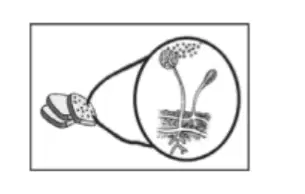
Identify the given picture.
Green plants
Fungi
Protozoa
Bacteria
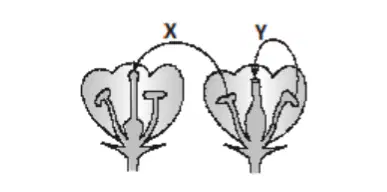
Identify the processes 'X' and 'Y' in the figure given below.
X - cross pollination, Y - self pollination
X - self pollination, Y - cross pollination
X - dispersal, Y - fertilisation of two cells
X - germination, Y - dispersion
Which of these plants undergoes vegetative reproduction?
Tomato, lady’s finger, onion, cauliflower
Potato, ginger, onion, sugarcane
Cauliflower, onion, potato, tomato
Lady’s finger, ginger, onion, sugarcane

Which seed is NOT dispersed by wind?
P
Q
R
S
Arrange the sentences given below in order to describe the process of fertilisation. Which of these options are in the correct order?
WXZY
XZWY
YWZX
WZXY
Reproduction in bryophyllum takes place by –
Root
Leaf
Stem
Spores
Potato grows from which part of the plant?
Bulbs of the modified stems
Eyes on the tuberous stem
Outgrowth from the modified roots
Leaf buds on the modified leaves
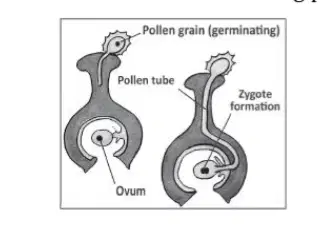
The figure given below represents which of the following processes?
Growth
Germination
Fertilisation
Dispersion
Which of the following constitute a pistil?
Stigma, anther and ovary
Stigma, stamen and ovary
Pollen sac, style and ovule
Stigma, style, and ovule
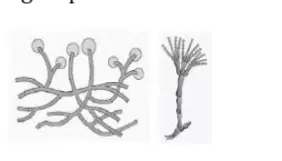
The organisms given below can be grouped into one class as they –
Do not have flowers
Reproduce by spores
Live in dark places
All of these
Yeast commonly reproduce asexually by
Budding
Spore formation
Fragmentation
None of these
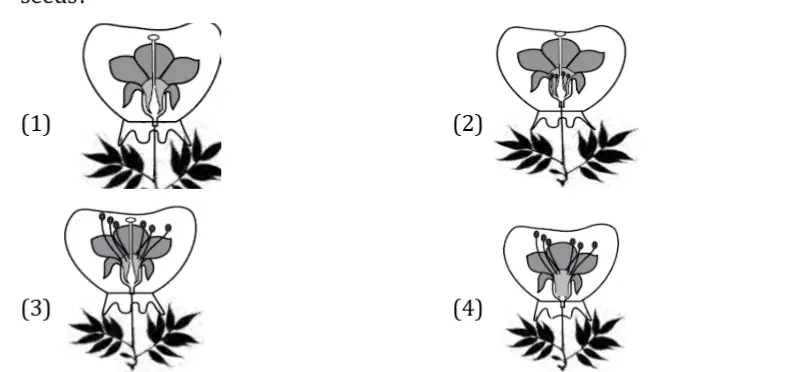
Anushka bagged four different kinds of flowers on the potted plants as represented by the given figure and left them as such. Which of these four flowers is most likely to produce fruits and seeds?
Flower labeled as (1)
Flower labeled as (2)
Flower labeled as (3)
Flower labeled as (4)
Which plant does not have unisexual flowers?
Pumpkin
Melons
Hibiscus
Guard
____ are formed in fungi.
Pollen grains
Seeds
Buds
Spores
In onion and garlic, new plants are produced from –
Bulbs
Tubers
Leaf buds
Subaerial stems
The seeds dispersed by birds and animals are:
Less smell
Very smelly
With smell and nectar
None of these
What is the role of the ovary in reproduction?
It produces male gametes.
It is where female gametes are present and fertilization occurs.
It sheds pollen grains.
It helps in vegetative reproduction.
Which type of pollination is shown by insects?
Self-pollination.
Cross-pollination.
Vegetative reproduction.
Pollination by insects.
How does ginger reproduce?
Through stems.
Through leaves.
Through seeds.
Through flowers.
What is Rhizopus classified as?
A plant.
A fungi.
An insect.
A seed.

What is the difference between X and Y in pollination?
X is self-pollination, Y is cross-pollination.
X is cross-pollination, Y is self-pollination.
X is vegetative reproduction, Y is pollination by insects.
X is fertilization, Y is germination.
Which plants undergo vegetative reproduction by underground stem?
Potato, ginger, onion, sugarcane.
Mango, apple, banana, guava.
Rose, sunflower, marigold, tulip.
Coconut, palm, pine, oak.
Which seeds are dispersed by wind?
Mango, apple, guava.
Madar, maple, sunflower.
Coconut, palm, pine.
Xanthium, rose, tulip.
What happens after pollen grain reaches the stigma?
It germinates and grows into a pollen tube.
It falls off the flower.
It undergoes vegetative reproduction.
It forms seeds directly.
How does reproduction take place in Bryophyllum?
By seeds.
By leaf.
By stem.
By flowers.
How does potato grow?
From seeds.
From eyes on the tuberous stem.
From flowers.
From leaves.
What does fertilization represent in plants?
Formation of seeds.
Growth of pollen tube.
Fusion of male and female gametes.
Germination of pollen grains.
What constitutes a pistil?
Ovary, stigma, and pollen tube.
Stigma, style, and ovule.
Style, ovary, and leaf.
Stigma, ovary, and seed.
What is the practice of growing different types of crops in a piece of land season after season called?
Monoculture
Mixed farming
Crop rotation
Terrace farming
Which group do fungi belong to based on their features?
Algae
Bacteria
Protozoa
Fungi
How does yeast commonly reproduce asexually?
By budding
By binary fission
By fragmentation
By spore formation
Which type of flower has both male and female reproductive parts?
Unisexual flower
Male flower
Bisexual flower
Female flower
In which organism are spores formed?
Algae
Bacteria
Protozoa
Fungi
In which plants are new plants produced from bulbs?
Onion and garlic
Mango and apple
Wheat and rice
Rose and jasmine
What characteristic do seeds dispersed by birds and animals usually have?
They are lightweight.
They are sticky.
They have smell and nectar.
They are spiny.
How do earthworms play their role in biological weathering?
Burrows made by them allow water to move quickly.
Their burrows provide pathways for roots to grow which weather the rock.
They can decompose dead plant and animal matter.
All of the above.
Which layer of Earth's crust describes the soil?
Uppermost layer
Middle layer
Lower layer
All three comprised to form soil.
Arrange the points in sequence with respect to the process of weathering.
2→4→5→1→3
2→5→4→3→1
2→4→5→3→1
1→2→4→5→3
Choose the incorrect option regarding physical weathering.
Existing minerals are broken down into new mineral components.
Rocks are broken down into smaller pieces.
Mechanical process with no change in characteristics of original rock.
Caused by temperature differences, frost, movement of animals etc.
Which one is not the factor responsible for weathering?
Frost
Water
Climate
Wind
How frost is the causative agent of weathering?
Rainwater produces lateral pressure to open up the crevices.
Ice expands to produce lateral pressure forcing crevices to open up.
Occasional rain breaks down the rock particles through their abrasive effect.
Both a and b
Name the region where decaying material is limited.
Tropical region
Evergreen region
Deciduous region
Desert region
The coarse-textured soil found in arid region is formed because of:
Excess of solar energy
Lack of rainfall
More moisture
Severe winter
Hilly areas on slope have thin layer of soil because of:
Running water and wind
Pollution
Soil erosion
Cool climate
Which horizon can be touched by roots of tall trees?
Parent rock
Top soil
Sub soil
Lowest layer
Find the incorrect option in respect to B horizon.
Remains of plant and animal present.
Harder and compact than A horizon.
Roots of tall plants can be reached.
Lighter in colour.
Which horizon is hard to dug up?
A horizon
B horizon
C horizon
R horizon
What is the reason of presence of large spaces and air in sandy soil?
Because of large particles
To make itself suitable for plant growth
Because of water presence
Enormous humus present
Which of the following can grow in sandy soil serving as wind breakers?
Hydrophytes
Xerophytes
Mesophytes
Halophytes
Why loamy soil is best suited for plant growth?
Permit proper root penetration
Allows growth of plant
Absorption of water and minerals
All of the above
What is percolation rate?
Rate at which water exit the soil
Rate at which water stay in soil
Rate at which water enters the soil
Capillary action
The number of adjustments that can make soil fertile are
Alteration in pH.
Low air content.
Increment in the concentration of fertilizers.
Peat is added to alkaline soils.
How do plants prevent soil erosion?
Roots of plants bind the soil together, preventing soil erosion.
Roots act as a channel for water to percolate, preventing soil to run off.
Both (1) and (2)
Presence of plants cut the wind flow.
What are the factors that add to the loss of soil fertility?
Continuous cropping
No replacement of humus
Water flow on steep slopes
All of the above
How does terrace farming prevent soil erosion?
It reduces the speed flow of wind
It reduces the speed flow of water
Both (1) and (2)
Terrace farming is a method to prevent floods, not soil erosion.
What role do earthworm burrows play in soil?
They prevent water from moving through the soil.
They block pathways for roots to grow.
They decompose only animal matter.
They act as tunnels for water movement and decompose dead plant and animal matter.
What is the uppermost layer of the Earth's crust called?
Soil
Rock
Sand
Gravel
Which of the following is an example of physical weathering?
Breaking down of rock into smaller pieces without changing its characteristics.
Formation of new minerals in the rock.
Chemical reaction between rock and water.
Melting of rock due to high temperature.
Which factors are responsible for weathering?
Earthquakes and volcanic eruptions.
Human activities and pollution.
Temperature changes, frost, water, and wind.
Soil erosion and deforestation.
What happens when rainwater freezes in small crevices of the parent rock during winter?
It causes the rock to melt.
It expands to produce lateral pressure, causing crevices to open up.
It forms new minerals in the rock.
It prevents weathering of the rock.
Why do desert regions have very little decaying material for soil?
They have abundant vegetation and animal life.
They have high rainfall.
They have fertile soil.
They have very little vegetation and animal life.
What leads to the formation of coarse-textured soil in arid regions?
High levels of vegetation.
Lack of rainfall.
Excessive water flow.
Presence of frost.
Why do hilly areas generally have a thin layer of soil?
Running water and wind tend to take away the soil down the slope.
The soil is formed only from sand.
The soil is too fertile to stay in place.
The soil is resistant to erosion.
Which horizon is the lowermost layer of soil that is hard to dig up?
A. A horizon
B. B horizon
C. R horizon
D. C horizon
What type of plants can grow in sandy soil and serve as wind breakers?
A. Hydrophytic plants
B. Xerophytic plants
C. Mesophytic plants
D. Epiphytic plants
What is the rate at which water exits the soil known as?
A. Absorption rate
B. Percolation rate
C. Evaporation rate
D. Filtration rate
Which soil type permits proper root penetration, growth, and absorption of water and minerals?
A. Sandy soil
B. Clayey soil
C. Peaty soil
D. Loamy soil
What are some adjustments to make soil more fertile?
A. Addition of fertilizers, aeration, and alteration in pH
B. Removal of humus and addition of sand
C. Increasing soil erosion and reducing water retention
D. Adding clay particles and reducing aeration
How does terrace farming help in preventing soil erosion?
A. By increasing the speed of water flow
B. By reducing the fertility of soil
C. By reducing the speed of water flow
D. By increasing soil compaction
What binds the soil together and acts as a channel for water to percolate down?
A. Fertilizers
B. Humus
C. Root system of plants
D. Clay particles
What factors contribute to the loss of soil fertility?
A. Continuous cropping and failure to replace humus
B. Addition of fertilizers and aeration
C. Terrace farming and water retention
D. Reduction in soil erosion and percolation rate
The lizard is well-adapted to live in human dwellings. Which function of its adaptations is incorrectly described?
Long, sticky tongue - To catch fast-moving prey
Long, narrow & flat body function - To crawl between narrow crevices and spaces easily
Sticky pads on the underside of the feet - To walk on walls and ceilings without falling
Tail that can drop off and wriggles for a while - To attract mates for reproduction
The day-to-day changes in the atmosphere is called
weather
season
climate
environment
Which of the following move to warmer regions during winters to escape the cold?
Penguins
Migratory birds
Polar bears
Seals
Which of the following lives on trees and has sticky pads on its feet that help it to climb trees?
Jaguar
Red-eyed frog
Lion-tailed macaque
The toucan
The most outstanding feature of a lion-tailed macaque is
sliver-white mane
sticky pads on feet
long and large beak
ability to change colour
Which of these is not a method of cooling the body?
Sweating
Panting
Licking
Hibernation
What is stored in the hump of a camel?
Carbohydrates
Proteins
Water
Fats
Which of the following adaptations of polar bear are not meant for hunting prey and getting protection from predators?
(i) and (v) only
(iii) and (iv) only
(ii) and (iii) only
(i) and (iv) only
An organism’s body is streamlined. The habitat of organism should be-
Mountain
Water
Land
Desert
The day-to-day changes in the atmosphere is called
weather
season
climate
environment
Animals found in tropical rainforests are all except
Lion tailed macaque
Red eyed frog
Toucan
Penguin
Fishes that show migration are
Eels
Salmon
Whales
Both (1) and (2)
Rainfall is measured by
rain gauge
water level increase in ponds
water level increase in water table
none of these
Select the incorrect match
Polar bear - Hibernation
Tortoise - Aestivation
Grasshopper - Camouflage
Lion tailed macaque - Mimicry
Which of the following is not the correct example of structural adaptation in animals?
A desert fox losing excess heat through its large ear.
A monkey using its strong, long limbs and tail for grasping branches.
A polar bear balancing itself on its paws with stiff hair.
Toucan has developed sticky pads on its feet to help it to reach the fruits on branches which are otherwise too weak to support its weight.
Read the given statements and select the correct option. Statement 1: Climate is the current condition or the state of atmosphere of a particular place in terms of humidity, cloudiness, temperature, wind, etc. Statement 2: Weather refers to the long term (usually 25-30 years) average environmental conditions of a particular place.
Both statements are true.
Both statements are false.
Statement 1 is true and Statement 2 is false.
Statement 1 is false and Statement 2 is true.
The phenomenon in which a bird or other animal moves from one place to another in one season and returns again in a different season is called:
Migration
Hibernation
Adaptation
Evolution
The (i)___ flies from its native place in Russia to places like (ii)___ in Rajasthan and (iii)___ in Haryana during a particular season. It stays in India for a few months and then goes back in (iv)____ season. The general name given to birds like these is (v)_____ birds. Select the correct sequence of words to fill up the blanks in the above passage.
Siberian, Sultanpur, Bharatpur, Winter, Migratory crane
Toucan, Sultanpur, Bharatpur, Autumn, Adaptatory
Siberian, Sultanpur, Bharatpur, Summer, Adaptatory crane
Siberian, Bharatpur, Sultanpur, Winter, Migratory crane
Arctic, Bharatpur, Sultanpur, Spring, Migratory crane
Which of the following is the probable method these migratory birds use to travel to the same place year after year?
They have built-in sense of direction and probably use land-marks to guide themselves.
They are guided by the position of the sun during the day and by the position of stars at night.
They use the magnetic field of earth to find the direction so as to reach the same place.
All of these.
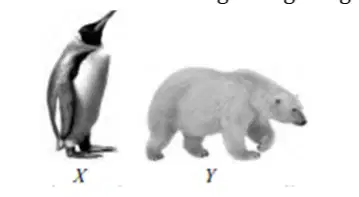
Which of the following statements are correct regarding the given animals? (i) Both X and Y possess streamlined body and webbed feet. (ii) Both are good swimmers. (iii) Y has a thick layer of fat under its skin with fur on its body, while X has thick skin and a layer of fat under its skin. (iv) Both live together in large numbers and huddle together to keep themselves warm. (v) Y has very strong sense of smell unlike X.
(ii), (iii) and (iv)
(i), (ii), (iii) and (iv)
(ii), (iii) and (v)
(i) and (iv)
What adaptation helps a lizard escape predators or dangerous situations?
Hibernation
Migration
Sticky pads on feet
Dropping its tail
What color is used to mark polar regions on a map?
Green
Blue
Red
Yellow
What term is used to describe the day-to-day changes in the atmosphere?
Weather
Climate
Adaptation
Migration
Why do migratory birds move to warmer regions during winters?
To find food
To escape cold
To reproduce
To avoid predators

