
 Worksheets
Earth Systems
Total questions: 70
Worksheet time: 1hrs 23mins
Which layer of the atmosphere has meteors?
troposphere
stratosphere
mesosphere
thermosphere
Which layer of the atmosphere has weather?
troposphere
stratosphere
mesosphere
thermosphere
Which layer of the atmosphere contains the ozone?
troposphere
stratosphere
mesosphere
thermosphere
"atmo-" means
gas or vapor
water
Earth or rocks
life
Airplanes fly in the
troposhphere
mesosphere
stratosphere
exosphere
As you get farther away from the Earth, the layers of the atmosphere get
colder
warmer
Earth's atmosphere is mostly made up of which 2 gases? CHOOSE 2!!!!!!
nitrogen
oxygen
ozone
water vapor
In which layer of the atmosphere is the most water vapor found?
thermosphere
mesosphere
troposphere
stratosphere
As altitude increases, air pressure....
Increases
Decreases
Stays the same
Goes up and down
Why is the ozone layer vital to life on Earth?
Planes fly in the ozone layer
It is made up of oxygen (O2)
It shields the Earth from ultraviolet (UV) rays from the sun
It causes clouds to be created
This layer is the hottest layer of the atmosphere?
Troposphere
Stratosphere
Mesosphere
Thermosphere
What is the order of the layers of the atmosphere, starting with the layer closest to Earth's surface?
Stratosphere, Troposphere, Exosphere, Mesosphere, Thermosphere
Troposphere, Stratosphere, Mesosphere, Thermosphere, Exosphere
Troposphere, Stratosphere, Mesosphere, Exosphere, Thermosphere
Troposphere, Stratosphere, Thermosphere, Exosphere, Mesosphere
What layer of the atmosphere has the highest air pressure?
Troposphere
Stratosphere
Exosphere
Mesosphere
All of the landforms on earth
Biosphere
Geosphere
Atmosphere
Cryosphere
All of the frozen areas
Cryosphere
Lithosphere
Hydrosphere
Stratosphere
All of the air, oxygen, nitrogen, and gases that surround the earth.
atmosphere
biosphere
hydrosphere
geosphere
All of the living things, living systems on eaarth
atmosphere
hydrosphere
geosphere
biosphere
All of the bodies of water on the earth.
cryosphere
geosphere
biosphere
hydrosphere
Which two earth spheres are interacting: A fish swimming in a river.
geosphere and atmosphere
hydrosphere and biosphere
geosphere and cryosphere
atmosphere and biosphere
Which three earth spheres are interacting: A polar bear floating on an iceberg in the ocean.
geosphere, atmosphere, biosphere
cryosphere
biosphere
hydrosphere
hydrosphere
cryosphere
geosphere
atmosphere
geosphere
lithosphere
Which two earth spheres are interacting: The wind blows the leaves from a tree.
atmosphere
biosphere
atmosphere
geosphere
geosphere
hydrosphere
geosphere
atmosphere
Which two earth spheres are interacting: The ocean waves crash onto the sandy beach.
geosphere
biosphere
geosphere
atmosphere
geosphere
hydrosphere
geosphere
cryosphere
Which two earth spheres are interacting: The sun dries up a small river.
hydrosphere
biosphere
hydrosphere
atmosphere
hydrosphere
geosphere
hydrosphere
cryosphere
__________ is part of the geosphere.
lake
clouds
glacier
mountains
_________ is part of the cryosphere.
icebergs
rivers
hills
wind

When plants use their roots to get water from the ground, which 2 spheres are interacting? (choose 2)
Geosphere
Hydrosphere
Atmosphere
Biosphere

When ocean water evaporates into the air, which 2 spheres are interacting? (choose 2)
Geosphere
Hydrosphere
Atmosphere
Biosphere

What is the biosphere?
all the air and gases on the planet
made up of living things
the non-living soil, rocks, and minerals of the Earth
the rivers, lakes, and oceans of the Earth
What is caused by differences in air pressure?
Time
Precipitation
Clouds
Wind

What is a cloud made of? (mostly)
Salt
Dust
Water droplets
Water vapor
Any form of water - solid or liquid - that falls from the sky is _______.
precipitation
humidity
air temperature
air pressure
Warm air _________ because it is _______ dense than the air around it.
rises, less
rises, more
falls, less
falls, more
Cold air _________ because it is _______ dense than the air around it.
rises, less
rises, more
falls, less
falls, more
Air that moves from area of high pressure to area of low pressure
Wind
Humidity
Front
Tornado

Identify the parts of the map:
Jet Stream
Colder air mass
Warmer air mass
The jet stream steers (a) across the United States of America.

What is the jet stream?
Precipitation in North Carolina
Weather over a long period of time
Strong winds above the Earth's surface
Football flying over the Earth

Which best describes a characteristic of the jet stream?
It forms a boundary between a cold air mass and a warm air mass.
It creates the high winds around the eye of a hurricane.
It forces the hot air along the equator to rise to areas in North
America.
It causes high pressure air masses to rotate clockwise.

A narrow band of fast moving winds high in the atmosphere that move from west to east
Jet Stream
doldrums
equator
polar easterlies

What will most likely result when the jet stream moves south of North
Carolina?
North Carolina will experience tropical weather conditions.
North Carolina will experience hot, dry weather.
North Carolina will experience mild weather.
North Carolina will experience cold weather.
What process describes the movement of water from the Earth's surface into the atmosphere and back again?
Water cycle
Carbon cycle
Nitrogen cycle
Oxygen cycle
Where does the energy needed for the water cycle to occur come from?
The Moon
The Sun
Producers
Omnivores
Ocean Currents Affect which of the Following:
Local weather conditions
Stabilization of Global Climate Patterns
All of the above
Delivery of nutrients
Which example describes how the water cycle carries on energy transfer?
A warm ocean current warming the air above it.
Ocean water depositing sand particles on a shore.
Water seeping through the soil and dissolving salts.
Large bodies of water store thermal energy. This causes temp. differences and surface currents that affect climate and weather. What are surface currents?
Daily changes in the level of ocean water.
Slow mixing of warm and cold water near the surface of the ocean.
Stream like movements of water that happen near the surface of the ocean.
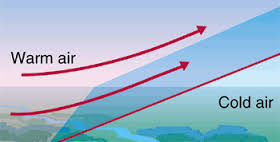



A _____________ weather front occurs when a cold air mass moves forward, pushing the warm air mass up.
Cold
Warm
Stationary
Occluded
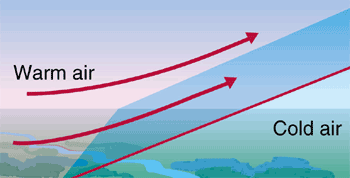
Why does warm air rise above cold air?
Warm air is less dense
Warm air is more dense
Cold air is stronger than warm air

Which type of weather front can produce precipitation (rain or snow)?
Cold
Warm
Stationary
Occluded
All of the above

What type of front is over Texas?
warm front
cold front
stationary front
occluded front
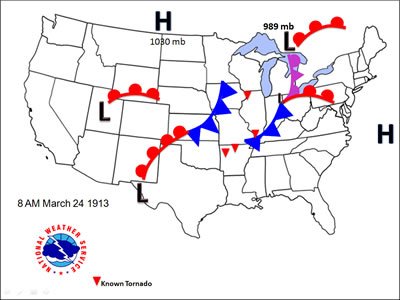
What type of front is over Ohio?
Warm front
Cold front
Occluded front
Stationary Front
What type of weather will you see along a cold front?
Thunderstorms
Sunny skies
Gentle rain
No weather

