
Font size
 Worksheets
Foundations of Pharmacology
Total questions: 98
Worksheet time: 49mins
What is the comprehensive study of drugs and their actions or effects on living organisms called?
Pharmacology
Pathology
Microbiology
Toxicology
The term 'pharmacology' originates from two Greek words. What does 'pharmakon' mean?
Study or science
Drug or medicine
Water or light
Stressor
The term 'pharmacology' originates from two Greek words. What does 'logos' mean?
A) Drug or medicine
B) Study or science
C) Light or heat
D) Stressor
Which therapeutic approach uses water, light, and heat for treatment?
Pharmacology
Physiotherapy
Psychotherapy
Biology
Which therapeutic approach identifies stressors and methods to reduce them?
Pharmacology
Physiotherapy
Psychotherapy
Biology
Which therapeutic method uses nutritional interventions to prevent, manage, or treat disease conditions, including specialized diets for diabetes, heart disease, and gastrointestinal disorders?
Diet Therapy
Physical Therapy
Radiation Therapy
Occupational Therapy
Which therapeutic method involves the use of pharmaceutical agents to treat, cure, prevent, or diagnose disease and represents the primary focus of pharmacology and nursing practice?
Drug Therapy
Physical Therapy
Radiation Therapy
Surgical Therapy
Which therapeutic method employs physical methods such as exercise, massage, heat, and cold to restore function and relieve symptoms?
Physiotherapy
Chemotherapy
Radiotherapy
Homeopathy
Which therapeutic method addresses mental and emotional disorders through verbal communication, behavioral techniques, and cognitive interventions?
Psychotherapy
Pharmacotherapy
Surgery
Radiation therapy
What is biologic therapy?
A) A type of surgery
B) A revolutionary class of drugs for autoimmune disorders
C) A form of physical therapy
D) A traditional small-molecule drug
Unlike traditional small-molecule drugs, biologic agents are ______ manufactured in living systems such as bacteria, yeast, or mammalian cells.
large, complex proteins
simple carbohydrates
small, inert molecules
synthetic polymers
Which of the following conditions can biologics help treat?
Rheumatoid arthritis
Crohn's disease
Psoriasis
Certain cancers
All of the above
Biologic agents include which of the following?
Monoclonal antibodies
Recombinant proteins
Gene therapies
All of the above
Biologics offer targeted therapy with potentially fewer side effects than traditional medications.
True
False
What does the chemical name of a drug describe?
The exact chemical composition of the drug molecule, including the precise placement of atoms and molecular groupings.
The brand under which the drug is sold.
The therapeutic use of the drug.
The company that manufactures the drug.
Which of the following is an example of a chemical name for acetaminophen?
Paracetamol
N-acetyl-para-aminophenol
Tylenol
Ibuprofen
The chemical name of a drug is rarely used in clinical practice due to its complexity.
True
False
According to the clinical note, why is it important for nurses to understand the existence of chemical names, even if they rarely use them in daily practice?
Understanding their existence helps appreciate the scientific foundation of pharmacology.
It allows nurses to prescribe medications independently.
It is required for nurses to memorize all chemical names for exams.
It helps nurses identify drug allergies more accurately.
What is the generic name of a drug?
The name registered by the manufacturer and always capitalized
The nonproprietary name assigned to a drug, not capitalized, and commonly used in hospital formularies, insurance plans, and clinical guidelines
The name listed by the FDA in official publications
The name followed by a trademark symbol
Which of the following is an example of a generic drug name?
Advil
Motrin
Ibuprofen
Tylenol
The official name of a drug is usually the same as the ________ name.
generic
brand
chemical
trade
What is the brand or trademark name of a drug?
The nonproprietary name assigned to a drug
The name listed by the FDA in official publications
The name registered by the manufacturer, always capitalized, and may have multiple names for the same generic drug
The name used in clinical guidelines
Advil and Motrin are both brand names for which generic drug?
Metformin
Lisinopril
Ibuprofen
Acetaminophen
Fill in the blank: The generic name of a drug is normally not _________
capitalized
abbreviated
italicized
pluralized
Which name(s) of a drug should the nurse use when teaching a patient about a new prescription?
Trade
Generic and trade
Generic and chemical
Official
What does Body System Classification refer to in drug classifications?
Groups drugs by the body system they affect, such as cardiovascular, gastrointestinal, respiratory, or nervous system medications.
Groups drugs by their chemical structure and molecular formula.
Groups drugs by their brand names and manufacturers.
Groups drugs by their dosage forms, such as tablets, capsules, or injections.
Which classification categorizes drugs by their therapeutic purpose or what condition they treat, such as antacids, antibiotics, antihypertensives, or analgesics?
Therapeutic Use or Clinical Indications
Chemical Structure
Mechanism of Action
Pharmacological Class
Physiologic or Chemical Action classifies drugs by how they work at the cellular or molecular level. Which of the following is an example of this classification?
Antacids
Calcium channel blockers
Analgesics
Antibiotics
Which category of drugs requires an order by a health professional licensed to prescribe drugs, such as physicians, nurse practitioners, or physician assistants?
Prescription Drugs
Nonprescription (OTC)
Illegal or Recreational
Biosimilar
Over-the-counter drugs are sold without a prescription.
True
False
Substances used for nontherapeutic purposes and obtained illegally are classified as ________.
Illegal or Recreational
Prescription
Over-the-counter
Therapeutic
A biologic product that is highly similar in structure and function to an existing FDA-approved biologic product is called a ________.
Biosimilar
Generic drug
Prodrug
Biologic agent
Which of the following is an example of a nonprescription (OTC) drug?
Acetaminophen
Meth
Biosimilar
Prescription Drug
Coke, meth, and marijuana are examples of which drug category?
Stimulants
Depressants
Hallucinogens
Opioids
What is the official public standards-setting authority for all prescription and over-the-counter medicines and other healthcare products manufactured or sold in the United States?
The United States Pharmacopeia (USP)/National Formulary (NF)
Food and Drug Administration (FDA)
Centers for Disease Control and Prevention (CDC)
World Health Organization (WHO)
Which resource provides standardized drug nomenclature for clear communication across healthcare settings?
USP Dictionary of USAN and International Drug Names
Physicians' Desk Reference
Merck Manual
Gray's Anatomy
Which clinical practice resource provides detailed prescribing information by manufacturers?
Package inserts
Clinical guidelines
Textbooks
Review articles
Which clinical practice resource offers evidence-based articles on drug therapy and medication management?
Nursing journals
Travel magazines
Cooking blogs
Sports news websites
Which clinical practice resource is rapidly updated and easily searchable for drug information systems?
Electronic databases
Printed textbooks
Manual logbooks
Paper charts
Nurses should utilize multiple reliable sources when seeking drug information to ensure safe medication administration and comprehensive patient education.
True
False
Which of the following is a comprehensive database of nursing and allied health journals providing evidence-based information for clinical practice?
Lexicomp
CINAHL
ePocrates
DailyMed
Which drug information database is widely used in hospitals and offers detailed monographs, drug interactions, dosing calculators, and patient education materials in multiple languages?
Lexicomp
CINAHL
ePocrates
DailyMed
Which mobile-friendly drug reference tool is popular among healthcare providers and features drug information, interaction checker, pill identifier, and clinical practice guidelines?
Lexicomp
CINAHL
ePocrates
DailyMed
Which free online resource from the National Library of Medicine provides access to FDA-approved drug labeling and package inserts in standardized format?
Lexicomp
CINAHL
ePocrates
DailyMed

Which source of information is best for the nurse to obtain drug information?
A. Physicians' Desk Reference (PDR)
B. Nursing journals
C. United States Pharmacopeia (USP) and National Formulary (NF)
D. Electronic databases
According to the Federal Food, Drug, and Cosmetic Act (1938, 1951, 1962), what must manufacturers prove before marketing a drug?
Drug safety only
Drug efficacy only
Drug safety and efficacy
Drug price
Which act established five classifications or schedules for controlled substances based on abuse potential and accepted medical use?
Federal Food, Drug, and Cosmetic Act
Controlled Substances Act (1970)
Pure Food and Drug Act
Drug Enforcement Act
Schedule I drugs have high abuse potential and no accepted medical use. Which of the following is a Schedule I drug?
Heroin
Tylenol 3
Valium
Lyrica
Schedule II drugs have high abuse potential and accepted medical use with severe restrictions. Which of the following is a Schedule II drug?
Lyrica
Morphine
Valium
Tylenol 3
Schedule III drugs have moderate to low abuse potential. Which of the following is a Schedule III drug? Select the correct answer.
Tylenol 3
Heroin
Lyrica
Valium
Fill in the blank: Schedule IV drugs have ______ abuse potential and include drugs such as Valium and Fetonal.
low
high
moderate
no
Fill in the blank: The drug Lyrica is classified as a Schedule ___ drug, which has the lowest abuse potential.
V (five)
I (one)
II (two)
III (three)
Which entity is responsible for monitoring drug safety in the United States?
Drug Enforcement Agency (DEA)
Department of Justice (DOJ)
U.S. Food and Drug Administration (FDA)
World Health Organization (WHO)
Which drug schedule indicates drugs with the highest risk for abuse?
Schedule I
Schedule II
Schedule III
Schedule IV
Schedule V
Specific requirements must be met to prescribe, dispense, and administer scheduled medications, including: ________ (Fill in the blank: What is required to legally handle scheduled medications?)
Valid DEA registration number
State-issued driver’s license
Hospital employee ID badge
Proof of malpractice insurance
Specific requirements must be met to prescribe, dispense, and administer scheduled medications, including: ________ (Fill in the blank: What is required for proper documentation?)
Proper documentation and record-keeping
Verbal instructions only
Patient self-reporting
No documentation required
Specific requirements must be met to prescribe, dispense, and administer scheduled medications, including: ________ (Fill in the blank: What is required for secure storage?)
Secure storage in locked cabinets or automated dispensing systems
Storage in open shelves accessible to all staff
Keeping medications in patient rooms for convenience
Storing medications in unlocked drawers
Specific requirements must be met to prescribe, dispense, and administer scheduled medications, including: ________ (Fill in the blank: What is required for inventory management?)
Regular inventory counts and reconciliation
Annual staff parties
Patient satisfaction surveys
Weekly marketing meetings
Specific requirements must be met to prescribe, dispense, and administer scheduled medications, including: ________ (Fill in the blank: What is required for reporting?)
Reporting of discrepancies or losses
Reporting of patient allergies
Reporting of medication expiration dates
Reporting of prescription refills
Hospital controls: Healthcare facilities implement strict inventory and dispersion control records for all controlled substances. These systems typically include automated dispensing cabinets with user identification, witness requirements for disposal, and comprehensive audit trails. Which of the following is NOT typically included in hospital controls for controlled substances?
Automated dispensing cabinets with user identification
Witness requirements for disposal
Comprehensive audit trails
Unrestricted access to medication cabinets
Which of the following is a critical nursing responsibility regarding controlled substances?
A) Nurses may keep controlled substances for personal use
B) Nurses may possess controlled substances only if properly prescribed to them
C) Nurses may borrow medications between patients
D) Nurses may carry controlled substances on their person
What are the possible consequences of diverting controlled substances?
Criminal prosecution
Loss of licensure
Potential imprisonment
All of the above
Fill in the blank: Any controlled substance removed from secure storage must be immediately administered, wasted with a witness, or returned to ________.
secure storage
the pharmacy
the nurse's station
the medication cart
the supervisor
Which entities help enforce drug legislation and maintain public safety?
FDA
DEA
State boards of pharmacy and nursing
All of the above
Which of the following is the first stage in the FDA drug approval process?
Clinical Research & Development
Preclinical Research & Development
New Drug Application (NDA) Review
Postmarketing Surveillance
Fill in the blank: The average time for Preclinical Research & Development is ________ months.
18
6
36
48
Which stage of the FDA drug approval process involves three phases of human trials to assess safety, dosing, efficacy, and side effects?
Preclinical Research & Development
Clinical Research & Development
New Drug Application (NDA) Review
Postmarketing Surveillance
Postmarketing Surveillance involves ongoing monitoring to identify rare or long-term adverse effects after drug approval.
True
False
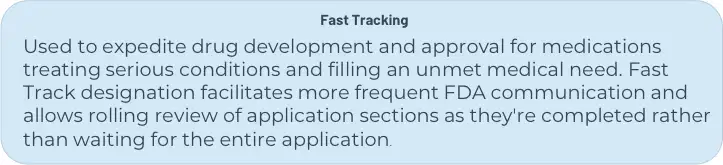
What is the purpose of the FDA's Fast Tracking program?
To delay drug approval for safety reasons
To expedite drug development and approval for medications treating serious conditions and filling an unmet medical need
To restrict access to investigational drugs
To eliminate the need for FDA communication
Parallel Tracking is used for patients with life-threatening illnesses who cannot participate in controlled clinical trials and have no other treatment alternatives.
True
False
What is a black box warning?
The least serious type of warning the FDA can require on a drug label
The most serious type of warning the FDA can require on a drug label
A warning that only applies to over-the-counter drugs
A warning that means the drug should never be used
Fill in the blank: An example of a drug with a black box warning mentioned in the worksheet is _________.
warfarin
acetaminophen
amoxicillin
ibuprofen
True or False: Black box warnings mean the drug should be avoided completely.
True
False
According to the worksheet, what is the probability that a drug will acquire a new black box warning or be withdrawn from the market within 25 years of being released?
5%
10%
20%
50%
According to the National Organization for Rare Disorders (NORD), approximately how many rare health conditions affect Americans?
1,000
6,000
20,000
200,000
A disease is considered rare if it affects fewer than how many people in the United States?
200,000
500,000
50,000
1,000,000
What are orphan drugs?
Medicines for common diseases
Medicines developed specifically for rare diseases or conditions
Over-the-counter drugs
Herbal supplements
Which of the following is NOT an incentive provided by the Orphan Drug Act of 1983?
Tax credits for clinical research expenses
FDA fee waivers for regulatory submissions
Free healthcare for all patients
Grant funding for clinical trials
Fill in the blank: The Orphan Drug Act of 1983 provides seven years of _______ after approval for orphan drugs.
marketing exclusivity
patent protection
clinical trials
tax incentives
Since the passage of the Orphan Drug Act, hundreds of orphan drugs have been approved, improving outcomes for patients with rare diseases.
True
False
How many years on average does it take for a drug to be brought to market from the time of its conception?
2 to 3 years
4 to 7 years
8 to 15 years
12 to 18 years
What are drug receptors? Fill in the blank: Drug receptors are _________.
Specific sites on cells where drugs form chemical bonds, typically proteins on cell surfaces or within cells that recognize and bind specific drug molecules.
Enzymes that break down drugs in the liver.
Hormones released in response to drug intake.
Cells that transport drugs throughout the body.
What is pharmacodynamics? Fill in the blank:
The study of interactions between drugs and their receptors, including the series of biochemical and physiologic events that result in a pharmacologic response. This explains what the drug does to the body.
The study of how the body absorbs, distributes, metabolizes, and excretes drugs.
The study of genetic variations that influence individual responses to drugs.
The process of drug formulation and compounding in a laboratory setting.
Which of the following is an example of an agonist?
Naloxone blocks opioid receptors to reverse morphine overdose.
Morphine binds to opioid receptors to relieve pain.
Drug receptors are proteins on cell surfaces.
Pharmacodynamics is the study of drug interactions.
Which of the following is an example of an antagonist?
Morphine binds to opioid receptors to relieve pain.
Naloxone blocks opioid receptors to reverse morphine overdose.
Drug receptors are proteins on cell surfaces.
Pharmacodynamics is the study of drug interactions.
What does an agonist drug do?
Binds to the receptor and causes an action
Blocks the receptor
Destroys the receptor
Has no effect on the receptor
Fill in the blank: An agonist drug binds to the _______ and causes an action.
receptor
enzyme
hormone
membrane

According to the key, what does the lock represent?
receptor
enzyme
substrate
hormone
What is the most common and convenient route of drug administration via the gastrointestinal tract?
Oral (PO)
Intravenous (IV)
Subcutaneous (SC)
Inhalation
Which enteral route is useful when the oral route is unavailable?
Rectal (PR)
Intravenous (IV)
Subcutaneous (SC)
Inhalational
For patients unable to swallow, which enteral route is used for drug administration?
Nasogastric tube (NG)
Intravenous injection
Transdermal patch
Sublingual tablet
Drugs administered via the enteral route must survive the _______ and first-pass liver metabolism.
acidic stomach environment
alkaline intestinal environment
neutral blood pH
basic oral cavity
Which parenteral route involves injection under the skin?
Subcutaneous (SubQ)
Intramuscular (IM)
Intravenous (IV)
Intradermal (ID)
Which parenteral route involves injection into muscle tissue?
Intramuscular (IM)
Subcutaneous (SC)
Intravenous (IV)
Intradermal (ID)
Which parenteral route delivers drugs directly into the bloodstream?
Intravenous (IV)
Intramuscular (IM)
Subcutaneous (SC)
Intradermal (ID)
Parenteral route is useful for drugs destroyed by _______.
stomach acid
liver enzymes
intestinal bacteria
pancreatic juice
Which percutaneous route involves breathing the drug into the lungs?
Inhalation
Transdermal
Subcutaneous
Intramuscular
Which percutaneous route involves placing the drug under the tongue?
Sublingual (SL)
Buccal
Transdermal
Intranasal

