
 Worksheets
Review Periodic table, Isotopes, Ions.
Total questions: 70
Worksheet time: 23mins
Elements are arranged in decreasing order of atomic numbers in the Periodic Table.
T
F
The group number of an atom is equal to the number of outermost shell electrons in the atom.
T
F
Group VII elements are known as noble gases.
T
F

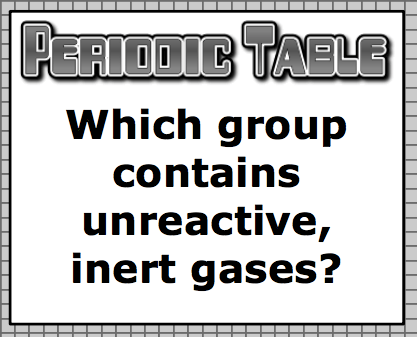
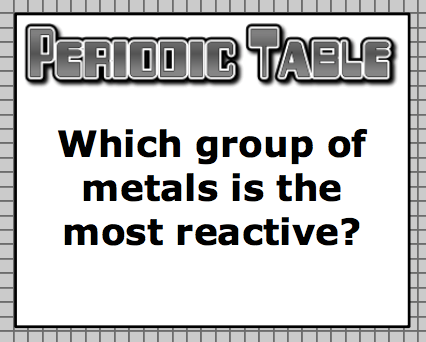
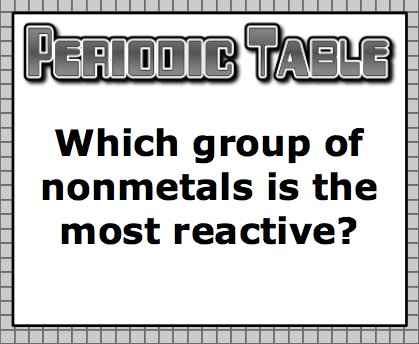
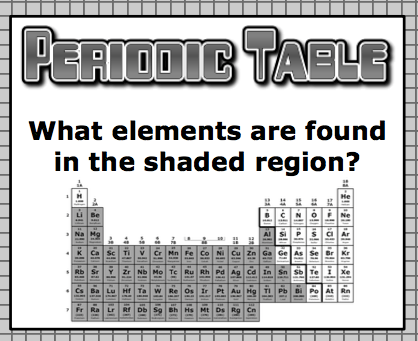

Select all the ions
Na+
Ba
Po
At-
Fr+
Magnesium has an atomic number of 12 and is in group 2. As a magnesium ion, what is its charge?
2+
+
-
2-

Which element has the highest electronegativity?

According to Coulomb's Law, when the distance increases, the electrostatic force ____________; we call this relationship ____________ proportional.
decreases; directly
decreases; inversely
increases; inversely
increases; directly
Coulomb’s law states that the force between two charged objects will __________ when the magnitude (value) of the object’s charge increases.
increase
decrease
stay the same
first increase, then decrease
Select all answer that apply:
What kinds of particles do Coulomb's Law apply to?
electrons
protons
neutrons
neutral atoms
A repulsive force exists between which two particles?
Two neutrons
An electron and a neutron
An electron and a proton
Two protons
An attractive force exists between which two particles?
Two neutrons
An electron and a neutron
An electron and a proton
Two electrons
What does "r" measure?
the distance between the two charged objects
the amount of charge carried by the objects
the amount of force between two charged objects
the constant value for forces between the objects
Potassium-39 has how many neutrons?
19
18
20
21
Isotopes of an element have a different number of...
Protons
Neutrons
Electrons
Mass
76 protons and 114 neutrons
Osmium-114
Osmium-76
Osmium-190
Osmium-190.23
How do you calculate mass number?
Mass x percent
Protons + Electrons
Protons + Neutrons
Neutrons + Protons + Electrons
How many electrons would a Nitrogen ion gain/lose? If it has 5 valence electrons.
lose 5
gain 5
lose 3
gain 3
What is the ion formed from Sulfur? If it has 6 valence electrons.
S+2
S-2
S+6
S-6
A Bromine ion gains 1 electron, which of the following is the correct symbol for a Bromine ion?
Br-1
Br+1
Br+7
Br-7


Which of the following is the electronic configuration for Mg2+ ion?
1s2 2s2 2p6
1s2 2s2 2p6 3s2 3p6
1s2 2s2 2p6 3s2 3p2
1s2 2s2 2p6 3s2
What is the electronic configuration for Phosphorus atom ?
1s22s22p63s23p3
1s22s22p63s23p5
1s22s22p3
1s22s22p63s2
Which one of the following contains no unpaired electrons in the ground state?
Be
F
Si
N
The number of electrons in the 3d orbital of the atom of atomic number 27 is
5
6
7
10

Which of the following statements regarding electronic orbitals is/are correct?
Each p-orbital can hold a maximum of six electrons.
The 3p-orbitals have a higher energy level than the 3s-orbital.
The three 3p-orbitals have slightly different energy levels.
The 1s-orbital has the same size and shape as the 2s-orbital.
What is the Aufbau principle?
Within an energy level, s orbitals are the lowest energy, followed by p, d and then f. F orbitals are the highest energy for that level.
The lower the principal quantum number (n) the lower the energy.
All three.
The Aufbau Principle states that electrons enter the lowest energy orbitals first.

State the valence electronic configuration for Mg (Z=12)
3s2
3s2 3p1
3s2 3p3
3s2 3p4
Determine the element that has valence electron 3s23p1
(Z of Na = 11, Al = 13, Cl = 17, Mg = 12)
Na
Al
Cl
Mg

