
 Worksheets
Stage 9 Science Unit: 3 & 4 Review quiz
Total questions: 90
Worksheet time: 1hrs 10mins
Look at the densities of these materials:
pine wood 0.41 g/cm3
polycarbonate 1.2 g/cm3
polyethene 0.95 g/cm3
water 1.0 g/cm3
Which of these materials will sink in water?
pine wood
polycarbonate
polyethene
A block of aluminium has a volume of 5.0 cm3 and a mass of 13.5 g. Calculate the density of the aluminium. Give your answer in g/cm3.
2.7
0.37
67.5
6.75

The block of wood in the diagram has a mass of 59 g. Calculate the density of the wood.
7.38
0.82
2.46
1.22
Silver has a density of 10.5 g/cm3 . Calculate the mass of silver that has a volume of 20 cm3.
1.90 g
0.525 g
210 g
Lead has a density of 11.3 g/cm3.
Calculate the volume of lead that has a mass of 6.0 g.
0.53 cm3
1.88 cm3
67.8 cm3

The irregular rock in the diagram has a mass of 65 g.
Calculate the density of the rock. (1 ml = 1 cm3)
2.6 g/cm3
0.38 g/cm3
16.25 g/cm3

The densities of diesel, water and gasoline are 860, 1000 and 725 in kg/m3 respectively.
So, A is (a) , B is (b) and C is (c) .

What is the property of the gas in balloon needed to make the balloon float in air?
Choose 2 answers.
The gas must be less dense than air.
The average density of the balloon, the string and the gas is less than that of air.
The balloon must exceed a certain minimum size.
The temperature of the surroundings must not be too law.
It is cooler in the early morning and late evening, so the surrounding air will be (a) ; the difference in density between the hot air balloon and the surrounding air will be (b) ; the hot air balloon will float more (c) .

How does the thermal energy of the liquid in the larger beaker compare to the thermal energy of the liquid in the smaller beaker but same temperature?
The liquid in the larger beaker has less thermal energy than the liquid in the smaller beaker.
The liquid in the larger beaker has more thermal energy than the liquid in the smaller beaker.
The liquid in the larger beaker has the same amount of thermal energy as the liquid in the smaller beaker.
The exact volume of the liquid in each beaker must be known to compare the thermal energy of the liquids.
Which description defines heat?
total thermal energy of an object or substance
change in the temperature of a substance in degrees Celsius
energy transferred between objects at different temperatures
average kinetic energy of the particles that make up a substance

Which cup contains more heat?
Cup B
Cup C

Which cup contains more heat?
Cup A
Cup B
______________ is the measurement of degree of hotness or coldness of a body.
Heat
Temperatue
Latent Heat
Specific heat
Heat and Temperature are the same thing
True
False
Which sentence explains why a cold metal spoon placed in a pot of boiling water becomes hot?
Thermal energy is transferred from the spoon to the water.
Thermal energy is transferred from the water to the spoon.
Thermal energy in the water is transformed into kinetic energy in the spoon.
Thermal energy in the spoon is transformed into kinetic energy in the water.

What is the SI unit for heat?
Calorie
Joule
Celsius
Kelvin
What is the lowest possible temperature?
0 C
0 K
0 F
100 C
As the kinetic energy of the molecules in a substance increases, the temperature of the substance __________.
increases
decreases
stays unchanged
If an object has particles that are moving very slowly, the temperature of the object is probably ______.
high
low

_________________________ is a measure of the average kinetic energy of the particles in a substance.
Thermal
Friction
Temperature
Expansion

The _______________ is transformed into electrical energy inside the battery.
chemical energy
sound energy
kinetic energy
potential energy

Steam is an example of _____________energy.
light
thermal
sound
electrical

What is energy measured in?
Joules
Newton
Watts
Voltage

waste energy is said to be..
Dissipated
Dispersed
Shed
Released
Energy is never created or destroyed. It is only converted from one form to another form.
Law of Conservation of Mass
Law of Conservation of Energy
Law of Conservation of Matter
Thermal energy moves from (a) places to (b) places.
Zara takes ice cream out of the freezer. The temperature of the ice cream is -18 0C when he first take it from the freezer. The temperature of the air in the room is 22 0C. The temperature of the ice cream will (a) as thermal energy will move from the (b) to the (c) .

The diagram shows a car engine. The engine block gets hot. Cold water enters the engine block through the bottom hose. Thermal energy moves from the (a) to the (b) ; heat from the engine is (c) into the water.

Hot water comes out of the engine through the top hose and passes through the radiator. Thermal energy from the hot water is dissipated into the (a) around the radiator as it is at (b) temperature than the hot water.

You feel cold when you holding a piece of ice because ...........
thermal energy transfers away from your hand into the ice.
cold moves from ice into your hand.
Cold means there is low (a) and (b) temperature, but cold is not an energy (c) and cold cannot (d) .
The rate or speed of thermal energy transfer is ...................... when the temperature difference between the hot place and cold place decreases.
faster
slower
the same
Energy is always (a) , so the thermal energy has not been created or (b) , it has just (c) to a different place.
Thermal energy causes a liquid or gas to expand so that hotter parts of the liquid or gas rise, and the cooler parts sink.
convection
Thermal energy is transferred but does not require matter to travel through.
radiation
Thermal energy passes through a substance from particle to particle.
conduction
The three states of matter are solids, liquids and gases. List the three states in order so the best conductor is first and the worst conductor is last.
(a) (b) (c)
List the three states in order so the best substance for convection is first and the worst is last.
(a) (b) (c)

The electric kettle heats up the water at the bottom. Name the process by which the hotter water moves around the kettle.
(a)
The electric heater gets hot, heat is transferred from the heater to the water by (a) , particles in water around the heater vibrate more vigorously and take up more space, water around the heater (b) and become (c) , this hotter water (d) to the top of the tank, cooler water moves to the bottom of the heater to replace the water that has risen; this sets up a (e) that heats all the water.
There are ways that thermal energy can be transferred from one place to another. Which two of these ways cannot occur in a vacuum.
Conduction
Convection
Radiation
(a) occurs best in solids because the particles in solid are (b) together to transferred the thermal energy from vibration.
Convection cannot occur in a (a) because the particles are not free to move.
If an object that is hotter than its surroundings needs to lose heat quickly, it should have a (a) and (b) surface because such a surface is a good emitter of radiation.
To reduce heat loss by radiation from an object that is hotter than its surroundings, the object should have a (a) and (b) surface because such a surface is a poor emitter of radiation.
Students in tropical countries wear white school uniform because white surface is a (a) and (b) of radiation.
Solar panels have (a) surfaces to absorb more radiation from the Sun.
Evaporation takes place at any temperature
True
False
Evaporation happens
throughout the liquid
at the surface of a liquid
What effect does Evaporation cause ?
Heating Effect
Magnetic Effect
Cooling Effect
Warming Effect
Evaporation occurs at the surface while boiling takes place all through a liquid
True
False

Which can occur at any temperature?
Boiling
Evaporation
Both
What factors affect the rate of evaporation?
Temperature only
Temperature and Wind only
Temperature, Wind and Exposed Surface Area
None of the above

Select the correct term for the following definition:
"The water transport system in plants."
Villi
Bronchi
Bolus
Xylem
What is the main purpose of root hairs in plants?
To provide structural support for the roots
To absorb water and minerals from the soil
To store food and nutrients for the plant
To release oxygen into the soil
Where do root hairs grow on the plant?
On the leaves
On the stem
On the flowers
On the surface of the roots
How do root hairs increase the surface area for water absorption?
By increasing the number of roots
By growing deeper into the soil
By being very tiny, numerous cells
By having a waxy coating to repel water
What is the main function of the xylem vessels in the plant?
To transport water and minerals from the roots to the leaves
To store food and nutrients for the plant
To provide structural support for the plant
To release oxygen into the air
How do xylem vessels transport water upwards in the plant?
They use cellular respiration to pump the water up
They have hollow, tube-like structures that allow unimpeded flow
They rely on the root hairs to actively push the water up
They create a suction force to pull the water up
What is the main role of the cell wall and cell membrane in the root hair cells?
To provide protection and structure
To allow water and minerals to move in and out
To store food and energy for the plant
To communicate with other root cells
What happens to the water and minerals after they enter the root hair cells?
They are stored in the root hair cells
They move towards the xylem vessels in the center of the root
They are immediately transported to the leaves
They are used to produce food for the plant
Why are the spaces between soil particles important for water absorption?
They allow air to circulate around the roots
They provide a pathway for the root hairs to grow
They store water and minerals for the plant to use
They prevent the soil from becoming too compacted
What is the diameter of a typical xylem vessel?
About 0.5mm
About 0.05mm
About 5mm
There is a range of xylem vessel diameters
How do xylem vessels differ from living plant cells?
Xylem vessels have no cytoplasm or nucleus
Xylem vessels are located in the roots only
Xylem vessels are made of lignin and cellulose
Xylem vessels are capable of photosynthesis
Where are xylem vessels found in the plant?
Only in the roots
Only in the stems
In both the roots and stems
Xylem vessels are not found in plants
How do the xylem vessels work together to transport water?
They are stacked on top of each other, creating a continuous tube
They have valves that pump the water up the plant
They use capillary action to draw the water upwards
They are connected by a network of smaller vessels
Xylem tubes are made of...
Dead cells
Living cells
Xylem tubes transport..
Water
Mineral ions
Food substances (e.g. sucrose)
Which process are the xylem tubes part of?
Translocation
Transpiration
The rate of transpiration decreases with
high temperature
high water content of leaf
closure of stomata
intensity of sunlight
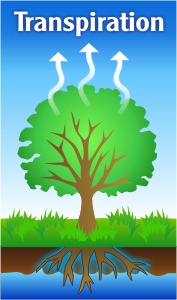
Transpiration is the process in which ______________.
water moves through a plant and is later evaporated from the roots
water moves through a plant and is later evaporated from the leaves
mineral salts enter the roots
none of the above

Remember when you put the celery in the water? What happened to the water level by the next day?
The level dropped A LOT, because the celery sucked it up.
The level stayed the same, because the celery was dead.
The level dropped a little, because of evaporation.
What is significance of transpiration
Creates suction force
Helps in distribution of water and nutrients
Cooling effect for plants
All of the above

Select all of the environmental factors that would increase transpiration.
Increased humidity
Increased wind speed
Increased temperature
Decreased surface area

A
B
C
D

A
B
C
D

A
B
C
D

A
B
C
D

A
B
C
D

A
B
C
D

A
B
C
D

