
Font size
 Worksheets
Biology First Semester Final Exam Review part 1 2025
Total questions: 90
Worksheet time: 45mins
What happens to a cell that contains mistakes in its DNA?
It always dies immediately.
The mistakes are always repaired by the cell's DNA repair mechanisms.
It may repair errors or undergo apoptosis.
The cell becomes a stem cell.
What is the main purpose of cell specialization in multicellular organisms?
To ensure all cells look the same.
To allow organisms to grow larger.
To perform specific tasks efficiently.
To make cells resistant to disease.
Stem cells are important because they...
Are already specialized for specific functions.
Can divide and become specialized cells.
Die quickly after dividing.
Only exist in adults.
What is the difference between embryonic stem cells and adult stem cells?
Embryonic stem cells can become any cell type, while adult stem cells have limited differentiation.
Adult stem cells can become any cell type, while embryonic stem cells are limited.
Embryonic stem cells cannot divide.
Adult stem cells are only found in the brain.
Cancer is best described as...
The formation of specialized cells.
The uncontrolled division of abnormal cells.
The shrinking of healthy tissues.
Cells growing slower than usual.
Metastasis occurs when...
Cancer cells remain in one location.
Cancer cells spread to other parts of the body.
Tumors shrink without treatment.
Cells become specialized for their function.
Which of the following treatments targets rapidly dividing cells?
Antibiotics
Chemotherapy
Vaccines
Antihistamines
Which of the following is a method to reduce the risk of cancer?
Avoiding tobacco
Eating a balanced diet
Protecting skin from UV rays
All of the above
Which phase of the cell cycle is the longest?
interphase
G1 phase
metaphase
cytokinesis
What happens during the S phase of the cell cycle?
Cell growth
DNA replication
Protein synthesis
Cell division
What is the main purpose of mitosis?
Production of gametes
Growth and replacement of damaged cells
Genetic variation
Energy production
How many daughter cells are produced at the end of mitosis?
2 identical daughter cells
4 identical daughter cells
8 identical daughter cells
1 identical daughter cells
Which type of cells undergo mitosis?
Gametes
Somatic cells
Sperm cells
Egg cells
What are sister chromatids?
Different chromosomes in a pair
Identical copies of a chromosome
Proteins that help spindle fibers
Two different copies of a cell
What happens if a cell fails a checkpoint?
It continues dividing
It enters apoptosis or corrects the issue
It skips to the next phase
It undergoes cytokinesis
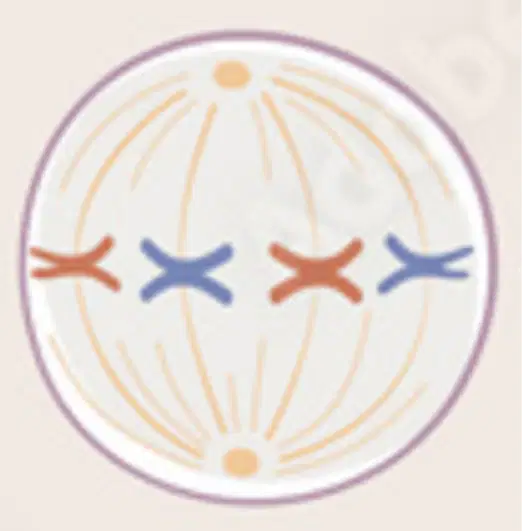
Identify the phase
prophase
metaphase
anaphase
telophase
cytokinesis
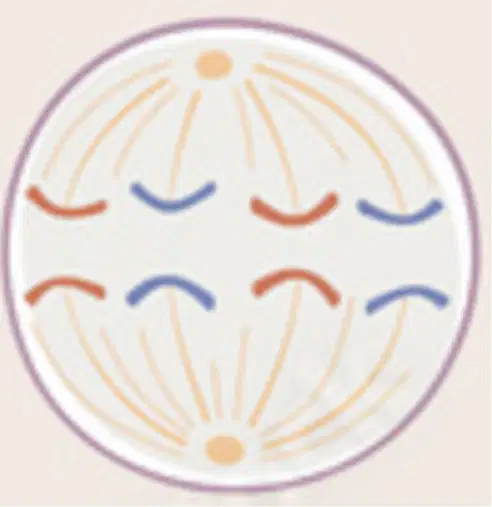
Identify the phase. Mark only one oval.
prophase
metaphase
anaphase
telophase
cytokinesis
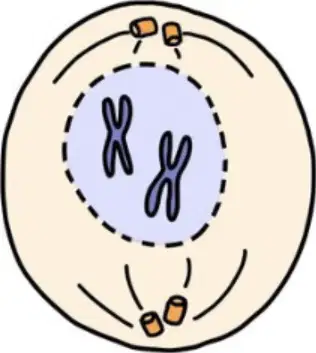
Identify the phase. Mark only one oval.
prophase
metaphase
anaphase
telophase
cytokinesis
How many chromosomes do normal human blood cells contain? Mark only one oval.
46
23
2
1
What is the shape of a DNA molecule?
Single stranded molecule
Triple helix
Double helix
Linear chain
What are the complementary base pairs in DNA?
Adenine pairs with Guanine, Cytosine pairs with Thymine
Adenine pairs with Thymine, Cytosine pairs with Guanine
Adenine pairs with Cytosine, Guanine pairs with Thymine
Adenine pairs with Uracil, Cytosine pairs with Thymine
What is the first stage of cellular respiration called?
Krebs cycle
Electron transport chain
Glycolysis
Fermentation
Where does Photosynthesis take place in a plant cell?
Nucleus
Chloroplast
cytoplasm
mitochondria
Which of the following is the correct equation for PHOTOSYNTHESIS?
glucose + oxygen --> water + carbon dioxide + light
carbon dioxide + water + light --> oxygen + glucose
oxygen + water + light --> carbon dioxide + glucose
carbon dioxide + glucose + water --> oxygen + light
The overall goal of cellular respiration is to make
water
glucose
ATP
oxygen
What is the primary purpose of lactic acid fermentation in cells?
To produce oxygen for cellular respiration
To generate energy (ATP) when oxygen is not available
To break down fatty acids for energy
To release carbon dioxide during aerobic respiration
Identify the second stage of cellular respiration.
ETC
Calvin cycle
Kreb's cycle
Glycolysis
Identify the process that releases energy by breaking down food molecules in the presence of oxygen.
glycolysis
cellular respiration
photosynthesis
pH scale
Which of the following processes produces the most ATP?
aerobic respiration
photosynthesis
glycolysis
anaerobic respiration
Where does aerobic respiration take place?
ribosome
mitochondria
nucleus
cytoplasm
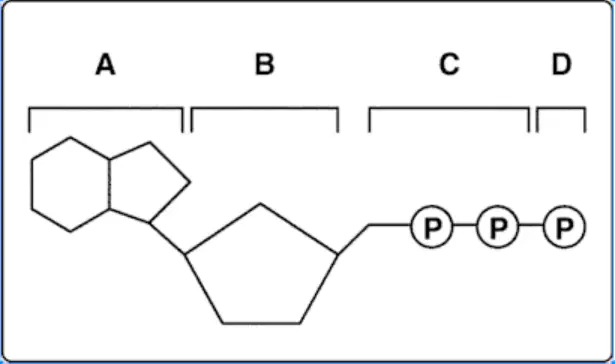
Between which parts of the molecule must the bonds be broken to form an ADP molecule?
A and B
A and C
B and C
C and D
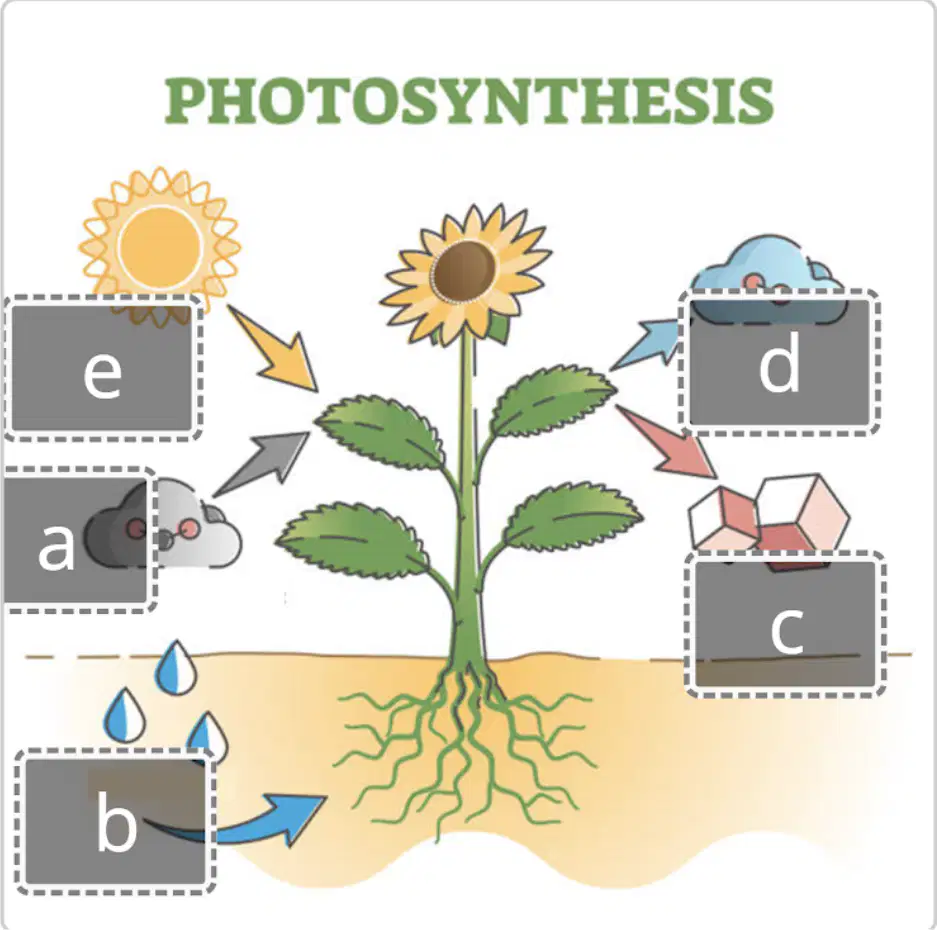
Match each label to the correct term:
sunlight
glucose
CO2
O2
glucose
CO2
O2
H2O
H2O
sunlight
Which is the main function of the plant roots?
reproduction
supports the plant
absorbs water and mineral salts from the soil
protection from herbivoires
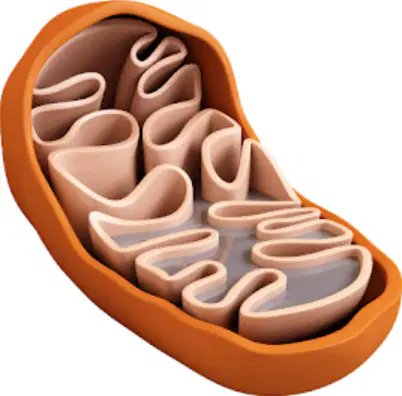
Identify the organelle is presented in this image.
Mitochondria
Chloroplast
Nucleus
Golgi Apparatus
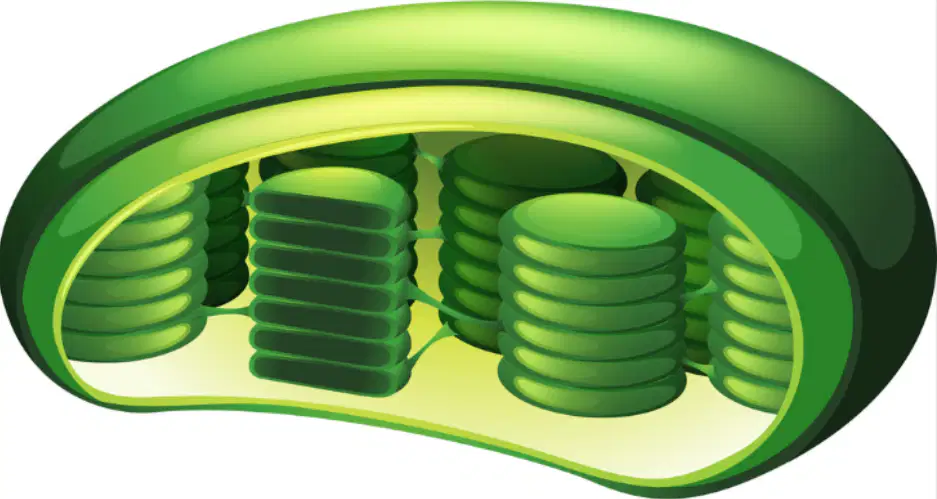
Identify the organelle is presented in this image.
Mitochondria
Chloroplast
Nucleus
Golgi Apparatus
Which of the following is the main difference between prokaryotic and eukaryotic cells.
Prokaryotic cells do not have a nucleus, while eukaryotic cells do.
Prokaryotic cells are typically larger in size than eukaryotic cells.
Prokaryotic cells typically have a higher amount & variety of organelles than eukaryotic cells.
Prokaryotic cells do not have cell walls, while eukaryotic cells do.
Greenhouse gases have environmental impacts on marine ecosystems. Which environmental impact is not a result of greenhouse gases?
Global Warming
Sea levels rising due to melting glaciers
Cooling of ocean waters
Coral bleaching due to acidified oceans
Without the greenhouse effect, Earth would be
Unchanged in its ability to house life on the planet
Warmer but livable
Colder and uninhabitable
Warmer and uninhabitable
Forest clearing, farming, and road building are all examples of:
Biodiversity
Population distribution
Habitat loss
Climate change
What factors most influence an individual's ecological footprint?
Income level, amount of education, and distance traveled daily.
Type of food consumed, energy usage, transportation choices, and waste production.
Water consumption, soil quality, and number of pets owned.
Number of family members, social status, and type of employment.
An endangered species is:
A species that has not been spotted after many years
A species whose numbers are so small, that it is at risk of extinction
A species whose population has many naturally occurring illnesses
A species that has been newly introduced in a foreign ecosystem
Which of the following is the law that is designed to protect plant & animal species?
The Biome Protection Act
The Habitat & Biodiversity Preservation Act
The Endangered Species Act
The C.I.T.I.E.S. Law
Which one of the following does not add carbon dioxide into the atmosphere?
Cooking with a gas stove
Burning a campfire
Planting Trees
Riding a bus
Why is the increase of greenhouse gases a big issue?
It causes climate change & increases global temperatures
It encourages more factories to be made throughout the world
It encourages more greenhouses to be constructed throughout the world
It causes a major decrease in biomagnification
Removing too many of a single species from the environment in a short period of time is problematic for all of the following reasons, except:
It threatens the biodiversity of the ecosystem
Removing one species directly impacts other species also
It can lead to the species becoming endangered
It can cause the species' population to increase unexpectedly
Which of the following is a consequence of ozone layer depletion?
Increased biodiversity
Increased amount of ultraviolet (UV) radiation on Earth
Decreased skin cancer rates
Decreased rates of adult-onset blindness
The term applied to a species where its members can no longer be found living is:
Threatened
Extinct
Endangered
Invasive
Which of the following is an example of a human activity that causes a species population to dramatically decrease?
Conservation efforts
Promoting wildlife preservations
Sustainable fishing
Habitat fragmentation
Which of the following statements about the Endangered Species Act of 1973 is false?
It grants federal protection for endangered species
It grants federal protection for ALL species; regardless of conservation status
It gives the federal government authority to prosecute individuals that negatively impact the status of a protected species
It grants the federal government the authority to dedicate certain parts of the country as protected territory.
Which of the following is the main mission of the Environmental Protection Agency (EPA)?
To protect human health and ecosystems around the nation.
To increase sources of pollution & mining of nonrenewable resources.
To reduce biodiversity by promoting the construction of multiple factories.
To pass laws for large corporations to overharvest Earth's natural resources.
Which of the following would be an example of a nonrenewable resource?
Solar Panels
Wind Turbines
Natural Gas
Hydropower
Which of the following best describes the difference between a renewable resource and a nonrenewable resource?
Renewable resources can be replenished, while nonrenewable resources cannot.
Renewable resources are man-made, while nonrenewable resources occur naturally.
Renewable resources are always found on the Earth's surface, while nonrenewable resources are found underground.
Renewable resources have a higher environmental impact compared to nonrenewable resources.
Which of the following best describes the interaction between invasive species and native species?
Invasive species have no impact on native species.
Invasive species coexist peacefully with native species.
Invasive species outcompete and negatively affect native species.
Native species benefit and thrive in the presence of invasive species.
Which of the following levels of organizations in ecology is arranged in the CORRECT sequence from most specific to most broad?
species, population, community, ecosystem, biosphere
biosphere, ecosystem, community, population, species
population, community, species, biosphere, ecosystem
species, community, ecosystem, population, biosphere
Which of the following describes a benefit of biodiversity to an ecosystem?
DECREASES the energy flow through the ecosystem.
INCREASES the maximum number of trophic levels.
INCREASES the maximum biomass of the ecosystem.
Allows the ecosystem the stability to withstand environmental changes.
Which data is most useful for analyzing the climate of a region?
The temperature of that region today
The highest and the lowest daily rainfall in only July of this year
The daily high temperature for every day in July of this year
Average temperatures for July measured over the course of the past 50 years
A heron is a bird whose survivability is affected by many factors in its environment. What distinguishes the biotic from the abiotic factors?
Location in the water vs out of the water
Plant vs animal
Living vs nonliving
Food vs not food
If 1,000 J of energy is captured by primary producers in an ecosystem, how much energy would typically be passed on to the consumer at the next level of the food web for that ecosystem?
1,100 J of energy
1,000 J of energy
100 J of energy
10 J of energy
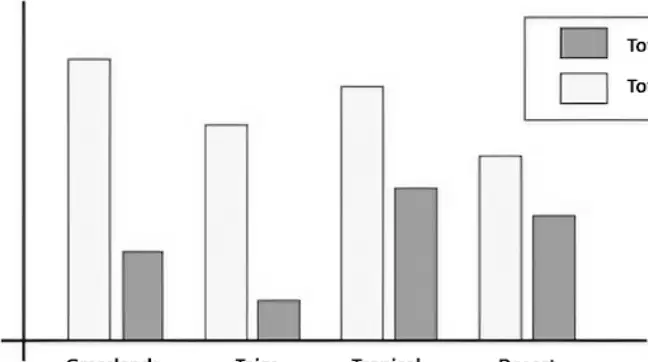
Which of the following ecosystems has the greatest biodiversity?
Grasslands
Taiga
Tropical Rain Forest
Desert
Which of the following is most likely to cause a decrease in biodiversity?
The immigration of species from another ecosystem
A decrease in the total population of an ecosystem
An increase in the total population of an ecosystem
A species extinction in the ecosystem due to climate change
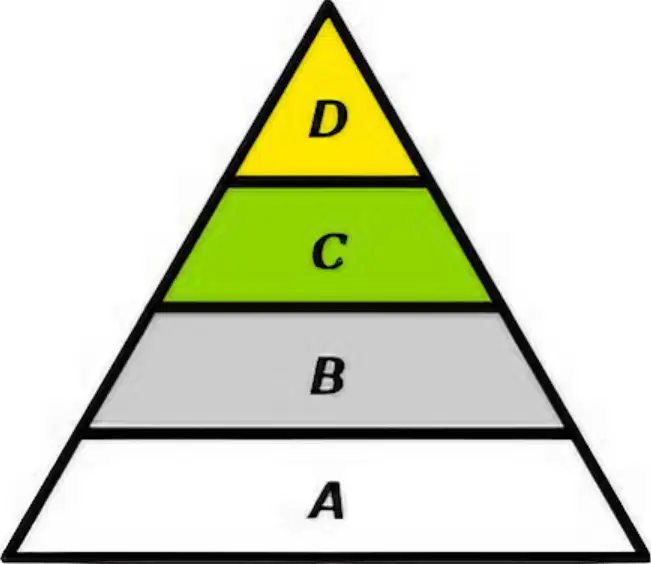
Which of the following is NOT true of the ecological pyramid presented?
Around 90% of food energy transferred from one trophic level to another is LOST as heat.
Primary (Level B) individuals are generally herbivores.
Relatively few Quaternary (Level D) individuals are supported by the ecosystem.
Tertiary (Level C) individuals have a greater biomass than Secondary (Level B) individuals.
A moose is considered a consumer because it:
Gets energy by eating other resources
Makes its own food
Forms carbohydrates using chemicals
Uses sunlight to obtain energy
Food webs are a more realistic representation than food chains because:
Many animals that comprise the links in a food chain are migratory.
Most organisms eat/are eaten by many different organisms.
Over time, food chains always become food webs.
Over time, food webs always become food chains.
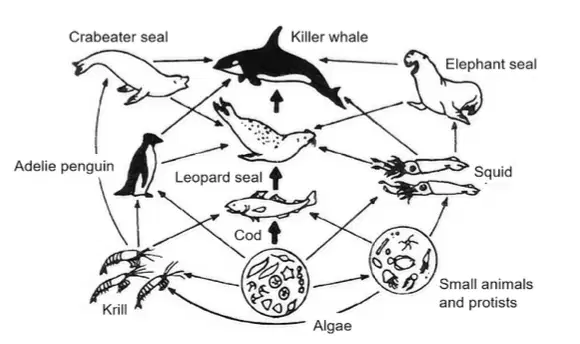
In the illustration below, the Algae are:
Producers
Consumers
Omnivores
Detritivores
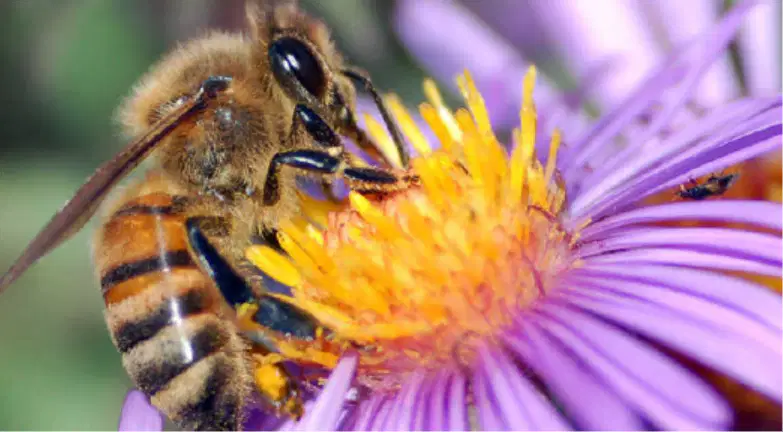
What type of symbiotic relationship is this considered?
Parasitism
Predation
Mutualism
Commensalism
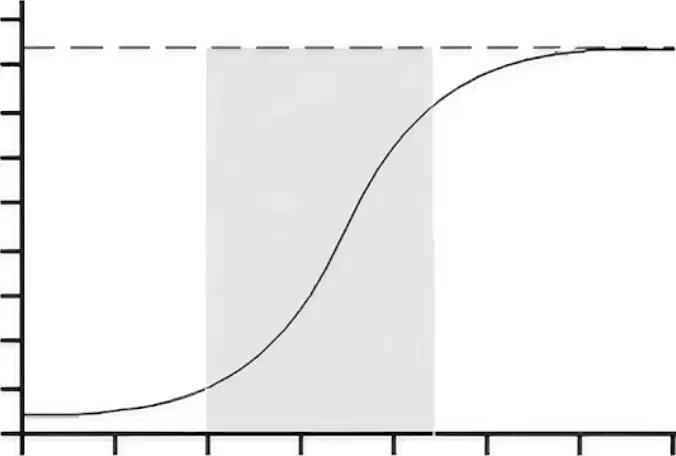
The graph presented shows changes in a fruit fly population over time. The dashed line in the graph represents the carrying capacity. When the fruit fly population MATCHES the carrying capacity, the overall population will most likely:
Increase
Decrease
Crash to near ZERO levels
Stay the same
The mistletoe plant lives on a spruce tree. The mistletoe extracts water & nutrients that the spruce tree needs; harming it in the process. Which type of symbiotic relationship is this?
Mutualism
Parasitism
Commensalism
Socialism
Bears have the digestive system of because it has the ability to digest both plant and meat sources
carnivores
omnivores
herbivores
scavengers
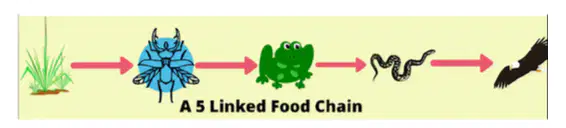
Which of the following in this food chain is considered as the secondary consumer?
the snake
the frog
the insect
the plant
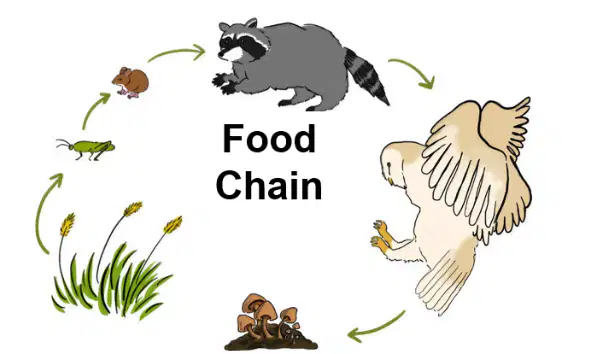
Which of the following is the decomposer in this food chain?
the racoon
the owl
the plants
the mushrooms
Rabbits are members of a community in a grassland. The rabbits eat grasses, clovers, as well as roots, seeds, and tree bark. Other organisms that would share the same trophic level as the rabbits would be the:
Snakes, hawks, and other animals that eat rabbits
Community members that interact with rabbits
Meadow animals that are about the same size as a rabbit
Meadow animals that are classied as herbivores
A _______________ is an organism's role in the ecosystem. This includes what the organism eats, where it lives, and what it does.
niche
ecosystem
habitat
resource partitioning
Which of the following is considered a Density DEPENDENT factor?
Disease
Earthquakes
Volcanic Eruptions
Wildres
Which of the following choices is an example of Interspecies Competition?
Male lions fighting other male lions for dominance
Male peacocks using their brightly colored feathers to attract potential female mates
Lions & Leopards hunting for the same prey resource
Barnacles competing with other barnacles for the same area of rock on the tidepool
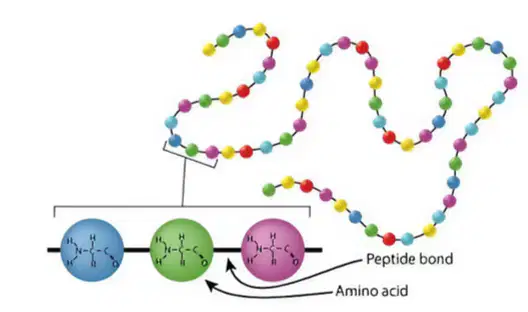
What macromolecule is shown in this image below?
protein
lipid
carbohydrates
nucleic acid
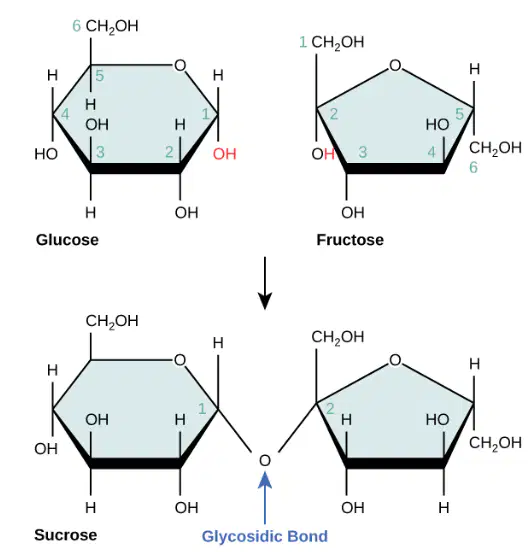
What macromolecule is shown in this image below?
protein
lipid
carbohydrates
nucleic acid
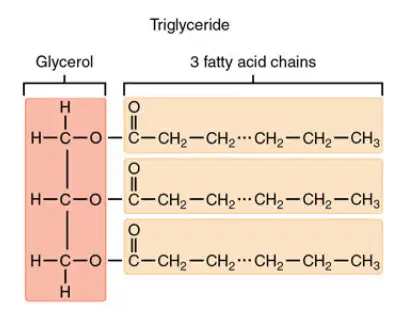
What macromolecule is shown in this image below?
protein
lipid
carbohydrates
nucleic acid
All carbohydrates are:
Composed of Carbon, Hydrogen, & Oxygen atoms
Composed of Amino Acids
Composed of Carbon, Hydrogen, Oxygen, & Nitrogen atoms
Composed of Carbon, Hydrogen, Oxygen, Nitrogen, & Phosphorus atoms
Which does not describe a function of proteins?
They encode genetic information
They allow muscle cells to contract
They help carry out chemical reactions
They make up structures that support the cell
Which macromolecule has the job of storing & transmitting genetic information?
Proteins
Lipids
Nucleic Acids
Carbohydrates
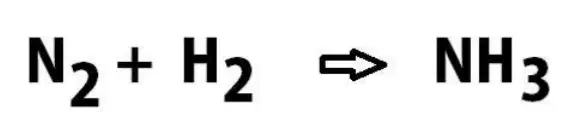
What are the reactants of the following chemical reaction?
NH2 and H2
N2 and H2
NH2
N2, H2, and NH2
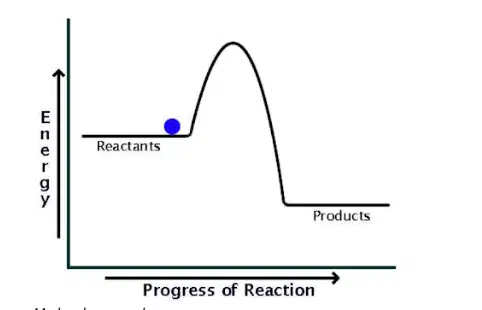
Which of the following best describes this graph
Endothermic reaction
Exothermic reaction
BOTH Endothermic & Exothermic reactions
NEITHER Endothermic nor Exothermic reactions
The enzyme lactase catalyzes the breakdown of lactose (milk sugar) into glucose. If a student adds lactase enzyme to milk, how will the concentrations change? (Please read each option carefully)
Lactase enzyme will DECREASE, glucose will INCREASE
Glucose will DECREASE, lactose will INCREASE
Glucose will INCREASE, lactase will remain the SAME
Lactose will INCREASE, glucose will remain the SAME
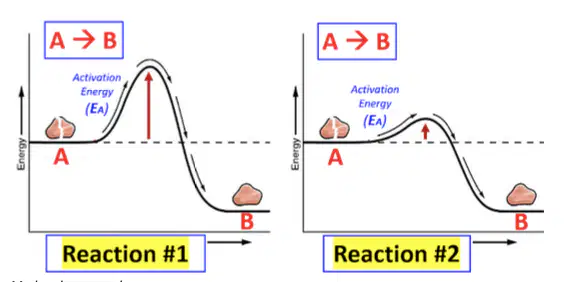
Compare the two pathways: Which pathway shows the reaction that has taken place with the help of an ENZYME?
Reaction #1
Reaction #2
You cannot tell from these graphs
Both reactions involved an enzyme.
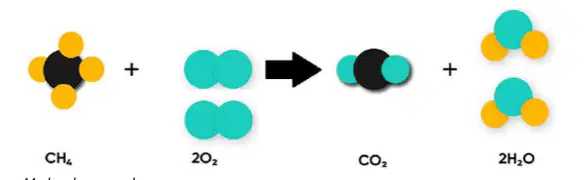
Determine if mass is conserved in the following chemical reaction.
YES, mass is conserved
NO, mass is not conserved
Which model explains how an enzyme and substrate fit together?
Lock and key model
Jack in the box model
Luck box model
Lock and lock model
Which of the following is an example of an enzyme?
Glucose
Amylase
Lactose
Sucrose
The removal of a(n) _____________ would directly contribute to destabilizing the local ecosystem.
Invasive Species
Keystone Species
Indicator Species
Reese's Pieces
Increased levels of greenhouse gases in the atmosphere will ________the Earth's average temperature and _________the Earth's overall albedo.
Increase ; Decrease
Decrease ; Increase
Increase ; Increase
Decrease ; Decrease
_____________ occurs when fertilizers, animal waste, sewage, or other substances rich in nitrogen & phosphorus flow into waterways causing excessive algae growth.
Biomagnifcation
Nitrogen Fixation
Eutrophication
Waste of Nonrenewable Resources

