
 Worksheets
AIIS 100 FALL 2025 Finals Review
Total questions: 82
Worksheet time: 41mins
Which of the following is an example of a TEK practice?
Controlled burns.
Deforestation.
Industrial agriculture.
Monoculture farming.
According to the University of Minnesota (UMN) Great Lakes TEK, TEK cannot be separated from its:
holistic system
generations
relationships with nature
people
When evaluating land management using Traditional Ecological Knowledge (TEK), which approach aligns MOST with its core principles?
Prioritizing community needs and long-term sustainability.
Maximizing short-term profits from resource extraction.
Disregarding environmental impacts for economic development.
Ignoring traditional practices in favor of modern technology.
Which statement best summarizes the core components of Traditional Ecological Knowledge (TEK)?
Emphasis on written documentation.
Focus on individual species.
Static and unchanging knowledge.
Holistic, relational, lived, and generational knowledge.
Manoomin (wild rice) is significant in the Great Lakes region for cattle ranchers within Traditional Ecological Knowledge.
true
false
Which of the following BEST summarizes the key events that shaped tribal gaming history?
Seminole opening bingo and California v. Cabazon
NIGC establishment and three classes of tribal gaming
IGRA establishment in 1988 and tribal-state compacts
Tribal gaming revenue usage and economic development
In what year did the Seminole tribe open Hollywood Seminole Bingo?
1987
1992
1979
1969
Tribal gaming is BEST defined as:
Gaming regulated by the federal government
Gaming taxed by the state government
Gaming owned/operated by a tribal nation on tribal land
Gaming available to all US citizens
Traditional gaming regulated only by tribal nations falls under which class of tribal gaming?
All classes
Class One
Class Three
Class Two
The 1987 Supreme Court ruling in California v. Cabazon Band of Mission Indians primarily addressed:
Tribes NOT falling under state jurisdiction
Tribes must share gaming revenue with the state
Tribes have NO sovereignty
Tribes must adhere to state regulations
Which class of tribal gaming requires a tribal nation to negotiate a compact with the state?
Class Two
Neither Class One, Two, nor Three
Class Three
Class One
Which best describes Nephi Craig’s work in “Gather”?
Opening an Indigenous café that also serves as a nutritional recovery clinic
Managing a large commercial cattle ranch
Teaching Native languages in public schools
Leading a legal campaign in Washington, D.C.
What is Elsie Dubray’s role in the film?
A journalist documenting Native political movements
A lawyer arguing treaty rights cases
A musician reviving traditional songs
A young scientist studying bison and their nutritional and cultural significance
The Ancestral Guard in “Gather” is primarily involved in:
Running a nationwide Indigenous cooking show
Negotiating land settlements with the federal government
Building housing developments on tribal land
Environmental activism to protect the Klamath River and related foodways
Which broader theme does “Gather” emphasize regarding Indigenous communities?
Transition away from rural reservations to major cities
Replacement of traditional diets with global fast food
Reconnecting with traditional foods and practices to heal from colonial trauma
Encouraging total abandonment of ancestral lands
Approximately how many acres of Indigenous land were redistributed under the Morrill Act to endow land-grant universities?
1 million acres
Nearly 11 million acres
200 million acres
100,000 acres
Which of the following best describes how much the United States paid to extinguish Indigenous title to the lands used for Morrill Act grants?
Less than $400,000, with many parcels taken without any payment
More than $10 million, adjusted for inflation
Nothing at all for any parcels
Full market value for all parcels
Which statement best captures the article’s argument about the long-term impact of Morrill Act lands on universities and Indigenous nations?
The grants equally benefited universities and tribal nations
The grants were fully repaid to tribal nations through scholarships
The grants gave only short-term support and have no modern significance
The grants created enduring university wealth while dispossession and marginalization continue for Indigenous peoples
What is the key distinction emphasized about treaty rights?
They are limited to criminal jurisdiction
They are suspended during emergencies
They are retained, not newly conferred
They are granted by federal courts
Which areas are highlighted when revisiting treaty rights today?
Education and health programs
Banking and trade policy
Land and water rights
Taxation and voting access
Select all statements that align with the nature of treaty rights.
They are best understood as special favors
They originate from inherent tribal sovereignty
They include aspects of land and water usage
They depend solely on state legislation
The Winters Doctrine primarily establishes which legal principle?
Reserved tribal rights to necessary water
Federal control of interstate commerce
Exclusive state jurisdiction over rivers
Temporary wartime limits on water use
Under the Winters Doctrine, what is the relationship between reservations and water rights?
Water rights are subordinate to downstream municipalities
Water rights are implied as necessary to fulfill reservation purposes
Water rights must be purchased from private users
Water rights are revoked when populations decline
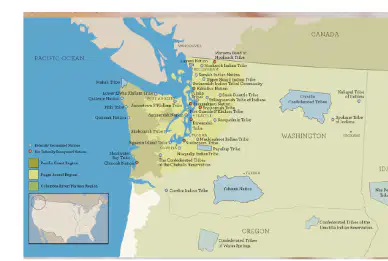
Which set lists only tribal nations shown in or near the Puget Sound in the Fish Wars map?
Puyallup Tribe; Nisqually Indian Tribe; Suquamish Nation
Nez Perce Tribe; Confederated Tribes of Warm Springs; Kalispel Tribe of Indians
Lummi Nation; Swinomish Indian Tribal Community; Tulalip
Makah Tribe; Hoh Tribe; Quileute Nation
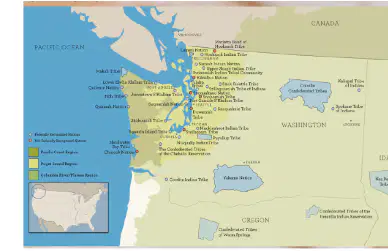
On the Fish Wars map, which area best represents the Columbia River/Plateau Region where inland treaty fishing was contested?
Southwest Washington lowlands near the mouth
Northern Puget Sound islands and inlets
Outer Olympic Peninsula and Pacific coastline
Eastern Washington and parts of Idaho and Oregon
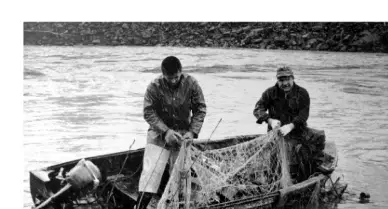
Which statement best captures the strategic purpose of the Fish-Ins movement by tribal members along Pacific Northwest rivers?
Purposeful disobedience to assert treaty fishing rights
Local fundraising to support hatchery expansion
Symbolic protest to gain media sympathy
Seasonal celebration of salmon with ceremonial nets
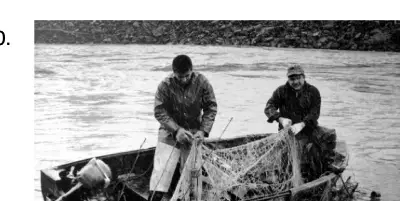
Which individuals or groups are most closely associated with organizing and leading Fish-Ins in Washington state?
Billy Frank Jr.
State wildlife commissioners
Suquamish community members
Nisqually Tribe activists
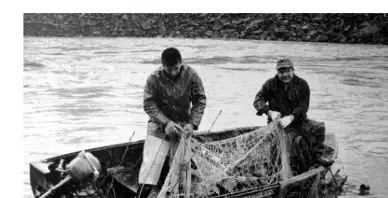
In the context of Indigenous identity, what does the phrase Salmon people most directly signify for tribes engaged in Fish-Ins?
A cultural identity rooted in salmon lifeways
A nickname for commercial fishing unions
A legal term for licensed net fishers
A tourism brand for river festivals
Which case established a 50/50 allocation of salmon harvest between tribal nations and Washington state?
Arizona v. United States (2012)
Oliphant v. Suquamish (1978)
Worcester v. Georgia (1832)
US v. State of Washington (1974)
Judge Boldt’s ruling most directly affirmed which principle regarding tribal fishing?
Treaty-backed equal share of salmon harvest
Federal preemption of all tribal regulations
Open-access fishing for all residents
Exclusive state control over fishery policy
What governance change followed the Boldt Decision in Washington’s salmon fisheries?
Authority transferred to federal courts
Creation of a single statewide fishery council
Privatization of salmon hatcheries
Co-management by tribes and state agencies
Which statement best describes the limit placed on Washington state officials after the Boldt Decision?
Unlimited discretion over non-tribal commercial fleets
Power to cancel tribal seasons unilaterally
Exclusive control of all off-reservation waters
Limited authority when regulating tribal treaty fisheries
In Settler v. Lameer, what authority was recognized for tribal nations?
Ban all non-tribal fishing statewide
Regulate tribal fishing on and off reservation
Set federal court schedules for fish cases
License international salmon fleets
Which outcomes together characterize the Boldt Decision’s impact? Select all that apply.
Tribal-state co-management
Recognition of tribal regulation powers
Expanded state authority
50/50 salmon allocation
What was the role of the United States in US v. State of Washington (1974)?
Defended Washington’s exclusive control
Acted as neutral mediator without arguments
Represented tribal nations asserting treaty fishing rights
Served as amicus with no direct stake
Which outcome best describes the Gurnoe Decision of 1972 regarding the Red Cliff and Bad River Bands?
Restriction of spear fishing techniques
Transfer of waters to federal control
Recognition of treaty-based fishing rights
Creation of new state fishing licenses
In 1973, Mike and Fred Tribble were arrested while exercising treaty rights. What key issue did their case highlight?
Requirement of commercial boat registration
Mandatory use of rod-and-reel only
Legality of off-reservation fishing
Ban on night fishing practices
What did the Voight Decision of 1983 affirm about tribal fishing rights?
They extend beyond reservation boundaries
They require state-issued permits
They apply only within reservation waters
They ban subsistence harvesting practices
Which statements accurately connect the Gurnoe and Voight Decisions to tribal sovereignty?
They affirmed off-reservation harvesting rights
They recognized treaty-guaranteed resource use
They replaced treaties with state statutes
They eliminated tribal regulatory authority
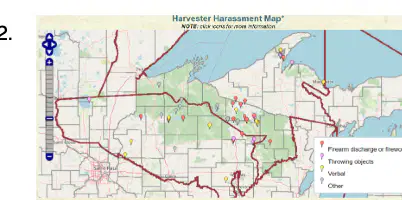
Identify two realistic forms of harvester harassment documented during the Walleye Wars.
Verbal intimidation of fishers
Firearm discharge or fireworks
Posting online rumors only
Throwing objects at harvesters
Which organization is most closely associated with monitoring and supporting tribal fishing rights in the Great Lakes region?
Great Lakes Indian Fish & Wildlife Commission
Midwest Coastal Fisheries Consortium
Upper Mississippi Treaty Fisheries Board
Northern Lakes Conservation Council
Based on the lecture on "Indigenous gender norms," which statement best captures how Indigenous ideas of gender compare to colonist views?
Adoption of colonist gender norms without change
Elimination of gender categories entirely
Strict binary gender identical to colonists
Fluid ideas of gender that differ from colonists
According to the lecture on "Indigenous gender norms," societal roles are primarily based on which organizing principle?
Legal status
Kinship
Occupational class
Binary gender
Which lineage pattern is explicitly noted on the slide titled "Indigenous gender norms"?
Patrilineal descent
Bilateral descent
Matrilineal decent
Ambilineal descent
What does the lecture on "Indigenous gender norms" say happened to many social and cultural norms through colonization?
They were preserved unchanged
They were isolated from kinship
They were stolen and reshaped
They were enhanced and expanded
According to the Statistics panel, what percentage of Native women experience violence?
50%
92%
56.1%
84.3%
What is the homicide rate ranking reported for Native women?
Equal to the rate for white people
Highest homicide rate
Fifth-highest homicide rate
Second-highest homicide rate
How does the homicide rate for Native women compare to the rate for white people, as reported?
Lower than for white people
Nearly equal
Nearly five times higher
About twice as high
What is the estimated number of cases reported as unsolved?
4,200
1,500
5,000
84
How many cases are reported as entered into the National Crime and Information Center?
3,000
500
4,200
1,500
According to the Major Crimes Act (1885), major crimes jurisdiction is directed to which courts?
State courts
Tribal courts
Federal courts
Municipal courts
In Oliphant v. Suquamish (1978), jurisdiction over non-Native offenders is placed under which authority?
County-level control
Exclusive tribal control
State/federal control
International treaty bodies
Which listed items assign jurisdiction to federal courts? Select all that apply.
General Crimes Act (1817)
Major Crimes Act (1885)
Public Law 280 (1953)
Oliphant v. Suquamish (1978)
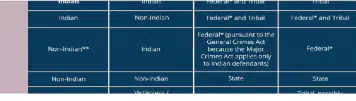
Refer to Table 1 titled “Breakdown of Federal, State, and Tribal Jurisdiction in Indian Country.” For an Indian alleged perpetrator and an Indian alleged victim, which authority has jurisdiction over all other crimes (not major crimes as defined by the Major Crimes Act)?
State
Tribal
Federal
Federal and Tribal
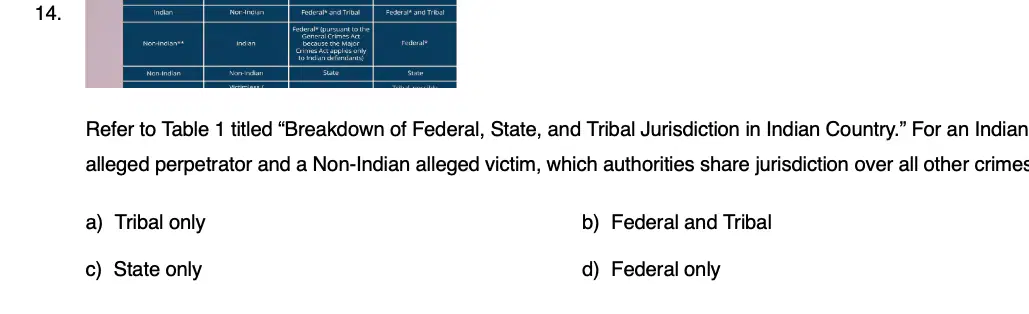
Refer to Table 1 titled “Breakdown of Federal, State, and Tribal Jurisdiction in Indian Country.” For an Indian alleged perpetrator and a Non-Indian alleged victim, which authorities share jurisdiction over all other crimes?
Tribal only
Federal and Tribal
State only
Federal only

Refer to Table 1 titled “Breakdown of Federal, State, and Tribal Jurisdiction in Indian Country.” For a Non-Indian alleged perpetrator and an Indian alleged victim, which authority has jurisdiction over major crimes, noting the Major Crimes Act applies only to Indian defendants?
Federal (pursuant to the General Crimes Act)
Tribal
Federal and Tribal
State
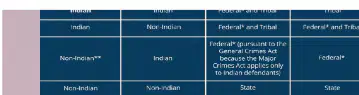
Refer to Table 1 titled “Breakdown of Federal, State, and Tribal Jurisdiction in Indian Country.” For a Non-Indian alleged perpetrator and a Non-Indian alleged victim, which authority has jurisdiction over major crimes?
Federal
Tribal
State
Federal and Tribal
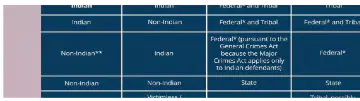
Based on the footnote in Table 1, under PL 280, what can states assume within Indian Country?
Exclusive tribal jurisdiction
Municipal policing authority only
Federal jurisdiction
Criminal appellate jurisdiction only
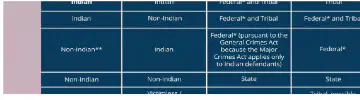
According to the footnote in Table 1, which act allows tribes to assume federal jurisdiction over non-Indian perpetrators of specific domestic violence–related crimes when procedural guarantees are met?
General Crimes Act
Violence Against Women Act
Major Crimes Act
Indian Civil Rights Act
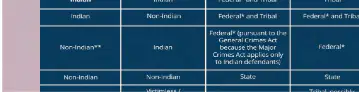
According to Table 1, when a Non-Indian is the alleged perpetrator and an Indian is the alleged victim in a major crime, which statute provides the basis for federal jurisdiction?
Indian Self-Determination and Education Assistance Act
PL 280
General Crimes Act
Major Crimes Act
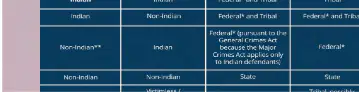
Refer to Table 1. For an Indian alleged perpetrator and a Non-Indian alleged victim, which authorities have jurisdiction over major crimes as defined by the Major Crimes Act?
Federal only
Tribal only
State
Federal and Tribal
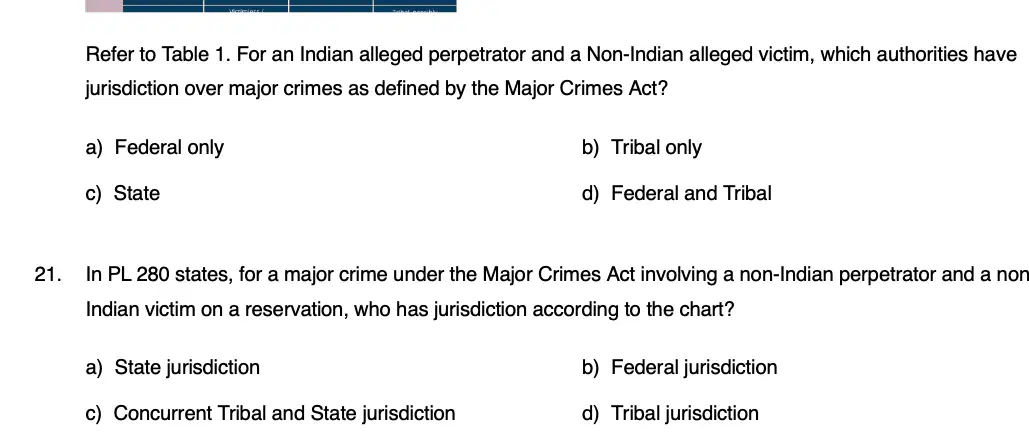
In PL 280 states, for a major crime under the Major Crimes Act involving a non-Indian perpetrator and a non-Indian victim on a reservation, who has jurisdiction according to the chart?
State jurisdiction
Federal jurisdiction
Concurrent Tribal and State jurisdiction
Tribal jurisdiction
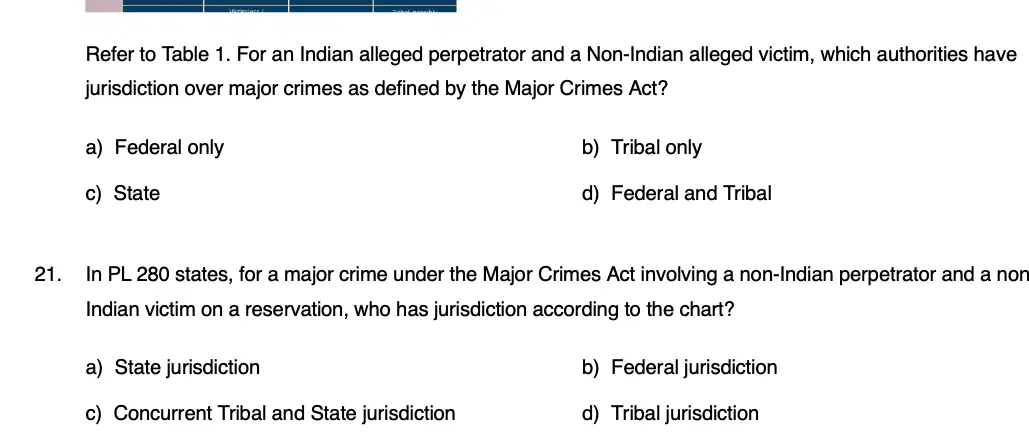
In a PL 280 state reservation, for all other crimes (not under the Major Crimes Act) when the perpetrator is Indian and the victim is non-Indian, who has jurisdiction according to the chart?
State jurisdiction only
State and Tribal jurisdiction
Federal jurisdiction only
Tribal jurisdiction only
Which of the following is listed as a PL 280 state in the footnotes accompanying the chart “Criminal jurisdiction in PL 280 states”?
New Mexico
Arizona
California
Montana
Which overarching area frames the listed responses to MMIW on this page?
Classroom instruction units
Law enforcement operations
Activism, organizing, and visibility
Private fundraising initiatives
Select all items that are listed under Programs and services in Responses to MMIW.
Holistic programming
Indian Health Services
Which contemporary social movements are identified as inspirations for Red Power? Select all that apply.
Chicano movement
Civil Rights
Temperance movement
Black Power
Which principle is presented as a core aim of Red Power?
Restoration of monarchy
Laissez-faire economics
Sovereignty and self-determination
Isolationism in foreign policy
According to the lecture, what best summarizes Red Power?
A Cold War campaign to oppose communism in the United States
A 19th-century initiative to expand railroads across the West
A movement for Native sovereignty and self-determination inspired by other contemporary social movements
A youth fashion trend centered on the color red
Third World Liberation Front Student Strikes: Which description best characterizes this movement?
A faculty-only demonstration
A coalition of student groups
A protest by a single academic department
A new government education policy
According to the slide on Third World Liberation Front Student Strikes, what did the strikes fight for within the university?
Ethnic studies programs and Indigenous representation
Increased athletic funding and new stadiums
Higher tuition to fund research
Elimination of student organizations
What was one outcome of the Third World Liberation Front Student Strikes?
Consolidation of all departments into a single college
A ban on all student protests on campus
Creation of Indigenous studies departments and the founding of tribal colleges & universities (TCUs)
Closure of ethnic studies programs
According to the typed statement titled “A Challenge to the University of Wisconsin,” which group authored and presented the challenges to the University of Wisconsin on September 25, 1970?
University of Wisconsin Board of Regents
Wisconsin Historical Society
Coalition of Native Tribes for Red Power
American Indian Movement (AIM) national office
One challenge in the document calls for the University of Wisconsin to employ personnel in the Special Five Year Program. How many Native Americans does the statement specify should be employed to work with Native American students on campus?
Eight
Two
Four
Six
What recruitment target does the statement set for Native American students to begin immediately for the fall semester of the 1971–72 school year?
250 students
150 students
100 students
50 students
According to the document, how much money does the Coalition request be appropriated to publish a newspaper aimed at recruiting youth in Indian country?
$1,000
$2,500
$500
$250
What policy change regarding language requirements for Native American students does the statement propose?
Require all students to study a second European language
Exempt Native American students who speak their native tongue and accept their tribal language as a first language with English counted as the foreign language
Allow test-out only through a standardized European language exam
Require English-only coursework for the first two years
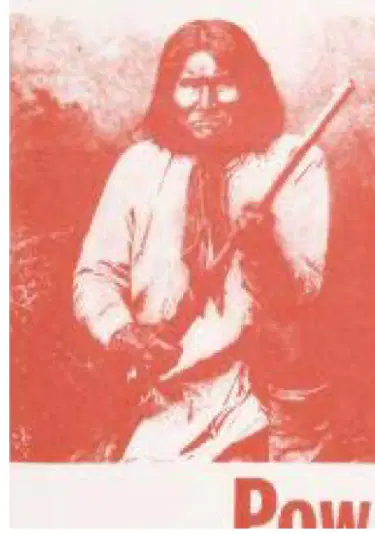
What is an activity/activities that is generally part of the "RED POWER Pow-Wow" tradition and traditional cultural knowledge?
Baseball tournament
Film screening
Modern art exhibition
bead work and basketry
According to the UW News press release, what was announced regarding Native American Programs at UW–Madison?
A faculty–student Ad Hoc Committee was appointed
A campus closure for renovations was scheduled
A tuition increase for all students was approved
A new varsity sports team was created
What directive did the chancellor give the new committee, according to the UW News release?
Reduce the number of history courses offered
Plan an outdoor festival for prospective students
Select a new university mascot
Make recommendations on increasing academic offerings about American Indians and culture
According to the UW News release, the committee formed was a response to what group’s challenges?
The Parent–Teacher Association
The State Legislature Budget Office
The Alumni Council for Athletics
The Coalition of Native Tribes for Red Power
According to the section titled American Indian Movement, where and when was the organization founded?
Albuquerque, NM in 1970
Chicago, IL in 1965
Seattle, WA in 1971
Minneapolis, MN in 1968

