
NEW
Font size
 Worksheets
Biology Final Exam 2025
Total questions: 67
Worksheet time: 34mins
Indicate whether the sentence or statement is true or false. An enzyme is a carbohydrate.
True
False
Indicate whether the sentence or statement is true or false. In a cell, proteins are made by ribosomes.
True
False
Indicate whether the sentence or statement is true or false. An enzyme speeds up a chemical reaction in the cell but can only be used once.
True
False
Indicate whether the sentence or statement is true or false. A bacterium cell is different from plant and animal cells because it lacks a nucleus.
True
False
Indicate whether the sentence or statement is true or false. A cell membrane is a layer that surrounds some cells.
True
False
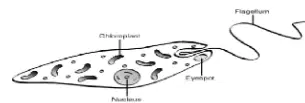
Indicate whether the sentence or statement is true or false. If a freshwater protist, like the single-celled organism shown, is placed in a saltwater solution, it would increase in size.
True
False
Indicate whether the sentence or statement is true or false. A person would never have pure water put into their veins in a hospital because their cells would expand.
True
False
Which of the following are the large molecules which are broken down, during digestion, into smaller molecules?
Simple sugars
Carbohydrates
Fatty acids
Amino acids
Amino acids are the building blocks of large, complex molecules called –
carbohydrates
lipids
proteins
simple sugars
Which of the following correctly shows a large molecule and the smaller molecules into which it is broken down by digestion?
Lipids → Sugars
Carbohydrates → Amino acids
Proteins → Lipids
Lipids → Fatty acids
Lipids are large molecules which can be broken down into –
carbohydrates
proteins
fatty acids
amino acids
Which of the following are the smaller units which make proteins?
Amino acids
Fatty acids
Carbohydrate
Sugars
Because olive oil is a type of fat, olive oil is -
a small molecule which can be absorbed without being broken down
a small molecule which will be built up into lipids during digestion
a large molecule which is always absorbed without being broken down
a large molecule which will be broken down into fatty acids during digestion
What happens to large molecules, such as carbohydrates, during digestion? During digestion, large molecules are -
joined together to make even larger molecules
broken down into smaller molecules
passed through the body without being absorbed
absorbed, unchanged, into the bloodstream
Lipids are synthesized (made) in the cell by--
Ribosomes
Golgi apparatus
Chloroplasts
Smooth ER
The molecule on which an enzyme acts is called a(n)
active site
substrate
inactive site
catalase
When an enzyme has lost its shape and no longer functions it is said to be-
hydrated
dehydrated
nurtured
denatured
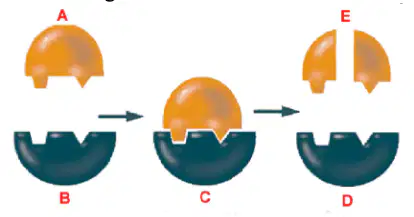
In the image, what is letter E referring to?
reactants
products
enzyme–substrate complex
enzyme
Each enzyme only has one substrate that will fit its active site. What is this called?
specific
reusable
fragile
catalyst
After the enzyme and substrate bind together and perform the reaction, what does the substrate become?
a substrate
a reactant
a product
an active site
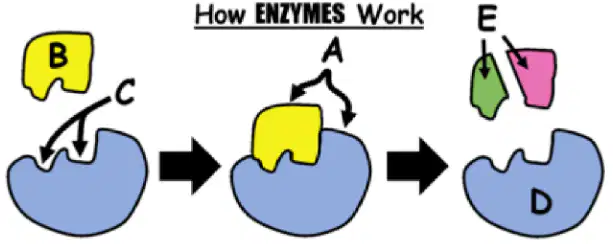
In the diagram, what is letter C?
product
enzyme–substrate complex
substrate
active site
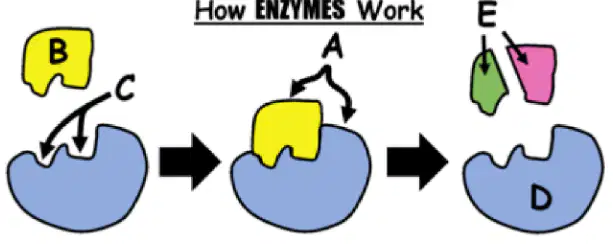
Identify letter B in the diagram.
enzyme
substrate
products
enzyme–substrate complex
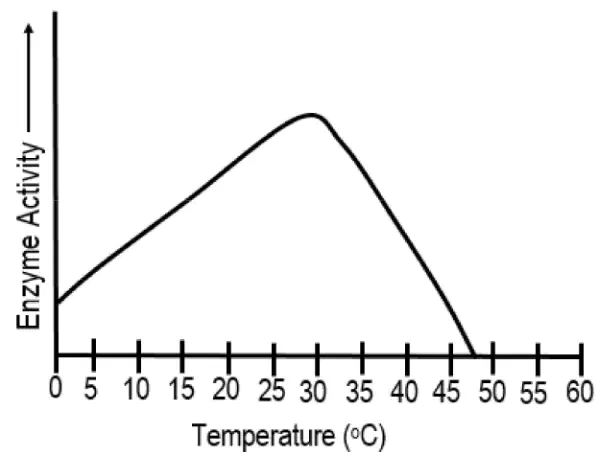
Based on the graph, what is the optimal temperature for this enzyme?
15 degrees Celsius
30 degrees Celsius
35 degrees Celsius
40 degrees Celsius
Plants move and grow by pumping water into and out of cells. Because the pressure in plant cells can be so much greater than in animal cells, plant cells need -
a nucleus
mitochondrion
cell wall
chloroplasts
Cells require a structure that regulates the transfer of material in and out of the cell and maintain homeostasis. This structure is the -
cell membrane
mitochondrion
nucleus
chloroplast
Mitochondria are structurally complex organelles with both an inner and outer membrane. Mitochondria function to -
store water, waste, and nutrients for the cell
transport materials between parts of the cell
produce energy for the cell
control the activities of the cell
Which two parts of the cell are unique to plant cells?
Cell membrane and cytoplasm
Cell wall and cytoplasm
Cell wall and chloroplasts
Cell membrane and chloroplasts
Two unlabeled slides are viewed under a microscope. Slide A has cells with a visible nucleus, mitochondria, a cell membrane, a cell wall, and chloroplasts. Slide B has cells with a visible nucleus, mitochondria, and a cell membrane. How should these slides be labeled?
Slide A – animal cells, Slide B – animal cells
Slide A – animal cells, Slide B – plant cells
Slide A – plant cells, Slide B – animal cells
Slide A – plant cells, Slide B – plant cells
Chloroplasts are oval disks containing green chlorophyll in plant cells. Animal cells lack chloroplasts because they -
have cilia for movement.
do not perform photosynthesis.
use mitochondria for photosynthesis.
do not have cell walls.
For any activity such as running, jumping and hunting, animals have to use energy obtained from food. What organelle performs a similar function within a cell to fuel cellular activities?
nucleus
mitochondria
vacuole
cell membrane
Which of the following is not a statement that makes up the cell theory?
All living things are composed (made up) of cells.
The cell is the basic unit of structure and function in living things.
Cells are made up of organelles.
New cells are produced from existing cells.
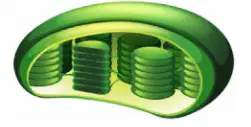
Leaves are plant organs specialized in photosynthesis. Through the light microscope, which organelle would be expected to be seen in greater numbers in a leaf?
chloroplast
mitochondrion
vesicle
golgi apparatus
People that are lactose intolerant lack the enzyme lactase which is needed to break down the sugar lactose. The enzyme would be located inside which organelle?
golgi apparatus
nucleus
ribosome
lysosome
Some students used information they gathered from lab investigations to prepare a table. They entered the table into their lab notebooks. Which of these correctly identifies the two cells described in the tables below? Cell 1: is smaller than 5 micrometers; does not have a nucleus; does not have membrane bound organelles; has circular DNA Cell 2: is larger than 10 micrometers; has a membrane bound nucleus; has membrane bound organelles; has many strands of chromosomal DNA
cell 1 is eukaryotic, and cell 2 is prokaryotic
cell 1 is prokaryotic, and cell 2 is eukaryotic
both cell 1 and 2 are eukaryotic
both cell 1 and 2 are prokaryotic
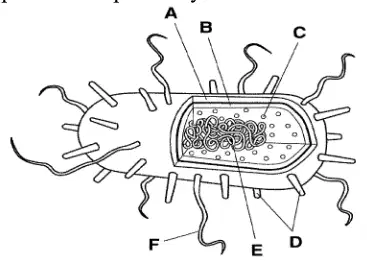
In the cell below, the organelle responsible for protein synthesis is located at which letter?
A
B
C
D
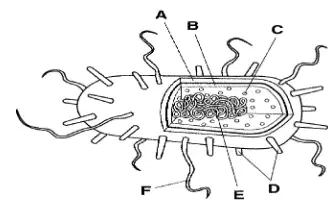
What type of cell is shown in the diagram below?
plant cell
bacterial cell
animal cell
none of the above
A cell will shrink when it is placed in a(n)
hypotonic solution
hypertonic solution
isotonic solution
none of the above
Diffusion is the movement of a substance
only through a lipid bilayer membrane
from an area of low concentration to an area of higher concentration.
only in liquids.
from an area of high concentration to an area of lower concentration.
A cell will swell when it is placed in a(n)
hypotonic solution.
hypertonic solution.
isotonic solution.
none of the above.
The diffusion of water into or out of a cell is called
solubility.
osmosis.
selective transport.
endocytosis.
Molecules that are too large to be moved through the membrane can be transported into the cell by-
osmosis.
endocytosis.
exocytosis.
diffusion.
There will be an equal exchange of water molecules through the cell membrane of a cell in a(n)
hypotonic solution
hypertonic solution
isotonic solution
none of the above
The concentration of molecule X is greater on the inside of a cell than on the outside. If the cell takes in more molecules of X, then molecule X must cross the cell membrane by
exocytosis
moving against its concentration gradient
passive transport
moving down its concentration gradient
Which of these is a function of the cell membrane in all cells?
producing cellular nutrients
preserving cellular waste
neutralizing chemicals
maintaining homeostasis
Algal cells are placed in an isotonic solution. Additional amounts of solutes are slowly added to the solution. What happens to the cells?
they will begin to swell
they will stay the same
they will burst
they will shrink
Which movement of substances through a cell membrane against a concentration gradient requires energy?
facilitated diffusion
diffusion
osmosis
active transport
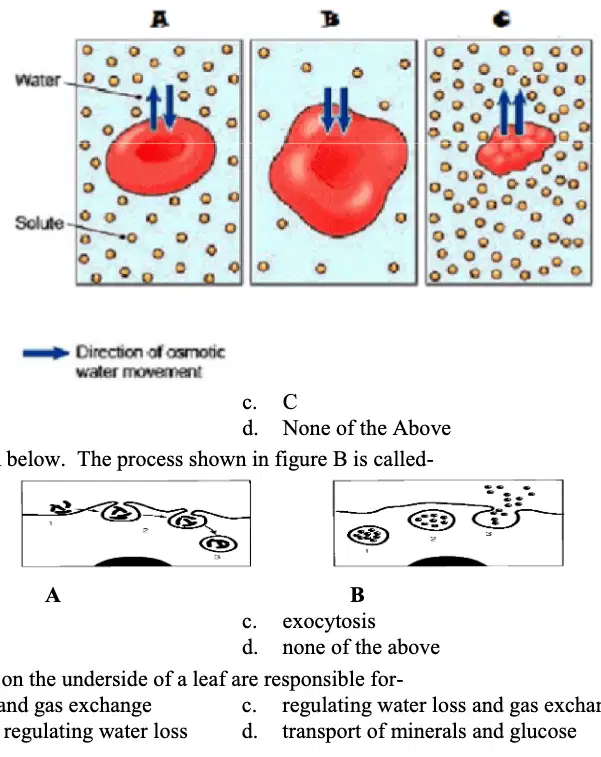
Which cell is in a hypertonic environment?
A
B
C
None of the Above
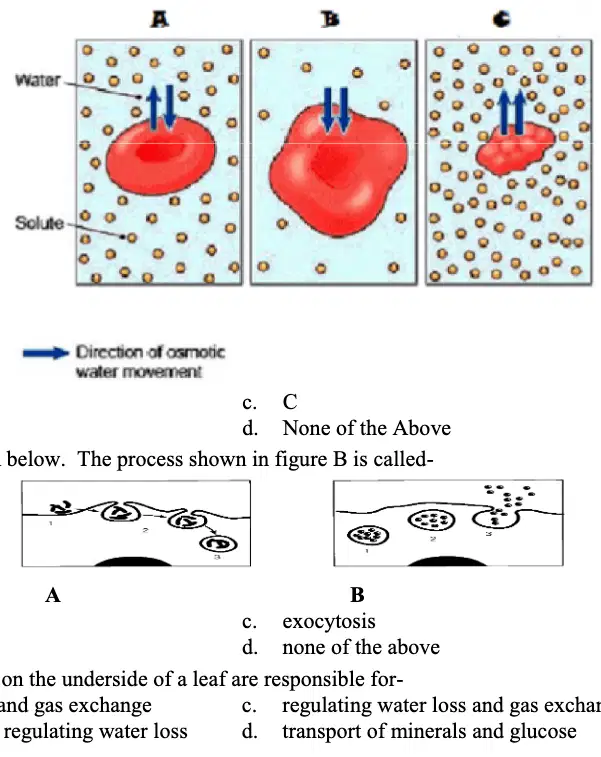
Refer to the diagram below. The process shown in figure B is called-
osmosis
endocytosis
exocytosis
none of the above
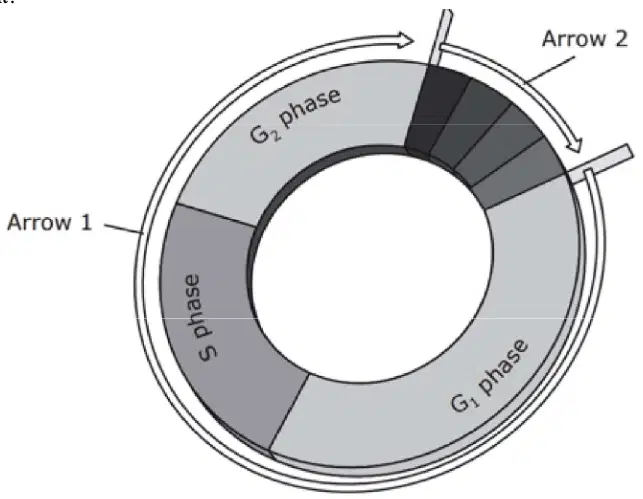
The model of the cell cycle includes two arrows that each represent a process in the cell cycle. What do the arrows represent?
arrow 1 represents prophase, and arrow 2 represents interphase
arrow 1 represents mitosis, and arrow 2 represents meiosis
arrow 1 represents interphase, and arrow 2 represents mitosis
arrow 1 represents meiosis, and arrow 2 represents prophase
As a result of mitosis, each of the two new cells produced from the parent cell during cytokinesis—
receives a few chromosomes from the parent cell.
receives an exact copy of all the chromosomes present in the parent cell.
donates a chromosome to the parent cell.
receives exactly half the chromosomes from the parent cell.
In a dog, there are 78 chromosomes in each body cell. How many chromosomes are there in each sperm or egg?
78
2
39
156
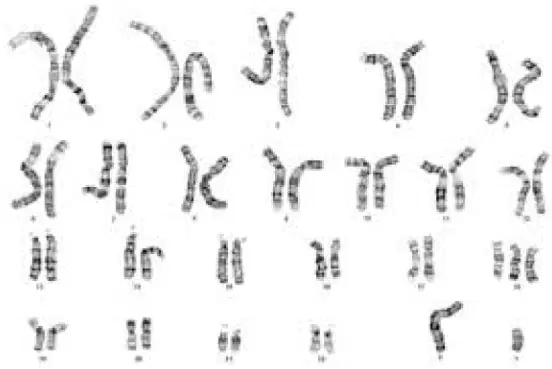
What makes this individual's karyotype not normal?
An extra sex chromosome
A missing sex chromosome
An extra autosome
A missing autosome
A cell that has 20 chromosomes undergoes mitosis. Which of the following is true?
two daughter cells will be created, each have 20 chromosomes
two daughter cells will be created, each have 40 chromosomes
two daughter cells will be created, each have 10 chromosomes
four daughter cells will be created, each have 10 chromosomes
Most cells spend their lives in which phase?
prophase
interphase
metaphase
cytokinesis
A cell with 24 chromosomes begins mitosis. At the end of the process there are two cells, each of which has—
12 chromosomes
24 chromosomes
48 chromosomes
50 chromosomes
Mitosis is the type of cell division seen in—
wound healing
growth from a baby to an adult
making sperm and eggs
both a and b
DNA duplication takes place during which phase?
G1
G2
S
prophase
Which of these cells would undergo meiosis?
brain cell
skin cell
liver cell
sperm cell
Hailey is comparing and contrasting various forms of cellular reproduction, and she focuses her research on meiosis. Meiosis is important for sexual reproduction because it gives sex cells (gametes) what unique feature?
They contain only half the genetic material of the parent.
They are smaller than all other cells in the body.
They are able to exist outside of the organism.
They have a very short life span.
The first step of Binary Fission is:
DNA coils into chromosomes
DNA replicates
DNA splits into 2 chromatids
The cell splits
With mitosis you get ___ , _________ cells, but with meiosis, you get ___ , _________ cells.
4 different, 2 identical
2 different, 4 identical
4 identical, 2 different
2 identical, 4 different
Identify the function of a lipid from the following:
lipids form cell membranes
lipids store energy in fat cells
lipids carry genetic material
lipids form the exoskeleton of insects
both A and B
Which of the following are true about nucleic acids?
nucleic acids are made of nucleotides, which consists of a phosphate, sugar, and nitrogen base
nucleic acids are made from repeating units called amino acids
nucleic acids play a major role in the storage and expression of genetic information
nucleic acids provide us with a quick source of energy.
Both A and C
What is the relationship between mutation, the cell cycle, and cancer?
Mutated, defective genes may cause cells not to be able to respond to signals that regulate the cell cycle and thereby their growth.
As a result of unregulated cell cycles, cells become cancerous, meaning that the cells grow and divide uncontrollably.
Cancerous cells may form malignant tumors that invade and destroy surrounding healthy tissue.
All of the above
Which of the following shows the correct sequence of the cell cycle?
C → M → G1 → S → G2
S → G1 → G2 → M → C
G1 → S → G2 → M → C
None of the above
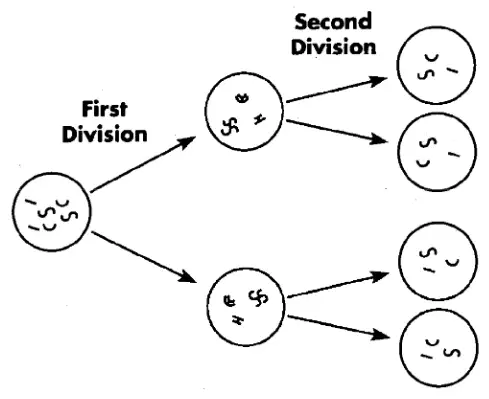
Refer to the illustration below. The process shown is:
mitosis
meiosis
chromosomal mutation
dominance

Stage of mitosis represented in this picture.
anaphase
telophase
cytokinesis
metaphase

