
 Worksheets
Unit 1 Review
Total questions: 64
Worksheet time: 32mins
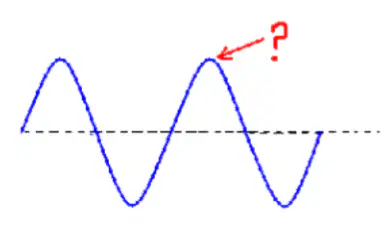
The highest point on a wave is:
the top
the coast
the crest
the trough
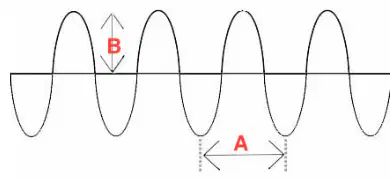
What property of the wave is represented by the letter "A"?
amplitude
wavelength
trough
crest
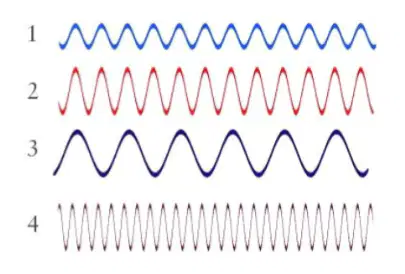
Which wave in the diagram has the greatest frequency?
2
3
4
1
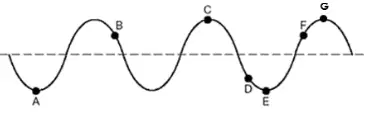
Which word is used to identify the distance between points C & G?
Crest
Wavelength
Amplitude
Frequency
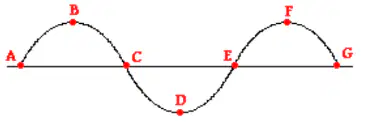
Which letter(s) represent the trough of the wave?
C & G
A
B & D
D
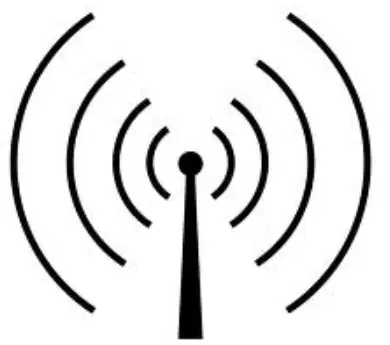
All waves carry ______ as they travel from one place to another.
matter
water
energy
space
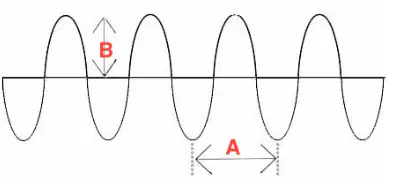
What property of the wave is represented by the letter "B"?
amplitude
trough
wavelength
crest
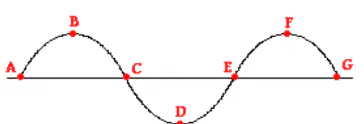
Which letter(s) represent the crest of the wave?
B & D
A
B & F
F

Which wave in the diagram has the longest wavelength?
3
2
1
4
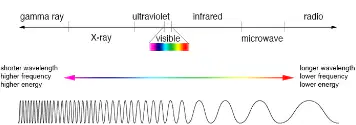
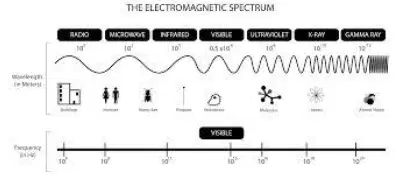
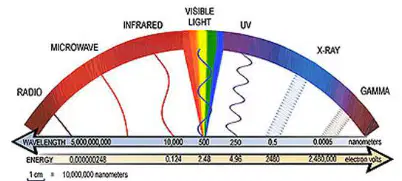
Which section of the spectrum is the ONLY one we can see?
Ultraviolet Rays
X-rays
Gamma Rays
Visible Light

Which of the following electromagnetic waves has the lowest energy?
visible light wave
microwave
gamma ray
infrared wave

High frequency waves have ________ wavelengths.
long
the same
varying
short
A wave with a large wavelength will have a ______ frequency and _____ energy
high, low
low, low
low, high
high, high
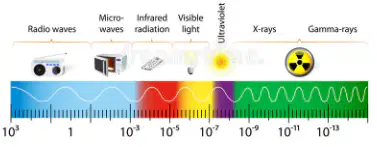
Which of the following is not in the electromagnetic spectrum?
X-rays
Sound waves
Radio Waves
Light waves

In which list are forms of electromagnetic energy arranged in order from longest to shortest wavelength?
Infrared -> radio wave -> ultraviolet
Visible light -> x-ray -> radio wave
Microwave -> infrared -> visibile light
Microwave -> Radio wave -> Infrared rays
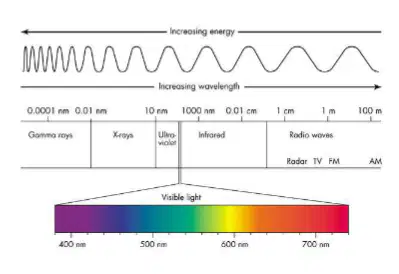
What is the correct order of the visible light spectrum starting with the longer wavelength?
Red, orange, yellow, green, blue, indigo, violet
Violet, indigo, blue, green, yellow, orange, red
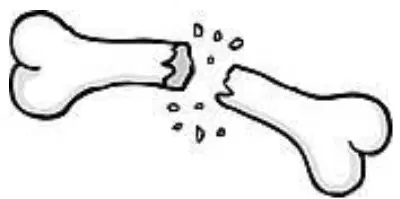
This type of EM wave shows a break in bones.
x-ray
gamma ray
radio wave
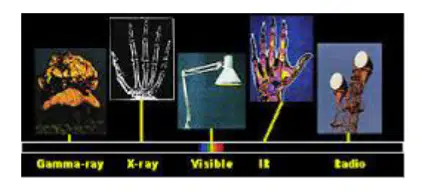
________ is an EM wave that has the LEAST energy.
visible light
microwaves
radio
If the wavelength of an electromagnetic wave is longer, what is true about the energy?
Energy is not dependent on wavelength.
Energy is higher.
Energy is lower.
Which part of the electromagnetic spectrum has high enough energy to cause damage to eyes and skin, and sometimes even cancer?
infrared light
visible light
ultraviolet light
Which of the following electromagnetic waves is given off as heat?
infrared rays
gamma rays
ultraviolet light

Cell phones use _____________ waves.
Microwaves
Radio
Gamma
Xrays
Infrared waves are used in __________________.
Remote Controls
Tanning
EM waves ______ travel the same speed in a vacuum.
can
never
always
Nuclear weapons are examples of __________.
x-rays
ultraviolet rays
gamma rays
infrared rays
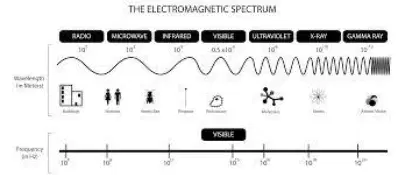
The higher the frequency the ______ the energy.
lower
higher
As the frequency of an electromagnetic wave increases, the amount of energy in that wave...
increases
decreases
stays the same
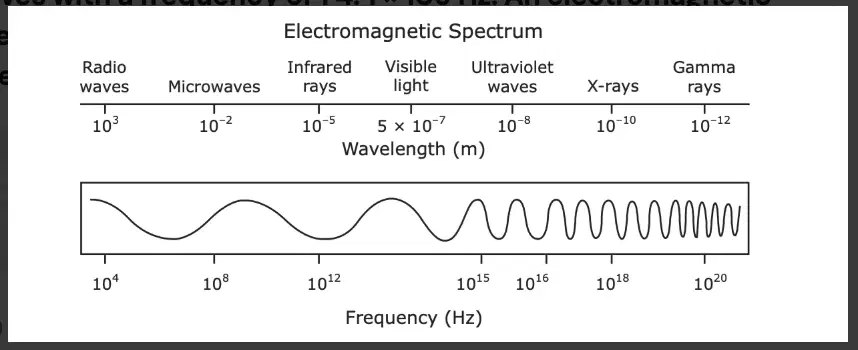
Quasars are extremely distant celestial bodies. Investigators using a special telescope determined that a certain quasar was emitting waves with a frequency of 1 4. 1 × 10⁹ Hz. An electromagnetic spectrum is shown. The investigators were most likely using a telescope that detects ___
microwaves
visible lights
x-rays
gamma rays
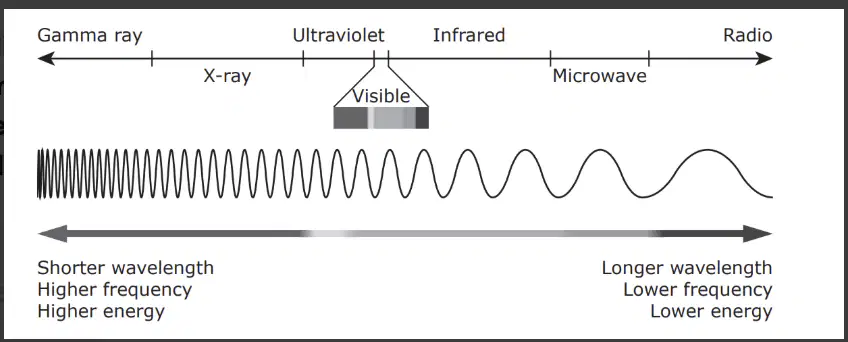
A diagram of the electromagnetic spectrum is shown. Earth’s atmosphere blocks short wavelengths of the electromagnetic spectrum. Which telescopes must be placed in orbit around Earth in order to observe short-wavelength radiation?
gamma ray telescopes
visible light telescopes
infrared telescopes
radio telescopes

The temperature of a star determines the wavelength of visible light that is produced. The visible part of the electromagnetic spectrum is shown.
Stars with the highest temperatures will emit most of their light at wavelengths that are near —
red light
orange light
green light
blue light
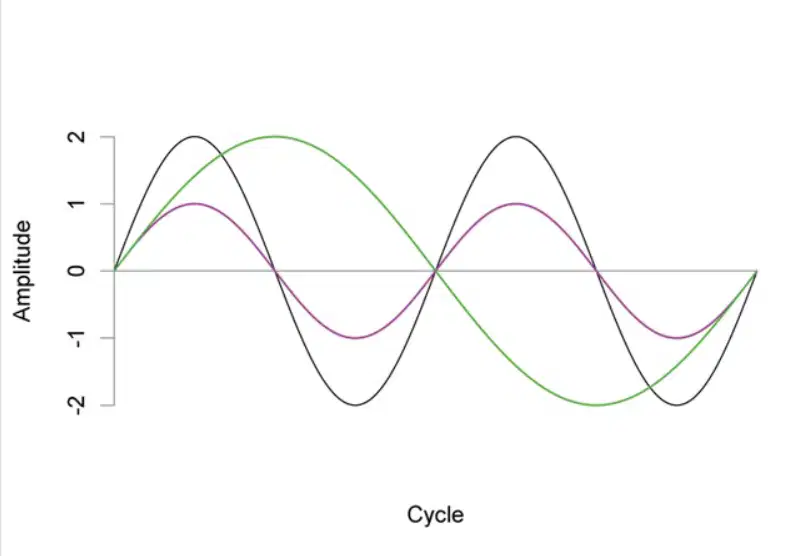
What is the amplitude of the green wave?
0
1
2
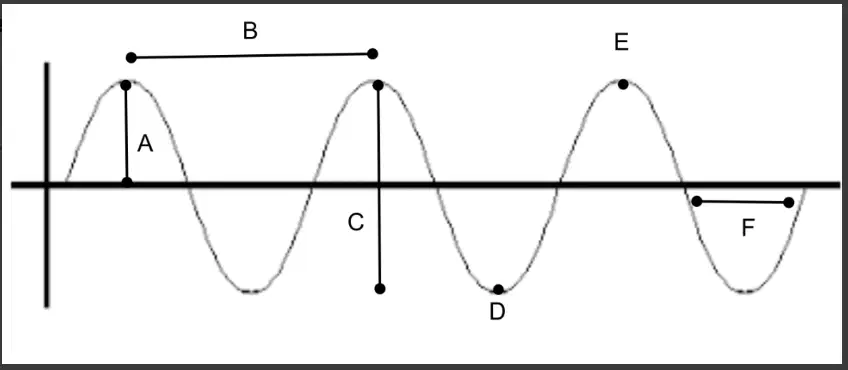
Choose the letter that represents the wave’s amplitude.
A
B
C
D
F
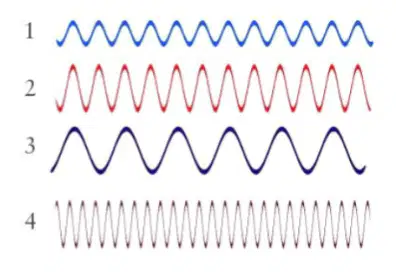
Which wave in the diagram has the greatest frequency? Choose the numbered wave with the most cycles over the same distance.
1
2
3
4
What is the best evidence for the Big Bang theory?
How fast light can travel
The expansion of the Universe
Creation of new planets
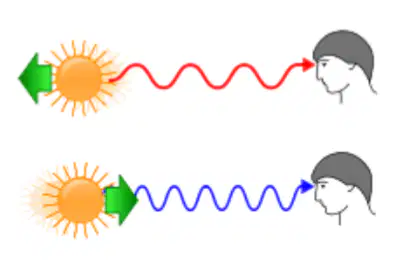
In ____ shift, the galaxies appear ____ in color because they are moving away from us.
blue; red
red; red
red; blue
blue; blue
If a galaxy is being observed from Earth and its light has shifted towards the blue side of the electromagnetic spectrum it would be...
Moving towards the Earth
Moving away from the Earth
This is a trick question that cannot be answered
It isn't a galaxy, it is a very large blueberry.
Describe the beginning of the universe
Small, dense, and hot
Small, cold
Large, dense, and hot
Constantly expanding and getting warmer
What is happening to our universe right now?
Shrinking
Stabilizing
Expanding
Dividing
Light years are a measure of:
time
speed
distance
light
A light year is...
The speed light travels
How long it takes light to get to you from the sun
The distance light can travel in a year
How many years it takes light to be emitted
Scientists use light years to measure objects in space rather than units such as miles or kilometers because of how massive the galaxy and universe is.
True
False
Proxima Centauri is the closest star to Earth after the Sun and is located 4.3 light years away from Earth. How long does it take light from Proxima Centauri to reach Earth?
1 year
4.3 years
43 years
10 trillion years
Our Sun is located on one of the spiral galaxy arms.
True
False
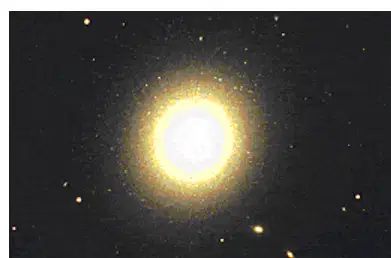
What type of galaxy is this?
Spiral
Elliptical
Irregular
Irrational
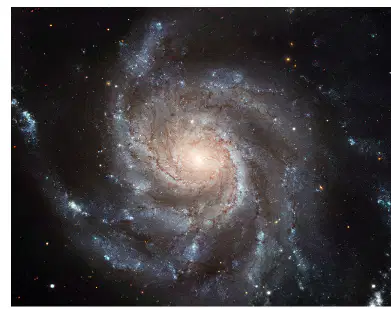
What type of galaxy is this?
Spiral
Elliptical
Irregular
Irrational
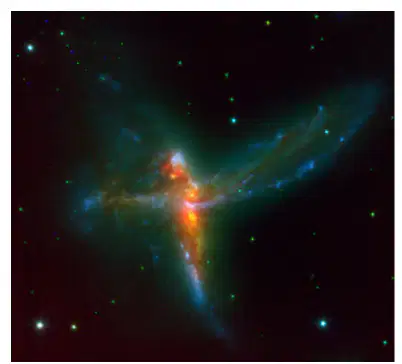
What type of galaxy is this?
Spiral
Elliptical
Irregular
Irrational
Alpha Centauri appears as a bright object visible in the Milky Way galaxy. Alpha Centauri is actually a system of three objects. Each object produces light and rotates on its own axis. The system is an average of 4 light-years from Earth. Based on this information, the three objects that make up the Alpha Centauri system are all —
asteroids
comets
planets
stars
Which information best supports the inference that the universe began with an explosion?
measurements of rates of decay using Carbon-14
measurements of cosmic background radiation
calculations of the distance from the Sun to each asteroid in the asteroid belt
calculations of the temperature and luminosity of stars
Star formation begins in the...
main sequence
nebula
dwarfism
periodic table
Which is an accurate description of determining a star's life span?
The less mass of the star the longer the life span
Stars never die
All stars shine the same
Stars don't have a life cycle
What is the force that acts on a nebula to cause the formation of a protostar?
Inertia
Nuclear fusion
Gravity
At which point in its development does a star exit the protostar stage and become a main sequence star?
When the nuclear fusion process begins
When collisions in particles result in an increase of temperature
When gravity squeezes it making it more dense
When it gets bigger and gravity gets stronger causing it to collide more often
Our Sun is considered slightly below average in mass. As it is a small to medium mass star, what would be the name of the phase that our Sun would enter after it exits the main sequence?
Red supergiant
Yellow supergiant
White giant
Red giant
There are 2 points in the life cycle of a star that stars can take different paths. In each of these cases, it is the ______ of the star that determines the path it will take.
Color
Mass
Temperature
Brightness
Main sequence stars are made primarily of which elements?
Hydrogen only
Helium and Carbon
Carbon and Iron
Hydrogen and Helium
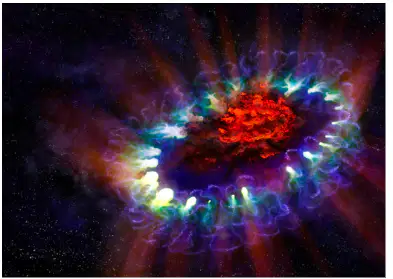
A gigantic explosion that causes the death of a large star is called
pulsar
red giant
supernova
black hole
The core of a Red Giant collapses and becomes a
White Dwarf
Blue Supergiant
Red Supergiant
Black Hole
The stage after the main sequence star
red giant
nebula
white dwarf
black dwarf
When a star's gravitational pull is so strong that not even light can escape, it's called a what?
Black hole
Supernova
White dwarf
Nebula
What is the correct order for the life cycle of our star the sun?
nebula, fusion stage, red giant, black dwarf, white dwarf
nebula, fusion stage, red giant, white dwarf, black dwarf
nebula, fusion stage, super red giant, black dwarf, white dwarf
nebula, fusion stage, red giant, super nova, black hole
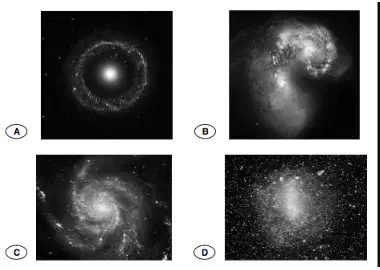
Which of the following galaxies is most like our own Milky Way? Images A–D show different galaxy types.
A
B
C
D
Life Cycle of a Massive Star: Stellar Nebula, (a) ______ , (b) ______ , (c) ______ , Neutron Star. Choose from: Main Sequence, Red Supergiant, Supernova, Planetary Nebula, Red Giant. Match each blank to the correct stage.
(a)
Main Sequence
(b)
Red Supergiant
(c)
Supernova
Life Cycle of a low mass star: Stellar Nebula, (a) ______ , (b) ______ , (c) ______ , White Dwarf. Choose from: Main Sequence, Red Giant, Planetary Nebula, Red Supergiant, Black Hole, Supernova. Match each blank to the correct stage.
(a)
Main Sequence
(b)
Red Giant
(c)
Planetary Nebula
Match the following galaxy types with their descriptions.
Irregular Galaxy
No regular shape, rich in gas and dust
Spiral Galaxy
pinwheel shape, rich in gas and dust
Elliptical Galaxy
oval shape, small amount of gas and dust

