
 Worksheets
Review for BIOL1406 Final
Total questions: 95
Worksheet time: 48mins
Plants show turgor pressure when
cells contain water vacuoles that are full of water.
water is being evaporated from the leaves.
water is being used up in photosynthesis.
cells are losing water from their water vacuoles.
Proteins in a membrane are
integral if they protrude from only one surface of the bilayer.
peripheral if they are on the inside surface held in place by the cytoskeleton.
integral if they are embedded in the membrane and protrude from both surfaces of the bilayer.
All of the choices are correct.
Which order of the following steps provides the most logical sequence to follow when splicing foreign DNA into a plasmid and inserting the plasmid into a bacterium?
IV, V, I, II, III
III, II, IV, V, I
III, IV, V, I, II
II, III, V, IV, I
Which of the following characteristics of Taq polymerase make it useful in the PCR process?
It is heat stable and can withstand the heating step of PCR.
It binds more readily than other polymerases to the primers.
It is isolated from bacteria so there is a large supply.
It has regions that are complementary to the primers.
During which stage of meiosis does crossing-over occur?
anaphase I of meiosis II
prophase I of meiosis I
anaphase II of meiosis I
prophase II of meiosis II
telophase I of meiosis I
The channel protein that accounts for why water can cross a membrane more quickly than expected is
integrin.
the sodium-potassium pump.
ATP synthetase.
aquaporin.
What is the most plausible explanation for why the male of most bird species have elaborate plumage and mating rituals?
gene flow
sexual selection
genetic mutations
natural selection
A cross between a male horse and a female donkey produces a mule. Mules are an example of
temporal isolation.
gametic isolation.
zygote mortality.
hybrid infertility.
An atom's atomic mass is best described as the mass of
electrons in the outermost shell.
protons and neutrons it contains.
the protons it contains.
protons and electrons it contains.
the neutrons it contains.
The correct sequence of events in translation is
elongation, termination, initiation.
initiation, elongation, termination.
termination, elongation, initiation.
initiation, termination, elongation.
elongation, initiation, termination.
Why are plants green?
They reflect green wavelengths of light and absorb blue and red light.
They reflect nearly all wavelengths of light.
They reflect yellow and blue wavelengths of light.
They absorb only green wavelengths of light.
They absorb only yellow and blue wavelengths of light.
Organic molecules are those that contain at least
carbon, oxygen, and hydrogen.
carbon.
carbon and hydrogen.
carbon and oxygen.
The sum of the chemical reaction in a cell constitute
metabolism.
coupling reactions.
endergonic reactions only.
exergonic reactions only.
free energy.
All the members of a single species that occupy a particular area at the same time are known as a
sub-population.
subspecies.
group.
gene pool.
population.
Scientists developed the ________ model after their studies of the fossil record revealed that some species appear quite suddenly and then remain essentially unchanged phenotypically for a long period of time.
punctuated equilibrium
gradualistic
Urey-Miller
Hardy-Weinberg
Which of the following organelles is found uniquely in autotrophic, eukaryotic cells and not heterotrophic, eukaryotic cells?
ribosomes
chloroplast
rough endoplasmic reticulum
lysosomes
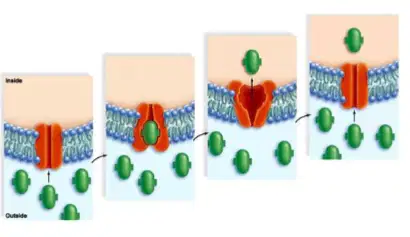
Study the series of pictures to identify the process as
passive transport.
facilitated transport.
active transport.
osmosis.
The plant cell's central vacuole
stores nutrients and cellular waste products.
provides the plant cell with support.
is a reservoir for water.
All of the choices are correct.
Which process is responsible for moving cellular wastes across the cell membrane and out of the cell?
receptor-mediated endocytosis
endocytosis
pinocytosis
exocytosis
Single-celled prokaryotes
lack a membrane bounded nucleus.
are found in almost all habitats.
are classified in the domains Bacteria and Archaea.
All of the choices are correct.
Living organisms are characterized by
evolving over time.
adapting to the environment.
displaying homeostatic controls.
all of the choices pertain to living organisms.
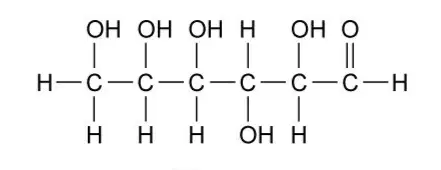
Identify this molecule:
lipid
carbohydrate
hydrocarbon
amino acid
Which of these statements is NOT true about DNA?
It contains the sugar ribose.
It is the genetic material of the cell.
It forms a double helix.
The sugar and phosphate groups form the backbone of the molecule.
Adenine pairs with thymine and guanine pairs with cytosine.
Variations within a population are maintained by
mutation.
gene flow.
genetic recombination due to fertilization.
All of the choices are correct.
Which of the following features is unique to bacterial cells?
cell membrane
nucleus
cell wall
nucleoid region
ribosome
If the Hardy-Weinberg equilibrium is met, what is the net effect?
evolution leading to a population better adapted to an unchanging environment
evolution leading to a population better adapted to a changing environment
no evolution because the alleles in the population remain the same
very slow and continuous evolution with no increased adaptation
Which of the following substrates are required to run cellular respiration?
glucose and oxygen
energy and glucose
glucose and carbon dioxide
sunlight and oxygen
If a DNA sample contains 13% adenine, what percentage of the sample contains cytosine?
37%
74%
26%
13%
________ is when one species splits into two species or when one species transforms into another over time.
The founder effect
Reproductive isolation
Convergent evolution
Speciation
Both reproductive isolation and speciation are correct.
Transcription of a part of a DNA molecule with a nucleotide sequence of A-A-A-C-A-A-A-C-T-T results in a mRNA molecule with the complementary sequence of
U-U-U-G-U-U-G-A-A.
C-C-C-A-C-C-T-C-C.
G-G-G-U-G-A-A-A-C-C.
U-U-U-G-U-U-U-A-A.
T-T-T-G-A-A-G-C-C.
When previous adaptations in a species are no longer useful in a changed environment,
artificial selection is witnessed.
selection of a different form occurs.
fitness is observed.
All of the choices are correct.
Which type of cellular process will most likely be used by an amoeba in order to obtain food?
exocytosis
receptor-mediated endocytosis
phagocytosis
pinocytosis
If an individual with a dominant phenotype is crossed with an individual with a recessive phenotype, 4 of their 9 offspring show the recessive phenotype. What is the genotype of the first parent?
aa
AA
Aa
The answer cannot be determined from this information.
Which level of primary control in eukaryotic gene activity involves changes in the polypeptide chain before it becomes functional?
transcriptional control
posttranslational control
translational control
posttranscriptional control
feedback control
Which process produces alcohol or lactate?
the electron transport system
the citric acid cycle
glycolysis
fermentation
the preparatory reaction
Saturated fatty acids and unsaturated fatty acids differ in
the number of hydrogen atoms present.
the consistency at room temperature.
the number of carbon-to-carbon bonds.
all of the choices are differences between saturated and unsaturated fatty acid.
The diploid (2n) number of chromosomes for a human being is
46.
24.
23.
44.
48.
Eukaryotic chromosomes
may occur as chromatin.
consist of both DNA and protein.
contain histones responsible for packaging DNA to fit into a small space.
All of the choices are correct.
Which statement describes the currently accepted induced-fit theory of how an enzyme and its substrate fit together?
The active site is permanently changed by its interaction with the substrate.
The enzyme is like a key that fits into the substrate, which is like a lock.
As the product is released, the enzyme breaks down.
As the substrate binds to the enzyme, the shape of the active site changes to accommodate the reaction.
Nucleotides contain all of the following except
a 5 - carbon sugar.
a nitrogen base.
a phosphate group.
a phosphate and a nitrogen base.
histones.
Women with X-linked disorders always pass the genes for the disorder to ________, while men with X-linked disorders always pass the genes for the disorder to ________.
both their daughters and sons; their daughters and sons
both their daughters and sons; only their daughters
both their daughters and sons; only their sons
only their daughters; only their daughters
The cell formed through fertilization of an egg by a sperm is called a/an
egg cell.
ovum.
sperm cell.
gamete.
zygote.
If a living plant were moved from a freshwater aquarium to a saltwater aquarium, which of the following would occur?
Nothing. The plant would be fine in either aquarium.
The plant's cells would take on ions.
The plant's cells would lose water and plasmolysis would occur.
The plant's cells would take on water and will lyse.
What type of speciation requires a geographic barrier?
sympatric speciation
allopatric speciation
both sympatric and allopatric speciation require a geographic barrier
neither sympatric or allopatric speciation require a geographic barrier
The subunits from which ATP is made are
ADP and NAD+.
FAD and NADPH.
ADP and FAD.
ADP and phosphate.
FAD and NAD+.
All of the following are true concerning Down Syndrome EXCEPT
it is caused by autosomal trisomy 21.
it is the most common trisomy in humans.
chances of a woman having a child with Down Syndrome decreases with her age.
in 23% of cases, the sperm contributes the extra chromosome.
A certain species of butterfly varies in color from white to dark blue. The birds found in the same area feed on the white or lightly colored butterflies, leaving butterflies that are darkly colored. This may result in what type of selection?
disruptive selection
stabilizing selection
directional selection
The characteristic way in which atoms of an element react is most related to the
number of electrons in the innermost shell.
number of electrons in the outermost shell.
number of neutrons in the nucleus.
size of the nucleus.
If an element contains 8 electrons how many electrons will be placed in the 2nd valence shell?
6
8
5
2
11
If you place the corner of a paper towel into a droplet of water the water moves across the paper towel. Which of the following would explain the movement of the water?
adhesion
surface tension
both cohesion and adhesion
cohesion
The X-ray diffraction photography of Rosalind Franklin and Maurice Wilkins was critical evidence in the study of DNA.
indicating that DNA has a double helix structure.
of the location of each adenine, guanine, cytosine, and thymine.
showing the bases of DNA were held together by hydrogen bonds.
showing equal numbers of purines and pyrimidines.
revealing the structure of the deoxyribose sugar.
What are alleles?
alternative forms of a gene for a single trait, such as blue eyes or brown eyes
recessive forms of a kind of characteristic carried by genes
genes for different traits, such as hair color or eye color
the locations of genes on a chromosome
dominant forms of a kind of characteristic carried by genes
To what does the term stroma refer?
the cytochrome system in the membranes of the thylakoids
the double membrane of the chloroplast
a stack of thylakoid membrane structures
the central fluid-filled space of the chloroplast
a flattened disk or sac in the chloroplast
Which section of the pre-mRNA contains the protein coding regions?
The pre-mRNA does not code for proteins at all.
exons
introns
The entire pre-mRNA contains protein coding regions.
Which substrate is missing: 6CO2 + _______ + energy = C6H12O6 + 6O2 ?
glucose
4O2
6H2O
4H2O
According to the endosymbiosis theory ________ were engulfed by larger eukaryotic cells.
lysosomes
ribosomes
Golgi apparatus
mitochondria
Which of these processes occurs in the cytosol?
glycolysis
the citric acid cycle
the electron transport system
the preparatory reaction
The major enzyme that 'fixes' carbon dioxide is called
glyceraldehyde-3-phospate (G3P)
ribulose bisphosphate carboxylase (rubisco)
PEP carboxylase (PEPcase)
lactate dehydrogenase
If a cell is placed in a hypotonic solution, which will occur?
Water will move out of the cell into the surrounding solution.
Salts will move into the cell from the surrounding solution.
Water will move into the cell from the surrounding solution.
Salts will move out of the cell into the surrounding solution.
None of the choices will occur.
In the case of the peppered moths in England, when Kettlewell set up cameras to document that more white or black moths were eaten by birds on clean or sooty trees, he was verifying which factor involved in evolution by natural selection?
The variation is inherited.
More young are born than can survive, so there will always be competition.
Some individuals are better adapted to a particular environment than other individuals.
The organisms vary in traits and that these traits may be acquired during a lifetime.
Over many generations man has chosen certain desirable characteristics in dogs by allowing dogs possessing those characteristics to reproduce. In this way, 150 breeds of dogs, all in the same species, have descended from wolves. This process is referred to as
convergent evolution.
artificial selection.
inheritance of acquired traits.
natural selection.
Choose the correct order of classification from most inclusive to exclusive.
Kingdom-Domain-Class-Phylum-Order-Family-Genus-Species
Domain-Kingdom-Phylum-Class-Order-Family-Genus-Species
Kingdom-Domain-Class-Phylum-Order-Genus-Species-Family
Kingdom-Class-Phylum-Domain-Genus-Order-Family-Species
The function of mitosis is:
asexual reproduction in some species.
growth of the organism and tissue repair.
to ensure that each new cell receives a complete set of genetic information.
All of the choices are correct.
Which process reduces molecular oxygen to water?
the citric acid cycle
the preparatory reaction
glycolysis
fermentation
the electron transport system
A deletion of one base pair that alters the sequence of codons is called a(n)
oncogene.
frameshift mutation.
substitution mutation.
carcinogen.
transposon.
What cellular organelle is responsible for receiving the mRNA and turning it into a protein?
lysosome
ribosome
nucleus
Golgi body
If the probability of event A is 3/4 and the probability of event B is 1/4, then the probability of both A and B occurring at the same time is
1 or absolute certainty.
3/16.
3/4.
1/4.
1/2.
Apoptosis refers to cell death and
is a failure in the translation or transcription mechanism.
is always biologically detrimental to an organism.
is any failure of the genetic machinery to work properly.
can be programmed and is essential to normal development.
is merely the accumulation of genetic errors.
Red blood cells come in many "blood types" including type A, type B, type AB, type O [lacking proteins A and B], Rh positive, and Rh negative [lacking Rh+] and many others. If blood is transfused, the recipient detects any new or "foreign" proteins. These blood type proteins are
evenly distributed throughout the cell contents and plasma.
on the outer surface of the red blood cell membrane.
in the plasma where they have been secreted by the red blood cells.
inside the red blood cell cytoplasm.
in the red blood cell nucleus.
When an individual of African descent marries and has children with an individual of European descent their children often have a mid shade of skin color. This can best be described as
pleiotropic inheritance.
the dominance of the gene for dark skin tone.
X-linked inheritance.
polygenic inheritance.
A student proposes that left-handedness is a recessive trait that is therefore hidden in much of the human population. A survey of a class of 36 students finds that 27 (0.75) are right-handed and 9 (0.25) are left-handed. Using the Hardy-Weinberg formula, what would the expected genotypes and allele frequencies be in this theoretical population?
0.75 homozygous dominant and 0.25 homozygous recessive, and a 3-to-1, right-to-left handed allele ratio in the population.
They cannot be estimated using these limited data.
0.50 homozygous dominant, 0.25 heterozygous, and 0.25 homozygous recessive, and a 0.5 allele frequency for each allele.
0.25 homozygous dominant, 0.50 heterozygous, and 0.25 homozygous recessive, and a 0.75 dominant allele frequency and a 0.25 recessive allele frequency.
0.25 homozygous dominant, 0.50 heterozygous, and 0.25 homozygous recessive, and a 0.5 allele frequency for each allele.
Which organelles contain functioning ATP synthetase complexes in their membranes?
mitochondria and chloroplasts
mitochondria and endoplasmic reticulum
golgi complexes and lysosomes
vacuoles and vesicles
endoplasmic reticulum and mitochondria
________ is said to occur when a similar trait evolves in two unrelated species while ________ is when a species evolves in response to another species.
Coevolution, convergent evolution
Allopatric speciation, convergent evolution
Convergent evolution, coevolution
Sympatric speciation, coevolution
ATP is considered to be
an enzyme used widely in all kinds of cells.
the precursor of a high-energy membrane-bounded protein.
a coenzyme used to inhibit or activate different enzymes.
a molecule that carries a great deal of chemical energy in a chemical bond.
In a phospholipid bilayer, the
phosphate groups are hydrophobic.
proteins are located only between the two layers.
phosphate heads are oriented toward the exterior of the cell or toward the cytoplasm.
fatty acid tails are ionized.
fatty acid tails are hydrophilic.
The recessive allele for sickle cell anemia is more prevalent in regions of Africa where malaria is prevalent, than it is in regions where there is no malaria. This is due to a
frequency dependent selection.
bottleneck effect.
heterozygous advantage.
Founder Effect.
Homologous structures such as the bones in wings, flippers, and arms would be studied in the field of
comparative embryology.
biogeography.
the fossil record.
comparative anatomy.
comparative biochemistry.
Which sequence of stages in mitosis is correct?
prophase, anaphase, prometaphase, metaphase, telophase
prophase, telophase, anaphase, prometaphase, metaphase
anaphase, prometaphase, metaphase, prophase, telophase
telophase, anaphase, prophase, prometaphase, metaphase
prophase, prometaphase, metaphase, anaphase, telophase
The function of a vector in genetic engineering is to
separate fragments of DNA by their length and electrical charges.
link together newly joined fragments of DNA.
cut DNA into many fragments.
make millions of copies of a specific segment of DNA.
introduce rDNA into a host cell.
Which of the following carbohydrates would NOT be a molecule used for energy storage?
cellulose
glycogen
starch
All of the above are used for energy storage
The introduction of normal genes into an afflicted individual for therapeutic use is called
genetic profiling.
proteonomics.
gene therapy.
human cloning.
Natural selection was independently proposed as a means of evolution by Darwin and
LeClerc.
Wallace.
Lamarck.
Lyell.
Active transport
occurs in osmosis and facilitated transport.
requires an input of ATP.
is involved in diffusion.
All of the choices are correct.
Darwin's opinion that living forms must be descended from extinct forms was based on ________ evidence.
fossil
anatomical
biochemical
biogeographical
Which of the following is NOT true concerning mitosis?
Mitosis allows growth and increase in size in both plants and animals.
Animal cells form a cell plate during cytokinesis while plant cells do not.
Plant cells lack centrioles while animal cells do not.
Both plant and animal cells undergo cytokinesis.
Which of the following crosses would always result in offspring that only display the dominant phenotype?
Tt x tt
TT x tt
TT x TT
Two of the crosses will always display the dominant phenotype
Tt x Tt
What aspect of Mendel's background gave him the necessary tools to discover the laws of inheritance?
He was a monk.
He was a teacher.
He corresponded with Charles Darwin.
He lived in Austria.
He had studied mathematics and probability.
The level of genetic control that involves the life span of the mRNA molecule and the ability of the mRNA to bind to ribosomes is ________ control.
feedback
translational
posttranscriptional
posttranslational
transcriptional
Which of the following is an example of evolution that can be observed and studied?
resistance of weeds to select herbicides
All are examples of evolution that can be observed and studied.
bacterial resistance to antibiotics
resistance of HIV to drug treatment
What are the end products of photosynthesis?
oxygen and carbohydrate
carbohydrate and water
water and carbon dioxide
water and oxygen
A random alteration in the sequence of DNA nucleotides that provides a new variant allele is
polymorphism.
disruption.
gene frequency.
gene mutation.
Reproductive isolation
is maintained by certain prezygotic and postzygotic barriers.
means there is no gene flow between two groups of organisms (species).
is necessary for species to remain separate.
All of the choices are correct.
None of the choices are correct.
Darwin's theory of natural selection to explain evolution is also known as
inheritance of acquired characteristics.
catastrophism.
descent with modification.
uniformitarianism.
Isolating mechanisms that prevent reproductive attempts or make it unlikely that reproductive attempts will be successful are referred to as
postzygotic isolating mechanisms.
a lack of F2 fitness.
prezygotic reproductive isolating mechanisms.
Two of these are correct.
None of the answer choices are correct.
Two species of the garter snake in the genus Thamnophis are found in the same geographic region. These species are not likely to meet and attempt to reproduce because one lives mainly in the water, while the other species spends most of its time on land. This is known as
temporal isolation.
habitat isolation.
zygote mortality.
behavioral isolation.

