
 Worksheets
Final Exam Escape room review
Total questions: 80
Worksheet time: 40mins
Name
Class
Date
1.
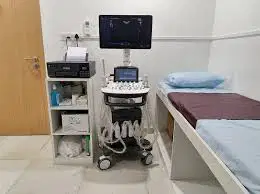
ROOM 1 – Neuro Lab
4 lines
2.
Which fetal organ is most severely affected by IUGR?
a)
Brain
b)
Liver
c)
Kidney
d)
Heart
3.
Absence of the cavum septum pellucidum with tear-drop ventricles suggests:
a)
Dandy-Walker
b)
ACC
c)
Holoprosencephaly
d)
Hydranencephaly
4.
A 22-week fetus has dangling choroid plexus and atrial width of 12 mm. Diagnosis?
a)
ACC
b)
Dandy-Walker
c)
Ventriculomegaly
d)
Holoprosencephaly
5.
Which condition is associated with the lemon sign?
a)
Encephalocele
b)
Spina bifida
c)
Dandy-Walker
d)
ACC
6.
Fused thalami and a single ventricle indicate:
a)
Hydranencephaly
b)
Alobar holoprosencephaly
c)
Dandy-Walker
d)
ACC
7.
Normal atrial width of the lateral ventricle is approximately:
a)
6.5 mm
b)
8 mm
c)
10 mm
d)
12 mm
8.
Absent cerebellar vermis with posterior fossa cyst is:
a)
Mega cisterna magna
b)
Vein of Galen
c)
Hydranencephaly
d)
Dandy-Walker
9.
ROOM 2 – Face & Spine
4 lines
10.
Polyhydramnios with a recessed chin most strongly suggests:
a)
Macroglossia
b)
Micrognathia
c)
Cleft palate
d)
Midface hypoplasia
11.
Splayed posterior ossification centers with a sac indicate:
a)
Spina bifida occulta
b)
Myelomeningocele
c)
Scoliosis
d)
Sacral agenesis
12.
Hypotelorism with a proboscis is associated with:
a)
Trisomy 18
b)
Turner syndrome
c)
Trisomy 13
d)
Trisomy 21
13.
Flattened midface producing a pancake profile is:
a)
Cleft palate
b)
Micrognathia
c)
Midface hypoplasia
d)
Macroglossia
14.
Cystic hygroma is most commonly associated with:
a)
Trisomy 21
b)
Trisomy 18
c)
Turner syndrome
d)
Triploidy
15.
Decreased fetal movement with contractures suggests:
a)
Caudal regression
b)
Pena-Shokeir syndrome
c)
Arthrogryposis
d)
Trisomy 13
16.
Incomplete cleft lip involves:
a)
Lip only
b)
Lip and palate
c)
Palate only
d)
Alveolar ridge
17.

ROOM 3 – Thorax
4 lines
18.
A large homogeneous echogenic lung mass with mediastinal shift suggests:
a)
CAM III
b)
Sequestration
c)
Pleural effusion
d)
Bronchogenic cyst
19.
Systemic arterial supply to a lung mass indicates:
a)
CAM II
b)
CAM I
c)
Sequestration
d)
Pulmonary hypoplasia
20.
Multicystic lung lesion with large cysts is:
a)
CAM I
b)
CAM II
c)
CAM III
d)
Bronchogenic cyst
21.
Single cystic lung mass is most consistent with:
a)
CAM I
b)
Effusion
c)
Bronchogenic cyst
d)
Sequestration
22.
Severe oligohydramnios increases risk for:
a)
CAM
b)
Pulmonary hypoplasia
c)
Pleural effusion
d)
CDH
23.
Massive pleural effusion can progress to:
a)
Sequestration
b)
Hydrops
c)
Pulmonary hypoplasia
d)
CAM
24.
Normal heart with compressed thorax is typical of:
a)
CAM
b)
Pulmonary hypoplasia
c)
Sequestration
d)
CDH
25.
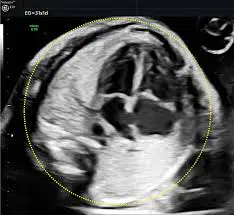
ROOM 4 – Echo Suite
4 lines
26.
Apical displacement of the tricuspid valve indicates:
a)
TGA
b)
Ebstein’s anomaly
c)
TOF
d)
AV canal
27.
Parallel great vessels without crossover indicate:
a)
TOF
b)
TGA
c)
Ebstein’s
d)
Coarctation
28.
Absent end-diastolic flow in the umbilical artery suggests risk for:
a)
Macrosomia
b)
IUGR
c)
Polyhydramnios
d)
Arrhythmia
29.
Fetal tachycardia is defined as HR greater than:
a)
160 bpm
b)
170 bpm
c)
180 bpm
d)
200 bpm
30.
Overriding aorta with VSD and pulmonary stenosis defines:
a)
TGA
b)
TOF
c)
Ebstein’s
d)
Tricuspid atresia
31.
Irregular rhythm with early beats indicates:
a)
SVT
b)
PACs
c)
Complete heart block
d)
Atrial flutter
32.
Right atrial enlargement is classic for:
a)
TGA
b)
Ebstein’s
c)
TOF
d)
ASD
33.
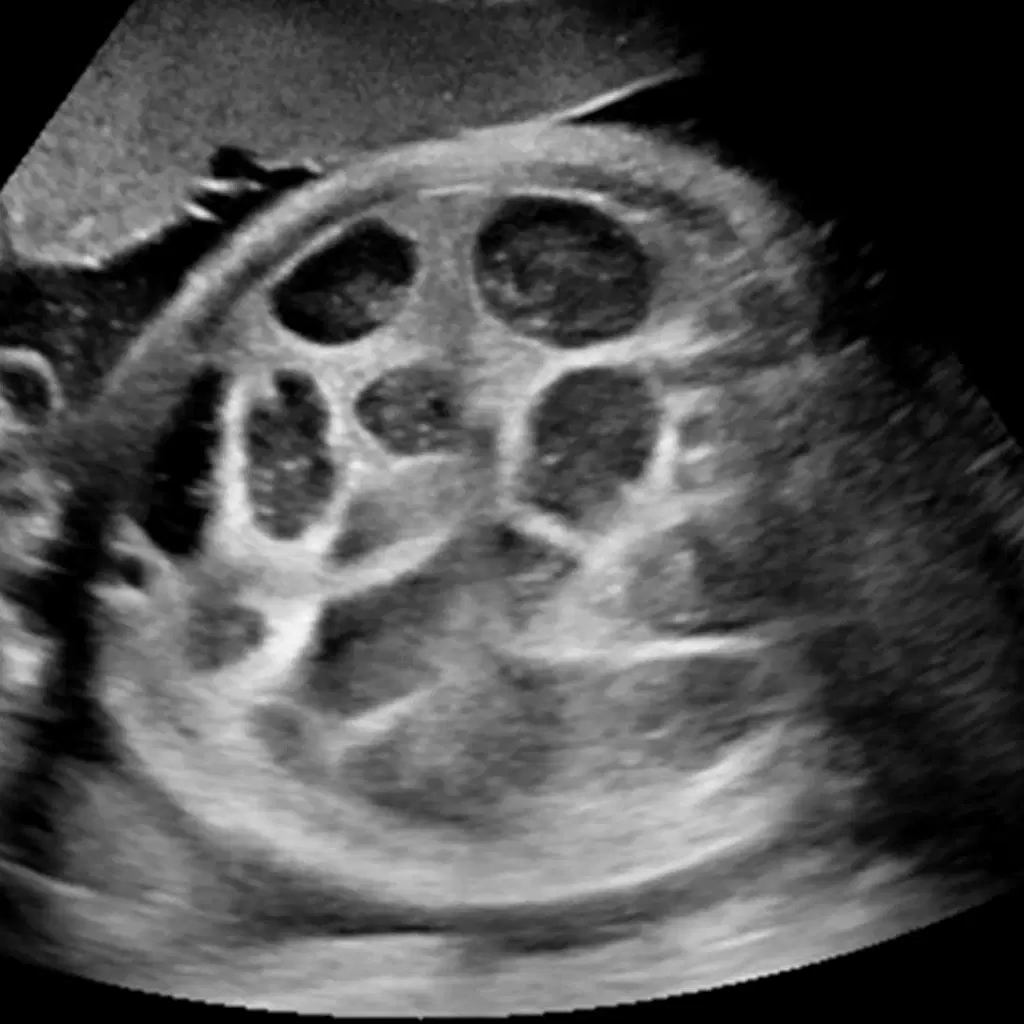
ROOM 5 – Abdomen & GI
4 lines
34.
Double-bubble sign indicates:
a)
Jejunal atresia
b)
Duodenal atresia
c)
Pseudoascites
d)
Choledochal cyst
35.
Free-floating bowel outside the abdomen indicates:
a)
Omphalocele
b)
Gastroschisis
c)
Hernia
d)
Cantrell pentalogy
36.
Hyperechoic bowel with absent gallbladder suggests:
a)
Trisomy 21
b)
Trisomy 18
c)
Trisomy 13
d)
Turner syndrome
37.
Thin echolucent line outlining the abdomen represents:
a)
Ascites
b)
Pseudoascites
c)
Wall defect
d)
Hernia
38.
Enlarged echogenic fetal liver is common with:
a)
IUGR
b)
Maternal diabetes
c)
TORCH
d)
Anemia
39.
Heart on right with liver on left indicates:
a)
Situs solitus
b)
Situs inversus
c)
Heterotaxy
d)
Dextrocardia
40.
Cyst near the porta hepatis suggests:
a)
PUV
b)
Choledochal cyst
c)
Duodenal atresia
d)
UVJ obstruction
41.

ROOM 6 – Growth & IUGR
4 lines
42.
Most sensitive fetal measurement for detecting IUGR is:
a)
BPD
b)
HC
c)
AC
d)
FL
43.
Normal head size with small abdominal circumference implies:
a)
Symmetric IUGR
b)
Asymmetric IUGR
c)
Constitutionally small
d)
Macrosomia
44.
Uterine artery Doppler notching is associated with:
a)
Macrosomia
b)
Placental insufficiency
c)
Polyhydramnios
d)
Neural tube defects
45.
Which parameter is NOT part of the biophysical profile (BPP)?
a)
Fetal breathing
b)
AFI
c)
Fetal tone
d)
UA Doppler
46.
Macrosomia is commonly associated with maternal:
a)
Smoking
b)
Diabetes
c)
Hypertension
d)
Anemia
47.
Symmetric IUGR most commonly results from:
a)
Placental disease
b)
First-trimester insult
c)
Post-term pregnancy
d)
Maternal diabetes
48.
A BPP score of 6/8 with low fluid is considered:
a)
Normal
b)
Equivocal
c)
Reassuring
d)
Severe compromise
49.
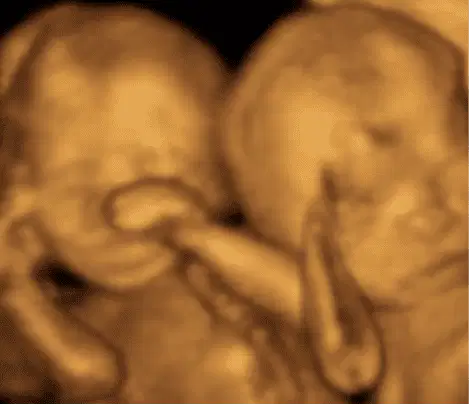
ROOM 7 – Fluid & Twins
4 lines
50.
An AFI of 4 cm represents:
a)
Normal
b)
Polyhydramnios
c)
Oligohydramnios
d)
Hydrops
51.
Polyhydramnios is usually defined as AFI greater than:
a)
20 cm
b)
22 cm
c)
24 cm
d)
30 cm
52.
Twin A with polyhydramnios and Twin B with oligohydramnios indicates:
a)
Discordance
b)
Twin-to-twin transfusion syndrome
c)
Vanishing twin
d)
Twin anemia
53.
Growth discordance is defined as EFW difference greater than:
a)
10%
b)
15%
c)
20%
d)
30%
54.
Amniotic bands differ from amniotic sheets because they:
a)
Are benign
b)
Have blood flow
c)
Constrict fetal parts
d)
Attach to placenta
55.
Monochorionic twins are at greatest risk for:
a)
Macrosomia
b)
TTS
c)
Placenta previa
d)
Postmaturity
56.
Thickness of the dividing membrane helps determine:
a)
Gestational age
b)
Chorionicity
c)
Gender
d)
EFW
57.
ROOM 8 – Placenta & Cord
4 lines
58.
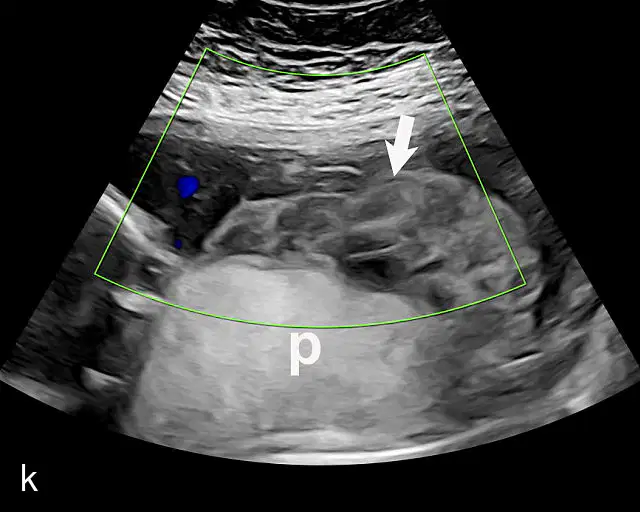
Placenta completely covering the cervical os is:
a)
Marginal previa
b)
Low-lying placenta
c)
Complete previa
d)
Vasa previa
59.
Villi invading into the myometrium describe:
a)
Increta
b)
Accreta
c)
Percreta
d)
Abruption
60.
Fetal vessels crossing the cervix on color Doppler indicate:
a)
Velamentous insertion
b)
Vasa previa
c)
Accreta
d)
Placenta previa
61.
An echogenic vascular placental mass is most consistent with:
a)
Placental lake
b)
Placental infarct
c)
Chorioangioma
d)
Hematoma
62.
Insertion of the umbilical cord into membranes is called:
a)
Battledore
b)
Velamentous
c)
Marginal
d)
Succenturiate
63.
Painless third-trimester bleeding suggests:
a)
Abruption
b)
Placenta previa
c)
Accreta
d)
Placental infarct
64.
Painful bleeding with a retroplacental clot suggests:
a)
Vasa previa
b)
Placental abruption
c)
Accreta
d)
Placental lake
65.

ROOM 9 – GU & Renal
4 lines
66.
A dilated bladder with keyhole sign is classic for:
a)
UPJ obstruction
b)
PUV
c)
UVJ obstruction
d)
Prune belly syndrome
67.
Bilateral renal agenesis is associated with:
a)
Polyhydramnios
b)
Hydrops
c)
Severe oligohydramnios
d)
Normal AFI
68.
Normal AP renal pelvis measurement at 20 weeks is ≤:
a)
2 mm
b)
4 mm
c)
6 mm
d)
8 mm
69.
Enlarged echogenic kidneys with oligohydramnios suggest:
a)
ADPKD
b)
ARPKD
c)
MCDK
d)
PUV
70.
Absent abdominal muscles with megacystis and cryptorchidism indicates:
a)
PUV
b)
Prune belly syndrome
c)
Potter sequence
d)
Meckel-Gruber
71.
UPJ obstruction causes dilation of the:
a)
Ureter
b)
Bladder
c)
Renal pelvis and calyces
d)
Urethra
72.
A nonfunctioning multicystic kidney is consistent with:
a)
ARPKD
b)
MCDK
c)
PUV
d)
Hydronephrosis
73.
ROOM 10 – Chromosomal, Skeletal & Ethics
4 lines
74.
Cystic hygroma with coarctation of the aorta suggests:
a)
Trisomy 21
b)
Turner syndrome
c)
Trisomy 18
d)
Triploidy
75.
Clenched fists with rocker-bottom feet are classic for:
a)
Trisomy 13
b)
Trisomy 18
c)
Trisomy 21
d)
Turner syndrome
76.
Holoprosencephaly with proboscis is associated with:
a)
Trisomy 13
b)
Trisomy 18
c)
Triploidy
d)
Turner syndrome
77.
Chorionic villus sampling (CVS) is performed at:
a)
6–8 weeks
b)
8–10 weeks
c)
10–13 weeks
d)
15–18 weeks
78.
Extremely narrow thorax with short ribs suggests:
a)
OI
b)
Thanatophoric dysplasia
c)
Achondroplasia
d)
Ellis–van Creveld
79.
Failure to respect a patient’s informed decision violates:
a)
Justice
b)
Nonmaleficence
c)
Autonomy
d)
Beneficence
80.
Thanatophoric dysplasia is lethal primarily due to:
a)
Renal failure
b)
Pulmonary hypoplasia
c)
Cardiac defects
d)
Chromosomal loss
100 %

