
Font size
 Worksheets
Second Quarter Quiz Review
Total questions: 82
Worksheet time: 2hrs 9mins
Which of these problems could happen if we don't look after the resources we have?
Loss of animal homes
Climate change
Increase in pollution
All of the above


Abiotic is non-living
An accurate definition of Sustainability is
meeting population needs
meeting the needs of the present without compromising the ability of future generations to survive
meeting the needs of the future without worrying about todays
meeting the food needs of animals
The term 'carrying capacity' is best defined as ...
How much pressure people put on the Earth
The number of people Earth can support at current rates of consumption
solving environmental problems through science and technology
solving environmental problems by changing the way we live
What are examples of non-renewable resources?
Oil, coal and solar energy.
Gas, coal and water.
Oil, gas and wind.
Oil, gas and coal.
What is 'Recycling' mean?
The processing and remanufacturing of the waste into new products
Using an object or resource material again without changing the object's structure.
To make something smaller or lower
What does 'Reuse' mean?
The processing and remanufacturing of the waste into new products
Using an object or resource material again without changing the object's structure.
To make something smaller or lower
The study of how living organisms interact with each other and their environment is called
Point Source Pollution
Ecology
Biodiversity
Nutrient Cycling
__ is the variety of plant and animal life in a particular habitat or ecosystem.
Point Source Pollution
Ecology
Biodiversity
Nutrient Cycling
__ refers to the contamination of the environment with harmful substances.
Pollution
Ecology
Biodiversity
Nutrient Cycling

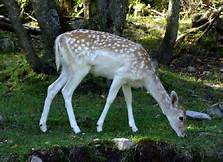


Which of the following organisms is a primary consumer?
grass
rabbit
fox
snake

As you move from the bottom of the energy pyramid to the the top, or the apex, the amount of energy
increases
decreases
remains the same

What is an invasive species?
An organism that is new to an environment that has positive effects on the environment.
An organism that is native to an environment that has negative effects on the environment.
An organism that is new to an environment that has negative effects on the environment.
An organism that is native to an environment that has positive effects on the environment.
Why do the populations of invasive species grow so quickly?
Invasive Species are native to an area.
Invasive species are prey to many animals.
Invasive species have no natural predators.
Invasive species keep the ecosystems in equilibrium.

Invasive species --- [choose 3]
take over the habitat of other organisms.
increases the populations of native organisms.
decrease biodiversity.
increase biodiversity.
cause the populations of native organisms to decrease.
Invasive plants out-compete native plants for --- [choose 3]
sunlight.
water.
oxygen.
space.

The primary cause of the introduction of invasive species is ---
too much food
humans bringing them over
weather events
asteroids
What happens to an ecosystem when a native species disappears?
Biodiversity increases
Invasive species leave
The food web becomes more stable
Opportunities open up for invasive species
When removed from its natural habitat, an invasive species:
Struggles to find food
Cannot adapt to the climate
Thrives and causes harm
Enhances its new environment
According to most scientists, what is the ultimate cause of most mass extinctions?
overhunting
evolution of new species to replace old ones
major change in environment due to extreme natural events
asteroid impact
There have been 5 mass extinctions in Earth's history. Which of the following answer choices was a cause of these extinctions? You may select more than one answer. Check all that apply.
increased carbon dioxide (CO2) levels in the atmosphere
an asteroid impact
formation of glaciers and decreased sea levels
widespread volcanic activity
All of them
Mass Extinction is best defined as....
Complete loss or death of a species
an abnormally large amount of species die out simultaneously or within a short period of time
Change in global or regional climate patterns
Change in climate during which glaciers covered much of the Earth
Species become vulnerable to extinction when
the climate changes
new species arrive
the species does not adapt
their habitat is changed or destroyed
all of the above
How many mass extinctions have occurred on Earth?
3
4
5
6
The current extinction event is being caused by
a meteor strike.
an alien invasion.
the increasing amount of hydrogen sulfide gas.
human activities.
According to most scientists, what is the ultimate cause of most mass extinctions?
overhunting
evolution of new species to replace old ones
major change in environment or climate
asteroid impact
The most abundant greenhouse gas in the atmosphere is ___________________.
oxygen
nitrogen
carbon dioxide
argon
Global warming is known as the gradual increase in _________________ of the atmosphere.
precipitation
sun spots
temperature
ocean currents
The area where a plant or animal lives
environment
location
habitat
home
What will help prevent unnecessary habitat destruction?
Spreading out farms and urban developments
Finding a balance between what humans and animals need
Decreasing animal populations
Decreasing plant populations
Breaking up large areas of habitat into smaller pieces is called...
Destruction
Conservation
Logging
Fragmentation
When a habitat is destroyed, ____ (check all that are true)
Only organisms that can adapt quickly will survive
Only organisms that can move out of the area quickly will survive.
No plants or animals will survive.
Most plants will survive because their seeds are still in the ground.
A good example of the fragmentation of habitat would be _____.
Cutting down a forest to build a housing development.
Draining a swamp to develop the land.
Building a road through the woods.
Polluting the James River
What is habitat diversity?
Diversity within a species
# of species and abundance in the community
How many different habitats are in a region
What is the primary source of energy in an ecosystem?
Plants
Animals
Sun
crops
trees

Wind is a __________ energy resource.
Renewable
Nonrenewable

All of the surroundings that affect living things.
environment
observation
inference
natural resources

What is the definition of ecological footprint?
is the footprint of ecologist
is a measure of the impact living things have on the environment.
is a kind of plant that grows in the rainforrest.
a measure of the amount of land needed to support one person in a particular country.
More- Developed Countries are....
industrialized with high average income
industrialized with low average income
have high poverty rates
have low ecological footprints
The study of living organisms is...
Biology
Ecology
Environmental Science
Social Science
The study of the interactions of living organisms with one another and their environment.
Biology
Ecology
Environmental Science
Social Science
The study of the impact of humans on the environment.
Biology
Ecology
Environmental Science
Social Science
Balances the cost of the action against the benefits one expects from it.
Cost-Benefit Analysis
Law of Supply and Demand
Risk Assessment
Tragedy of the Commons
As the demand for a good or service increases, the value of the good or service also increases.
Cost-Benefit Analysis
Law of Supply and Demand
Risk Assessment
Tragedy of the Commons
A scientific estimation of the likelihood of negative effects that may result from exposure to a specific hazard.
Cost-Benefit Analysis
Law of Supply and Demand
Risk Assessment
Tragedy of the Commons
Pollutants that do not break down easily, they can build up to dangerous levels in the environment.
Biodegradable Pollutants
Non-Biodegradable Pollutants
Pollutants that can be broken down by natural processes.
Biodegradable Pollutants
Non-Biodegradable Pollutants
Unable to dispose of waste or take on new supplies.
Pollution
Closed System
Non-Biodegradable pollutant
Ecological Footprint
Developing countries have rapid population growth.
True
False
What is the primary goal of sustainable development?
Maximum profit
Resource depletion
Environmental balance
Rapid growth
A social movement dedicated to sustaining Earth’s systems that support life is called…
Environmentalism
Industrialism
Capitalism
Feudalism

