
 Worksheets
ACP PREP
Total questions: 70
Worksheet time: 42mins
This organelle is found in both prokaryotic and eukaryotic cells
Mitochondria
Nucleoid
Cytoplasm
Ribosomes
Eukaryotic Cells have the following...
SELECT ALL that apply
Genetic Material
Capsid
Ribosomes
Cell Wall
In the cell theory, new cells are made from old cells via cell........
What are other similarities
Both have cell membrane
Both have a Cell wall
DNA
both cells float in one spot



Which process does this chemical formula represent?
Cellular Respiration

Which process occurs inside of mitochondria?
Cellular Respiration

Which process occurs inside of chloroplasts?
Cellular Respiration
Identify the process.
PRODUCT: GLUCOSE (C6H12O6)
Cellular Respiration
Identify the process.
REACTANT: GLUCOSE (C6H12O6)
Cellular Respiration
What type of macromolecule is primarily responsible for storing genetic information?
Carbohydrates
Proteins
Lipids
Nucleic acids
What is the primary function of lipids in biological organisms?
To provide structural support
To store energy
To catalyze reactions
To transmit genetic information
Which of the following statements is true about proteins?
They are composed of nucleotides.
They are the main source of genetic information.
They are made up of amino acids.
They are primarily used for energy storage.
Which of the following elements are found in all macromolecules? (Select all that apply).


Which macromolecule stores energy?
Carbohydrates
Proteins
Lipids/Fats
Nucleic Acids
This is one job proteins do not have in the body.
structure for tissues and organs
transport things through cell membranes
speed up chemical reactions
insulation

What do viruses need to reproduce?
they need genetic material
They need a host cell
They need bacteria
They need insulin

How does a virus cause a person to develop the common cold?
invades the host cell to reproduce
removes energy from the host cell
produces toxins in the host cell
protects the host cell from bacteria

A virus can be classified by its type of
mitochondria
chromosomes
nucleic acid
carbohydrates

takes over the cell's functions.

The flu is caused by a virus.

What part of a virus is the protein capsule that houses the genetic material (DNA/RNA)?
tail
nucleus
capsid
glycoprotein

Which viral life cycle kills its host cell by lysing (exploding)?
lytic
mitosis
lysogenic
S phase

Which viral life cycle allows viral genetic material to lay dormant while the host cell reproduces?
lytic
mitosis
lysogenic
S phase

What is in the center of the virus?
Nucleic Acids (RNA or DNA)
Nucleus
Capsid
Glycoproteins (surface markers)

Protects the genome of a virus. Made out of protein.
Capsid
Nucleus
Glycoproteins (surface markers)
Nucleic Acids (DNA or RNA)
How do vaccines work against viruses?
Vaccines are like antibiotics, except they work against viruses.
Vaccines prepare the immune system to fight the virus without harming the host.
Vaccines make it impossible for a virus to enter a host cell.
Vaccines find viral DNA or RNA and cut it to pieces, making the virus unable to replicate.

How does Human Immunodeficiency Virus (HIV) replicate?
Lytic Cycle
Lysogenic Cycle
Mitosis
Binary fission

How does influenza (flu virus) replicate?
Lytic Cycle
Lysogenic Cycle
Mitosis
Binary fission
Should a doctor give a patient antibiotics to treat a disease caused by a virus?
Yes, because antibiotics will stop the cellular processes of the virus, helping the patient get better faster.
Yes, because antibiotics will kill bacteria in the body, giving the immune system an easier time fighting the virus.
No, because diseases caused by viruses are always deadly, meaning that the patient cannot be saved.
No, because viruses are not cells, and antibiotics target cellular processes.
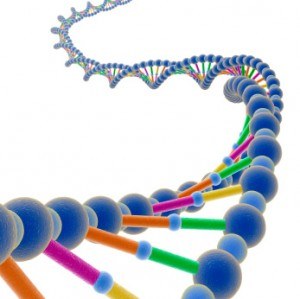

What is the correct order to make a protein?
Protein, DNA, RNA
RNA, DNA, Protein
DNA, RNA, Protein
Protein, RNA, DNA
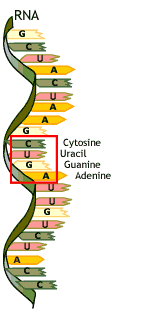

What makes up the SIDES of a DNA ladder?
nitrogen bases
sugars & phosphates
genes & chromosomes
RNA

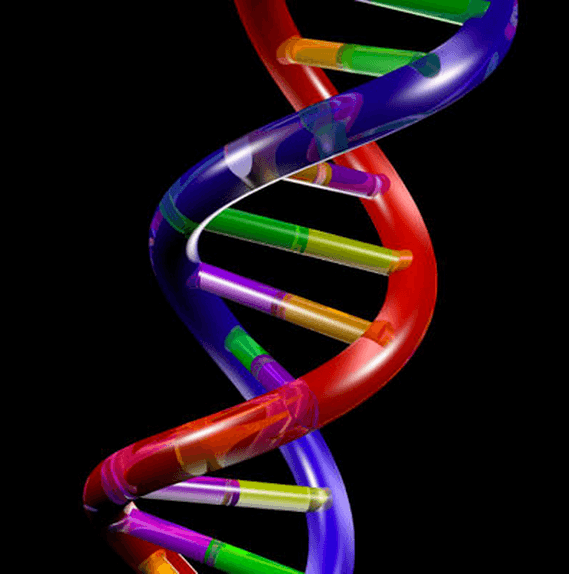

During transcription, this type of ribonucleic acid is responsible for copying the DNA and brining it out of the nucleus.
tRNA
mRNA
rRNA
dRNA

When these bond together, they form a protein
Amino Acids
Peptide Bonds
Ribose
Nucleotides

mRNA occurs during this process
Translation
Transcription
Replication
Delivery
Which of the following is the complementary mRNA sequence to this DNA strand: AACTGAA
UUGACUU
TTGACTT
AACTGAA
AACUGAA

What is the location in the cell for translation?
Cytoplasm
Nucleus
Lysosome
Golgi apparatus
How many nucleotides code for 1 amino acid?
1
2
3
4
Use the CODON CHART to answer the following question.
CCG UUG ACC GCG
What is the sequence of amino acids that will be translated from the mRNA above?
proline - threonine - alanine - luecine
proline - leucine - threonine - alanine
proline - phenylalanine - tyrosine - arginine
arginine - leucine - threoinine - alanine
Use your codon chart to answer the following question:
AUG AGA ACG CCG
What is the amino acid sequence from the mRNA above?
methionine - arginine - proline - threoinine
methionine - alanine - threoinine - proline
methionine - arginine - threoinine - proline
methionine - proline- arginine - threoinine
Use the CODON CHART to answer the following question.
What amino acid is coded for by the codon CAG?
histidine
tyrosine
valine
glutamine

