
 Worksheets
Environmental Science Midterm Study Guide
Total questions: 95
Worksheet time: 48mins
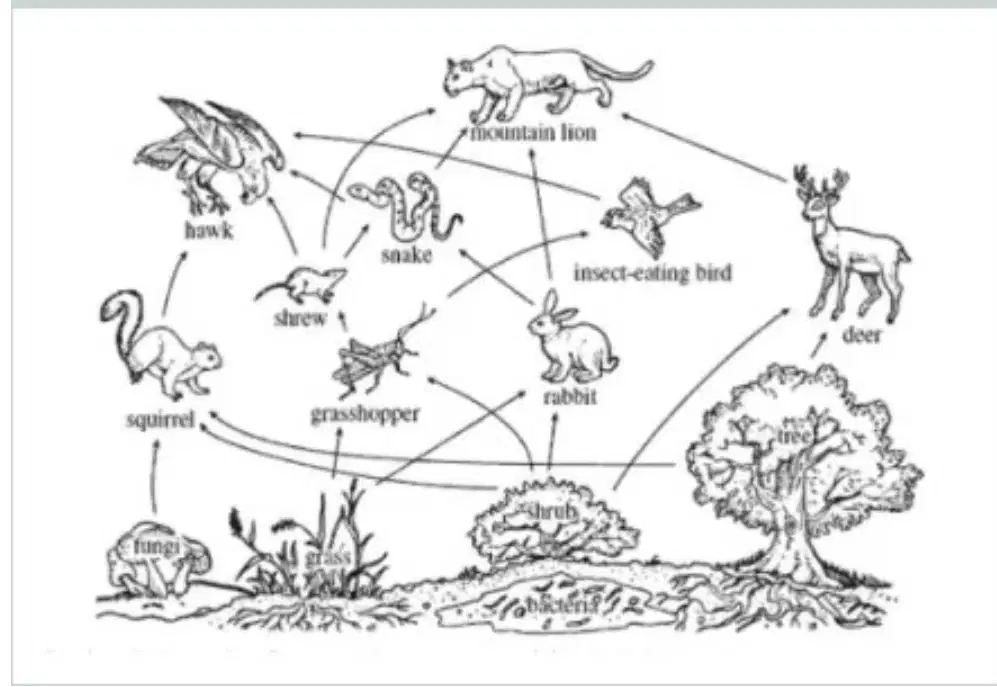
A complex feeding pattern of several groups of consumers in an ecosystem is called a
pyramid of energy
food chain
food web
trophic level
The arrangement of different ages in a population is called the population's
sex structure
sex ratio
age ratio
age structure
Declining death rates due to increased food production and improved medical care while birth rates remain high is characteristic of the ______ stage.
developmental
pre-industrial
post-industrial
transitional
industrial
The two processes that determine the world's current biodiversity are:
breeding and ecotourism
endemism and climate change
extinction and speciation rates
extinction and evolution rates
mutation and evolution
Which of the following statements best describes competition for a niche?
Competition for a niche always results in the disappearance of one of the competing species.
Competition for resources always involves aggression.
Two species could divide a niche through resource partitioning.
Members of two different species never compete for resources.
Global warming has been hypothesized to cause many plants to flower earlier. If bees search for food earlier in response to this, this would represent ____ within the community.
Primary succession
Climax
Coevolution
Secondary succession
The species most often vulnerable to human impact from habitat loss and poaching is the _____.
decomposer
producer
top predator
competitive species
The highest rate of extinctions for organisms in Alabama can be found in ______ environments.
saltwater
freshwater
terrestrial
domestic
About half of the endangered or threatened species listed for Alabama are
deer
crayfishes
mussels
kudzu
Which year listed below demonstrated the greatest volume of recycling from the data in the graph titled Recycling Tonnages, 1960–2018?
1985
2005
2000
1960
1995
What is the MOST dangerous pollutant to freshwater ecosystems, and why?
Acid rain, because it affects the most organisms.
Heavy metals (lead, mercury), because they cause brain damage in humans.
Sediment, because there is so much of it and it chokes off sunlight to producers.
Herbicides, because it kills off all of the plants in a freshwater ecosystem.
Which of the following organisms is known for creating the first delicate layers of soil? (Pioneer species)
otters
grasses
lichen
spruces
is the process by which primary producers use sunlight to convert carbon dioxide and water into sugars.
Photosynthesis
Cellular respiration
Chemosynthesis
Adaptation
Which of the following organisms is a decomposer?
mushroom
deer
kudzu
tiger
Which of the following is an interaction in which one organism benefits and the other is harmed?
mutualism
parasitism
commensalism
competition
Ecosystems with high biodiversity levels
have greater stability than those with lower biodiversity
cause other ecosystems to become less resilient
have almost no effect on the biomes
have a decrease in an ecosystem's resistance to change
Carrying capacity refers to
the maximum number of individuals of a species that an environment can support sustainably
the rate at which a population grows when resources are unlimited
the average number of offspring produced per individual each season
the total amount of biomass produced by an ecosystem annually
Which of the following human populations is experiencing high birth and high death rates?
Venezuela
Hungary
Russia
Afghanistan
In the demographic transition model, first the ______ rate will decrease, and then the ______ rate will also decrease, stabilizing population growth.
mortality, natality
natality, mortality
mortality, immigration
natality, immigration
The amount of offspring that a single female can produce in her lifetime is known as:
Fertility
Biotic potential
Gestational period
Generational period
A “developed” nation refers to the fact that it has
an agrarian economy and has finished the demographic transition
a post-industrial economy and has not completed the demographic transition
a pre-industrial economy and has not completed the demographic transition
an industrial economy and has finished the demographic transition
Which of the following is an end product, or output, of photosynthesis?
nitrogen
sunlight
carbon dioxide
water
oxygen
Which processes are shown by letters D and G?
D is decomposition and G is evaporation
D is evaporation and G is decomposition
D is respiration and G is photosynthesis
D is photosynthesis and G is respiration
Which of the letters in the diagram represent something that will decrease atmospheric carbon dioxide levels?
G
F
J
C
D
Humans have dramatically altered the rate of nitrogen fixation into forms usable by autotrophs _____.
because we have allowed the erosion of farmlands through poor agricultural practices.
because we burn fossil fuels to meet our energy needs.
because we produce and apply synthetic fertilizers to crops, lawns, and parks.
because we use antibiotics to reduce the numbers of denitrifying bacteria.
By damming rivers and using methods such as flood irrigation, we are:
decreasing transpiration
increasing evaporation
decreasing the water table
increasing the water table
decreasing evaporation
Nitrogen fixation is a process that makes nitrogen available to plants and is carried out by
parasitic bacteria
mutualistic and free-living bacteria
How do plants contribute to the water cycle?
through the process of transpiration
through the process of condensation
through the process of infiltration
through the evaporation of water from their roots
Which two factors can speed up the process of evaporation?
warm temperatures and strong winds
strong winds and proximity to the ocean
warm temperatures and proximity to the ocean
increased cloud cover and low temperatures
The origin of all phosphorus in biological tissues is
phosphorus found in animal bones and muscles
phosphorus weathered from rock
atmospheric phosphorus gas
phosphorus dissolved in the ocean and taken up by shellfish
Tigers living in warm climates have thinner coats of fur than tigers living in cool climates. This is a result of
general diversity
species diversity
genetic diversity
ecosystem diversity
For every 1,000 babies born in Mozambique this year, nearly 150 of them will die before they reach their 1st birthday. The rate of 150 deaths per 1,000 births is known as the:
Infant mortality rate
Child mortality rate
Total mortality rate
Immigration rate
The organisms in the picture above are engaged in which type of species relationship?
Amensalism
Commensalism
Mutualism
Predation
The Sikhote-Alin Mountains, and the Siberian tigers living on them, are separated from other mountain regions in which the tigers could live. The mountains are an example of a(n)
invasive species
habitat fragment
mass extirpation
mass extinction
A high infant mortality rate is most often associated with
low incidence of infectious disease
under-nutrition
high standards of living
balanced diets
The population change in a particular year can be calculated by
(births+immigration) - (deaths+emigration)
(births+emigration) - (deaths+immigration)
(deaths+emigration) - (births+immigration)
(deaths+immigration) - (births+emigration)
In the demographic transition model, birth and death rates are lowest during the
preindustrial stage
industrial stage
transitional stage
postindustrial stage
What is the correct hierarchy of taxonomic groups, from largest to smallest?
genus, family, species, subspecies
genus, family, subspecies, species
family, genus, species, subspecies
family, genus, subspecies, species
The addax is an endangered antelope. During the summer its coat is white and during winter its hair turns brown. Addax are nocturnal and do not drink. They get their moisture from succulent plants. Their hooves are broad with flat soles. In which of the following biomes would the addax most likely live?
tundra
taiga
grassland
desert
rainforest
A caterpillar eats some grass. A bird eats a caterpillar. A fox eats a bird. Which of the following food chains represents this series of feeding relationships?
fox -> bird -> caterpillar -> grass
grass -> caterpillar -> bird -> fox
bird -> fox -> caterpillar -> grass
Identify where most of the energy is located in the ecological energy pyramid shown, which has producers at the broad base and higher-level consumers toward the narrow top.
carnivores
herbivores
producers
top predator
A population of wolves is seeing a birth rate of 5 per year and a death rate of 3 per year. There are 2 immigrants and 4 emigrants in the same time period. Is the population getting larger or smaller?
The population is growing.
The population is shrinking.
Population change cannot be calculated from the given data.
The population is stable.
Per capita land consumption means the
amount of land a country uses as a whole.
type of land covered by state capitols.
type of land people live on.
amount of land each person uses.
Which of the following is often a result from land development for resource extraction?
Higher disease incidence from industrial pollution of air or water
Lower socioeconomic status for workers involved
Creation of additional habitat niches for species to use
Increasing biodiversity and habitat integrity
If we were to restrict water use globally, which industry would have to make the greatest cuts to be most effective at conserving water?
domestic use
fossil fuel extraction
agriculture
transportation
manufacturing
Marshes, bogs, swamps, estuaries, mangrove forests, deltas, and bayous are all examples of
forest ecosystems
saltwater ecosystems
freshwater ecosystems
endangered lands
wetlands
Which type of organism is responsible for making the nitrogen cycle work?
Bacteria
Plants
Animals
Fungi
Which biogeochemical cycle is represented by the image showing gas in the atmosphere, bacteria in root nodules of legumes, bacteria in soil, nitrate ions, ammonium ions, decomposers, dead animals and plants, and amino acids and proteins in plants and animals?
carbon
phosphorus
nitrogen
water
sulfur
Which of the following is NEVER considered a renewable resource?
fresh water
sunlight
natural gas
soil
Which of the following is true about nations that have the largest ecological footprint (resource use)?
They use the most fossil fuels
They have the largest populations
They have the highest amount of natural resources
They have the fewest number of environmental laws
Which of the following is NOT part of a scientific study being peer-reviewed?
Sharing conclusions with peers
Peers checking for possibly inaccurate conclusions
Peers checking experimental procedures for flaws
Peers analyzing the possible ethical impacts of the conclusions
Kayaking on a river with friends is the use of which ecosystem service?
Regulating
Cultural
Provisioning
Supporting
Many individuals of one species together in one place at the same time is considered
a community
mutualism
a niche
a population
Look at the population pyramid. What can you predict based on this information?
The population is expanding
The population is stable
You can't predict based on this image
The population is declining
Which of the following is an example of climate?
There is a cold front coming in this weekend.
It rained 4 inches last week in Seattle, WA.
A snowstorm is forecasted to hit the northeast U.S. this week.
It is usually hot in Texas in July.
Because frogs absorb both oxygen and toxins through their skin, they are very sensitive to air and water quality. This makes them an excellent
pioneer species
keystone species
primary species
indicator species
Which of the following is not true about mangrove trees?
Their leaves excrete excess salt from brackish water.
Their roots provide shelter for fish and shark species.
Their large roots cause erosion.
Mangrove forests are threatened by tourism and shrimp farming.
Which of the following is not an example of secondary succession?
Trees regrowing after being logged
The growth of lichens on a newly created volcanic island
Vegetation growing after a hurricane has destroyed a patch of land
The recolonization of an area burned by a forest fire
A species that absorbs nutrients primarily from the air rather than soil would likely be
a pioneer species
an endangered species
an indicator species
a keystone species
What is the name of the process used by a scientist when studying a small part of a larger ecosystem as an indication of what happens in the larger system?
coring
line transects
sampling
total organism count
When collecting and processing minerals for use, which is the most damaging type of mining for the environment and living species, including humans?
Placer mining
Strip mining
Solution mining
Shaft mining
Which type of forest product harvesting is the least ecologically damaging, although it costs more than other processes due to having to take time and effort to reduce impacts?
Clear cut logging
Selection system logging
Shelterwood logging
Seed-tree logging
If Chile is experiencing a particularly warm year, this could be caused by
Jet stream
El Niño
tides
La Niña
The phosphorus cycle is unique because it does not include which location?
atmosphere
biosphere
hydrosphere
geosphere
Which process takes carbon dioxide from the air and converts it into organic matter?
photosynthesis
decomposition
denitrification
respiration
A location that releases more of a nutrient than it takes in, or that stores nutrients for long times, is called a
source
compaction
sink
reservoir
Which of the following is NOT a greenhouse gas?
methane
carbon dioxide
water vapor
nitrogen gas
The atmosphere is the largest reservoir for which nutrient?
phosphorus
nitrogen
sulfur
carbon
A place where an organism lives is called its
niche
community
trophic level
habitat
Which level of an energy pyramid is most likely to have the highest number of organisms?
tertiary consumers
secondary consumers
producers
Two types of organisms consume dead and decaying matter. The difference between them is that ____ are consumers that feed on large dead organisms, while ____ break down organisms into simpler molecules.
decomposers; scavengers
producers; decomposers
scavengers; decomposers
decomposers; producers
The viceroy butterfly and the monarch butterfly look very similar. Both are distasteful to predators. This is an example of
coevolution
mimicry
mutualism
camouflage
Cowbirds are known to lay their eggs in the nests of other birds. Those birds will feed the new chicks and their own, which sometimes means not every chick gets enough food. This is an example of
parasitism
commensalism
amensalism
mutualism
Which sphere of the earth is named using the Greek root meaning "ground"?
hydrosphere
atmosphere
geosphere
biosphere
Which of these is NOT an example of an abiotic factor?
temperature
bacteria
sunlight
rainfall
Which kind of niche takes competition between organisms into account?
fundamental
competitive
realized
unique
How much chemical energy is transferred from one trophic level to the next in a food chain?
50%
90%
10%
100%
If the producers in a forest make 20,000 Calories, how much do the secondary consumers receive?
20 Calories
200 Calories
2,000 Calories
10,000 Calories
Organisms that eat both plants and animals are called
autotrophs
herbivores
carnivores
omnivores
Which is not true about food webs?
Food webs contain decomposers and scavengers throughout
Food webs are simpler than food chains
Food webs show the transfer of energy among organisms
Food webs are more accurate than food chains
If the gene pool of two populations are separated, the populations may develop into a new species. This is called
interspecific competition
natural selection
speciation
genetic separation
20 different species of galagos, also known as bushbabies, are found in Africa. Even though various species of galagos share habitats, they cannot interbreed with one another because of their differently structured genitalia. Which type of speciation is this?
temporal isolation
behavioral isolation
mechanical isolation
geographic isolation
An ecologist is discussing two animals' ability to reproduce with one another. Which would be the appropriate term?
fertility
fecundity
mortality
natality
Which is NOT true about animal species?
individual species are well documented on a central registry
some species have been protected through trade restrictions
animals of the same species can interbreed and reproduce
endangered species are in immediate jeopardy of extinction
Which type of organisms would you expect to have low levels of natal care and a short life expectancy?
r-selected species
K-selected species
apex predators
late-successional trees
Long life expectancy usually correlates with all the following, EXCEPT:
type I survivorship curve
high levels of natal care
larger size
rapid reproduction
Which of the following is NOT a density-dependent limiting factor?
predation
storms
competition
disease
What causes a J curve to flatten into an S curve?
exponential growth beginning
logistic growth beginning
death rate equaling birth rate (mortality being equal to natality)
limiting factors affecting the population
When a population passes its carrying capacity, which of the following will likely happen?
a population cannot pass its carrying capacity
natality rates will increase
mortality rates will increase
competition will decrease
The primary cause of biodiversity loss worldwide is
invasive species
pollution
poaching
habitat destruction
Which of the following field techniques would be most helpful when studying migratory patterns of an endangered bird?
making sporadic notes in field journals
implanting microchips to track movement
using binoculars to spot members
using drift nets to capture them
A species that is accidentally introduced into an ecosystem is called a(n)
native (endemic) species
non-native (exotic) species
specialist species
keystone species
Ecologists study matter and systems in an organized manner. Choose the correct sequence of organization from the least inclusive to most inclusive:
organism -> community -> population -> biosphere -> ecosystem
organism -> population -> community -> ecosystem -> biosphere
biosphere -> ecosystem -> community -> population -> organism
biosphere -> population -> community -> ecosystem -> organism

Which type of pollution is shown in the image below?
Air pollution
Water pollution
Acid precipitation
Global warming
Where does the majority of plastic waste end up?
Oceans
Burned for energy
Landfills
Recycled

