
 Worksheets
AGS-2025-EARTH/SPACE-S1 PRACTICE-J
Total questions: 110
Worksheet time: 3hrs 47mins

Is water considered abiotic or biotic?
Abiotic
neither

A dead plant is...
Abiotic
Biotic

Climate
Biotic factor
Abiotic factor

This dinosaur diet...
Meat and plants eater
Plants eater

The original source of energy for a food web is...
sun
plants

What is a herbivore?
an animal that gets energy from eating other animals
an organism that gets energy from eating only plants

Photosynthesis is important because...
it makes food for the food webs
it makes carbon dioxide
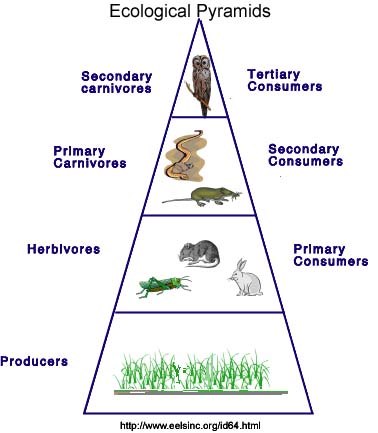
The largest group of organisms found in a food web would be:
Primary Consumers
Producers

List the physical plates from outermost layers to the innermost layers.
Crust, mantle, asthenosphere, outer core, inner core
Lithosphere, asthenosphere, mesosphere, outer core, inner core

Today is much colder than yesterday!
Weather
Climate

Cattle egrets forage (feed) in fields among cattle. The egret gets easy access to flying insects stirred up by the cattle, and the cattle don't care if they are there or not.
competition
commensalism

Clown fish live among anemones, acting as a lure for the sea anemone's prey. The clown fish get protection and shelter from the anemone. This is an example of which type of symbiosis?
Mutualism
Commensalism

This is any variation that makes an organism better suited to its environment.
Evolution
Adaptation

The role an organism plays in its ecosystem
function
niche

When an organism copies a characteristic of something else in order to better its chances for survival and reproduction
hibernation
mimicry

Which of the following shows the symbiotic relationship between the Rodent and the Bird?
Competition
Mutualism

A mosquito feeding off of a human.
Mutualism
Parasitism
What is a Geologic Process?
Something that occurs naturally and changes Earth's surface
Something that only happens to geodes
What can geologic processes do? Select ALL that apply...
Create things
Destroy things
Shape Earth's surface
Be helpful
Be harmful
What does climate mean?
is the broad long term patterns (average) of weather in a region
day to day regions on earth
What would most likely occur if the Sun did not heat Earth?
There would be no weather
There would be slightly less weather.

Which of the following best describes a relationship in the food web?
The mouse is a producer because it consumes the green plant.
The wild cat is a secondary consumer because it consumes the rabbit.

What is a producer?
an organisms that uses sunlight to make its own food
an organism that gets energy from eating dead organisms, non-living material or waste
Today is much colder than yesterday!
Weather
Climate

A volcano is an opening in the Earth's crust that allows hot lava to escape from underground.
True
False
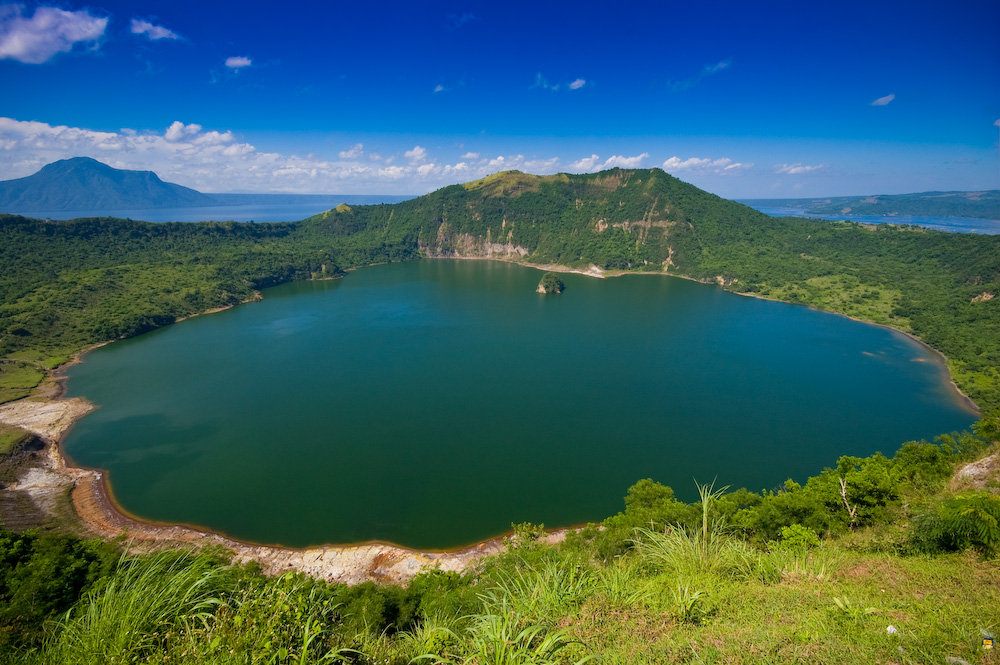
Name this body of water
plain
lake

What is magma called when it reaches the surface of Earth?
viscosity
Lava
Which image shows a tsunami in action?


The huge pieces of the earth's crust are called ____________________________.
plates
directions

parasites, disease, predators, are examples of what type of limiting factors?
density independent
density dependent

When a population grows past the ecosystem's carrying capacity, what happens to the population?
The population starts to die off to return to carrying capcity
Continues to grow

A population of foxes has 36 individuals. In one year, 10 baby foxes are born and 6 older foxes die. The population at the end of the year is (a) .

After a forest fire, an ecosystem would start regrowth through -
limiting factors
secondary succession

What is the order of succession shown in this figure?
C, D, A, B
D, A, B, C

This is the process that forms a new ecosystem where no organisms lived before.
competition
primary succession

The snake is the _______.
Predator
Prey

Who is the prey?
Bear
Salmon

Tiger
Predator
Prey

Noah and Aria love checking the forecast to see if they need an umbrella or sunglasses. What is it that changes every day?
weather
latitude

Benjamin and Anika are looking at a map of the United States, trying to figure out what word describes the average temperature over a large area or region. Can you help them out?
Weather
Climate

Mason, William, and Evelyn are on a globe-trotting adventure! They notice that the temperature and weather patterns change as they move closer or farther from the equator. What is this change mostly related to?
Weather
Climate

Weather or Climate?
The forecaster predicted thunderstorms for tomorrow.
Weather
Cimate

Which continent is shown here?
I don't know that yet!
North America

Which continent is shown on the globe here?
Africa
Australia

Which of these letters indicates the location of Australia?
B
D

Which layer of the atmosphere contain all the weather?
Thermosphere
Troposphere

Moving air in Earth’s atmosphere is called ___________.
wind
weather

Which of these BEST describes the atmosphere?
a blanket of air that surrounds Earth
all of Earth's water

What are clouds made of?
small animals
tiny droplets of water

What does temperature measure?
how fast the wind is moving
how warm or cool something is

Which of the following is a part of weather?
wind
all of these

Which part of the day is usually the warmest?
evening
noon
night
morning

This cycle shows the way water evaporates from Earth’s surface into the air, condenses, and falls back to the surface as precipitation.
What is this cycle called?
A. the water cycle
B. the weather cycle
C. the precipitation cycle

This diagram shoes three important processes in the water cycle, What does number 1 show?
Evaporation
condensation
precipitation
This diagram shoes three important processes in the water cycle, What does number 2 show?
Evaporation
condensation
precipitation
This diagram shoes three important processes in the water cycle, What does number 3 show?
Evaporation
condensation
precipitation
What does it mean to adapt?
To stay the same
To move environments
To change in order to survive
To stay the same in order to survive

birds dancing for mates
Physical Adaptation
Behavioral Adaptation

fish swimming in schools
physical adaptation
behavioral adaptation

Long Limbs
physical adaptation
behavioral adaptation

Puffer Fish Spines & Large Jaws
physical adaptation
behavioral adaptation

Fur Color
Physical Adaptation
Behavioral Adaptation



Brazil's rainforest is located in a region with a tropical climate. The tundra of the North Pole is located in a region with a polar climate. Why does air in an area with a tropical climate hold more water than air in a polar climate?
Tropical climates have more rivers.
Warm air holds more hot water vapor.
Polar climates get more sunlight.
Polar climates have ice instead of water.

On which kind of day would you expect the most evaporation from the surface of a pond?
Sunny and hot
Sunny and cold
Rainy and hot
Rainy and cold


What are thunderstorms?
a storm with thunder and lighting and typically also heavy rain or hail
a storm with high winds and heavy snowfall.
a mobile swirling of violently rotating winds with the appearance of a funnel shaped cloud
a huge storm with strong winds and storm surges

What are tornadoes?
a storm with thunder and lighting and typically also heavy rain or hail
a storm with high winds and heavy snowfall.
mobile violently rotating winds with the appearance of a funnel shaped cloud and beneath a large storm system.
a huge storm with strong winds and storm surges

When convergent plates collide, if both plates are pushed upward, this forms.
Fissures
Mountain Ranges
Volcanoes
Rock Cycle

The arrows in the mantle are showing _________ which move the Earth's plates.
(click on the image to enlarge)
continental drift
convection currents
radioactive decay
conduction


Primary Consumer
Most likely an herbivore
Must find its own food
Most likely eats meat “ONLY”
Creates its own food through photosynthesis
Most likely an omnivore

Parasitism
A. Both organism’s benefits
B. This is the maximum number of organisms that can be supported by an ecosystem
C. Non-Living parts of the environment
D. Things that can grow a population or the lack thereof, can destroy a population.
One organism benefits and the other is harmed


Which letter shows exponential growth happening?
A
B
C
D


Why do animals migrate?
they enjoy traveling
they do not like to stay in one place very long
find food, join other animals, go to a colder environment
find food, to mate, to give birth to young

a behavior an animal knows without learning it
instinct
behavior
learned
hibernation

behaviors that come from watching other animals or through experience
hibernation
migration
instinct
learned behavior

Josie likes to visit the park in her neighborhood to watch hummingbirds. Based on the beak of the hummingbird, what does it most likely eat?
Fish
Nuts
Insects
Flower Nectar


The teeth in this picture are from an animal that would most likely eat
grass
insects
fruit
fish


Volcanoes
Meteorology
Astronomy
Geology
Oceanography
Pseudoscience

Waves
Meteorology
Astronomy
Geology
Oceanography
Pseudoscience

Thunderstorms
Meteorology
Astronomy
Geology
Oceanography
Pseudoscience

Star properties
Meteorology
Astronomy
Geology
Oceanography
Pseudoscience

Bigfoot
Geology
Meteorology
Astronomy
Oceanography
Pseudoscience

Which step of the scientific method is this example-
Container #: State of Water: Height:
1- water =14.0 mL, ice =14.8 mL
2-water=20.0 mL, ice= 20.8 mL
3-water= 24.0 mL, ice=24.9 mL
question
hypothesis
experiment
data
conclusion


A statement of whether your hypothesis was supported.
conclusion
summary
scientific knowledge


What are climate factors?
Latitude/Elevation
All of the Above
Wind/Ocean Currents
Surface features (Landforms)

Higher elevations are warmer than lower elevations.
True
False

Animals that live in the desert have adapted to live with little water since the desert gets little rainfall.


In this photo, what is an abiotic factor?
Deer
Grass
rain


What could happen to this food web if all the plants were eliminated?
only fungi would survive
the food web would collapse
birds and nematodes will increase
the food web would produce more decomposers

