
 Worksheets
Exam Reminders
Total questions: 79
Worksheet time: 40mins
What was the original purpose of the allergy response (hypersensitivity) in the immune system?
It was originally designed for parasites.
It was originally designed for bacteria.
It was originally designed for viruses.
It was originally designed for fungi.
Which type of hypersensitivity involves the interaction of soluble antigens with IgE and mast cell degranulation?
Type I
Type II
Type III
Type IV
Type II hypersensitivity is mediated by which antibody made against cell surface proteins that were modified, with new epitopes?
IgE
IgG
IgA
IgM
Type III hypersensitivity involves IgG against immune complexes. What system and process are involved in the tissue response?
Complement system and inflammation
Mast cell degranulation
Antibody production
T cell activation
Type IV hypersensitivity involves which cells against foreign objects and modified proteins?
B cells
CD4/CD8 T cells
Mast cells
Neutrophils
What is another name for Type I Hypersensitivity?
Delayed-type reaction
Immediate or anaphylactic reaction
Cytotoxic reaction
Immune complex reaction
Which immunoglobulin is primarily involved in the first contact sensitization in Type I Hypersensitivity?
IgA
IgM
IgE
IgD
In Type I Hypersensitivity, cross-linking of IgE with FcεRI leads to mast cell degranulation with the release of ________.
Histamine (HA)
Interleukin-2 (IL-2)
Tumor Necrosis Factor-alpha (TNF-α)
Immunoglobulin G (IgG)
The receptors involved in Type I Hypersensitivity are found on which of the following cells?
Neutrophils, monocytes, lymphocytes
Mast cells, eosinophils, basophils
Red blood cells, platelets, macrophages
Dendritic cells, B cells, T cells
Complement activation occurs in Type I Hypersensitivity.
True
False
Which type of T cells are involved in Type I Hypersensitivity?
TH1 cells
TH2 cells
Regulatory T cells
Cytotoxic T cells
Name any two cytokines involved in Type I Hypersensitivity.
IL4, IL5 (also IL10)
IL2, IL12
IFN-gamma, TNF-alpha
IL17, IL23
List the immunoglobulin classes associated with Type I Hypersensitivity.
IgE, IgG1, IgG4
IgA, IgM, IgD
IgG2, IgG3, IgM
IgA, IgE, IgM
What has led to a decrease in parasites in high populated countries?
Increased population
Production of vaccines, antibiotics, and hygiene
Poor hygiene
Lack of medical facilities
What does a population with parasites have a balance between?
Superinfected, healthy, and immunopathology
Predators, prey, and resources
Genetic diversity, mutation rate, and adaptation
Temperature, humidity, and rainfall
Impact of Hygiene: Parasite free population has lost balance. People are developing allergies. True or False: Parasite-free populations are developing allergies due to lost balance.
True
False
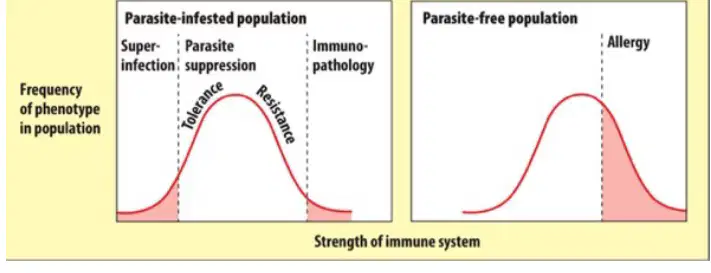
What is a major health issue observed in parasite-free populations according to the diagram?
Immunopathology
Superinfection
Allergy
Resistance
Which immunoglobulin is anti-inflammatory and can bind 2 antigens?
IgA
IgG4
IgE
IgM
Does IgG4 facilitate complement or phagocytosis?
True
False
The Fc region of IgG4 binds to an inhibitory FcγRIIB receptor, resulting in net inhibition of a cell. Can it also bind to IgE and prevent release of histamine?
True
False
Fill in the blank: The receptor for IgE has two ______ alpha domains and is anchored to the membrane by a transmembrane alpha domain.
extracellular
intracellular
cytoplasmic
nuclear
Mast cells are full of granules with enzymes, which do contain _____?
histamine
serotonin
dopamine
adrenaline
Which enzyme is associated with mucosal mast cells?
Chymotrypsin
Tryptase
Elastase
Amylase
Which enzyme is found in connective tissue mast cells?
Tryptase
Chymotrypsin
Chymotryptase
Elastase
Mast cells display an increase diversity of _____ antibodies that have different antigen specification.
IgE
IgA
IgG
IgM
Irreversible binding to FcεRI occurs in which cells?
Mast cells, eosinophils, basophils
B cells
T cells
Macrophages
Omalizumab binds to Fc of IgE and prevents binding to receptor. This prevents the release of _____
HA (histamine)
serotonin
dopamine
acetylcholine
Fill in the blank: Histamine is found in ______ and basophils.
mast cells
erythrocytes
platelets
neutrophils
Fill in the blank: Histamine causes vasodilation and ______ muscle contraction.
smooth
skeletal
cardiac
voluntary
Fill in the blank: Histamine is involved in hay fever, urticaria, angioedema, and ______.
bronchospasm
diabetes
hypertension
arthritis
Fill in the blank: Prostaglandins cause capillary dilation and ______ muscle contraction.
smooth
skeletal
cardiac
striated
Fill in the blank: Thromboxanes aggregate ______.
platelets
red blood cells
neutrophils
lymphocytes
Fill in the blank: Prostaglandins and thromboxanes are formed from ______ acid.
arachidonic
palmitic
oleic
linoleic
Fill in the blank: Leukotrienes are not preformed and are formed during ______.
anaphylaxis
mitosis
photosynthesis
digestion
Fill in the blank: Leukotrienes are formed from arachidonic acid via the ______ pathway.
lipoxygenase
cyclooxygenase
peroxidase
hydroxylase
Fill in the blank: Leukotrienes cause vasodilation and ______ muscle contraction.
smooth
skeletal
cardiac
striated
Fill in the blank: Eosinophil Chemotactic Factor of Anaphylaxis is a ______ in mast cells.
tetrapeptide
monosaccharide
lipoprotein
disaccharide
Fill in the blank: Eosinophil Chemotactic Factor is released in anaphylaxis and attracts ______.
eosinophils
neutrophils
basophils
lymphocytes
Fill in the blank: Eosinophils release histaminase and arylsulfatase to degrade ______ and leukotrienes.
histamine
serotonin
dopamine
acetylcholine
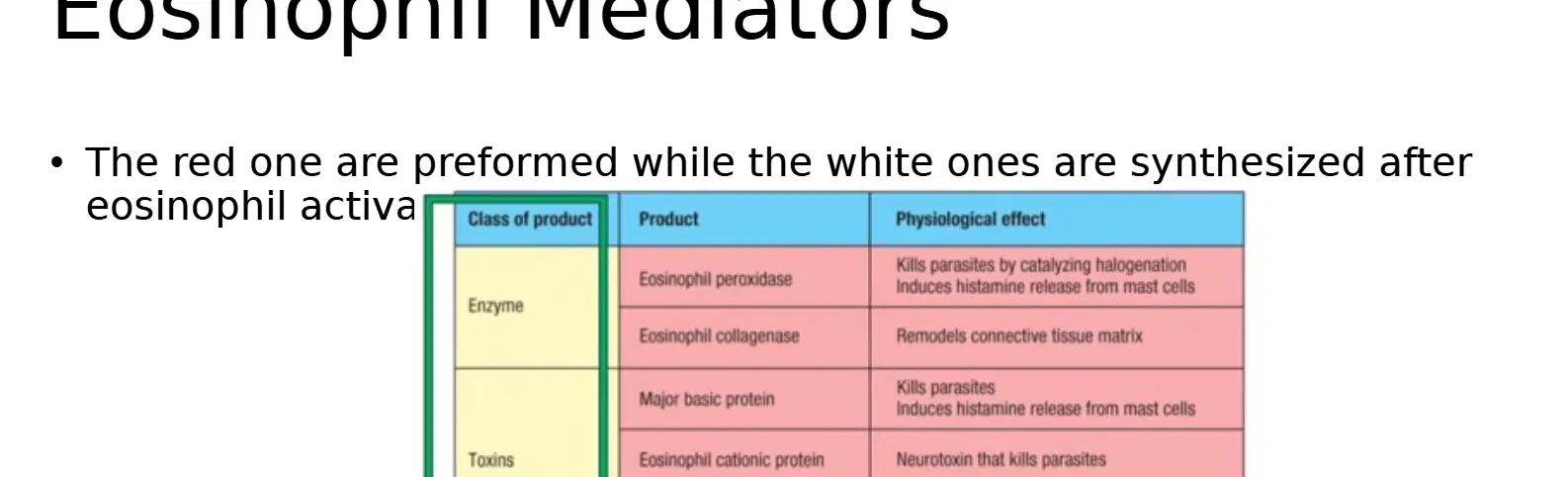
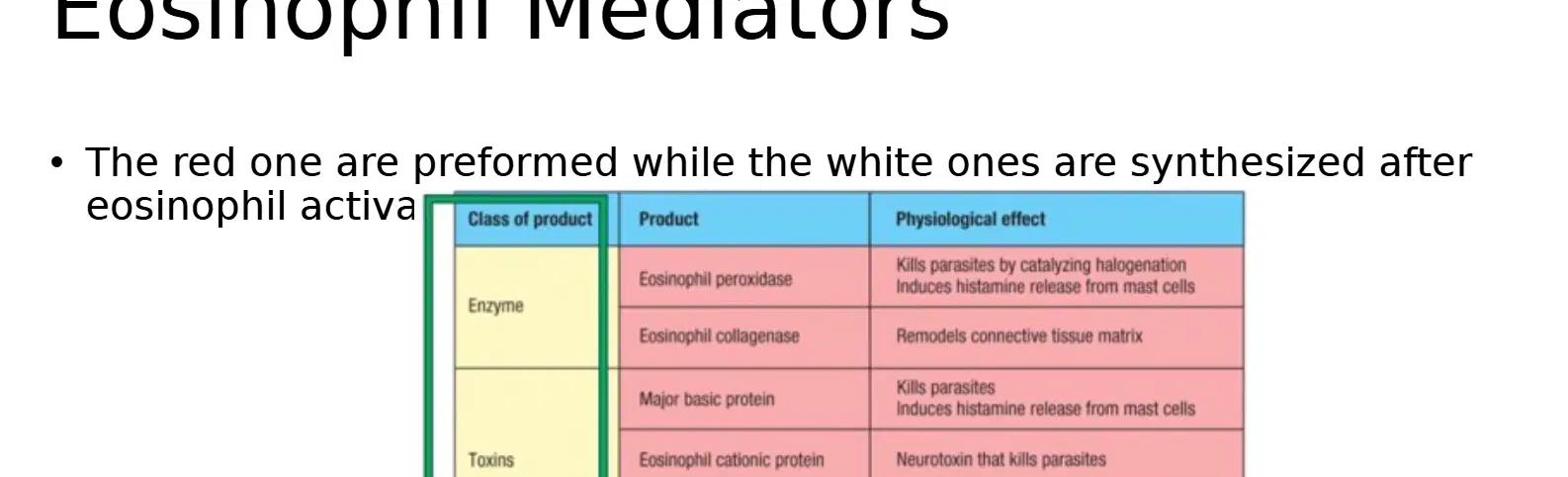
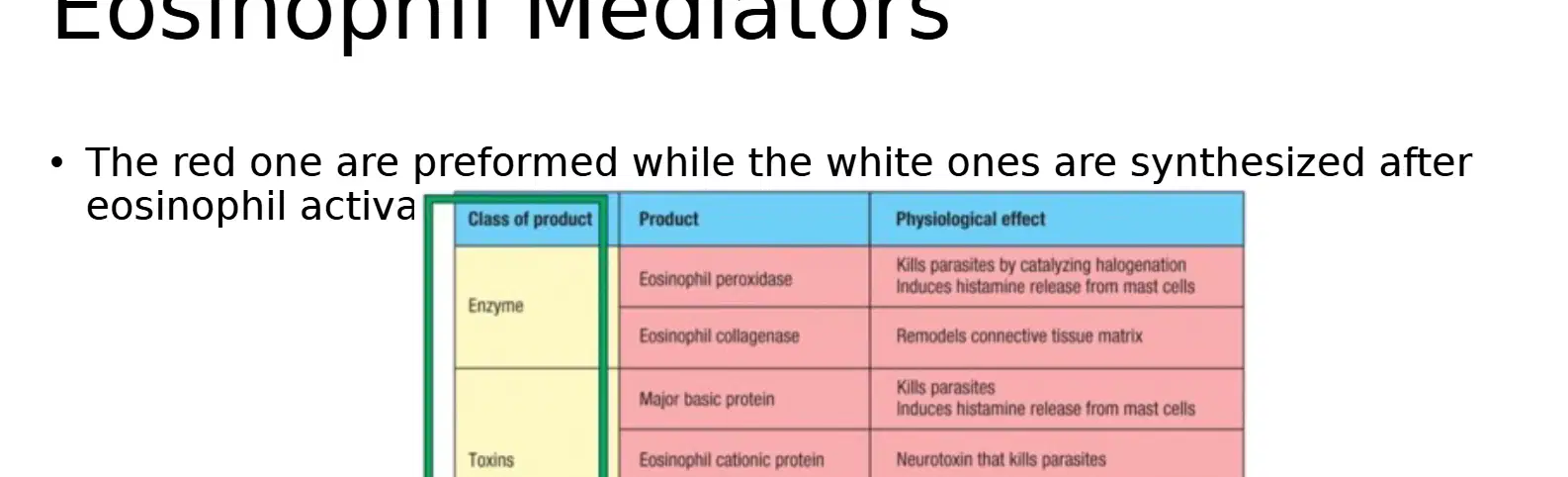
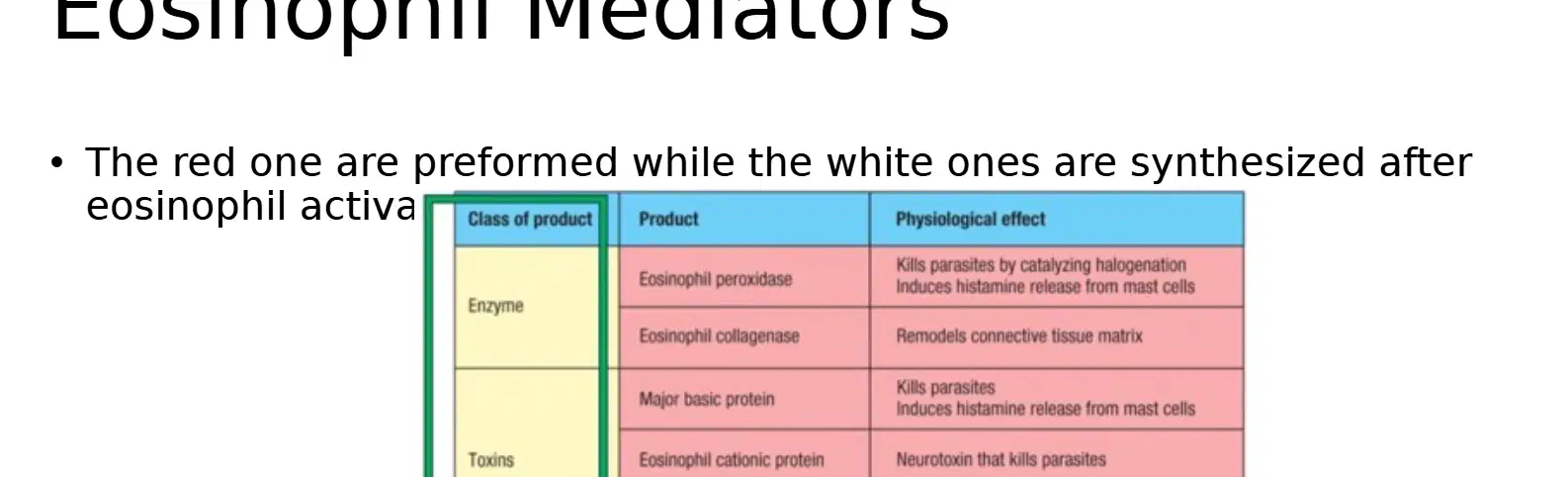
Fill in the blank: Eosinophil peroxidase kills parasites by _______ and induces histamine release from mast cells.
catalyzing halogenation
inhibiting protein synthesis
blocking neurotransmitter release
stimulating antibody production

Fill in the blank: Eosinophil collagenase _______ connective tissue matrix.
remodels
destroys
ignores
replicates

Fill in the blank: Major basic protein kills parasites and induces _______ release from mast cells.
histamine
serotonin
dopamine
acetylcholine
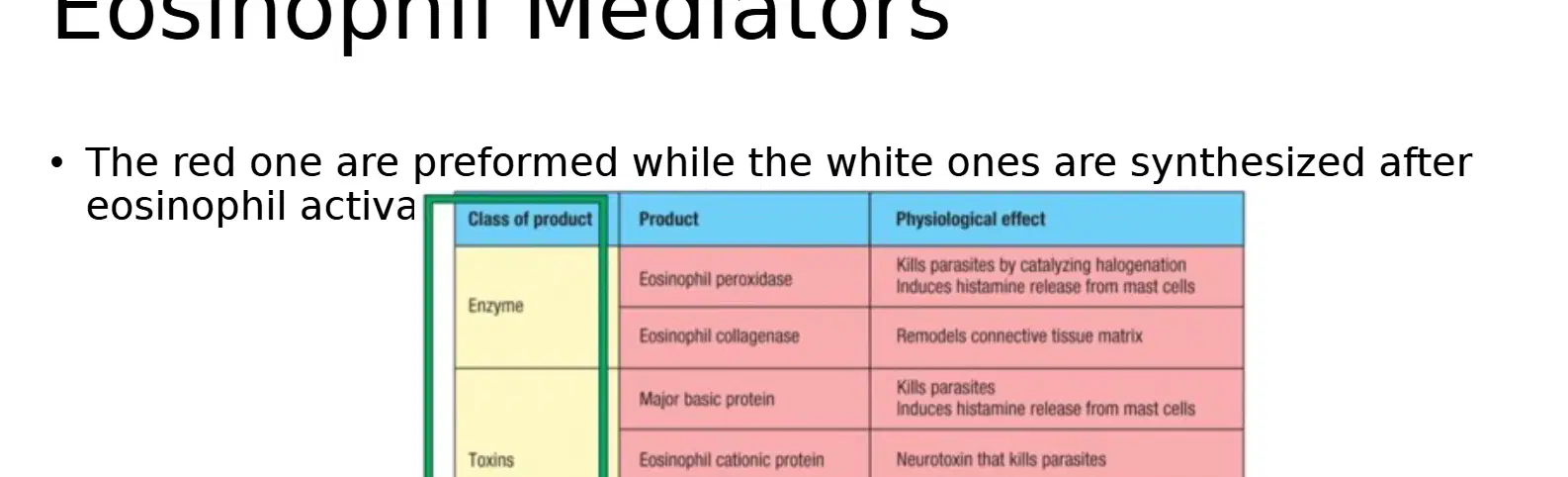
Fill in the blank: Eosinophil cationic protein is a _______ that kills parasites.
neurotoxin
enzyme
hormone
antibody
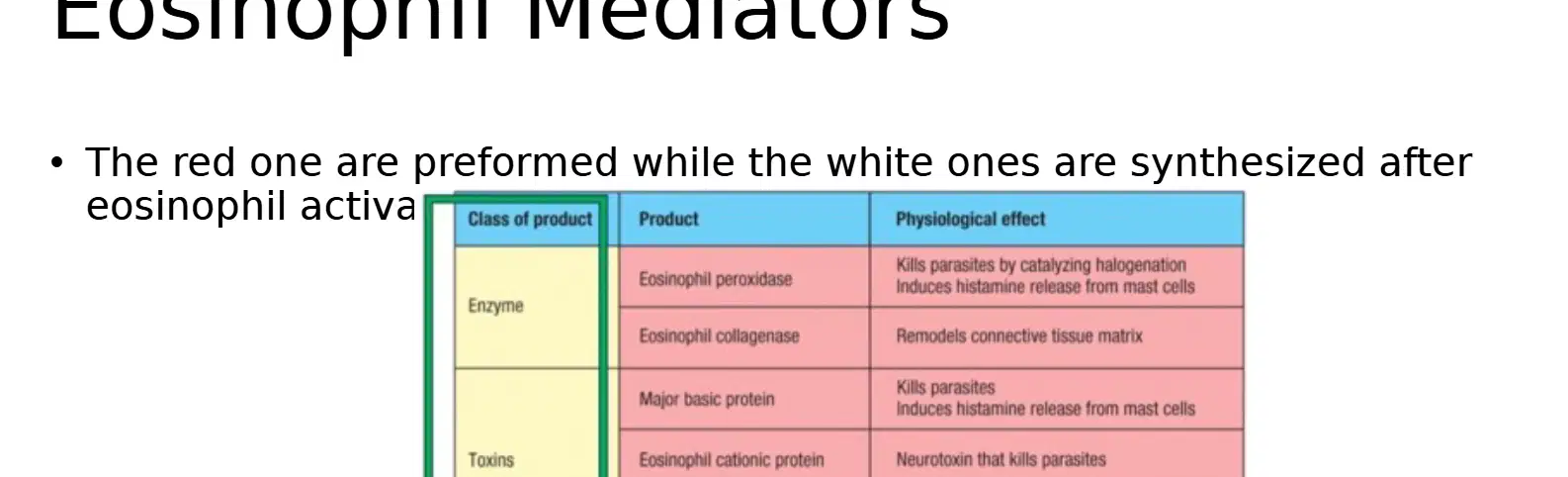
Fill in the blank: Eosinophil-derived neurotoxin has an antiviral effect by degrading _______.
RNA
DNA
Proteins
Lipids

Fill in the blank: IL-3, IL-5, GM-CSF amplify eosinophil production in _______ and activate eosinophils.
bone marrow
lymph nodes
spleen
thymus
Fill in the blank: CXCL8 promotes influx of _______.
leukocytes
erythrocytes
platelets
neurons
Fill in the blank: Leukotrienes C4, D4, and E4, prostaglandins induce smooth muscle contraction, vascular permeability, and _______ secretion.
mucus
bile
insulin
saliva
Fill in the blank: Platelet-activating factor attracts and activates neutrophils and platelets and increases synthesis of _______ mediators.
lipid
protein
carbohydrate
nucleic acid

Which statement is true about the color coding in the table of eosinophil mediators?
True
False
Most allergens are ______ since TH2 cells only react to proteins.
proteins
lipids
carbohydrates
nucleic acids
Which of the following is the first step in the activation of allergens?
Activation of TH2 cells
Inhalation
Binding at mucosa in lungs
IL4 binds to B cells
Fill in the blank: During the first exposure, IL4 binds to B cells, plasma cells produce ______.
IgE
IgG
IgA
IgM
Which cell type is activated by TH2 cells to secrete IL4?
T cells
B cells
Plasma cells
Mast cells
Allergens taken up by APCs are transported to the lymph node.
True
False
What happens during the second exposure to antigen?
IgE binds to mast cells
Allergen and IgE cross-link
HA release due to mast cell degranulation
All of the above
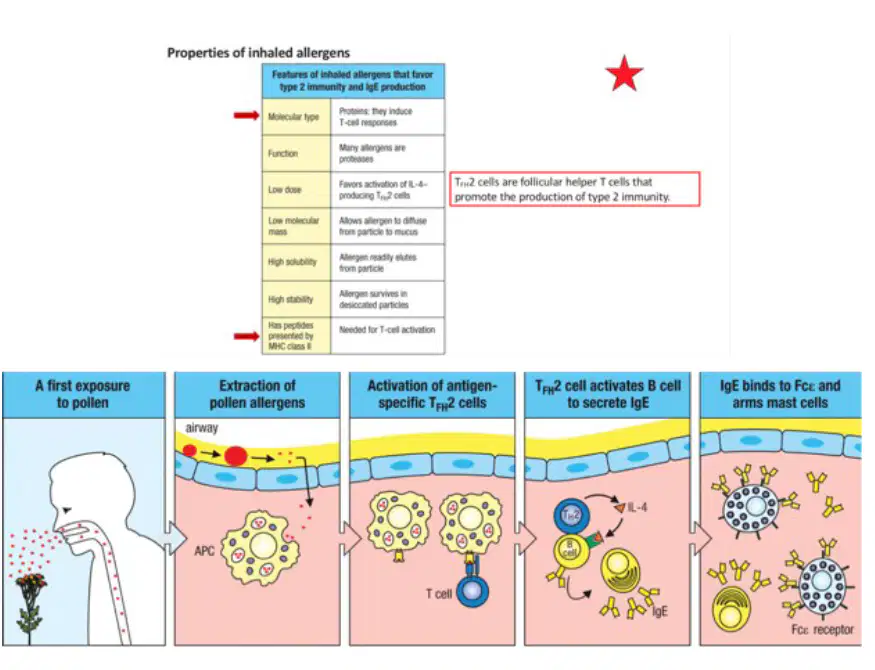
Fill in the blank: TH2 cells are follicular helper T cells that promote the production of type ______ immunity.
2
1
3
4
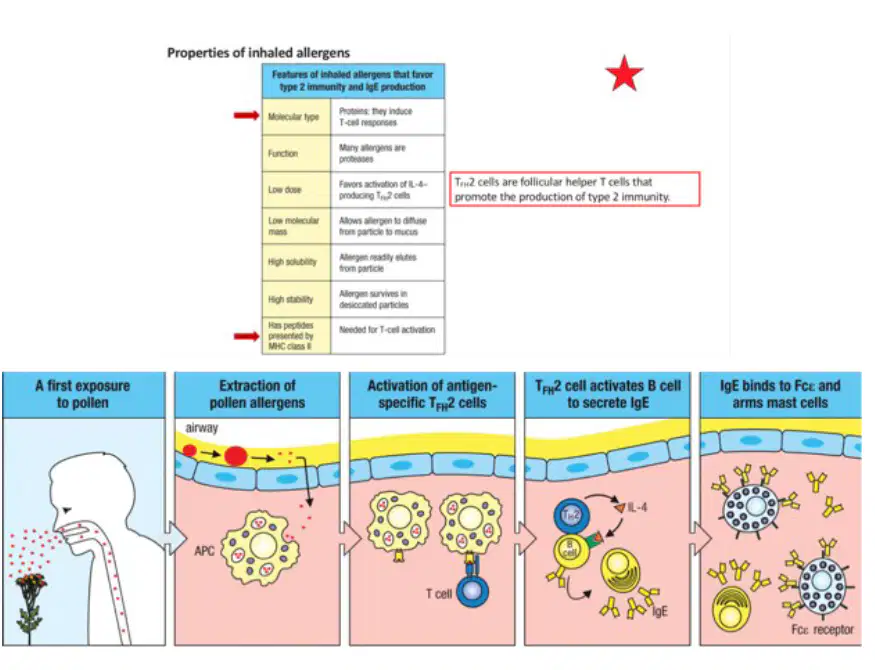
Which feature of inhaled allergens allows allergens to diffuse from particles to mucosa?
High solubility
Low molecular mass
High stability
Function
What is the emergency condition caused when antigen is in the blood, leading to bronchoconstriction and hypotension?
Systemic Anaphylaxis
Asthma
Diabetes
Hypertension
Fill in the blank: The treatment for systemic anaphylaxis involves the use of ________, which increases blood pressure, heart rate, and dilates blood vessels to skeletal muscle and liver.
Epinephrine
Insulin
Antihistamine
Cortisol
Penicillin can cause a Type II hypersensitivity reaction by binding to RBC surface proteins and creating new epitopes.
True
False
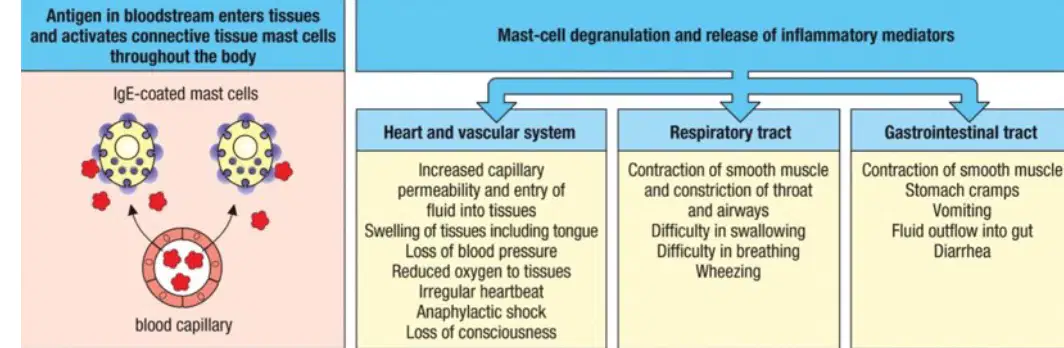
Which of the following is NOT a symptom of systemic anaphylaxis affecting the heart and vascular system?
Increased capillary permeability
Swelling of tissues
Wheezing
Loss of consciousness
Fill in the blank: Allergic rhinitis, also known as ________, occurs when allergens enter the respiratory tract and blood borne eosinophils enter inflamed nasal tissue. Release of inflammatory mediators and mucus will remove eosinophils later.
hay fever
bronchitis
asthma
sinusitis
Fill in the blank: Allergic asthma is mediated by ________ cells and involves chronic inflammation of airways, bronchoconstriction, and production of allergen specific IgE in mucosa.
TH2
B
TH1
NK
Fill in the blank: Skin mast cells release ________, which dilates local blood vessels, leading to swelling and redness. An example is a bed bug bite.
histamine (HA)
serotonin
dopamine
acetylcholine
Fill in the blank: Food allergy can cause NVD and ________ when the allergen is in the blood and carried to the skin.
urticaria
eczema
psoriasis
acne
Fill in the blank: Atopic dermatitis is associated with many genes related to ________ immunity.
innate
adaptive
humoral
cell-mediated
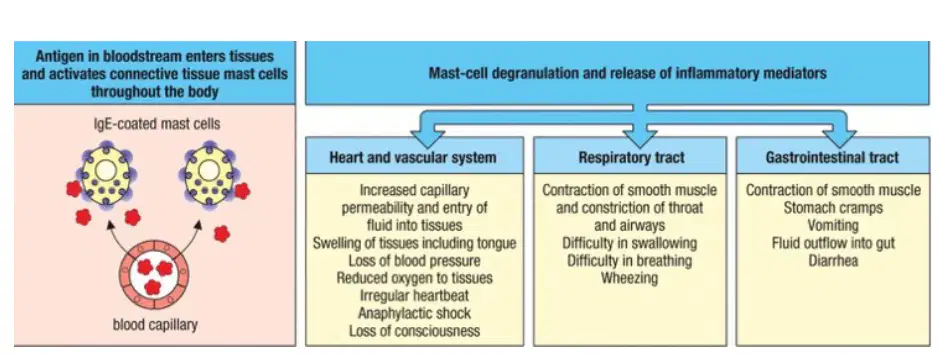
Which of the following is NOT a symptom of mast-cell degranulation in the heart and vascular system?
A. Increased capillary permeability
B. Loss of blood pressure
C. Contraction of smooth muscle
D. Anaphylactic shock
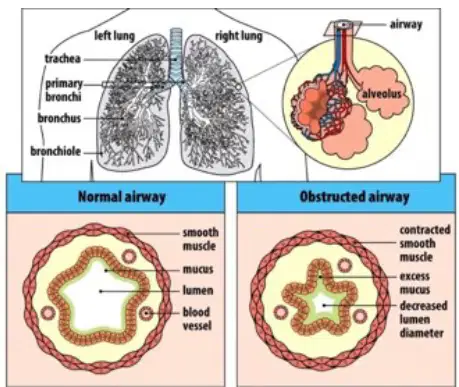
Which diagram shows an obstructed airway?
Diagram with wide lumen and thin smooth muscle
Diagram with contracted smooth muscle, excess mucus, and decreased lumen diameter
Which of the following is a method of desensitization for allergy?
Acute: small dose every 10-15 minutes
Chronic: weekly antigen dosing
Both A and B
None of the above
What is the purpose of chronic desensitization in allergy treatment?
To make IgG4 lead to blocking response
To increase mast cell activity
To cause anaphylaxis
To avoid skin tests
Fill in the blank: Prevention of allergy includes ______ and avoidance.
skin tests
antibiotics
vaccination
exercise
Which of the following is NOT a treatment option for allergy?
Antihistamines
Corticosteroids
Inhibit Ca2+ influx
Antibiotics
Corticosteroids have ______ and immunosuppressive effect.
anti-inflammatory
pro-inflammatory
antibacterial
antiviral
Which drug inhibits Ca2+ influx and blocks release of mediators in mast cells?
Cromolyn sodium
Antihistamines
Corticosteroids
Penicillin
A patient experiencing systemic anaphylaxis after ingesting a peanut exhibits bronchoconstriction and hypotension. Which of the following treatments would be most appropriate?
Antihistamines
Epinephrine
Cromolyn sodium
Corticosteroids
A 25-year-old individual has been diagnosed with a Type I hypersensitivity reaction after exposure to pollen. Which immune component is not involved in this process?
IL-4 cytokine
Mast cells
IgE
Complement system
A child living in a region with high parasite prevalence shows a balanced immune phenotype with minimal allergic responses. This balance is disrupted in parasite-free populations due to:
Increased exposure to allergens similar to parasites.
Suppression of TH1 cell activity.
Mutations in IL-4 receptors.
Enhanced atopy-associated genetic mutations.
A pharmaceutical company develops a monoclonal antibody targeting the Fc region of IgE. This treatment would most likely:
Stimulate Fc receptor binding to mast cells.
Prevent histamine release during an allergic reaction.
Enhance IgG4-mediated inhibition of allergens.
Increase mast cell degranulation.
In a patient presenting with allergic asthma, chronic inflammation of the airways is predominantly driven by which immune response?
TH1-mediated immune regulation
Chronic TH2 cell activity
Overproduction of complement proteins
Mast cell-independent IgE synthesis

