
 Worksheets
Environmental Science Mid-year Practice
Total questions: 145
Worksheet time: 1hrs 13mins
Select all the following causes of degradation to a wetland.
Agriculture
Industrial use
Sedimentation
Soil runoff
Which president enacted the Farm Bill?
Andrew Jackson
Harry S. Truman
Herbert Hoover
Franklin D. Roosevelt
Which year was the Duck Stamp Act enacted?
1932
1933
1934
1935
Wetlands are NOT critical for which of the following?
Maintaining biodiversity
Protecting freshwater quality
Developing agricultural land
Providing groundwater recharge
Hurricanes do less financial damage, flood further inland and displace more people when coasts are heavily developed.
True
False
Wetlands are economically important due to which of the following factors?
Wetlands cover a substantial land area which can be developed into a profit
Wetlands provide both commercial and recreational fisheries
Wetlands offer cropland significantly fertile soil
Wetlands host a wide range of wildlife biodiversity
Levees are most commonly used for which of the following?
Stopping water from naturally changing course
Restricting water flow
Draining wetlands
Filtering sediment from water
A wetland with woody plants, saturated/slow moving water and a lack of oxygen in the soil can be described as a __________.
Tidal Marsh
Bog
Swamp
Fen
Select all the factors in which a wetland is classified.
Hydrological regime
Landscape position
pH level
Vegetation cover
What act was created in 1933 by franklin D Roosevelt
The national park service act
Yellowstone national park protection act
National Economic Restoration Plan
Forest service
which of the following produce 40% of the earths oxygen
Rainforests
Mountain forests
Kelp Forest
Scary Haunted forest
Refers to the contamination of air, water or soil by substances which are harmful to wildlife
Pollution
Farming
City Life
Hunting
Presence of hair and mammary glands are a diagnostic feature of which class of kingdom animalia?
Mammalia
Chiroptera
Carnivora
Aves
Which family of class Aves is identified by a distinct yellow ring around eyes and beak and has yellow legs?
Falconiformes
Galliformes
Accipitriformes
Passeriformes
Which family is most closely related to giraffes?
Antilocapridae
Phasianidae
Cervidae
Bovidae
Game animals bring in money to fund wildlife conservation.
TRUE
FALSE
Match the following species to their specific grouping of game animals. Mourning Dove
Migratory Game
Small Game
Big Game
If apex predators are a game species they are considered big game.
TRUE
FALSE
Which of the following is the only species of marsupials in North America?
Virginia opossum
Cotton Rat
Moose
American Badger
Which of the following is the largest order of class Aves?
Passeriformes
Falconiformes
Galliformes
Chiroptera
Which of the following orders is classified by arm, hand and extra long finger bones covered with a membrane which resembles a wing?
Chiroptera
Aves
Carnivora
Artiodactyla
Moose antlers have one main beam with additional points coming from the beam.
FALSE
TRUE
Match the following family to their description. Cervidae
presence of antlers
presence of retractable claws
presence of body armor
presence of horns
Which of the following species has the diagnostic characteristic of modified feathers which resemble a beard?
Wild Turkey
Mourning Dove
White-Winged Dove
Northern Bobwhite
Order chiroptera is defined as species with armored bodies.
FALSE
TRUE
Which order is classified by their long, broad wings for soaring?
Accipitriformes
Piciformes
Passeriformes
Falconiformes
Match the following species to their specific grouping of game animals. White-Tailed Deer
Big Game
Small Game
Migratory Game
Upland Game
Woodpeckers belong to the family Piccidae.
TRUE
FALSE
Select the correct pair to complete the statement: ____ deer have a white underside of the tail used as a flag when startled, while ____ deer have a mostly dark tail with a black tip.
White-tailed, Mule
Mule, White-tailed
Which of the following families includes species that have antlers present?
Cervidae
Felidae
Canidae
Bovidae
Presence of feathers and physical adaptations for flight are diagnostic features of which animal class?
Aves
Mammalia
Carnivora
Chiroptera
Which of the following families includes species that have horns present?
Bovidae
Felidae
Cervidae
Canidae
Which of the following is the most specific level of taxonomy?
Species
Class
Family
Genus
Upland game birds are migratory.
FALSE
TRUE
Game animals are classified by state and federal regulations.
TRUE
FALSE
The Eastern spotted skunk belongs to the family Mephitidae.
TRUE
FALSE
Which of the following species has modified feathers that resemble a beard as a diagnostic characteristic?
Wild Turkey
Blue Jay
Northern Bobwhite
Peregrine Falcon
White-tailed deer are the most abundant deer species in North America.
TRUE
FALSE
Match the following species to its specific grouping of game animals: Turkey.
Upland Game
Small Game
Big Game
Migratory Game
Match the following family to its description: Dasypodidae.
Presence of body armor
Presence of antlers
Presence of retractable claws
Presence of horns
The majority of wildlife species are classified as non-game.
TRUE
FALSE
All species in class Mammalia are classified as game animals.
FALSE
TRUE
Furbearers are species harvested for their pelts.
TRUE
FALSE
Match the following species to its specific grouping of game animals: Cottontail Rabbit.
Small Game
Migratory Game
Big Game
Upland Game
Bobcats belong to the family Canidae.
FALSE
TRUE
Which of the following families includes species that have retractable claws?
Felidae
Bovidae
Cervidae
Canidae
Elk belong to the family Bovidae.
FALSE
TRUE
Match the following family to its description: Felidae.
Presence of retractable claws
Presence of antlers
Presence of body armor
Presence of horns
Many species in class Aves are protected under the Migratory Bird Treaty Act.
TRUE
FALSE
Which of the following families does NOT belong to order Carnivora?
Icteridae
Canidae
Mephitidae
Felidae
Match the following family to its description: Bovidae.
Presence of horns
Presence of antlers
Presence of body armor
Presence of retractable claws
The largest estuary in the United States is the
Chesapeake Bay
Mississippi River
Pacific Ocean
Albemarle Sound
Biological productivity includes which of the following?
Greater volume of food production for large food webs
Physical trapping
Stopover sites
In-lieu wetland mitigation
The hooded warbler is a ________ wetland species.
Temporary
Seasonal
Permanent
Which of the following allows organizations like farmers to be paid to reduce the amount of pollution they discharge?
Water quality trading
Wetland-mitigation banking
Clean Water Act
Farm Bill
How do wetlands benefit (help) wildlife animals?
Keeps predators together
Makes it easier for them to find water
Provides a nursery for young animals
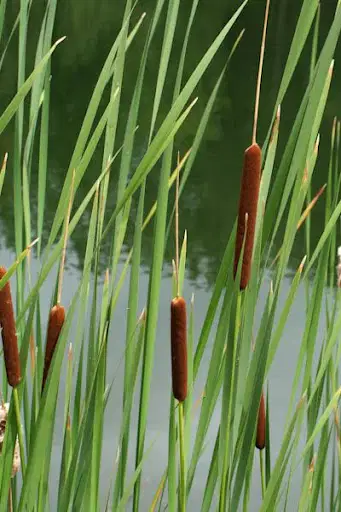
Cattails are part of which type of wetland?
Bog
Swamp
Marsh
Recreational activities generate how much money per year?
40 Billion
13 Billion
38 Billion
116 Billion
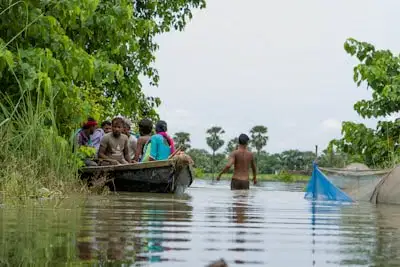
A wetland acts as a _____ to help control flooding.
dam
water bucket
sponge
wall
What animals are used to filter sediment from the water in a wetland?
oysters and clams
fish and birds
alligators and crocodiles
turtles and lobsters
Riparian wetlands are particularly vulnerable to destruction, but serve a vital role in which of the following?
floodplain protection
aesthetic viewsheds
nutrient cycling
stopover sites
Which of the following was enacted to restore and maintain the chemical, physical, and biological integrity of the nation’s waters?
Clean Water Act
Wetland‑mitigation Banking
Water Quality Trading
Safe Drinking Water Act
What are wetlands?
areas where water covers the soil or the ground is very moist
dry areas that get very little rain
grassy areas that are great for sports
places that have no value to the environment
High primary productivity in wetlands means they are referred to as this.
food factory
nutrient sink
biodiversity desert
water scrubber
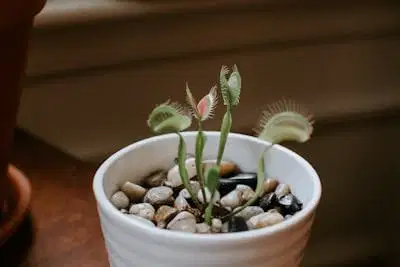
Pitcher plants and Venus flytraps grow in this type of wetland.
bog
marsh
swamp
Which wetland type has dominant plants that are scrub, shrubs, and small trees?
scrub‑shrub wetlands
emergent wetlands
bogs
riparian wetlands
To be considered a wetland, the area must be covered in shallow water all year.
FALSE
TRUE
Which wetland type has plants rooted in soil but emerging from the water (grasses)?
emergent wetlands
scrub‑shrub wetlands
bogs
salt marshes
What is the job of the plants in a wetland?
to filter nutrients and pollutants from the water
to look beautiful
to attract birds to land
to keep people from building homes on top of wetlands
Which wetland function makes having and raising young easy?
spawning/mating grounds
erosion control
carbon sequestration
recreation
What percent of Earth is covered in water?
75%
50%
90%
25%
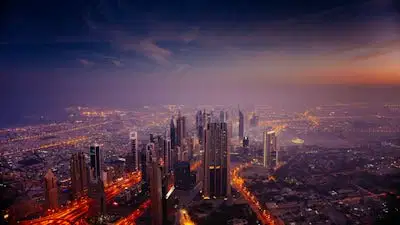
Humans have negatively affected wetlands by...
adding pollution
filling them in for farmland
building new neighborhoods
all of the above
Which of the following is NOT a wetland?
substrate
bog
fen
swamp
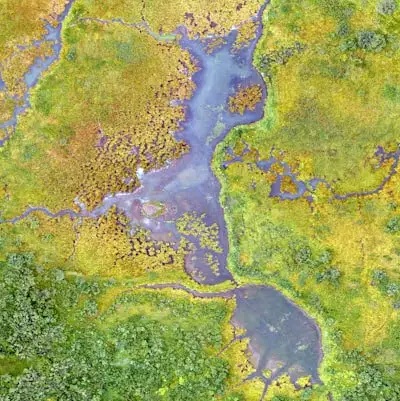
Wetlands are important because
they help clean waste and pollution from freshwater
they provide habitat for a variety of animals
they protect cities from floods
all of the above
How are wetlands beneficial to migrating birds?
wetlands provide nesting and resting spots
wetlands keep their wings wet
wetlands are a road map for where they should fly
birds like to eat the pollution that the wetland filters out
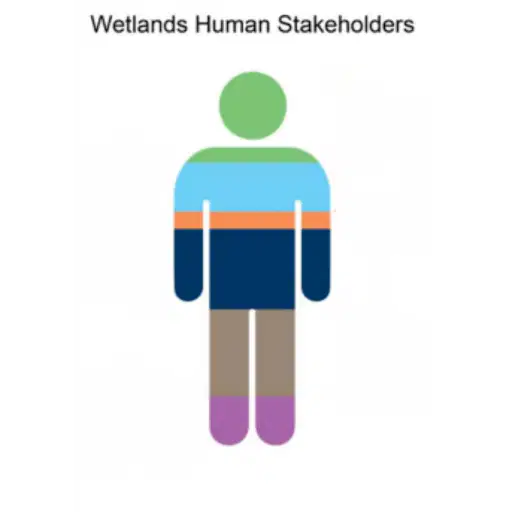
What color represents the Government/Municipal (Landowner) on the Wetlands Human Stakeholder image?
purple
brown
orange
green
An area where freshwater and ocean water mix is called
estuary
wetland
river
ecosystem
Which wetland function involves carbon‑based nutrients, nitrogen, and phosphorus changing forms efficiently?
cycle nutrients
prevent erosion
filter pollutants
store floodwater
Which term matches this definition: land covered in water for any part of the year, with unique soil and plants and animals adapted to that environment?
wetland
estuary
watershed
floodplain
An area on land where all excess water runs to a specific body of water (formally known as a drainage basin) is called what?
Watershed
Tributary
Estuary
Aquifer
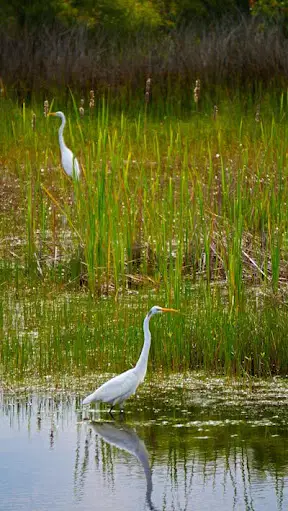
This type of wetland has tall grasses. Identify it based on the photo of a grassy wetland with wading birds.
Marsh
Swamp
Bog
Rainforest
Wetlands recharge groundwater. What does that mean?
Wetlands gather water pollution into one place
Wetlands keep water above ground
Wetlands give water a positive charge
Wetlands allow more water to stay in the ground
Dominant plants in this wetland are plants rooted in soil but emerging from the water (grasses). Which wetland is described?
Marsh
Swamp
Bog
Rainforest
Smallest to largest tributaries: choose the correct sequence.
Rill → brook → creek → stream → river → bay → ocean
Rill → creek → brook → stream → river → bay → ocean
Stream → rill → brook → creek → river → bay → ocean
Rill → brook → stream → creek → river → ocean → bay
The term for the high elevation that separates watersheds is what?
Divide
Delta
Floodplain
Estuary
Mouth: End of a river where it meets a larger body of water. Which term matches this definition?
Mouth
Source
Delta
Estuary
In wetlands, soil is typically described as what?
Saturated
Arid
Rocky
Frozen
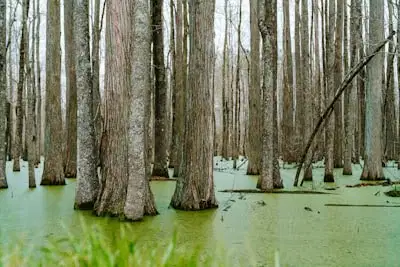
What type of wetland contains trees and shrubs? Identify it based on the photo of standing water among tree trunks.
Swamp
Marsh
Bog
Fen
Which term refers to wetlands because they absorb runoff and slowly release it back into the environment?
Buffer zone
Headwaters
Alluvial fan
Aquifer
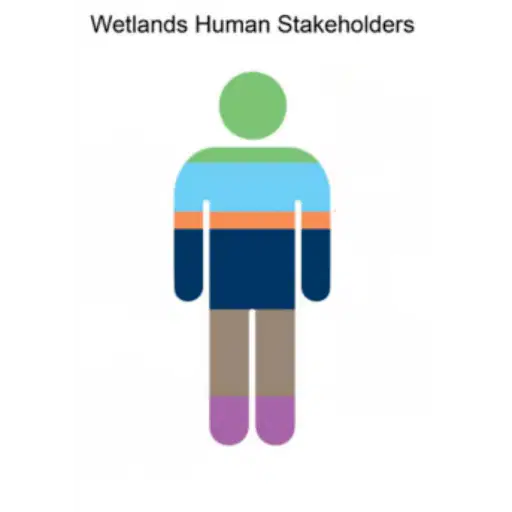
What color is the Recreation – Hunter on the Wetlands Human Stakeholder image?
Navy blue
Orange
Green
Teal
One function of wetlands is to cycle nutrients so that carbon-based nutrients, nitrogen, and phosphorus change forms efficiently. Which option correctly states this function?
Cycle nutrients
Increase water salinity
Strip all nutrients from water
Eliminate habitats
Start, beginning, or headwaters of a river or a stream is called what?
Source
Mouth
Delta
Divide
A smaller body of water that feeds into a larger body of water is called what?
Tributary
Estuary
Delta
Channel bar
Which of the following is a function of wetlands?
Filter pollutants
Increase shoreline erosion
Remove all wildlife habitats
Convert freshwater to saltwater
A wetland with trees as the dominant plant type is called what?
Swamp
Marsh
Bog
Prairie pothole
Land that is covered in water for any part of the year and contains unique soil and organisms specifically adapted to that environment is called what?
Wetland
Desert
Tundra
Prairie
What percent of water on Earth is saltwater, which cannot be used by most living organisms?
97%
3%
50%
75%
The end of a river where it meets a larger body of water is called what?
Mouth
Source
Interfluve
Oxbow
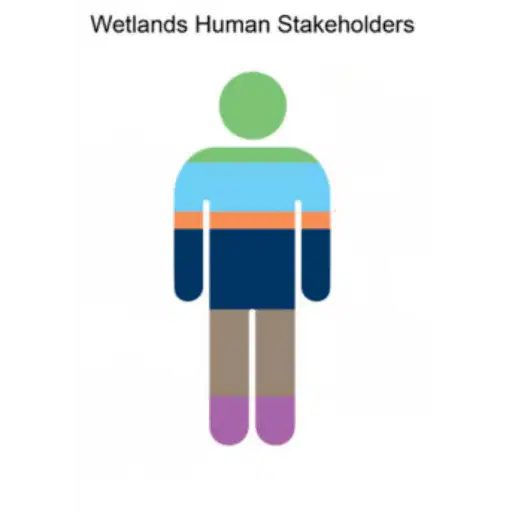
What color is the Recreation – Angler (Fishing) on the Wetlands Human Stakeholder image?
Orange
Green
Navy blue
Purple
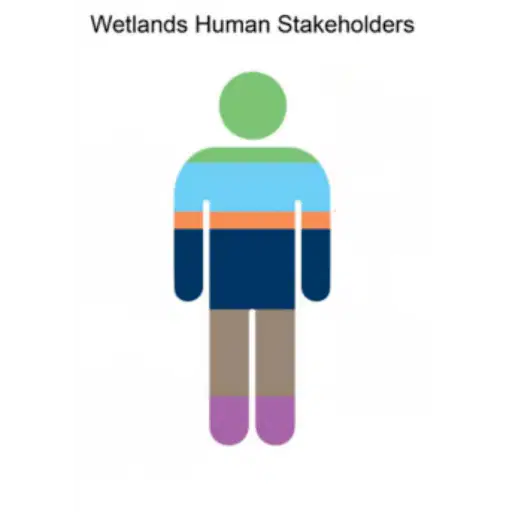
What color represents Agriculture on the Wetlands Human Stakeholder image?
Brown
Green
Purple
Orange
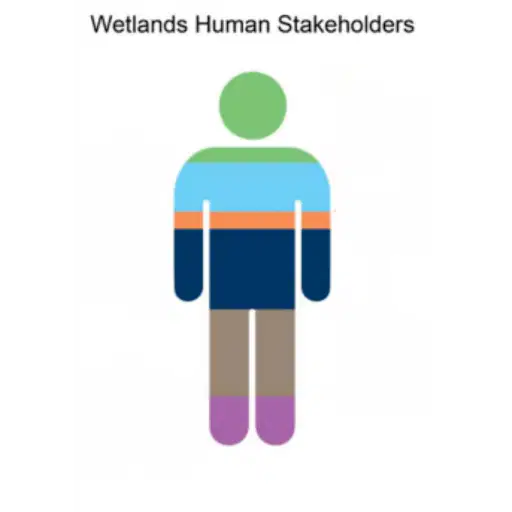
What color represents Recreation – Experience & View on the Wetlands Human Stakeholder image?
Green
Orange
Navy Blue
Brown
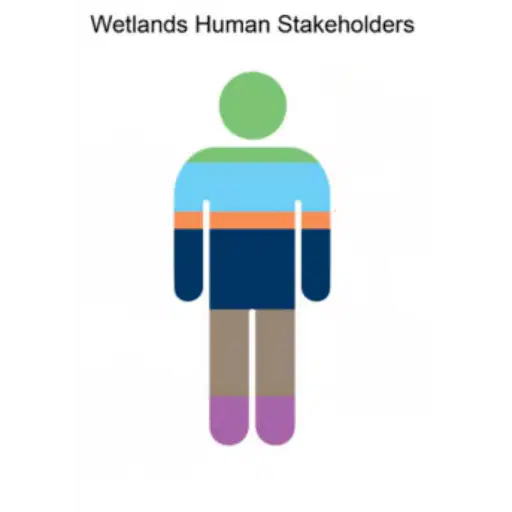
What color represents the Non User on the Wetlands Human Stakeholder image?
Teal
Green
Purple
Navy Blue
Which of the following best describes respiration?
Intake of oxygen to convert glucose to energy
Release of water vapor
Absorption of light by chlorophyll
Splitting of atmospheric nitrogen atoms to bond with oxygen
What is the largest ecological level?
Biosphere
Population
Ecosystem
Organism
Energy flow begins with which of the following?
Photosynthesis
Oxygen cycle
Decomposers
Plants
Which of the following interactions are positive?
Commensalism, Mutualism
Competition and Predation
Mutualism and Predation
Commensalism and Parasitism
Which of these is a producer?
Grass
Cow
Hawk
Mushroom
Energy flow ends with which of the following?
Decomposers
Oxygen cycle
Photosynthesis
Plants
Which of the following is also known as the hydrologic cycle?
Water cycle
Carbon cycle
Oxygen cycle
Nitrogen cycle
Which of the following best describes chlorophyll?
Green pigment in plants which absorbs light
The plants found in an area
The envelope of gases surrounding the earth
Any living organism
Which of the following does NOT influence an organism’s niche?
Commensalism
Competition with other species
Parasitism
Mutualism
What is the smallest ecological level?
Organism
Population
Community
Ecosystem
Where is the phosphorus cycle primarily conducted?
In soil and plants
In water and atmosphere
In air and volcanoes
In volcanoes and lightning
A freshwater ecosystem has a salt content over 0.5 ppt.
False
True
True or false: A mountain is a biome.
False
True
Which of the following describes transpiration?
When plants release water vapor during photosynthesis and respiration
When consumers release carbon dioxide for photosynthesis
The transformation of water to gas when reaching the boiling point
When producers release atmospheric carbon for photosynthesis
Which of the following does NOT conduct nitrogen fixation?
Humans
Peanuts
Algae
Nitrogen-fixing bacteria
A nutrient is a chemical substance required by an organism for growth, reproduction, and maintenance.
True
False
Which is not a wetland biome?
Tropical
Fen
Bog
Marsh
Which of the following is a living organism that produces food or biomass through photosynthesis?
Producer
Niche
Tertiary consumer
Consumer
At what level does a food chain start?
Producer
Secondary consumer
Apex predator
Secondary producer
Which of the following best describes the Farm Bill?
Incentives provided to landowners to conserve grassland habitats
Contract requiring proof of conservation practices from landowners with a set acreage
Enables the federal government to fund grazing programs to improve and manage rangelands
Special tax farmers must pay each year that goes toward conservation
Why do temperate grasslands have the most fertile soil on earth?
Deep-rooted grasses add abundant organic matter as they die back seasonally, and periodic fires and low rainfall limit nutrient loss
Constant heavy rainfall leaches nutrients from the soil, concentrating them near the surface
Frequent flooding deposits large amounts of salt, increasing soil fertility
High tree density leads to rapid nutrient uptake and storage in woody biomass
What percentage of the proceeds from the Duck Stamp Act is provided for wetland and waterfowl habitat acquisition?
98
50
75
90
Which of the following is the specific mission of the Natural Resources Conservation Service?
To conserve soils for agricultural production
To keep grasslands in their condition and not allow trees and invasive species after the land
To enforce the Farm Bill
To improve water resources on grasslands
Which of the following is NOT a type of grassland?
Deciduous
Savanna
Temperate
Montane
Which of the following agricultural practices ensures an area is NOT overgrazed by moving cattle from pasture to pasture?
Rotational grazing
Tactile grazing
Set stocking Continuous grazing
Continuous grazing
Some climate scientists even believe grasslands may be more efficient and reliable at removing carbon from the atmosphere than forests, because grasslands are more resilient after fires and drought.
TRUE
FALSE
How much of the earth’s land surface is covered with grasslands?
20 to 40 percent
10 to 19 percent
40 to 45 percent
20 to 30 percent
What percentage of grasslands are currently protected?
Less than eight
Less than two
Less than six
Less than three
Tillage is primarily used for which of the following?
Control weeds and aerate soil
Move cattle from one pasture to another
To prepare the grasslands for intentional burning
To harvest the crops
Which of the following does NOT prevent woody vegetation like shrubs and trees from thriving?
Use of pesticides
Fire
Grazing
Drought
Grasslands can be found on every continent EXCEPT which of the following?
Antartica
South America
Austrialia
Asia
Which of the following is NOT a main threat which plagues grasslands today?
Lasting effects from Dust Bowl
Urbanization
Unsustainable agriculture
Climate change
Most grasslands are publicly owned.
FALSE
TRUE
Cattle may decimate vegetation through overgrazing and their heavy hooves compact soil leading to erosion and loss of sod.
TRUE
FALSE
Which of the following is NOT a reason why cover crops are important?
Provides shade to the main crops
Increases water retention
Prevents soil erosion Provides habitat for spiders to eat crop pests
Provides habitat for spiders to eat crop pests
When topsoil is lost, the loss is fairly permanent because the process to create just three centimeters of topsoil takes about 1,000 years
TRUE
FALSE
Why is fire considered a common management practice?
Suppresses invasive species such as shrubs and trees
Fire is not a common management practice and should be avoided
Fire burns and removes topsoil so more fertile soil will be available
Teaches grazing animals to stay away from specific areas
The Dust Bowl lasted how many years?
10
15
12
11
Which of the following qualities determines if an area should be considered a grassland?
Amount of precipitation
Location
Amount of stored carbon in soil
Height of plants
Where are savannas typically found?
Africa, Australia and South America
Europe and North America
Higher altitudes
South of the Tropic of Capricorn
Which of the following limits the biodiversity of grasslands?
Farming a single variation of a crop
Grazing animals
Pesticides and fertilizers
Loss of topsoil
Grasslands typically exist between which of the following?
Forest and desert
Fire-prone areas and areas of urbanization
Wetlands and deserts
Shrubland and desert
Which of the following services was formed by the federal government due to the Dust Bowl?
Soil Conservation Service
Granger-Thye Service
Land and Water Conservation Service
Duck Stamp Service

