
 Worksheets
2nd 9 Weeks Common Assessment Review
Total questions: 66
Worksheet time: 38mins
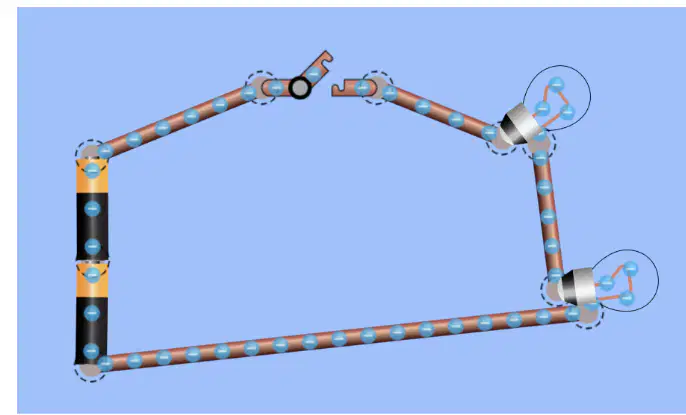
Student B created this circuit. When one of the light bulbs go out, the other one does also. Why is that happening?
It's a parallel circuit. When one is not working, they all stop working because electricity cannot get all the way around the circuit.
Student B needs to check the parts to make sure they are all working.
It's a series circuit. When one is not working, they all stop working because electricity cannot get all the way around the circuit.
Student B has created a circuit that does not work.
What type of circuit is this?
It's a parallel circuit.
It's a battery circuit
It's a series circuit.
It's a circle circuit
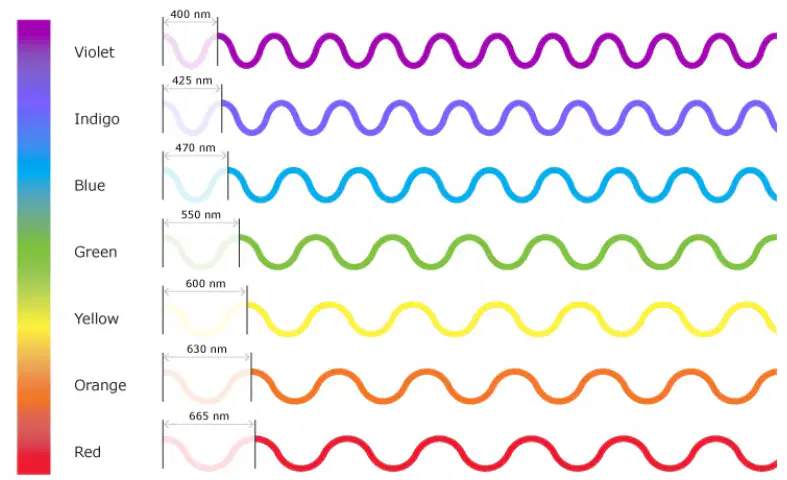
Student A is looking at the chart below. What claim could they make from the information in the chart?
Yellow light has the most energy.
Red light was the first light discovered.
Violet light has the most energy.
Blue light has less energy than green.
On this chart, which color has the least energy?
Yellow light
Red light
Violet light
Blue light
On this chart, which color has the shortest wavelength?
Yellow light
Red light
Violet light
Blue light
On this chart, which color has the lowest frequency?
Yellow light
Red light
Violet light
Blue light
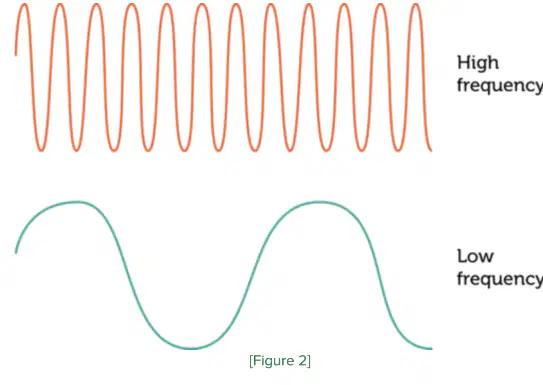
For any wave, as frequency increases, energy increases.
True
False
Student B is doing an experiment on sound waves. They have a machine that will show what a sound wave looks like when a sound is created. They notice that some sounds will have a higher amplitude than others. These sounds are usually louder. What claim could Student B make from this information?
Louder sounds hurt your ears.
Louder sounds require less energy
Increasing amplitude requires more energy
Soft sounds have a greater frequency
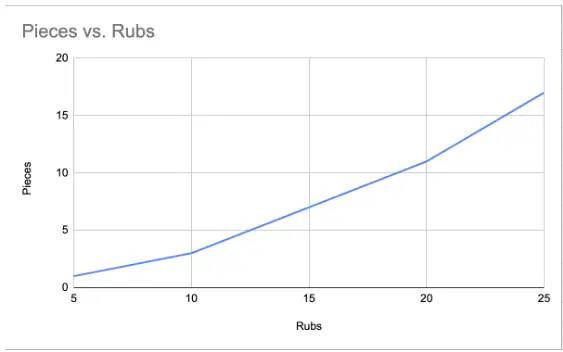
A student rubs a balloon with fur a certain number of times and then counts the number of pieces of paper it will hold. What relationship can Student C claim exists between the number of rubs and the number of pieces of paper held?
The more times they rub the balloon, the more paper it will hold
The more times they rub the balloon, the less paper it will hold
The fewer times they rub the balloon, the more paper it will hold
There is no relationship between number of rubs and the amount of paper the balloon will hold.
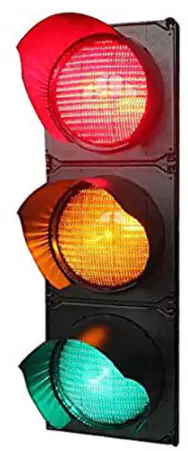
In these traffic lights, there is a white bulb behind a colored lens. Why does the red light look red?
The red lens only allows red wavelength light to be transmitted.
The red lens only reflects red wavelength light to the observer
The red light is red because it is red.
The red light is made of material that absorbs red light from the bulb and then glows red. The other colors of light go to the other colors on the traffic light.
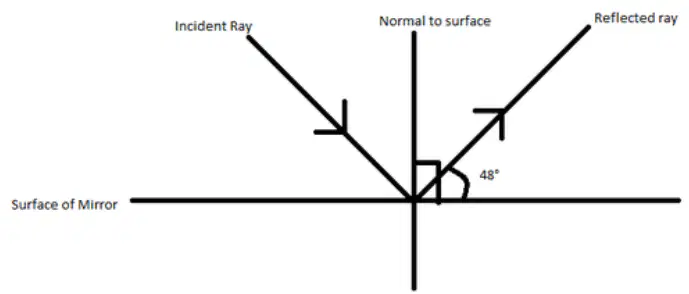
In this image, the light ray strikes the surface of a mirror and reflects at 40 degrees. How many degrees is the angle it hits the surface of the mirror?
40 degrees
90 degrees
180 degrees
80 degrees
When you get an X-ray, you wear a lead vest to protect your body from X-rays. How does the lead vest protect you?
X-rays are transmitted by lead
Lead destroys x-rays
X-rays are not transmitted by lead
Lead is transparent
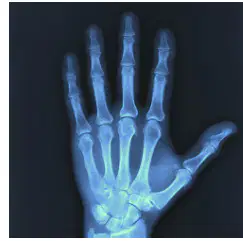
X-ray paper will turn black when x-rays hit it. If the x-ray doesn't hit it, it will be white. Based on this, what claim could you make about the skin and muscle in the hand?
The skin and muscle will allow fewer X-rays to pass through than bone.
The skin and muscle will allow more X-Rays to pass through than bone.
The skin and muscle allows all the X-Rays to pass through
The skin and muscle block all the X-Rays.
Astronauts on the moon would NOT be able to hear a landslide because
the lunar dust deadens sound
intensive sunlight destroys sound waves
the magnetic field of the moon is too weak to carry sound
Air molecules on the moon are too far apart to carry sound

A diagram of the electromagnetic spectrum is shown below. Sunscreen protects the skin from ultraviolet radiation. This sunscreen protects a person's skin from wavelengths that are
longer than radio waves but shorter than x-rays
longer than x-rays but shorter than infrared waves
longer than visible light but shorter than radio waves
longer than microwaves but shorter than infrared waves
When electric current flows through the metal filament of a lightbulb, electrical energy is transformed into
heat energy only
heat and light energy
light and motion energy
light energy only
You are watching a video on your phone (not in class, of course). How does your phone connect to the internet so you can watch the video?
The phone uses light waves to transmit information to and from your phone.
The phone uses radio waves to transmit information to and from your phone.
The phone uses a wire to connect to the internet.
The phone has all the videos on it already.
Computer speakers use digital signals to create sound. How does your computer play sounds from the internet?
The sounds just come from the computer
Sound waves
The sounds are coded as on and off signals. The computer will turn the speaker on and off to make the sounds.
The actual sound vibrations are stored in the computer.
Newton's second law states that the acceleration of an object is related to the force on the object and the mass of the object. What is the formula that goes with this law?
D=M/V
F=MA
S=21AT2
S=D/T

In the picture below, if the man lets go of the kid, what direction will the kid travel?
The kid will travel in a straight line away from the merry go round.
The kid will continue to go around like the merry go round.
The kid will travel in a curved path away from the merry go round.
The kid will immediately drop to the ground.
The strength of the gravitational force between two objects depends on what properties of the objects?
Color
Mass
Distance between them
Weight
Size
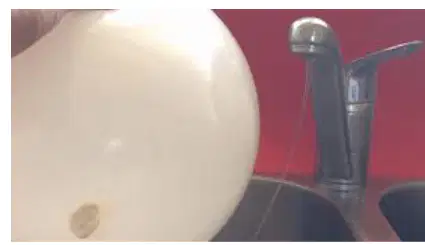
In the picture below, the balloon is causing the water to bend without touching it. This is due to charges in the balloon and the water. From this picture, what can you determine about the force of charges?
Charges must touch to exert a force
Charges can exert a force at a distance without touching.
Charges cannot exert a force
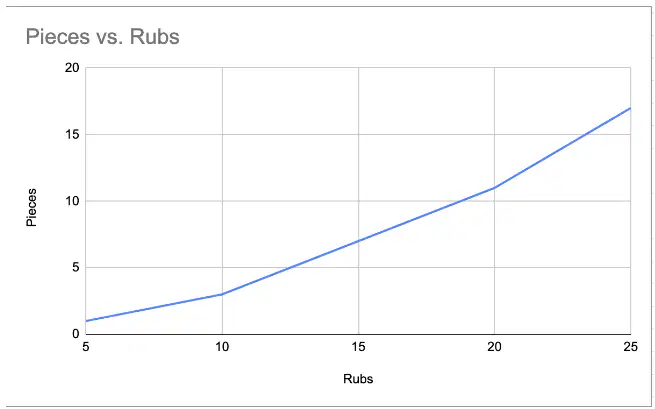
In Student C's experiment with balloons and pieces of paper, they collect their data and produce the graph below. When the balloon is picking up more pieces of paper, what claim about the strength of the force could Student C make?
As the balloon is rubbed more, the strength of the electric force decreases
As the balloon is rubbed more, the strength of the electric force increases
As the balloon is rubbed more, there is no real difference in the strength of the electric force
The electric force in the balloon is increased by the number of pieces of paper present.
Christmas lights are wired in series. If one of your Christmas lights burns out, what will happen to the other lights?
They will stay lit
They will all go out
Half will go out
They will explode
A toaster uses a current of 4 A. If the resistance is 27 ohms, what is the voltage of the toaster?
V = IR
0.15 V
6.75 V
10.8 V
108 V
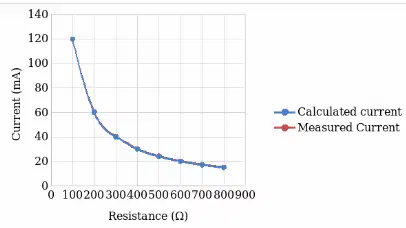
Jess graphed the current versus the resistance of a lightbulb. What can she conclude based on her graph?
Current increases and resistance increases
Current decreases as resistance increases
Current decreases as resistance decreases
Current doubles as resistance increases
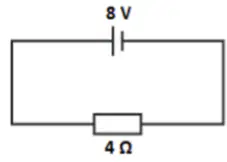
What is the current (I) in the circuit pictured below?
I = V/R
0.5 A
2 A
16 A
32 A
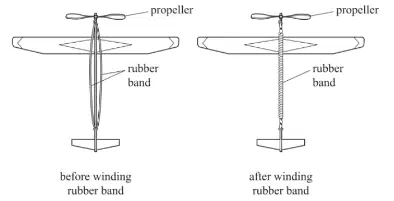
The diagram below shows a model airplane. Which energy transformation happens in the rubber band powered model airplane when it is flown?
thermal energy in the rubber band changes into chemical potential energy.
Chemical potential energy in the rubber band changes into potential energy.
Kinetic energy in the rubber band changes into thermal energy.
Elastic potential energy in the rubber band changes into mechanical energy.
A 54 kg high diver is preparing to jump off a diving platform 10 meters above the water. The force of gravity (9.8 m/s^2) pulls the diver towards the water. How much potential energy do they have before they jump?
PE = mgh
540 J
529 J
5292 J
54 J
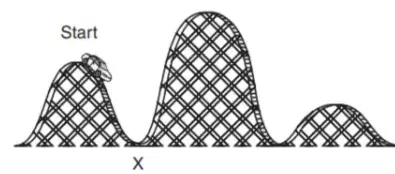
Doug builds a roller coaster with three hills, as shown in the diagram. He places a toy car at the top of the first hill and releases it. The car stops at point X. Which change to the roller coaster would allow the toy car to travel over all three hills?
Add a loop before the first hill to maximize the kinetic energy of the car.
Add a loop after the tallest hill to maximize the kinetic energy of the car.
Order the three hills from shortest to tallest to build up potential energy.
Order the three hills from tallest to shortest to provide enough potential energy.
If you put a cool spoon in a cup of hot coffee, the temperature of the spoon rises because
thermal energy is transferred from the coffee to the spoon
Specific heat is transferred from the coffee to the spoon
Particles in the spoon gain kinetic energy
Thermal energy is transferred from the spoon to the coffee.
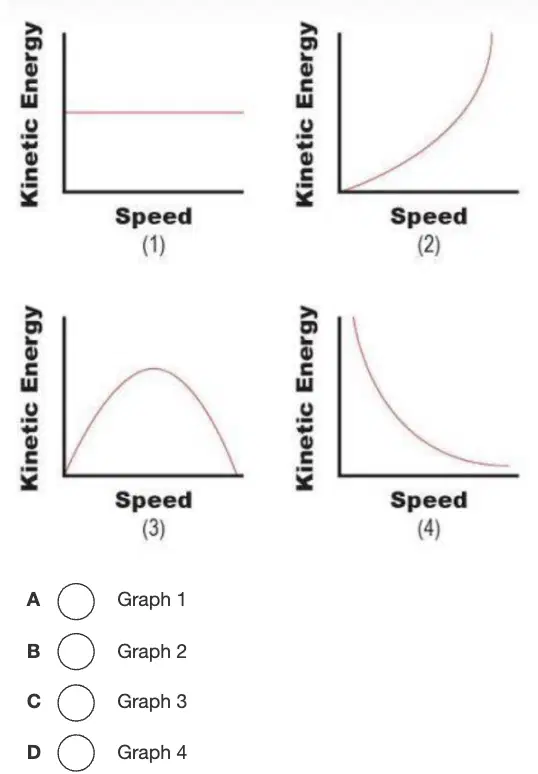
A student is graphing kinetic energy versus speed for a marble rolling down a hill. Which graph accurately shows the relationship between the marbles' kinetic energy and speed?
KE = 1/2mv^2
Graph 1
Graph 2
Graph 3
Graph 4
Student A claims that when a battery powers a lightbulb, “some of the energy is lost because the bulb gets hot.” Which statement best explains whether student A is correct?
Student A is correct; some energy is destroyed when it turns to heat
Student A is incorrect; energy transforms into other forms like light and heat.
Student A is correct; heat energy is not a form of energy conservation.
Student A is incorrect; all of the energy becomes light energy.
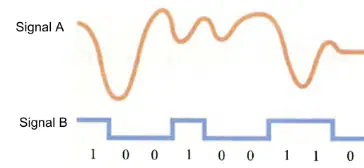
The graphs below show two signals that send sound to a speaker.
Signal 1 is digital and uses on/off pulses to transmit information.
Signal 1 is analog because it varies smoothly; Signal 2 is digital because it uses discrete steps.
Signal 2 is analog because it repeats; Signal 1 is digital because it has higher frequency.
Both are analog signals but one is louder than the other.
When a light ray hits a mirror at an angle of 30 degrees, at what angle will it reflect?
30 degrees
60 degrees
0 degrees
90 degrees

Which form of energy is generated by the movement of electrons?
Sound
Chemical
Electrical
Thermal
Which form of energy causes particles to vibrate back and forth?
Sound
Chemical
Electrical
Thermal

Identify the energy transformations for each of the items below. a) Electrical energy is transferred to ____________ energy.
Heat energy
Sound energy
Light energy
Kinetic energy
Identify the energy transformations for each of the items below. Mechanical energy is transferred to ____________ energy.
Electrical energy
Thermal energy
Sound energy
Light energy
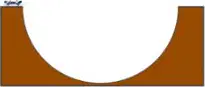
The skateboarder in the picture below moves down the ramp. As the skateboarder moves down the ramp, his potential energy changes into __________.
chemical energy
kinetic energy
electrical energy
light energy
Friction between two surfaces creates ________ which is lost.
Heat energy
Chemical energy
Sliding energy
Inefficient energy
Which of the following terms is the distance between two crests of a wave?
Wavelength
Frequency
Rarefaction
Compression
Which one of the following terms is defined as the number of complete waves that pass a given point in a second?
Wavelength
Frequency
Rarefaction
Compression
Which of the following characteristics determines the loudness of the sound?
Frequency
Period
Amplitude
Wavelength
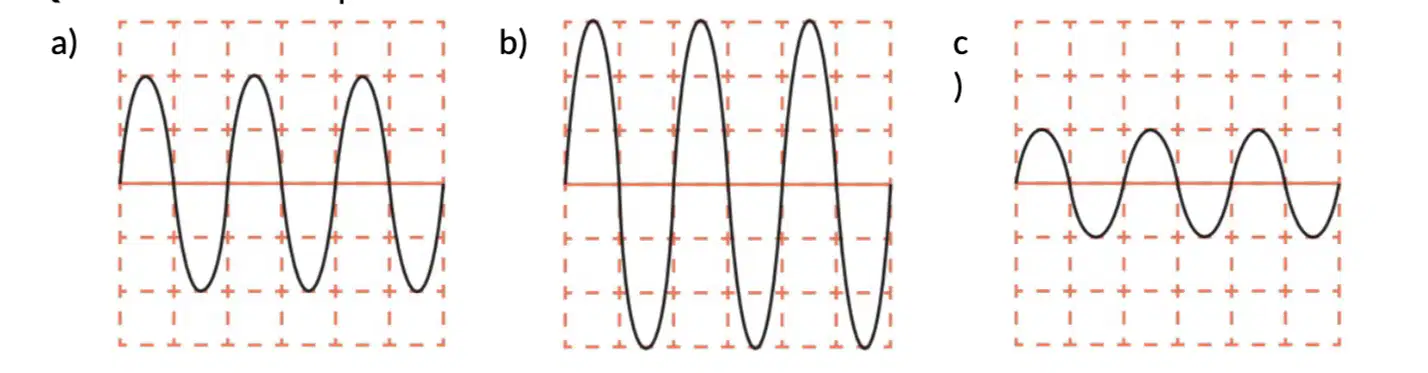
Which trace represents the loudest sound?
A
B
C
Which of the following statements is true?
Sound travels in one direction like a flash light beam.
Sound is a form of energy that can be changed into other forms of energy.
Loudness and pitch of sounds are the same things.
Radio waves are sound waves.
What is a reflected sound wave called?
Frequency
An echo
Intensity
Loudness
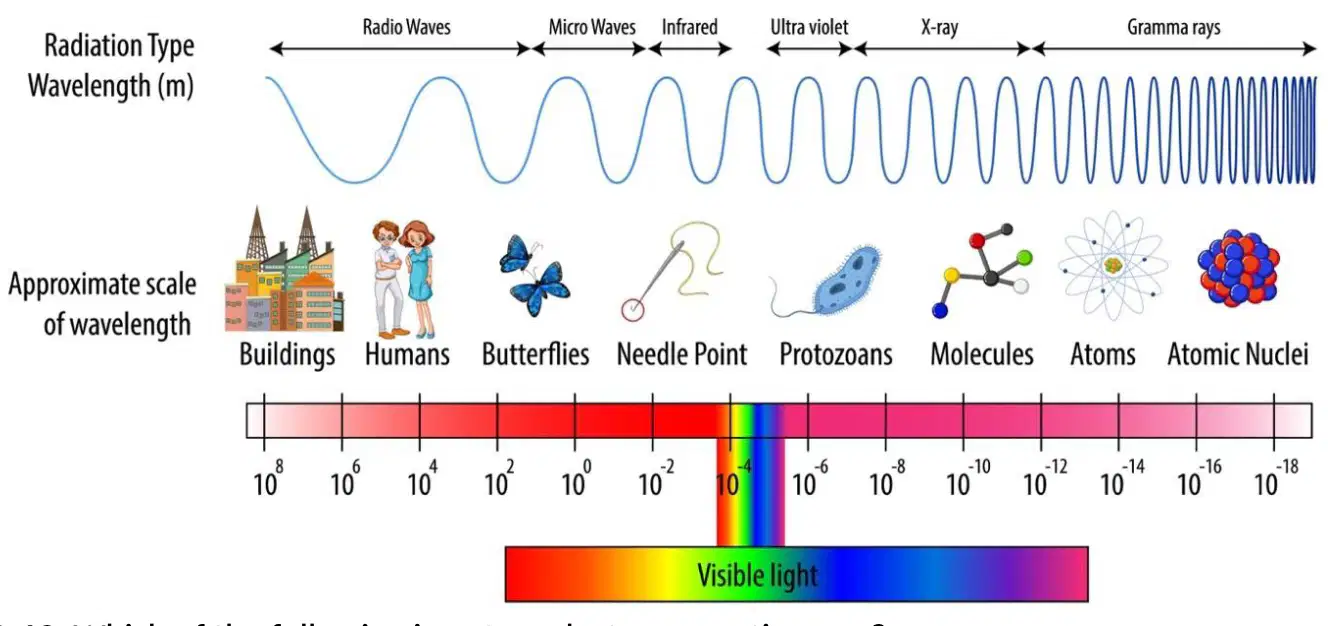
Which of the following is not an electromagnetic wave?
Visible Light
Gamma
Radio
Sound
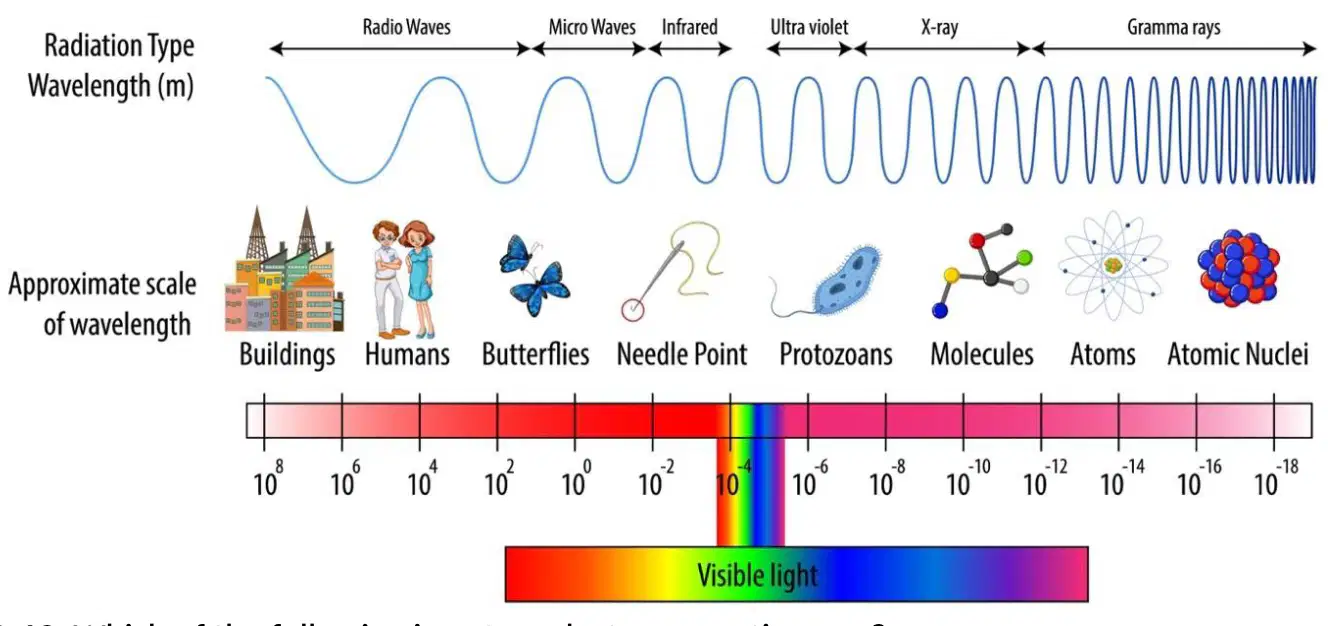
Which of the following has the longest wavelength?
Infrared
Ultraviolet
Radio waves
Gamma rays

Which of the following has the shortest wavelength?
Infrared
Ultraviolet
Radio waves
Gamma rays

The distance from the beginning of one compression to the beginning of the next compression is called a -----
Rarefaction
Frequency
Wavelength
Compression

______________ electricity is the result of an imbalance between negative and positive charges in an object.
Conductor
Current
Static
Insulator
are substances that allow electricity to pass easily through them.
Insulators
Resistors
Connectors
Which of the following is NOT an example of a conductor?
Metal Paper Clips
Gold
Copper
Plastic
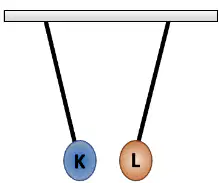
Sphere K is positively charged, and the charges on sphere L is unknown. The following diagrams show the positions of these spheres when they are suspended side by side. What is the charge on sphere L?
Sphere L is neutral.
Sphere L is positively charged
Sphere L is negatively charged
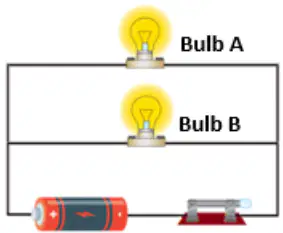
If bulb A is removed in the circuit, what will happen to bulb B?
It will get brighter
It will get dimmer
It will turn off
It will stay the same
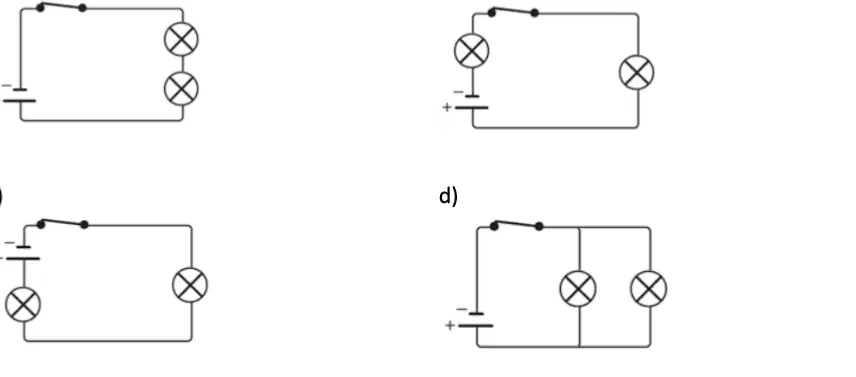
In which of the following circuits are the bulbs NOT connected in series?
a)
b)
c)
d)
What is the SI unit of current?
Ampere (A)
Coulomb (C)
Ohm (Ω)
Volt (V)
What is the SI unit of resistance?
Ampere (A)
Coulomb (C)
Ohm (Ω)
Volt (V)
Where V stands for voltage, I stands for current, and R stands for resistance, which is the correct formula for Ohm's Law?
I = R/V
V = R/I
V = I/R
V = IR
Batteries convert to electrical energy.
nuclear
light
sound

Which of these correctly indicates what happens when the two magnets are placed side by side?
They repel
They attract
Nothing
They explode
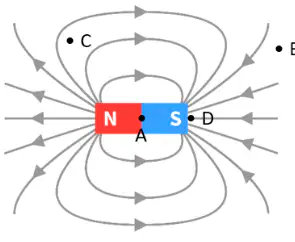
At which of the labeled points in the diagram is the magnetic field the strongest?
A
B
C
D
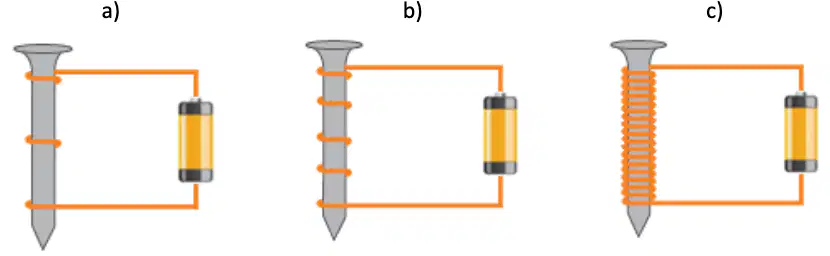
Which of the following will result in a stronger electromagnet?
a)
b)
c)

