
Font size
 Worksheets
7th Grade Healthy Relationships Test
Total questions: 30
Worksheet time: 15mins
Before you can develop healthy relationships with others you have to have a healthy relationship with yourself.
True
False
Select two positive qualities/characteristics you have (please don’t tell what you like).
Honesty and kindness
Pizza and movies
Traveling and swimming
Reading and painting
Define Self Esteem (choose the best answer)
The way you feel about others, feeling lovable and capable
The way people feel about you
The negative feelings you have about yourself
One thing you can do to develop good self esteem is:
Ignore your feelings
Compare yourself to others
Set realistic goals for yourself
Focus only on your weaknesses
Name two common types of human relationships
One-to-One and One-to-Many
Parallel and Sequential
Primary and Secondary
Open and Closed
Complete the missing Building Blocks of a Healthy Relationships
Trust, Respect, communication, boundaries
Money, Power, Fame, Popularity
Competition, Secrecy, Jealousy, Control
Lies, Manipulation, Selfishness, Neglect
Sam is very possessive, she doesn’t like it when Jen hangs out with her other friends and constantly puts Jen down.
Healthy
Unhealthy
Ben loves to spend time hanging out with his family. He feels very comfortable talking to his mom and dad if he has a problem.
Healthy
Unhealthy
Ben often criticized Kirsten and called her fat.
Healthy
Unhealthy
Who are 2 important people in your life?
Mom and Dad
Superman and Batman
Santa Claus and Easter Bunny
Harry Potter and Voldemort
SpongeBob and Patrick
Who are 2 important people in your life?
Friend, Sibling
Car, Tree
Pencil, Eraser
Shoe, Bag
What is the definition of decision making?
the state of being free from illness or injury
strategies or methods that an individual can use to say "no" in peer pressure situations.
the process of making choices by identifying a decision, gathering information, and assessing alternative resolutions.
the process of finding solutions to difficult or complex issues.
What are the 6 Steps to the Decision Making Process
Gather information
Ignore all options
Make random choices
Avoid decisions
What are the 6 Steps to the Decision Making Process
Consider values and priorities
Ignore consequences and risks
Act without reflection
Follow peer pressure
Make random choices
What are the 6 Steps to the Decision Making Process
Evaluate the decision
Ignore the consequences
Make random choices
Avoid responsibility
Values are defined as:
Principles or standards of behavior regarded as important in life
Physical objects owned by a person
Mathematical numbers used in calculations
Rules set by governments
Where do values come from?
family
friends
school
all of the above
What does HELP criteria stand for?
H - Healthful, P - Parent Approval
H - Helpful, E - Energetic, L - Lively, P - Positive
H - Honest, E - Ethical, L - Logical, P - Practical
H - Hopeful, E - Encouraging, L - Loving, P - Patient
State 2 pressure situations you could face at your age.
Exams and peer pressure
Vacations and hobbies
Shopping and eating out
Traveling and watching movies
One tip you should follow when sending a message (talking) is:
Speak clearly and listen actively.
Interrupt frequently.
Ignore the listener's response.
Use complicated language.
One tip you should follow when receiving a message (listening) is:
Pay attention to the speaker
Interrupt frequently
Ignore non-verbal cues
Think about your response while the other person is talking
What behavior is being shown in each situation below. Circle Passive, Aggressive or Assertive. 27. You are waiting in line for tickets at the movies. Someone barges in front of you. You let him or her barge in without comment. After all, it's only one person.
Passive
Aggressive
Assertive
What behavior is being shown in each situation below. Circle Passive, Aggressive or Assertive. 28. You say "Excuse me. I'm waiting in line. The end of the line is behind me."
Passive
Aggressive
Assertive
What behavior is being shown in each situation below. Circle Passive, Aggressive or Assertive. 29. You push the person and say, "I was here first. Wait your turn like everyone else."
Passive
Aggressive
Assertive
Match the word with its definition:
not reacting to what happens
having bold/confident statements/behavior
to behave in an angry, attacking way
not reacting to what happens
having bold/confident statements/behavior
to behave in an angry, attacking way
What are 2 Refusal Skills you can use when facing negative pressure?
Examples: Say no firmly, walk away, suggest an alternative, use humor.
Examples: Ignore the situation, agree with the pressure, follow the crowd, stay silent.
Examples: Accept the offer, encourage others to join, avoid making a decision, pretend to agree.
Examples: Give in immediately, make excuses, blame others, avoid responsibility.
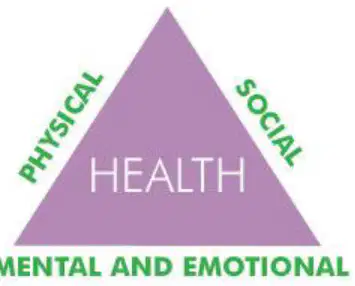
Give 2 Examples of each part of the Health Triangle: Physical
Examples: Exercise, eating healthy, getting enough sleep.
Examples: Reading, meditating, journaling.
Examples: Socializing, making friends, joining clubs.
Examples: Painting, listening to music, watching movies.
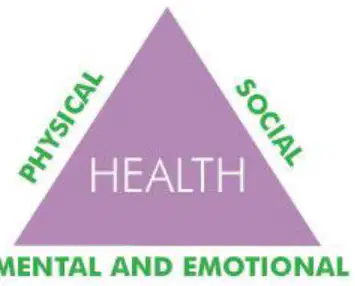
Give 2 Examples of each part of the Health Triangle: Social
Examples: Making friends, communicating, teamwork.
Examples: Eating vegetables, exercising, sleeping well.
Examples: Studying, reading books, solving puzzles.
Examples: Brushing teeth, washing hands, taking medicine.
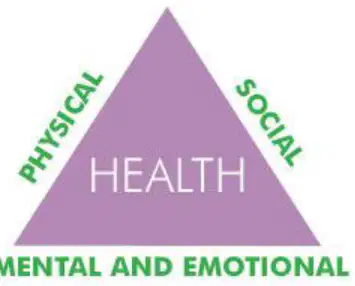
Give 2 Examples of each part of the Health Triangle: Mental/Emotional
Examples: Managing stress, expressing emotions, self-esteem.
Examples: Eating healthy foods, regular exercise, proper sleep.
Examples: Making friends, teamwork, communication skills.
Examples: Brushing teeth, washing hands, wearing sunscreen.
What can you do to help stop bullying?
Ignore bullying when you see it
Support the person being bullied
Join in with the bullying
Spread rumors about others

