
 Worksheets
Quiz: Grundlagen der Kristallstrukturanalyse 2025
Total questions: 77
Worksheet time: 41mins
The teachers are done teaching - QUIZ TIME !!!
30 seconds per question (or until everyone has clicked)
Do you feel ready ?
Oh no, I shouldn't have used my real name..
A bit shaky.
Solid 4 out of 10.
Should be fine. Probably.
Bring it on !

What does the picture show ?
reflections from a cubic lattice
a fingerprint
an X-ray spectrum
a simulated powder diffraction pattern
Which statement is correct ? There are...
7 crystal systems,
14 Bravais lattices and
230 3D space groups.
10 Laue classes,
33 crystal classes and
230 3D space groups.
17 plane groups and
226 space groups
11 Laue classes,
32 crystallographic point groups and
10 Bravais lattices.
What happens to the positions of the reflections in a diffraction pattern if the X-ray wavelength is made longer ?
They get broader.
They appear further apart.
Their positions on the detector do not change.
They appear closer together.
If a motif is repeated several times in a periodic fashion, which of the options below will return the sharpest diffraction pattern ?
Sharpness does not require a specific number of repeats.
2 repeats
22 repeats
122 repeats
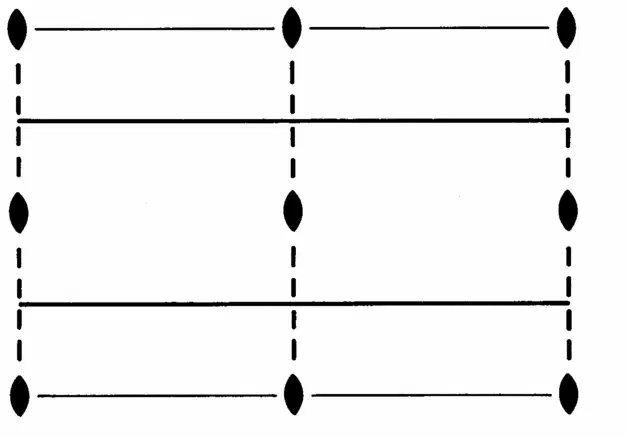
Name the plane group:
cm
p2mg
p4mm
p2gg
If α = β = γ = 90°, what is the reciprocal angle α* ?
90°
180°
120°
b* and c* do not intersect.
Which statement is true? Space group I4 is…
centrosymmetric.
non-centrosymmetric.
a Sohncke group: enantiopure chiral compounds can crystallize in it.
face-centered.
What happens to the positions of the reflections in a diffraction pattern if the unit cell in crystal A is larger than that in crystal B ?
The reflections for crystal B appear further apart.
The reflections for crystal B appear closer together.
No change.
Crystal B has sharper reflections but less resolution.
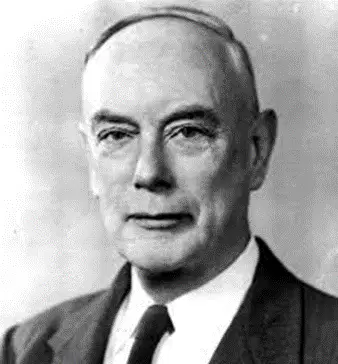
The Ewald construction...
was invented by Friedel Ewald around 1925.
relates real and reciprocal space.
is a sphere containing all reflections of a crystal.
is a sphere with r = λ/2.
What is the unit of reciprocal unit cell axes ?
Å
Å3
a.u.
Å-1
The intensities of the diffracted beams give information about…
the used X-ray wavelength.
the size of the unit cell.
the arrangement of the contents within the unit cell.
all of the above.
The conformation of a conformationally flexible molecule in a crystal…
must be the same as in solution.
must be different from the solution.
might or might not be the same as in solution.
is a Boltzmann distribution.
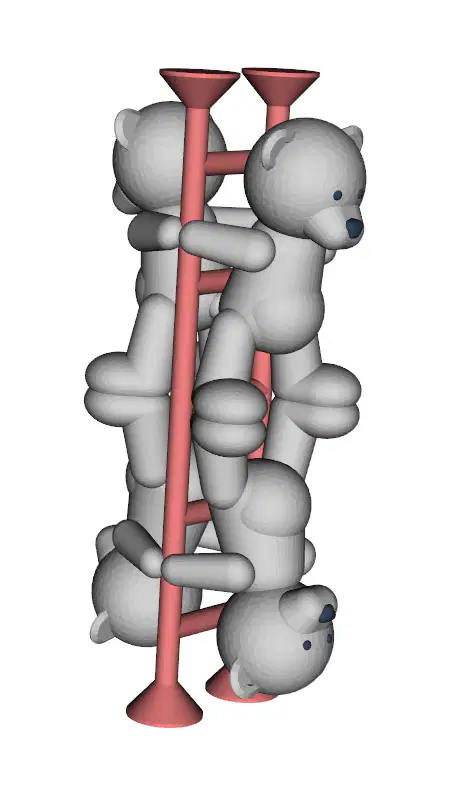
What does the picture show ?
Laue group mm2
bears fooling around on a ladder
point group mm2
Sohncke group mmm
Which element has a characteristic X-ray wavelength of 0.71 Å ?
Copper
Silver
Gallium
Molybdenum
Why is the atomic form factor curve almost the same for F- and Na+ ?
These species have the same ionic radius.
These species have the same net charge.
The statement is false, the form factor is independent of the element.
These species are isoelectronic.
Single crystals lead to discrete spots in an X-ray diffraction pattern because…
they contain discrete molecules.
the arrangement of the chemical components in the crystal is periodic in 3 dimensions.
there are electrons present.
X-rays have a wavelength < 1 nm.
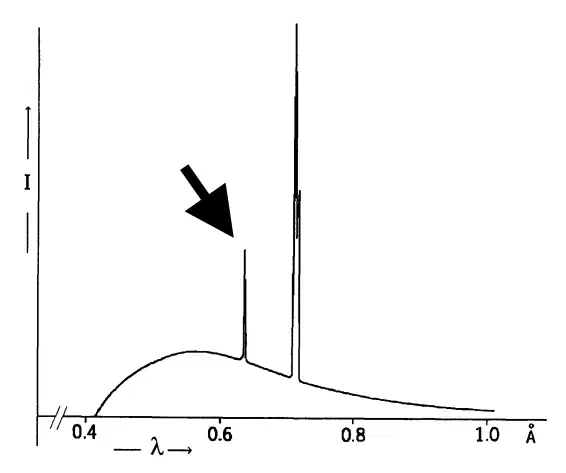
How do you call the indicated peak ?
Kα1
Kα2
Kβ
Bremsstrahlung
If a compound was not fully purified before crystallization, the obtained single crystals will contain…
only the major component.
only the minor component.
a mixture of the components in any ratio.
any of the above.
What is the characteristic X-ray Kα wavelength of Copper ?
about 1.54 Å
exactly 0.71 Å
less than 0.54 Å
1.937 Å
Which systematic absence condition will arise for a 21 screw axis parallel to the b-axis ?
Reflections are absent when:
h0l: h+l = 2n+1
h00: h = 2n
0k0: k = 2n+1
There are no systematic absences generated by this symmetry element.

This picture illustrates…
a lattice
the concept of mosaicity
libration effects
plane group p1
If a molecule with two chiral centres crystallizes in space group Pna21 and the absolute structure (Flack x) parameter refines to 0.01(1), you know that...
the compound in the crystal is a single enantiomer and you have successfully determined its absolute configuration.
the compound in the crystal is a single enantiomer, but its absolute configuration cannot be determined unambiguously.
you have a mixture of diastereoisomers.
the compound in the crystal is racemic and you have successfully determined the absolute structure (direction of the polar axis).
For a body-centred Bravais lattice, the condition for a reflection to have observed intensity is:
All reflections are allowed.
The sum of all hkl indices must be an even number.
The sum of all hkl indices must be an odd number.
hkl: h+k, k+l, h+l = 2n
Which classes of reflections show systematic absences when glide planes are present in a structure ?
general reflections
central reflections
axial reflections
zonal reflections
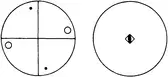
What is this symmetry ?
422
I4/m
mmm
4
Cubic symmetry is characterized by...
a = b = c, and all angles 90°.
three 4-fold axes in the diffraction pattern.
the vector [111] (space diagonal).
more than one 3-fold rotation axis.
A non-primitive Bravais lattice is chosen when…
a 90° unit cell angle can be achieved without changing the unit cell volume.
the lattice symmetry is higher than that of the corresponding P lattice.
the resulting unit cell volume doubles compared with the primitive unit cell.
the crystal system is tetragonal, trigonal, hexagonal or cubic.
The unit cell dimensions must obey the conditions a = b ≠ c, α = β = γ = 90° when the crystal system is...
cubic
orthorhombic
hexagonal
tetragonal

Who is this Lady ?
Dorothy Hodgkin (solved structures of penicillin and vitamin B12)
Rosalind Franklin (discovery of DNA was based on her work)
Isabella Karle (developed direct methods with her husband Jerome)
Queen Elizabeth II
An object with mm2 point symmetry has...
a mirror plane not intersecting or coincident with a 2-fold axis.
a centre of inversion (always).
two mutually perpendicular mirror planes, both of which are parallel to a 2-fold axis.
two mutually perpendicular mirror planes, only one of which is parallel to a 2-fold axis.
A lattice with symmetry 4/m 2/m 2/m has three symmetry-independent perpendicular mirror planes:
Correct.
Incorrect.
It depends on the orientation of 2-fold axes.
This is not a proper point group.
An F lattice has non-primitive lattice points...
in the middle of every edge of the unit cell.
in the centre of every face of the unit cell.
at ½, ½, ½.
along the body diagonals of the unit cell.
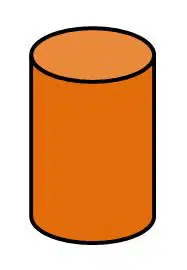
What is the point group of this object ?
∞/mmm (D∞h)
Laue group 6/mmm
6
cannot be assigned a point group
If a molecule with one chiral centre crystallizes in space group P212121 and the absolute structure (Flack x) parameter refines to 0.99(2), then...
the crystal is an inversion twin.
the refinement model may be correct, but the Flack parameter is ambiguous.
the absolute structure cannot be determined.
You must invert your refinement model for the structure.
The quadratic form of the Bragg equation can be used to...
test for twinning.
calculate the atomic form factor.
compare intensities of equivalent reflections.
calculate the resolution of a reflection.
If a molecule with one chiral centre crystallizes in space group P21 and the absolute structure (Flack x) parameter refines to 0.48(1), then...
the crystal is an inversion twin.
you must invert your refinement model for the structure.
the refinement model is correct and needs no further refinement.
the refinement model may be correct, but the Flack parameter is ambiguous.
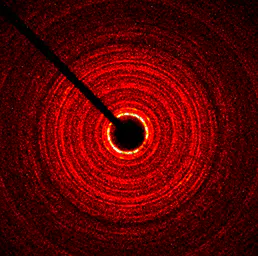
The image shows scattering in...
a single crystal.
a gas.
bee’s wax.
some polycrystalline material.
If a difference Fourier map shows a residual peak of 4.7 e Å-3 approximately 1.51 Å from a carbon atom in a phenyl ring that currently has no substituent in the model, what atom/functional group is this peak likely to represent ?
carbonyl oxygen atom
hydroxy oxygen atom
methyl group
fluorine atom
A twin…
can and should always be prevented by changing the crystallization conditions.
should be resolved automatically by a special algorithm.
makes heavy atoms appear lighter in the difference Fourier map.
is characterized by a reciprocal or real space geometrical relationship between domains.
The allowed phase angles for any reflections in a non-centrosymmetric structure are:
0°
0 - 360°
0 or 180°
0, 90, 180 or 270°
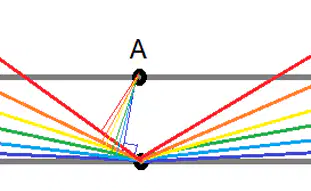
What does the figure illustrate ?
diffraction at long (red) and short (blue) wavelengths
diffraction at short (red) and long (blue) wavelengths
diffraction of neutrons and visible light
diffraction of electrons at high energy
Which of the following is a rule of thumb used in crystallography ?
the Bernoulli principle
the 18 electron rule
the 18 Å3 rule
The law of large numbers (LLN)
What is described by Z in crystallography ?
the number of formula units in the asymmetric unit
the number of formula units in the unit cell
the number of atoms in the unit cell
the numbering of elements in the periodic table
Why is the Laue class relevant for structure determination ?
It represents the symmetry of the X-ray diffraction pattern.
It is a prerequisite for systematic absences.
A higher symmetry Laue class makes it easier to determine the space group.
The Fourier synthesis requires knowledge of the Laue class.
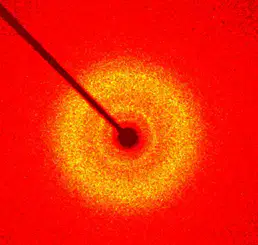
The image shows scattering in...
a single crystal.
a twinned crystal.
probably glass.
a polycrystalline material.
A large negative region of residual electron density (e.g. -7 e Å-3) directly surrounding a Ru atom in a Ru(II) metal complex probably means...
the space group is incorrect.
the metal is really an element lighter than Ru.
the crystal quality is bad, which leads to Fourier ripples.
the absorption correction was faulty.
Which is NOT a warning sign for twinning ?
no birefringence along optic axis
crystal always polarizes the light
lamellar lines on crystal surfaces
split reflections
What information is needed to determine the unit cell parameters in X-ray diffraction ?
structure factors
direction of the reflection vectors
direction of the reflection vector and its intensity
reflection phases
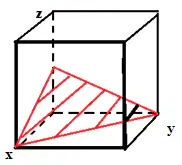
The miller index of the shown plane is...
2 2 4
1 1 4
2 1 1
1 1 2
What is the point group of space group P63/mmc ?
63/mmc (centrosymmetric)
6/mmm (Laue group)
6 (same as 3/m)
mmm
Which of the following is the correct term for the quadratic form of the Bragg equation in the cubic crystal system ?
sin2θ=c24λ(h2+k2+l2)
sin2θ=4a2λ2(h2+k2+l2)
n2λ2=4d2sin2θ
d21=a2sin2βh2+b2k2+c2sin2βl2−acsin2β2hlcosβ
What information does a peak in an X-ray powder diffraction pattern contain ?
intensity
diffraction angle
unit cell constants
diffraction angle and relative intensity
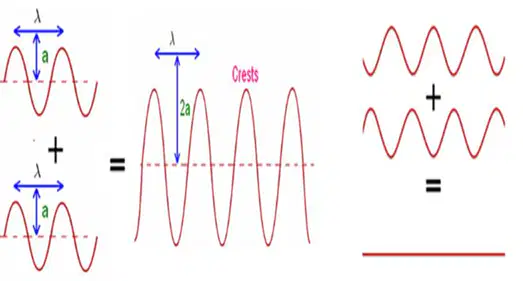
The image shows...
constructive and destructive interference.
diffraction of waves.
normal scattering of two waves.
a sine signal on an oscilloscope screen.
In which database can you find protein structures?
PDB
ICSD
CCDC
Why can’t a structure simply be calculated from the reflections in the diffraction pattern ?
due to the low intensity of diffraction
because of the phase problem
because of long computation times
due to difficulties with crystal growing
Which kind of radiation can be used for structure determination by diffraction methods ?
X-ray, neutrons, microwaves
gamma rays, electrons, X-rays
X-ray, neutrons, electrons, synchrotron radiation
X-rays, UV, IR
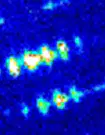
This diffraction image was taken with Mo radiation.
Which experimental conditions should be used to collect diffraction data from the crystal ?
Use Mo radiation with no restriction.
Use Cu radiation. Alternatively use Mo radiation and position the detector far from the sample.
No change is necessary if the crystal contains heavy elements.
Cu and Mo radiation are equally suitable for the experiment.
Which systematic absence condition will arise for a 4-fold axis parallel to the c axis ?
Reflections are absent when…
00l: l = 2n+1
00l: l ≠ 4n
00l: l = 4n
There are no systematic absences generated by this symmetry element.
The unit cell parameters a = b = c, α = β = γ ≠ 90° are typical for the...
cubic crystal system.
monoclinic crystal system.
triclinic crystal system.
trigonal crystal system in rhombohedral setting.
Direct methods allow phase determination...
of heavy atom structures.
of light atom structures.
of any kind of structures.
only of centrosymmetric structures.
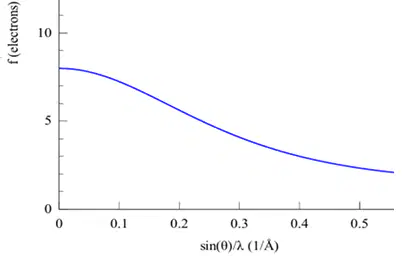
The graph shows the atomic form factor for...
Cu
C
N
O
The use of molybdenum instead of copper radiation makes it possible to obtain a diffraction pattern with...
lower resolution.
higher resolution.
higher intensities.
higher intensities and resolution.
An X-ray tube can effectively generate X-rays at an anode voltage of...
tens of kV.
12V.
230V AC.
1000V.
What is the most effective and fastest detector for X-ray detection today ?
SONY full frame camera
digital detector with direct readout
photographic film
proportional counter
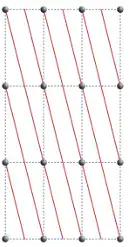
Which family of lattice planes is shown ?
(210) or (210)
(210)
(120)
(120)
An undulator is used for...
generating high intensity radiation in the synchrotron.
collimating and focusing the primary beam.
filtering Bremsstrahlung.
accelerating electrons.
What does the square amplitude of the structure factor represent in a diffraction experiment ?
phases
intensities
scattering power
phases and Miller indeces
Disorder in a crystal...
reduces resolution.
reduces the data collection time.
improves diffraction strength of the crystal.
all of the above
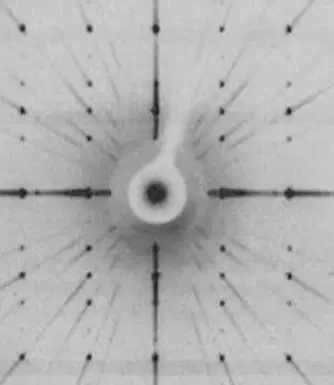
Shown here is a diffraction pattern obtained using...
filtered radiation.
electrons.
non-monochromatic radiation.
incoherent radiation.
Electron density is the Fourier transform of...
Miller indices.
the θ angle.
the 2θ angle.
structure factors.
The purpose of a monochromator is to...
completely eliminate Kβ.
eliminate Kα1 and Kα2.
eliminate Bremsstrahlung.
eliminate Bremsstrahlung and Kα1 / Kα2.
Fourier synthesis generates...
diffraction peaks on maps of electron density.
the distribution of electron density in the unit cell.
general intensity scattering.
intensities of the peaks and phase distribution over time.
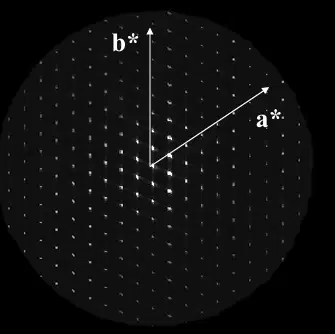
The depicted reciprocal space points represent a unit cell with an angle of...
90°
180°
120°
100°
How can the absorption effects present in diffraction experiments be reduced ?
by using short wavelength radiation
by using smaller crystals with a near-isotropic shape
by properly mounting and centering the sample
all of the above
How can molecular dynamic disorder in a crystal be reduced ?
heating
cooling or applying high pressure
leave the crystals undisturbed for a long time, to allow the molecules to organize themselves
none of the above
The Patterson method for solving crystal structure requires...
phases and intensities
only intensities
phases and directions
all of the above

