wayground logo

Free Printable Worksheets

Font size

S
M
L
XL
Worksheets

Semester 1 Bio midterm 2025

Total questions: 114

Worksheet time: 4hrs 33mins

Name
Class
Date
1.
Robert Hooke, Anton van Leeuwenhoek, Theodor Schwann, Rudolf Virchow, and Matthias Schliden were all responsible for what theory?
a)
The Theory of Gravity
b)
The Theory of Relativity
c)
The Cell Theory
d)
The Theory of Continental Drift
2.
What tool do you use to view the cells?
a)
metric ruler
b)
centrifuge
c)
microscope
d)
telescope
3.
All living things are made up of...
a)
cells
b)
cell tissues
c)
organ
d)
organ systems
4.
All cells come from___________ cells.
a)
pregnant
b)
pre-existing
c)
paternal
d)
pin size
5.
Rocks are not living because
a)
they never move
b)
they aren't needed for humans
c)
they are not made of cells
d)
they don't break down
6.
what is a cell classified as?
a)
a basic unit of structure and function of all living organisms
b)
a unit based on only plants and animals that are living
7.
Who looked at cork and named the cell?
a)
Robert Hooke
b)
Van Leeuwenhoek
c)
Robert Brown
d)
Francesco Redi
8.
Which scientist did NOT contribute to the cell theory?
a)
Anton Van Leeuwenhoek
b)

Robert Hooke
c)
Albert Einstein 
d)

Matthias Schleiden
9.
Cells are often called "the ____ of life."
a)
bread
b)
road map
c)
building blocks
d)
meaning
10.
A plant and an animal are both living things. According to the Cell Theory, what can you conclude about these two very different organisms?
a)
Plants have cells but animals do not.
b)
They are both made of one or more cells. 
c)
They both come from the same kind of cell.
d)
They both come from a non-living organism.
11.

  There are three parts to the cell theory. Which is NOT one of those parts?

a)

All organisms are composed of one or more cells.

b)

The cell is the basic unit of structure and organization in organisms.

c)

Cells spontaneously arise from carbon and nutrients carried in the bloodstream.

d)

All cells come from pre-existing cells.

12.
Which of the following scientists was the first to observe bacteria?
a)
Anton van Leuwenhoek
b)
Matthais Schleiden
c)
Robert Hooke
d)
Theodor Schwann
13.

A cell without a true nucleus

a)

Prokaryotic

b)

Eukaryotic

14.

A cell that has a true nucleus

a)

Prokaryotic

b)

Eukaryotic

15.
Which of the following is not a characteristic of a Prokaryotic cell?
a)
unicellular
b)
floating DNA
c)
very small
d)
complex
16.

Bacteria is an example of a(n)

a)

prokaryotic cell.

b)

eukaryotic cell.

17.
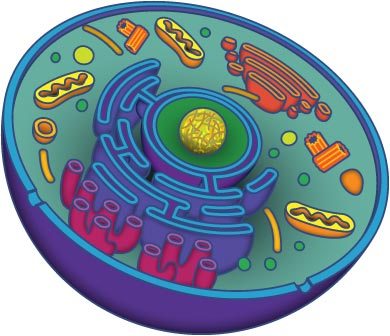
Which type of cell?
a)
Prokaryote
b)
Eukaryote
18.

Plants and animal cells are examples of ___ cells

a)

prokaryotic cells

b)

eukaryotic cells

c)

both eukaryotic and prokaryotic

d)

neither

19.
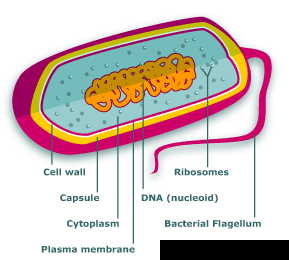
This is a picture of:
a)
Prokaryote
b)
Eukaryote
20.

Prokaryote or Eukaryote?

Unicellular or Multicellular?

Orange Tree

a)

Prokaryote

Unicellular

b)

Eukaryote

Unicellular

c)

Eukaryote

Multicellular

21.
Which of these characteristics was most likely NOT inherited?
a)
dimples
b)
purple hair
c)
blue eyes
d)
freckles
22.
The arctic fox lives in the tundra where it gets very cold in the winter. In summer, its coat is brownish or gray. In winter, its coat is bright white. Which of these is most likely the cause of this color change?
a)
a new learned behavior
b)
the amount of sunlight
c)
the type of food
d)
changes in the environment
23.
Which of the following explains why some animals hibernate?
a)
Animals hibernate as a defense against predators.
b)
Hibernating is a response to changes in the environment.
c)
Hibernating allows animals to grow faster.
d)
Most animals hibernate to avoid the summer’s heat.
24.
a)
Cricket chirps grow louder as the temperature increases.
b)
The temperature has no effect on the number of chirps.
c)
Crickets will not chirp if it is colder than 60 oF.
d)
The number of chirps increases as the temperature increases.
25.
What kind of behavior is fetching a stick?
a)
characteristic
b)
inherited
c)
instinct
d)
learned
26.
Which of the following is NOT an example of an inherited behavior?
a)
bear hibernating
b)
seal tossing a ball
c)
bird building a nest
d)
spider spinning a web
27.
Which of the following best explains the seasonal migration behavior in geese, elk, whales, and butterflies?
a)
They are inherited behaviors.
b)
They are learned behaviors.
c)
They are optional behaviors.
d)
They are environmental behaviors.
28.
Which of the following would make the best topic sentence for a report on animal behavior that is inherited.
a)
Only adult animals can learn different behaviors.
b)
Humans are the only mammals that can learn behaviors.
c)
Animals are born with inherited behaviors called instincts.
d)
An instinct is a behavior an animal has after lots of practice.
29.
a)
The rabbit population stayed the same between 2002 and 2004.
b)
In 1996, the wolf population was highest and the rabbit population was lowest.
c)
The wolf population was higher than the rabbit population in 2000.
d)
There were no wolves observed in 2004 because there were no rabbits to eat.
30.
Which macromolecule is made of simple and complex sugars?
a)
lipids
b)
proteins
c)
carbohydrates
d)
nucleic acids
31.
Which macromolecule stores energy, insulates us, and makes up the cell membrane?
a)
lipids
b)
proteins
c)
carbohydrates
d)
nucleic acids
32.
Which are enzymes?
a)
simple carbohydrates
b)
proteins that speed up chemical reactions
c)
lipids that make up the cell membrane
d)
a building block of DNA
33.
This is one job proteins do NOT have in the body
a)
storing genetic information
b)
structure
c)
speed up chemical reactions
d)
transport things through cell membrane
34.
Unsatured fats are healthier for you. Which is an example of an unsaturated fat?
a)
butter
b)
bacon
c)
olive oil
d)
eggs
35.
DNA and RNA are examples of...
a)
proteins
b)
nucleic acids
c)
carbohydrates
d)
lipids
36.
Which of the following elements make up nucleic acids?
a)
C, H, O
b)
C, H, O, N
c)
C, H, O, N, P
d)
C, H, O, Ca, S
37.
What suffix is used in the names of most carbohydrates?
a)
-ase
b)
-nic
c)
-ose
d)
-yme
38.
Where does the energy from our food originally come from?
a)
the Sun
b)
chemical reactions
c)
carbohydrates
d)
mitochondria
39.
Nucleotides are monomers of
a)
Carbohydrates
b)
Lipids
c)
Proteins
d)
Nucleic Acids
40.
The element _______is found in all of the organic compounds.
a)
Iron
b)
Nitrogen
c)
Carbon
d)
Oxygen
41.
Waxes, oils and fats are examples of
a)
Carbohydrates
b)
Lipids
c)
Proteins
d)
Nucleic Acids
42.
The polymer of monosaccharides are called ____________
a)
Glycerol and fatty acids
b)
Nucleotides
c)
Amino Acids
d)
Polysaccharides
43.
What is the function of nucleic acids?
a)
store genetic information
b)
store energy (long-term)
c)
store energy (short-term)
d)
build skin, hair, nails, muscles
44.
Which macromolecule is shown?
a)
lipid
b)
protein
c)
nucleic acid
d)
carbohydrate
45.
Which macromolecule is shown?
a)
lipid
b)
protein
c)
nucleic acid
d)
carbohydrate
46.
Which macromolecule is shown?
a)
lipid
b)
protein
c)
nucleic acid
d)
carbohydrate
47.
What type of macromolecule are enzymes?
a)
Protein
b)
Carbohydrate
c)
Lipid
d)
Nucleic Acid
48.
Which of these is NOT true.
a)
Enzymes can denature (change shape) when the temperature gets too high.
b)
Enzymes can only be used once in a chemical reaction. 
c)
Enzymes can denature when the pH changes. 
d)
Enzymes speed up chemical reactions. 
49.
Which of these is NOT true.
a)
Enzymes can denature (change shape) when the temperature gets too high.
b)
Enzymes can only be used once in a chemical reaction. 
c)
Enzymes can denature when the pH changes. 
d)
Enzymes speed up chemical reactions. 
50.
What kind of reaction links monomers together to form polymers?
a)
dehydration synthesis
b)
hydrolysis
51.
Two monosaccharides combine to make a ______.
a)
disaccharide
b)
polysaccharide
c)
dipeptide
d)
polypeptide
52.
Carbohydrates are made of the elements... 
a)
C H O
b)
C H O N
c)
C H O N P
d)
C H O N S
53.
What is the ratio of the elements found in carbohydrates?
a)
1:2:1
b)
2:1
c)
1:2
d)
1:4
54.
Which is an example of a carbohyrdate?
a)
wax
b)
bread
c)
DNA
d)
red meat
55.
Which is an example of a protein?
a)
oil
b)
sugar
c)
DNA
d)
beans
56.
Which is the monomer (building block) for lipids?
a)
fatty acids & glycerol
b)
nucleotide
c)
amino acids
d)
monosaccharide
57.
What kind of reactions break down polymers into individual monomers?
a)
hydrolysis
b)
dehydration synthesis
58.

What is biotechnology mainly about?

a)

Painting pictures with new colors

b)

Changing organisms to meet human needs

c)

Building bridges and tall buildings

59.

Biotechnology can help improve products and reduce diseases. Which sentence best explains why this helps people?

a)

It turns deserts into snowy mountains

b)

It makes the oceans deeper and bluer

c)

It can make daily life safer and healthier

60.

Fill in the blank: Biotechnology may help increase (a)   and energy resources.

61.

A town wants to keep Earth’s temperatures from increasing. Which use of biotechnology fits this goal best?

a)

Building taller statues for parks

b)

Making louder music for festivals

c)

Creating cleaner ways to make energy

62.

Kids in a science club must pick one project that shows biotechnology solving a global problem. Which project is the best choice?

a)

Practicing dances for a school show

b)

Coloring posters with new crayons

c)

Designing crops that grow with less water

63.

Which color is linked with medical biotechnology?

a)

Red

b)

Blue

c)

Green

d)

Yellow

64.

Medical (red) biotechnology mainly focuses on human health and creates new medicines to treat and prevent illnesses.

a)

It focuses on human health

b)

It makes sports equipment

c)

It grows crops for food

65.

In medical (red) biotechnology, what tool can be used to make custom treatments for people?

a)

Water filters

b)

Genetic engineering

c)

Weather stations

66.

Agricultural biotechnology is connected with the color?

a)

Red

b)

Green

c)

Orange

d)

Pink

67.

A farmer wants to raise animals for food and use techniques that are kind to nature. Which biotechnology category should the farmer explore?

a)

Agricultural (green) biotechnology

b)

Industrial (white) biotechnology

c)

Medical (red) biotechnology

68.

What does industrial, or white, biotechnology mainly try to do?

a)

Study sea creatures for science

b)

Create new eco-friendly processes

c)

Grow plants in dry deserts

69.

Marine, or blue, biotechnology focuses on using organisms found in which place?

a)

Desert dunes

b)

City parks

c)

Mountain caves

d)

The sea and oceans

70.

Blue biotechnology can help make new sources of energy for ocean life. Which energy source is named in the text?

a)

Marine

b)

Industrial

c)

Medical

71.

Which is true of NEW biotechnology?

a)

It never affects the environment

b)

Everyone agrees it is perfect

c)

New materials might harm humans

72.

How can biotechnology help people and the planet?

a)

Stop people from asking questions

b)

Make more trash for landfills

c)

Improve life and protect resources

73.

Agricultural (green) biotechnology aims to create more ______ farming solutions.

a)

electronics

b)

enviornmentally friendly

c)

solar power

74.

What is the main goal of medical (red) biotechnology?

a)

To design new sports equipment

b)

To build taller buildings

c)

To create new medicines and treatments

75.

Which of these is an example of agricultural (Green) biotechnology?

a)

Developing drought-resistant crops

b)

Inventing new musical instruments

c)

Painting murals on city walls

76.

Which field uses biotechnology to discover new medicines from OCEAN life?

a)

Marine biotechnology (Blue)

b)

Agricultural biotechnology (Green)

c)

Industrial biotechnology (White)

77.

Which is a charateristic of living things?

a)

They all have cells

b)

They all breathe air

c)

They all eat

78.

Which of the following is a characteristic of all living things?

a)

They all respond to their environment

b)

They all eat food

c)

They all need shelter

79.

Which of the following is a characteristic of all living things?

a)

They all reproduce

b)

They all eat food

c)

They all need sunshine

80.

Which of the following is a characteristic of all living things?

a)

They all grow and mature

b)

They all need water

c)

They all need food

81.

Which of the following is a characteristic of all living things?

a)

They use energy

b)

They all need water

c)

They all need food

82.

Which of the following is a characteristic of all living things?

a)

They all grow

b)

They all need sunshine

c)

They all need food

83.

What did all livingthings need to survive?

a)

Water, air, food, and shelter

b)

To grow, mature, and sunshine

c)

Cells, energy, and to respond to change

84.

What nutrients need from food?

a)

Carbohydrates, lipids, and proteins

b)

Water, vitamins, and minerals

85.

A producer is a living things that_______________________.

a)

makes its own food

b)

eats other living things

c)

breaks down dead living things into nutrients

86.

A consumer is a living things that_______________________.

a)

makes its own food

b)

eats other living things

c)

breaks down dead living things into nutrients

87.

A decomposer is a living things that_______________________.

a)

makes its own food

b)

eats other living things

c)

breaks down dead living things into nutrients

88.

Mushooms and other fungi are examples of__________________.

a)

producers

b)

consumers

c)

decomposers

89.

Lions and tigers are examples of__________________.

a)

producers

b)

consumers

c)

decomposers

90.

Apple trees and carnations are examples of__________________.

a)

producers

b)

consumers

c)

decomposers

91.

What is an adaptation?

a)

Characteristics of all living things

b)

Changes living things go through to help them survive

92.

The information you collect while doing your experiment is called

a)

conclusions

b)

data

c)

hypotheses

d)

procedures

93.

Something that you keep the same in an experiment is called a(n) _________________________.

a)

variable

b)

control

c)

procedure

d)

conclusion

94.
What is a hypothesis?
a)
A hypothesis is the right answer to an experiment.
b)
A hypothesis is the wrong answer to an experiment.
c)
A hypothesis is an educated guess.
95.

What is the first step in the scientific method?

a)

Identify the problem

b)

Conclusion

c)

Form a hypothesis

96.

The one thing you CHANGE in an experiment is the

a)
Dependent Variable
b)
Independent Variable
c)
Control
97.
The variable that is being tested, counted, or measured and is responding to the independent variable is known as 
a)
Control
b)
Constant
c)
Independent Variable
d)
Dependent Variable
98.

A hypothesis is...

a)

not important when conducting an experiment.

b)

a statement of expectation or prediction that will be tested by research.

c)

should never be use to prove an outcome.

d)

is a made up word.

99.


A series of steps used by scientists to solve a problem or answer a question.

a)

Scientific method

b)

Hypothesis

c)

Experiment

d)

Data collection

100.


The information you collect while doing your experiment is called ___

a)

procedures

b)

data

c)

hypotheses

d)

conclusions

101.

The one thing that a scientist changes in their investigation

a)

Variable

b)

Independent variable

c)

data

d)

Hypothesis

102.

All the things the scientist keeps the same in their experiment.

a)

Control variables

b)

Dependent variable

c)

Data

d)

Hypothesis

103.

Select the question below that is a testable question.

a)

What helps a plant grow best?

b)

Does changing the amount of light a plant gets affect how fast is grows?

c)

How does a plant grow?

d)

What does a plant need?

104.

A testable question should include what two things?

a)

A hypothesis and question

b)

A question and a dependent variable

c)

An independent variable but no dependent variable

d)

An independent variable and a dependent variable

105.

What is the process scientists use when planning an experiment?

a)

Scientific Questioning

b)

Scientific Method

c)

They just guess

d)

Scientific Plan

106.

A hypothesis is a....

a)

educated guess

b)

problem

c)

experiment

d)

lesson

107.

What is the DEPENDENT variable (effect) in this experiment?


"Does eating breakfast improve test scores?"

a)

eating breakfast or not

b)

the grade you got on the test

c)

what time you get up in the morning

d)

how tasty the breakfast is

108.
Steve wanted to see if the type of fertilizer made sunflowers grow larger. What is the independent variable 
a)
Type of fertilizer
b)
Size of sunflower
c)
type of sun flower
109.
Steve wanted to see if the type of fertilizer made sunflowers grow larger. What is the dependent variable 
a)
Type of fertilizer
b)
Size of sunflower
c)
Type of sunflower
110.

The variable that is measured. It is the result of the experiment.

a)

Controlled Variable

b)

Dependent Variable

c)

Independent Variable

111.

How many independent variables should you have in an experiment?

a)

two

b)

as many as possible

c)

four

d)

one

112.

A student changes how much water they give to a bean plant. After 4 weeks, they measure how many leaves each plant has. They kept the amount of sunlight and the soil the plants grew in the same.

What is a control variable?

a)

The amount of sunlight.

b)

The amount of water

c)

How many leaves on each plant

d)

How many beans on each plant

113.

A student changes how much water they give to a bean plant. After 4 weeks, they measure how many leaves each plant has. They kept the amount of sunlight and the soil the plants grew in the same.

What is the independent variable?

a)

The amount of sunlight

b)

The amount of water

c)

How many leaves on each plant

d)

How many beans on each plant

114.

Are you ready for the test on Monday?

a)

Yes!!!!!!!!

b)

I am not sure!!

c)

I need to study for the test.

d)

I feel confident!!