
 Worksheets
Fall Semester Exam Study Guide
Total questions: 97
Worksheet time: 56mins
Define the following: A large molecule produced by living organisms that performs biological functions (e.g., proteins, lipids, carbohydrates, nucleic acids).
Biomolecule
Enzyme
Hormone
Cellulose
Define the following: A nonpolar biomolecule mainly used for long-term energy storage, membrane structure, and signaling.
Lipid
Protein
Carbohydrate
Nucleic acid
Define the following: A polymer of amino acids that performs structural, enzymatic, transport, and regulatory roles in cells.
Protein
Carbohydrate
Lipid
Nucleic acid
Define the following: A polymer (DNA or RNA) that stores and transmits genetic information.
Nucleic acid
Carbohydrate
Lipid
Protein
Define the following: An organic compound of carbon, hydrogen, and oxygen used for short-term energy and structural support.
Carbohydrate
Lipid
Protein
Nucleic acid
Define the following: A reaction that breaks a bond in a molecule using water, producing smaller molecules.
Hydrolysis
Condensation
Oxidation
Polymerization
Define the following: A reaction that joins monomers into a polymer by removing a water molecule.
Dehydration synthesis
Hydrolysis
Condensation
Oxidation
Define the following: A small molecular subunit that can join with others to form a polymer.
Monomer
Polymer
Enzyme
Nucleotide
Define the following: A large molecule made of repeating monomer units linked by covalent bonds.
Polymer
Enzyme
Ion
Isotope
Define the following: A property of a molecule arising from unequal sharing of electrons, creating partial charges.
Polarity
Isotropy
Solubility
Conductivity
Define the following: A molecule with an uneven distribution of charge (partial positive and negative regions).
Polar molecule
Nonpolar molecule
Ionic compound
Covalent bond
Define the following: Attraction between different substances (e.g., water sticking to glass).
Adhesion
Cohesion
Surface tension
Capillarity
Define the following: Attraction between like molecules (e.g., water molecules sticking to each other).
Cohesion
Adhesion
Diffusion
Osmosis
Define the following: Movement of a liquid within narrow spaces due to cohesion, adhesion, and surface tension.
Capillary action
Osmosis
Diffusion
Evaporation
Define the following: A molecule with an even distribution of electrical charge and no significant partial charges.
Nonpolar molecule
Polar molecule
Ionic molecule
Hydrogen-bonded molecule
Define the following: The amount of energy required to raise the temperature of a unit mass of a substance by one degree.
Specific heat capacity
Latent heat
Thermal conductivity
Heat of fusion
Define the following: Weak attractions between a hydrogen atom bonded to an electronegative atom and another electronegative atom.
Hydrogen bonds
Ionic bonds
Covalent bonds
Van der Waals forces
Define the following: A substance (often liquid) that dissolves solutes to form a solution.
Solvent
Solute
Precipitate
Suspension
Define the following: Tending to repel or fail to mix with water (water-fearing).
Hydrophobic
Hydrophilic
Isotonic
Osmotic
Being "attracted" to water; readily interacting with or dissolving in water is called ________.
Hydrophilic
Hydrophobic
Lipophilic
Amphipathic
Energy-requiring movement of molecules across a membrane against their concentration gradient is called ________.
Active transport
Passive transport
Facilitated diffusion
Osmosis
Movement of molecules across a membrane down their concentration gradient without cellular energy input is called ________.
Passive transport
Active transport
Osmosis
Endocytosis
Passive diffusion of water across a semipermeable membrane
Osmosis
Active transport
Facilitated diffusion
Endocytosis
Net movement of particles from regions of higher concentration to lower concentration is called ________.
Diffusion
Osmosis
Filtration
Active transport
Vesicle-mediated export of materials from a cell when a vesicle fuses with the plasma membrane is called ________.
Exocytosis
Endocytosis
Osmosis
Diffusion
Vesicle-mediated uptake of materials into a cell by inward folding of the plasma membrane is called ________.
Endocytosis
Exocytosis
Osmosis
Diffusion
A solution with lower solute concentration relative to another solution, causing water to enter cells, is called ________.
Hypotonic
Hypertonic
Isotonic
Supersaturated
A solution with higher solute concentration relative to another solution, causing water to leave cells, is called ________.
Hypertonic
Hypotonic
Isotonic
Neutral
Two solutions having equal solute concentrations, resulting in no net water movement, are called ________ solutions.
Isotonic
Hypertonic
Hypotonic
Supersaturated
A low-energy molecule formed when ATP loses one phosphate; can be recharged to ATP is called ________.
ADP (adenosine diphosphate)
AMP (adenosine monophosphate)
NADH (nicotinamide adenine dinucleotide)
GTP (guanosine triphosphate)
The primary cellular energy carrier that releases energy when a phosphate bond is broken is called ________.
ATP (adenosine triphosphate)
DNA (deoxyribonucleic acid)
RNA (ribonucleic acid)
NADH (nicotinamide adenine dinucleotide)
Processes that require oxygen to produce energy (e.g., aerobic respiration) are called ________ processes.
Aerobic
Anaerobic
Photosynthetic
Fermentative
Processes that occur without oxygen (e.g., some fermentation pathways) are called ________ processes.
Anaerobic
Aerobic
Photosynthetic
Oxidative
The innermost compartment of the mitochondrion where the Krebs cycle occurs is called the ________.
Mitochondrial matrix
Cristae
Intermembrane space
Outer membrane
The folded membrane inside mitochondria containing proteins for the electron transport chain and ATP synthesis is called the ________.
Inner membrane
Outer membrane
Cristae
Matrix
A substance consumed or changed during a chemical reaction is called a ________.
Reactant
Product
Catalyst
Solvent
A substance formed as the result of a chemical reaction is called a ________.
Product
Reactant
Solvent
Catalyst
Anaerobic metabolic pathways that regenerate NAD+ by partially oxidizing glucose, producing ATP and byproducts. Fill in the blank: ________
Fermentation
Photosynthesis
Glycolysis
Respiration
Fermentation pathway converting glucose to lactic acid
Lactic acid fermentation
Alcoholic fermentation
Glycolysis
Citric acid cycle
Fermentation pathway converting glucose to ethanol (alcohol)
Alcohol fermentation
Lactic acid fermentation
Glycolysis
Citric acid cycle
A plant cell organelle where photosynthesis occurs.
Chloroplast
Mitochondria
Nucleus
Vacuole
A molecule that absorbs specific wavelengths of light and gives color (e.g., in photosynthesis). Fill in the blank: ________
Pigment
Enzyme
Protein
Carbohydrate
The green pigment in chloroplasts that absorbs light energy for photosynthesis. Fill in the blank: ________
Chlorophyll
Hemoglobin
Carotene
Melanin
The photosynthetic reactions that use light to produce ATP and NADPH. Fill in the blank: ________
Light-dependent reactions
Calvin cycle
Glycolysis
Fermentation
The Calvin cycle reactions that do not require light directly
Light-independent reactions
Light-dependent reactions
Glycolysis
Electron transport chain
A packaged DNA molecule with associated proteins carrying genetic information. Fill in the blank: ________
Chromosome
Ribosome
Mitochondria
Nucleus
One of two identical copies of a chromosome joined at the centromere after DNA replication. Fill in the blank: ________
Sister chromatid
Homologous chromosome
Centromere
Gene
Nuclear division that produces two genetically identical daughter nuclei for growth and repair. Fill in the blank: ________
Mitosis
Meiosis
Binary fission
Budding
Uncontrolled cell growth and division due to genetic and regulatory failures. Fill in the blank: ________
Cancer
Diabetes
Influenza
Arthritis
Microtubule structures that segregate chromosomes during cell division. Fill in the blank: ________
Spindle fibers
Centrioles
Ribosomes
Lysosomes
Paired microtubule structures that help make the spindle in animal cells.
Centrioles
Lysosomes
Ribosomes
Mitochondria
Write out the names of the elements contained in each macromolecule: Carbohydrates: ________
Carbon, Hydrogen, Oxygen
Carbon, Nitrogen, Oxygen
Hydrogen, Nitrogen, Sulfur
Carbon, Phosphorus, Oxygen
Write out the names of the elements contained in each macromolecule: Lipids: ________
Carbon, Hydrogen, Oxygen
Carbon, Nitrogen, Oxygen
Hydrogen, Nitrogen, Sulfur
Carbon, Phosphorus, Oxygen
Write out the names of the elements contained in each macromolecule: Protein: ________
Carbon, Hydrogen, Oxygen, Nitrogen, Sulfur (sometimes)
Carbon, Hydrogen, Oxygen, Phosphorus
Carbon, Hydrogen, Oxygen, Calcium
Carbon, Hydrogen, Oxygen, Sodium
Write out the names of the elements contained in each macromolecule: Nucleic Acids: ________
Carbon, Hydrogen, Oxygen, Nitrogen, Phosphorus
Carbon, Hydrogen, Oxygen, Sulfur, Potassium
Carbon, Hydrogen, Oxygen, Calcium, Magnesium
Carbon, Hydrogen, Oxygen, Nitrogen, Sodium
What are the important functions of the macromolecules?
a) Carbohydrates: short term energy b) Lipids: long term energy storage c) Protein: many different functions (most diverse macromolecules) d) Nucleic Acids: carry and transmit genetic information
a) Carbohydrates: long term energy storage b) Lipids: short term energy c) Protein: only structural support d) Nucleic Acids: provide energy for cells
a) Carbohydrates: build cell membranes b) Lipids: transmit genetic information c) Protein: store genetic code d) Nucleic Acids: act as enzymes
a) Carbohydrates: act as hormones b) Lipids: provide immediate energy c) Protein: store energy d) Nucleic Acids: structural support
What is the goal of dehydration synthesis reactions?
To combine monomers into polymers
To break down polymers into monomers
To add water to molecules
To release energy from molecules
List the monomers for each of the macromolecules: a) Carbohydrates: ________ b) Lipids: ________ c) Protein: ________ d) Nucleic Acids: ________
a) Carbohydrates: monosaccharides b) Lipids: no true monomer c) Protein: amino acids d) Nucleic Acids: nucleotides
a) Carbohydrates: amino acids b) Lipids: fatty acids c) Protein: nucleotides d) Nucleic Acids: monosaccharides
a) Carbohydrates: nucleotides b) Lipids: monosaccharides c) Protein: fatty acids d) Nucleic Acids: amino acids
a) Carbohydrates: fatty acids b) Lipids: nucleotides c) Protein: monosaccharides d) Nucleic Acids: amino acids
What atoms is a water molecule made up of? How many of each?
Hydrogen (2), Oxygen (1)
Hydrogen (1), Oxygen (2)
Hydrogen (2), Nitrogen (1)
Hydrogen (1), Carbon (2)
Lebel the water molecule. Which elements make up the molecule and what charge does each part of the molecule have?
Cell theory states:
1. All living organisms are composed of cells. 2. All cells arise from pre-existing cells. 3. The cell is the basic unit of life.
1. All living organisms are composed of atoms. 2. All cells arise from non-living matter. 3. The cell is the basic unit of energy.
1. All living organisms are composed of tissues. 2. All cells arise from chemical reactions. 3. The cell is the basic unit of reproduction.
1. All living organisms are composed of molecules. 2. All cells arise from spontaneous generation. 3. The cell is the basic unit of heredity.
Which cell organelle regulates entry/exit of substances and maintains homeostasis (selective barrier)? Found in all cells. (Fill in the blank)
Cell membrane
Nucleus
Mitochondria
Ribosome
Which cell organelle is a rigid outer layer (in plants/fungi/bacteria) that provides structural support and protection? Found in plant cells and some prokaryotes.
Cell wall
Mitochondria
Nucleus
Vacuole
Which cell organelle produces ATP through cellular respiration and regulates metabolic activity? Found in eukaryotic cells plant and animal.
Mitochondria
Nucleus
Ribosome
Golgi apparatus
Which cell organelle conducts photosynthesis, converting light energy into chemical energy (sugars)? Found in plant cells.
Chloroplast
Mitochondria
Nucleus
Vacuole
Which cell organelle organizes microtubules and helps form the mitotic spindle during cell division (in animal cells)? Found in animal cells.
Centriole
Mitochondria
Nucleus
Golgi apparatus
Which cell organelle synthesizes lipids, detoxifies chemicals, and stores calcium ions? Found in all eukaryotes?
Smooth Endoplasmic Reticulum (SER)
Golgi Apparatus
Mitochondria
Rough Endoplasmic Reticulum (RER)
Which cell organelle synthesizes and folds membrane-bound and secreted proteins (studded with ribosomes)? Found in all eukaryotes.
Rough Endoplasmic Reticulum (RER)
Golgi Apparatus
Lysosome
Smooth Endoplasmic Reticulum (SER)
Which cell organelle stores genetic material (DNA) and controls gene expression and cellular activities? Found in all eukaryotes.
Nucleus
Mitochondria
Ribosome
Golgi apparatus
Which cell organelle assembles ribosomal RNA (rRNA) and ribosome subunits? Found in all eukaryotes. (Fill in the blank)
Nucleolus
Mitochondria
Golgi apparatus
Endoplasmic reticulum
Which cell organelle synthesizes proteins by translating mRNA into polypeptide chains? Found in all cells.
Ribosome
Mitochondria
Golgi apparatus
Lysosome
Which cell organelle modifies, sorts, packages, and ships proteins and lipids for secretion or delivery to organelles? Found in all eukaryotes?
Golgi body / apparatus
Mitochondria
Ribosome
Lysosome
Which cell organelle stores nutrients, waste, and water; in plant cells large central vacuole maintains turgor pressure? Found in all eukaryotes.
Vacuole
Mitochondria
Nucleus
Golgi apparatus
Which cell organelle is a small membrane-bound transport carrier that moves materials within and out of the cell? Found in animal cells.
Vesicle
Mitochondria
Nucleus
Ribosome
Which cell organelle contains digestive enzymes to break down macromolecules, old organelles, and pathogens? Found in animal cells.
Lysosome
Mitochondria
Golgi apparatus
Nucleus
Which cell organelle breaks down fatty acids and detoxifies harmful substances, producing and decomposing hydrogen peroxide? Found in all eukaryotes.
Peroxisome
Lysosome
Mitochondrion
Golgi apparatus
Cytoplasm is ________ and its function in the cell is ________.
the jelly-like substance that fills the cell; to support and suspend organelles and cellular molecules
the cell's outer membrane; to protect the cell from its environment
the genetic material of the cell; to control cell activities
the energy-producing part of the cell; to generate ATP
Label and describe the parts of the cell membrane. (Refer to the diagram)
Passive transport involves which of the following: structures used, substances transported, and movement with or against the concentration gradient?
Uses membrane proteins or phospholipid bilayer, transports small molecules or ions, moves with the concentration gradient
Uses ATP, transports large molecules, moves against the concentration gradient
Uses vesicles, transports macromolecules, moves against the concentration gradient
Uses ribosomes, transports proteins, moves with the concentration gradient
Label the beakers with isotonic, hypotonic, and hypertonic solutions.
Label the chloroplast with the following terms: thylakoid, granum (grana), stroma, inner membrane, outer membrane. (Refer to the diagram)
What is the complete equation for photosynthesis?
6CO2 + 6H2O + light → C6H12O6 + 6O2
6O2 + 6H2O + light → C6H12O6 + 6CO2
C6H12O6 + 6O2 → 6CO2 + 6H2O + light
6CO2 + 6O2 + light → C6H12O6 + 6H2O
List each step in the process of photosynthesis in order.
1. Light absorption by chlorophyll 2. Light-dependent reactions (production of ATP and NADPH, release of O2) 3. Calvin Cycle (light-independent reactions, production of glucose)
1. Calvin Cycle (light-independent reactions, production of glucose) 2. Light-dependent reactions (production of ATP and NADPH, release of O2) 3. Light absorption by chlorophyll
1. Light-dependent reactions (production of ATP and NADPH, release of O2) 2. Calvin Cycle (light-independent reactions, production of glucose) 3. Light absorption by chlorophyll
1. Light absorption by chlorophyll 2. Calvin Cycle (light-independent reactions, production of glucose) 3. Light-dependent reactions (production of ATP and NADPH, release of O2)
What is the chemical equation for cellular respiration?
C6H12O6 + 6O2 → 6CO2 + 6H2O + ATP
C6H12O6 + 6CO2 → 6O2 + 6H2O + ATP
C6H12O6 + 6O2 → 6CO2 + 12H2O + ATP
C6H12O6 + 12O2 → 12CO2 + 6H2O + ATP
What distinguishes ATP from ADP and how does this affect cellular processes?
ATP (adenosine triphosphate) has three phosphate groups and stores high usable energy in the bonds between those phosphates.
ATP has fewer phosphate groups than ADP and releases less energy.
ATP and ADP have the same number of phosphate groups and identical energy storage.
ATP contains no phosphate groups and does not participate in energy transfer.
The three main stages of cellular respiration are:
Glycolysis, Krebs cycle, Electron transport chain
Photosynthesis, Fermentation, Glycolysis
Glycolysis, Calvin cycle, Electron transport chain
Krebs cycle, Photosynthesis, Fermentation
Aerobic respiration is:
a process that requires oxygen to produce energy
a process that occurs without oxygen
the breakdown of food in the absence of water
the conversion of energy without using any gases
Anaerobic respiration is:
A process that occurs without oxygen
A process that requires sunlight
A process that only occurs in plants
A process that produces only water
The 2 types of fermentation and what they make are:
Alcoholic fermentation makes alcohol and lactic acid fermentation makes lactic acid.
Alcoholic fermentation makes lactic acid and lactic acid fermentation makes alcohol.
Alcoholic fermentation makes oxygen and lactic acid fermentation makes carbon dioxide.
Alcoholic fermentation makes glucose and lactic acid fermentation makes water.
Briefly describe the key events that occur during each phase of mitosis.
Prophase
Chromosomes condense
Metaphase
Chromosomes align at the center
Anaphase
Sister chromatids separate
Telophase
Nuclear membranes reform.
The cell prepares for mitosis during interphase by:
replicating its DNA and increasing organelle numbers
dividing into two daughter cells
breaking down its nuclear envelope
condensing its chromosomes
Match the cell with the phase it is in
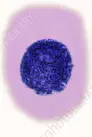
Interphase
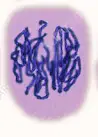
Prophase

Metaphase
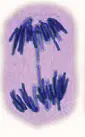
Anaphase
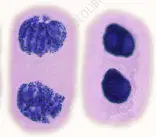
Telophase & cytokinesis
How many cells form at the end of mitosis?
2 identical cells
4 identical cells
1 cell
3 cells
If the skin cell of an organism contains 14 chromosomes, how many chromosomes are in a new cell of this organism?
14
7
21
28
Interphase, Prophase, Metaphase, Anaphase, Telophase, Cytokinesis. Why does mitosis occur?
Growth and repair
Energy production
Digestion of food
Excretion of waste
What is cancer? How does it relate to the cell cycle?
Cancer is unregulated and uncontrolled cell division. When the checkpoints of the cell cycle fail.
Cancer is a type of virus that attacks healthy cells during mitosis.
Cancer is a genetic disorder that only affects the G1 phase of the cell cycle.
Cancer is a result of cells skipping cytokinesis and merging together.
Label the cell cycle

