
NEW
Font size
 Worksheets
Quizizz Final Review - Units 1-3
Total questions: 48
Worksheet time: 24mins
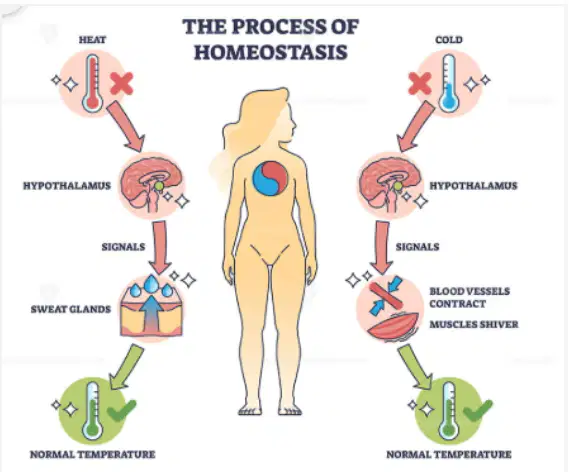
You run outside on a hot day and your body temperature rises. Which of the following responses by your body would help decrease your temperature and maintain homeostasis?
Vasodilation and sweating; their skin will turn red as blood is moved to the surface of the skin and water released from their skin will evaporate.
Goosebumps; the muscles under the hair in their skin will contract.
Vasoconstriction; their extremities will turn pale or blue as blood moves to the core of the body.
Sweating and shivering; the water released from their skin will evaporate and their muscles will begin moving quickly.
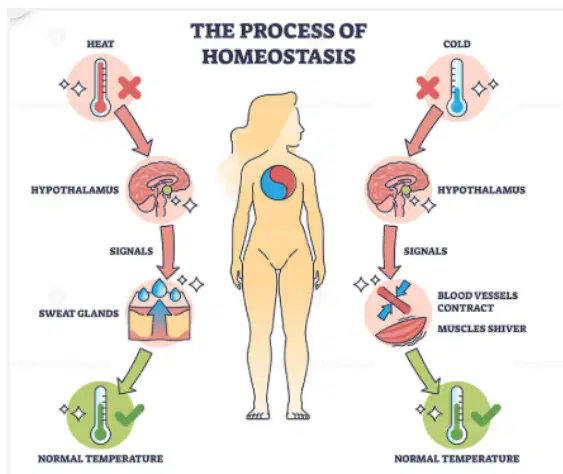
Negative and positive feedback mechanisms are the systems by which the body maintains homeostasis. Most variables are regulated through a negative feedback mechanism where the body works to correct an imbalance and move the body back to its normal set-point. Positive feedback mechanisms work in certain circumstances where the body needs to move away from its stable set-point to support a process, such as childbirth. Select why temperature regulation in the body is an example of a feedback mechanism (negative or positive - select the correct response).
When temperature varies from its normal set-point, the hypothalamus amplifies the imbalance by initiating a response through a positive feedback mechanism.
When temperature varies from its normal set-point, the hypothalamus reverses the imbalance by initiating a response through a negative feedback mechanism.
When temperature varies from its normal set-point, the hypothalamus reverses the imbalance by initiating a response through a positive feedback mechanism.
When temperature varies from its normal set-point, the hypothalamus amplifies the imbalance by initiating a response through a negative feedback mechanism.
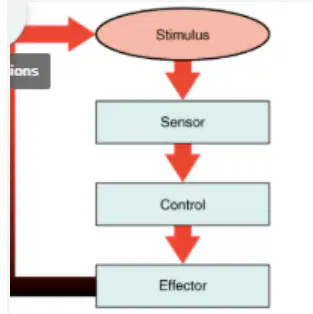
What is the role of a receptor in helping an organism maintain homeostasis? Choose the correct answer.
It receives the messages sent by the control center.
It carries out a response to restore internal conditions.
It detects stimuli and sends information to the control center.
It compares current conditions with ideal values for those conditions.
Which of these does homeostasis most directly relate to? Choose the correct answer.
Stability or balance
Evolution
Scale and structure
Interacting systems
The body works to maintain homeostasis in response to what conditions? Choose the correct answer.
Tissue and cell formation
Production of key vitamins
Internal and external changes
Cell differentiation and determination
The body's internal environment must stay ____________. Choose the correct answer.
Exactly the same at all times
The same as its external environment
Within normal ranges that support human life
Away from sudden outside temperature changes
Which of these is a long-term effect of a disruption of homeostasis? Choose the correct answer.
Destruction of organ systems
The immune systems taking control regulation of the internal environment
Establishment of feedback mechanisms
Regulation of the internal environment
Which of the following is an example of positive feedback?
Blood sugar regulation
Childbirth
Temperature regulation
Osmoregulation
Select the correct order of the levels of organization in the human body (smallest to largest).
Tissue -> Cell -> Organ system -> Organ -> Organism
Organ system -> Organism -> Cell -> Tissue -> Organ
Organism -> Organ system -> Organ -> Tissue -> Cell
Cell -> Tissue -> Organ -> Organ system -> Organism
A grouping of two or more types of tissue that performs a specific function that contributes to the larger purpose:
Organ system
Organelle
Organism
Organ
What is a cell?
The smallest particle of all matter (living and nonliving)
A group of organisms of the same species
The building block of all living things
Genetic material
Which of the following is NOT a correct pairing?
Cell → neuron
Tissue → connective tissue
Organ → stomach
Organ system → mitochondria
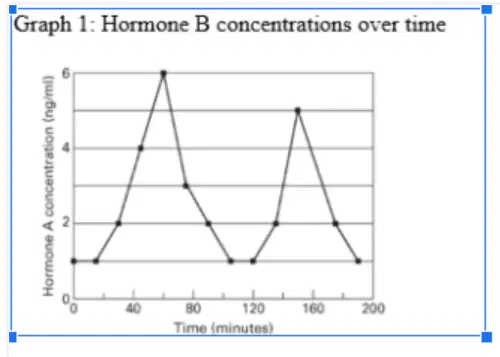
Which of the following is the correct type of feedback mechanism that the graph best represents? Graph 1: Hormone B concentrations over time.
Negative feedback
Positive feedback
Neutral feedback
Critical feedback
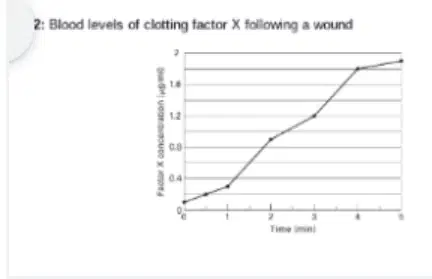
Which of the following is the correct type of feedback mechanism that the graph best represents? 2: Blood levels of clotting factor X following a wound.
Negative feedback
Positive feedback
Neutral feedback
Critical feedback

Which of the following best describes why blood glucose is an example of negative feedback?
When blood sugar rises or falls, the pancreas releases hormones that prevent blood sugar from changing.
When blood sugar rises, the body releases a hormone to further increase blood sugar.
When blood sugar rises or falls, the pancreas releases hormones that work to bring blood sugar levels back to normal.
When blood sugar falls, the body releases a hormone that drops blood sugar more.
What happens in the body during positive feedback?
The level decreases until normal
The level stays the same
The level increases until the desired result is achieved
The level fluctuates randomly
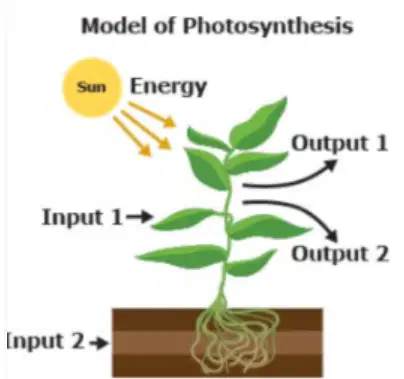
Which chemical equation is correct for photosynthesis?
6CO2+6H2O→C6H12O6+6O2+energy
6CO2+6H2O+energy→C6H12O6+6O2
C6H12O6+6O2→6CO2+6H2O+energy
C6H12O6+6O2+energy→6CO2+6H2O
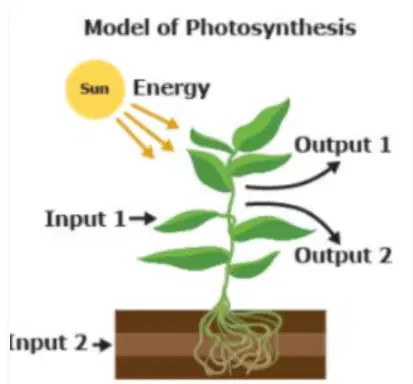
Based on the model, which is the BEST description for the process of photosynthesis?
Photosynthesis is the transfer of matter and flow of energy between the plant and its environment.
Photosynthesis requires an input of matter but not an input of energy.
Photosynthesis requires an input of energy but not an input of matter.
Photosynthesis is the transfer of matter and flow of energy between the plant and the Sun.
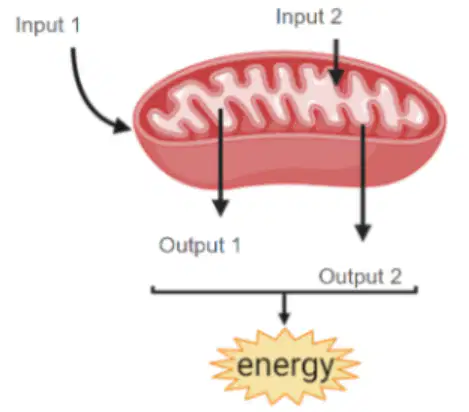
Which chemical equation is correct for cellular respiration?
6CO2+6H2O→C6H12O6+6O2+energy
6CO2+6H2O+energy→C6H12O6+6O2
C6H12O6+6O2→6CO2+6H2O+energy
C6H12O6+6O2+energy→6CO2+6H2O
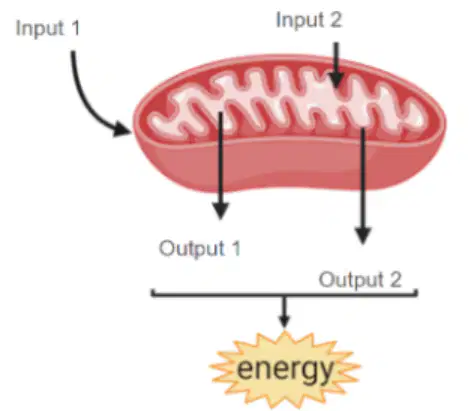
Based on the model, which is the BEST description for the process of cellular respiration?
The process of breaking down sugar in the presence of oxygen to release energy.
The process of breaking down oxygen to release energy.
The process of building energy from oxygen and sugar.
The process of building water and carbon dioxide from sugar.
Photosynthesis takes place in the (a) __________ while Cellular Respiration takes place in the (b) __________.
(a) chloroplast (b) nucleus
(a) chloroplast (b) mitochondria
(a) mitochondria (b) chloroplast
(a) nucleus (b) mitochondria
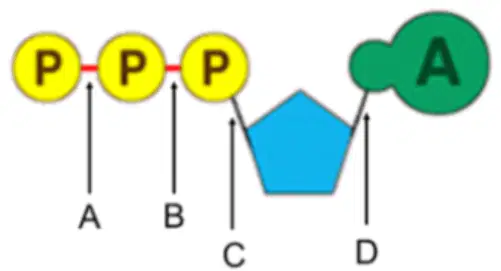
Which bond is broken in an ATP molecule when it releases energy, forming ADP? The diagram shows an ATP molecule with bonds labeled A, B, C, and D.
A
B
C
D
How are photosynthesis and cellular respiration connected?
The reactants of photosynthesis become the products of cellular respiration.
The reactants of photosynthesis become the reactants of cellular respiration.
The products of photosynthesis become the products of cellular respiration.
The products of photosynthesis become the reactants of cellular respiration.
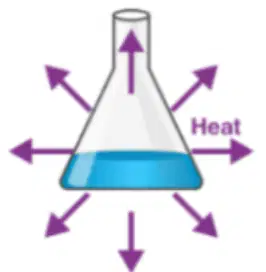
What type of reaction is shown in the image?
Endothermic because there is a net release of energy in the form of heat.
Endothermic because there is a net absorption of energy in the form of heat.
Exothermic because there is a net release of energy in the form of heat.
Exothermic because there is a net absorption of energy in the form of heat.
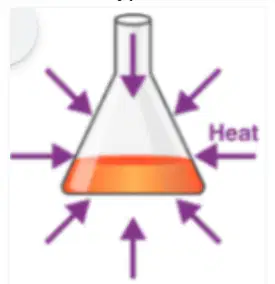
What type of reaction is shown in the image?
Endothermic because there is a net release of energy in the form of heat.
Endothermic because there is a net absorption of energy in the form of heat.
Exothermic because there is a net release of energy in the form of heat.
Exothermic because there is a net absorption of energy in the form of heat.

What type of reaction is shown in the image?
Anabolic because a large molecule is built from smaller molecules.
Anabolic because a large molecule is being broken down into smaller molecules.
Catabolic because a large molecule is built from smaller molecules.
Catabolic because a large molecule is being broken down into smaller molecules.

What type of reaction is shown in the image?
Anabolic because a large molecule is built from smaller molecules.
Anabolic because a large molecule is being broken down into smaller molecules.
Catabolic because a large molecule is built from smaller molecules.
Catabolic because a large molecule is being broken down into smaller molecules.
Select the correct chemical reactions that describe the process of photosynthesis.
Catabolic and Exothermic
Catabolic and Endothermic
Anabolic and Endothermic
Anabolic and Exothermic
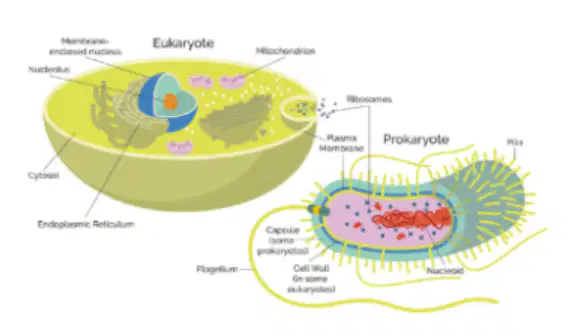
Which of the following BEST describes the difference between prokaryotic and eukaryotic cells?
Prokaryotic cells have a nucleus but lack membrane bound organelles.
Prokaryotic cells do not have a nucleus or membrane bound organelles.
Prokaryotic cells have a nucleus and membrane bound organelles.
Prokaryotic cells have membrane bound organelles but do not have a nucleus.
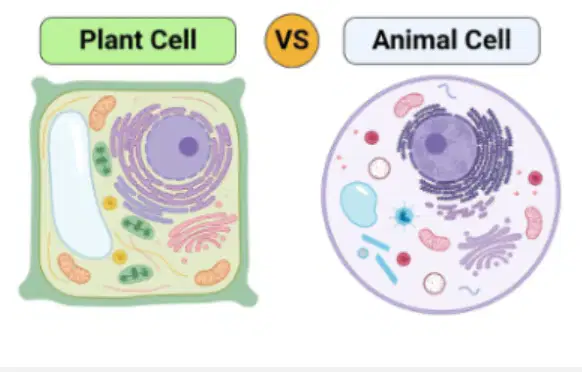
Which organelles do plant cells contain that animal cells do not?
Chloroplasts and cell walls
Nucleus and mitochondria
Nucleus and chloroplasts
Mitochondria and cell walls
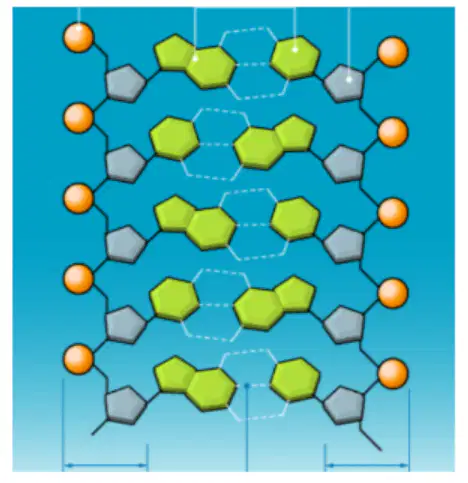
_____ forms the backbone of DNA and ______ forms the inside/rungs.
Sugar and Nitrogen bases / phosphates
Nitrogen bases / sugar and phosphate
Sugar and phosphate / nitrogen bases
Phosphate and nitrogen bases / Sugar
What is the function of helicase?
It forms bonds between DNA nucleotides.
It adds new nucleotides to the DNA helix.
It forms the DNA helix.
It separates DNA strands.
In DNA, the nitrogen base Cytosine is complementary (always pairs up) to
Adenine
Guanine
Thymine
Uracil
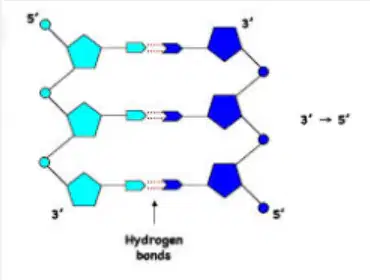
Both sides of the DNA strands run _____ in relation to each other
Parallel
Anti-Parallel
Perpendicular
Transverse
What does DNA replication ensure?
It ensures that a specific protein will be made.
It ensures that every cell has a complete set of identical genetic information.
It ensures that tRNA is only copied in the nucleus.
It ensures that a complementary strand of RNA is made and can move into the cytoplasm to await translation.
The complementary strand to the DNA sequence TAGTCA is?
ATGAGT
GACAGT
GTAGAT
ATCAGT
In order for DNA to be replicated, where is the DNA molecule unzipped?
Between the phosphate and the sugar
Between the hydrogen bonds of the nucleotides
After each codon
Between each deoxyribose sugar
The process of transcription occurs in the (a) ____________ and the process of translation occurs in the (b) ______________.
(a) cytoplasm (b) nucleus
(a) nucleus (b) cytoplasm
(a) nucleus (b) mitochondria
(a) chloroplast (b) cytoplasm
Which nucleotide in mRNA pairs with adenine in the DNA template strand?
Uracil
Cytosine
Guanine
Thymine
What is the purpose of transcription in the overall process of protein synthesis?
To replicate the DNA molecule
To create a temporary copy of the genetic information that can leave the nucleus
To directly synthesize proteins
To break down unnecessary genetic material
Which is the mRNA molecule that would be transcribed from this DNA template: TGGCAAGTACGT
ACCGTTCATGCA
UGGCAAGUACGU
UCCGUUCUUGCU
ACCGUUCAUGCA
_____ is made during transcription and ______ is made during translation.
a protein / mRNA
mRNA / a protein
Ribosome / Nucleus
mRNA / tRNA
What is the correct sequence of protein synthesis? A. tRNA brings amino acids to the ribosome. B. DNA molecules serve as the templates for mRNA. C. mRNA molecules move to ribosomes. D. Polypeptides are formed on ribosomes.
A-B-C-D
B-C-A-D
C-B-A-D
D-B-A-C
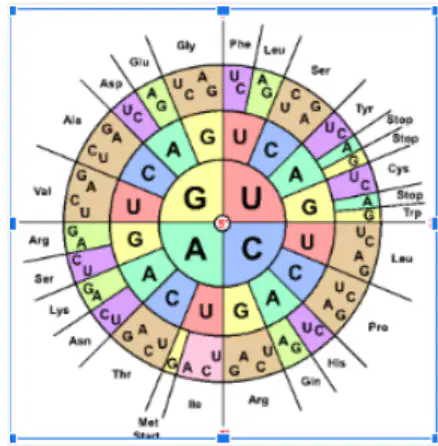
What amino acids are translated in the following mRNA? Use the table below to find them. UGA - UUU - AUG - CAC - GGG - UCA
Stop - Phe - Met - His - Gly - Ser
Met - Trp - Leu - Asp
Stop - Ser - Met - Thr - Val - Ala
Met - His - Gly - Ser
What is the correct sequence for Central Dogma?
RNA --> DNA --> Protein
Protein --> RNA --> DNA
DNA --> RNA --> Protein
DNA --> Protein --> RNA
What structure transfers the amino acids to the ribosome?
mRNA
tRNA
rRNA
DNA
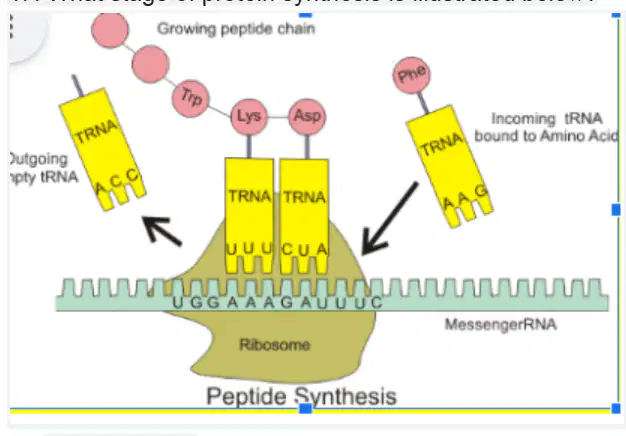
What stage of protein synthesis is illustrated below? The diagram shows tRNA molecules carrying amino acids to a ribosome where they pair with codons on an mRNA strand and a growing peptide chain forms.
Duplication
Transcription
Translation
Replication
A specific protein (polypeptide) is made up of many different ______.
DNA Polymerase
Nucleotides
Amino acids
Proteins

